


Tokyo is an easy base for exploring the wider Kanto region, with fast trains, smart passes and an almost overwhelming number of options. The challenge is not finding a day trip from Tokyo, but choosing the one that fits your time, energy and travel style. This guide compares the strongest excursions around Kanto so you can match destinations like Hakone, Nikko, Kamakura, Yokohama, Kawagoe, Chichibu and Hitachi Seaside Park to the kind of day you actually want.
How to Use This Day Trip Decision Guide
Instead of ranking every destination from best to worst, this guide groups Tokyo day trips by the kind of experience you are chasing. If you want temple-rich history near the sea, you will look at Kamakura. If you want hot springs with mountain views, Hakone rises to the top. For sweeping flower fields, Hitachi Seaside Park or Ashikaga Flower Park may win. The idea is to help you reach a short list quickly, then refine with practical details like train time, transport complexity and season.
As a baseline, most of the destinations in this article sit within about 30 to 120 minutes of central Tokyo by train. That makes it realistic to leave around 8:00 a.m., spend six to eight hours on the ground, and still be back in the city in time for dinner. Where a place deserves more than a day, such as Hakone or Nikko, you will find that clearly flagged so you can decide whether to commit a night outside Tokyo or keep it as a long day trip.
Train times and examples here use typical routes from major hubs like Shinjuku, Shibuya, Tokyo Station, Ikebukuro and Ueno. Actual travel time will shift slightly depending on your hotel location and the exact train you board, but you can use these ranges for planning. When prices are mentioned, they are approximate and based on recent fares in 2026; expect minor variation when you travel.
Finally, remember that Japan Rail Passes no longer include many private railways that serve classic day trip spots such as Hakone and Nikko. In practice, most travelers mix regular JR tickets with regional passes, like the Hakone Freepass or Nikko Pass, bought on the spot. Throughout the guide you will see how complicated, or not, each destination feels in real life.
For History Lovers: Kamakura, Nikko and Kawagoe
If your ideal day trip is packed with shrines, temples and intact streetscapes, three Kanto destinations stand out: Kamakura, Nikko and Kawagoe. Each offers a distinct period of Japanese history and a different level of effort to reach.
Kamakura lies about one hour from Tokyo Station or Shinjuku using JR lines, often with a simple transfer at Ofuna if you are coming from Shinjuku. Once the political center of Japan in the 12th and 13th centuries, it now feels like a laid back seaside town ringed by wooded hills. A classic day here combines the Great Buddha of Kotokuin, the Zen temples of Engakuji or Kenchoji in the north, and Hasedera looking down to the ocean. Walking between the sights is easy and you can end the afternoon with sunset on Yuigahama Beach before riding back to Tokyo in the early evening.
Nikko, in contrast, is a full scale pilgrimage into deep forest and ornate Tokugawa era architecture. From Asakusa, the private Tobu Railway runs limited express services that reach Tobu Nikko Station in around two hours; the fastest JR routes from Ueno or Shinjuku via Utsunomiya can be in a similar time range. Add a 10 to 20 minute bus ride into the shrine area and you have a long but very doable day. Many travelers aim to arrive by 10:00 a.m. to see Toshogu Shrine, Rinnoji and Futarasan Shrine, then decide whether they have time left to ride buses another 40 minutes up to Lake Chuzenji and Kegon Falls. Nikko is outstanding in autumn for its foliage and feels almost too grand for a single day, so if you have flexibility an overnight stay lets you slow down.
Closer to Tokyo in both distance and atmosphere is Kawagoe, in Saitama Prefecture. From Ikebukuro on the Tobu Tojo Line or Seibu Shinjuku on the Seibu Shinjuku Line, it takes about 30 to 60 minutes to reach Kawagoe Station depending on the service. Visitors come for the Edo period Kurazukuri warehouse district, its clay walled merchant houses and the Time Bell Tower that still rings several times a day. Candy Alley is lined with traditional sweets shops and is a hit with families. Kawagoe is compact enough that a half day trip works, but many people stretch it into a full day by including a riverside stroll or a leisurely lunch in a converted storehouse restaurant before rolling back into Tokyo before dinner.
For Nature and Scenic Landscapes: Hakone, Chichibu and Okutama
When you need a break from neon and high rises, Kanto delivers real mountains and rivers within a couple of hours of Tokyo. Hakone is the most famous, but Chichibu and the Okutama area inside Tokyo’s own borders are strong alternatives, especially for repeat visitors or those watching costs.
Hakone usually starts from Shinjuku with the Odakyu Railway. The limited express Romancecar runs to Hakone Yumoto in about 85 minutes, while cheaper local and rapid trains with a transfer at Odawara take around 100 to 110 minutes in total. Once there you can connect to the Hakone Tozan Railway and the looping network of cable cars, ropeways and sightseeing boats that circle the area. On a clear day, the combination of Lake Ashi, Owakudani volcanic valley and an onsen bath with Mount Fuji views is hard to beat. This network is best tackled with a Hakone Freepass, which covers most local transport and makes hopping on and off stress free.
Because Hakone is spread over several valleys and lakes, trying to see everything in a single day can feel rushed. A realistic day trip covers two or three highlights, such as the Hakone Open Air Museum, Owakudani and a short Lake Ashi cruise, before soaking in a hot spring and heading back to Tokyo by early evening. Staying overnight in a ryokan with dinner and breakfast turns it into a classic mini getaway and is particularly appealing in winter, when soaking in an outdoor bath with cold air on your face is part of the magic.
Chichibu in Saitama is less known to first time visitors but well loved by Tokyo residents. From Ikebukuro, the Seibu Railway’s limited express Laview train takes just over one hour to Seibu Chichibu Station, and regular express trains are slightly slower but cheaper. The town acts as a base for river walks, modest hikes and temple visits, and in early May the Hitsujiyama Park shibazakura, or moss phlox, paints hillside fields in pink and white. Autumn brings good foliage in the surrounding hills. With its slower pace and relatively compact layout, Chichibu suits travelers who want an easy nature escape with some seasonal color and local food stalls rather than a long checklist of famous sights.
If you prefer to stay technically inside Tokyo, the Okutama and Mount Mitake area is reachable in about 90 minutes from Shinjuku on JR lines. A typical route is to take the Chuo Line to Ome and continue on to Okutama or Mitake, with a bus and cable car added for the Mount Mitake summit. Hiking courses here range from gentle walks to more serious ridge routes, all under tall cedars and along clear rivers. Given the travel time and the fact that trails close with daylight, Okutama is a solid full day trip for travelers comfortable with basic navigation and a little less structure than Hakone.
For Onsen and Relaxation: Hakone, Atami and Takaragawa Style Trips
While Hakone straddles the line between nature and hot spring resort, some travelers simply want a day dominated by onsen and relaxation rather than sightseeing. In that case, you can either lean further into Hakone by booking a day use onsen plan, or aim for more dedicated resort towns like Atami on the Shinkansen line.
Atami in Shizuoka Prefecture is about 45 minutes from Tokyo Station on the Tokaido Shinkansen when you take a Kodama or some Hikari services that stop there. Once you step out of the station you are essentially in a classic seaside onsen resort, with numerous ryokan and day use baths advertising their packages on multilingual boards. Many establishments offer daytime plans that include a few hours access to indoor and outdoor baths plus a set lunch featuring local seafood. This makes Atami one of the most time efficient onsen options from central Tokyo if you are willing to pay Shinkansen fares.
For Hakone, day trippers can book daytime onsen access at hotels near Hakone Yumoto, Gora or along the Hakone Tozan line. A practical approach is to follow a shortened version of the popular Hakone loop in the morning, then arrive at a prebooked bath slot in the mid afternoon. Expect a full day of roughly 11 to 12 hours door to door, with around four hours each way dedicated to transport and transfers and the rest to sightseeing and soaking. Because much of the journey uses scenic trains and cable cars, the travel time itself often feels like part of the experience rather than dead time.
Travelers who are serious hot spring enthusiasts sometimes look further afield to places like Kusatsu Onsen in Gunma Prefecture or Takaragawa Onsen, a famous riverside bath, both of which are technically possible as long day trips via a combination of Shinkansen and local buses. However, journey times often push past three hours each way from Tokyo, which erodes relaxation. Unless you are very short on nights in Japan, these destinations make more sense as one or two night stays where you can fall asleep in a yukata and wake to a second round of morning baths.
For Families and Easy Logistics: Yokohama and Short-Hop Escapes
Families with younger children, or anyone nervous about complicated transfers, will likely find Yokohama and a handful of near Tokyo spots the least stressful choices. Distances are short, stations are familiar, and if the weather turns, it is simple to pivot plans.
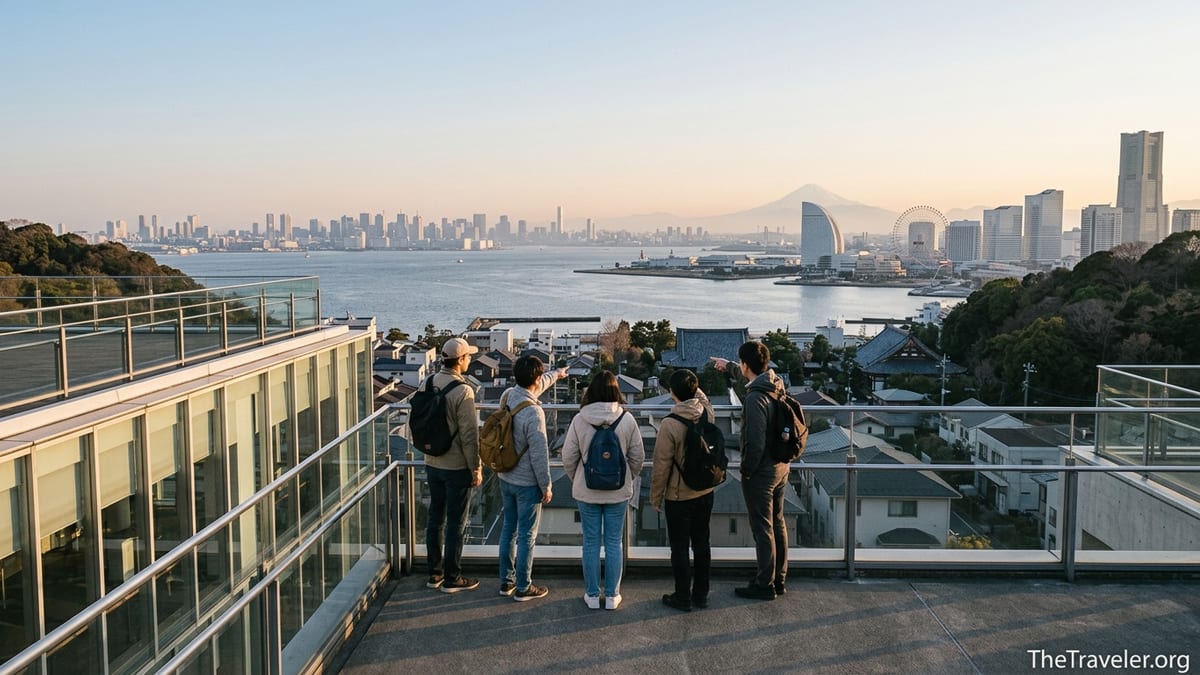
Yokohama is effectively Tokyo’s neighbor, reached in about 30 minutes from Shinjuku or Shibuya on the Shonan Shinjuku Line or Tokyu Toyoko Line, and even faster from Tokyo Station on the Tokaido Line. Typical family friendly days here include the waterfront Minato Mirai area, the Cup Noodles Museum where children design their own instant noodle cups, and Yamashita Park with views of the harbor. The large Chinatown district offers easy meals, snack grazing and colorful evening strolls. Because the city is dense with indoor attractions and malls, it is a popular foul weather backup to more outdoor oriented day trips like Nikko or Hitachi Seaside Park.
For something slightly different but still easy, Enoshima and the Shonan coast connect naturally with Kamakura. From Kamakura Station you can ride the Enoden tram to Enoshima in about 25 minutes, hop off near the island and explore sea caves, observation towers and a small aquarium. Many families split their day between a temple or two in Kamakura in the morning and a relaxed Enoshima afternoon, returning to Tokyo after dinner.
Closer still are some of Tokyo’s own outer districts, such as Odaiba’s entertainment complexes, Mount Takao’s cable car accessed hiking near Hachioji, and the Tama River cycling trails. While these are technically still part of Tokyo rather than separate cities, they scratch the same itch as a day trip with even lower logistical stakes. Travel times from Shinjuku or Shibuya often sit in the 30 to 50 minute range and can be slotted into itineraries where you do not want to commit a full day to rail travel.
Because these short hop escapes are so close, they are especially suited to travelers with only half a day free. For example, if you have a morning without plans before a late evening flight, a quick trip to Yokohama’s harborfront or Mount Takao’s lower trails lets you experience something different without the anxiety of distant connections.
For Flowers and Seasonal Color: Hitachi Seaside Park, Ashikaga Flower Park and Chichibu
Some of Kanto’s most photogenic day trips exist almost entirely for seasonal flowers. These destinations are highly time sensitive, so you will need to pair them with up to date bloom reports when finalizing your dates, but the payoff is extraordinary hillsides of color and local festival energy.
Hitachi Seaside Park in Ibaraki Prefecture has become globally recognizable for two main spectacles. In late April to early May, blue nemophila carpets the Miharashi Hill area like a sky flipped onto the ground. In early autumn, spherical red kochia bushes turn the same hill into a scarlet wave. To reach the park from Tokyo, a common route is to ride a Hitachi or Tokiwa limited express train from Ueno Station to Katsuta Station, which takes around 80 to 90 minutes. From Katsuta, local buses or seasonal shuttle services connect to the park entrance in roughly 15 to 20 minutes. A full day visit often runs from about 8:00 a.m. to 6:00 or 7:00 p.m. door to door.
Ashikaga Flower Park in Tochigi Prefecture is famous for its ancient wisteria trees, whose purple and white curtains typically peak from late April into early May. Access from Tokyo usually involves taking the JR Ueno Tokyo Line or Shinkansen toward Oyama, then transferring to local trains that stop at Ashikaga Flower Park Station, a small station built specifically for park visitors. Total train time hovers around 90 minutes each way. At peak bloom, the park can be open into the evening, with illuminations that let you see the blossoms lit from below, making it easy to justify a full day trip focused almost entirely on one attraction.
Chichibu’s flower draw is the shibazakura fields of Hitsujiyama Park, which usually bloom slightly earlier than Ashikaga’s wisteria season. Visitors spread picnic sheets and buy snacks from food stalls while overlooking geometric patterns of pink, purple and white moss phlox. Since Chichibu is just over an hour from Ikebukuro on the Seibu Railway, it works as a slightly shorter day than Hitachi or Ashikaga. Outside flower seasons, Chichibu reverts to a quieter nature and temple town, so pairing it with a specific seasonal event makes the most sense for most travelers.
Because these flower destinations are extremely popular on peak weekends, trains and buses can be crowded and on site restaurants may have long waits. It is wise to eat a quick breakfast in Tokyo, carry simple snacks like onigiri and bottled drinks, and aim to arrive soon after the sites open to enjoy the landscapes before midday crowds swell.
For Travelers With Only Half a Day
Not every traveler can spare a full day outside Tokyo, and in some itineraries scheduled tours or evening commitments carve the day into smaller blocks. In these cases, the key is to focus on places under an hour away with minimal transfers and a concentrated payoff.
Yokohama and Kawagoe are top choices here. Both can be reached in under an hour and both condense their main experiences into compact, walkable areas near the central stations. A three to five hour window is enough to stroll Yokohama’s waterfront, grab lunch in Chinatown and ride back, or to wander Kawagoe’s Kurazukuri street, sample a couple of sweets from Candy Alley and be back in Tokyo by mid afternoon. Because neither destination requires reservations or fixed entry times, you can adjust the day on the fly if you find yourself running late.
Very short half days, such as a spare morning before a bullet train departure from Tokyo Station, might be better spent in districts like Asakusa, Ueno or Odaiba rather than on true out of town trips. Visiting Sensoji Temple, Ueno Park’s museums or Odaiba’s waterfront offers new scenery without the risk of getting stuck behind a delayed regional train when you need to catch a plane or long distance service later in the day.
If you do decide to attempt a more ambitious destination in half a day, keep your plans tightly focused. For example, visiting Hakone only for an onsen without trying to complete the full loop, or dropping into Nikko only for Toshogu Shrine, is technically possible but can feel rushed and fragile if any delays occur. As a rule of thumb, treat any day trip involving two hours or more of train time each way as a full day commitment.
Overnight vs Day Trip: When to Stay Longer
Many Kanto destinations marketed as day trips from Tokyo arguably shine brighter with at least one night away. Deciding when to upgrade from a day trip to an overnight stay comes down to your tolerance for long travel days and your priorities for evening and early morning experiences.
Hakone and Nikko are the two clearest candidates for an overnight. In Hakone, staying in a ryokan with kaiseki dinner and private onsen access transforms the destination from a string of scenic transport rides into a slow, restorative escape. You can ride the ropeways and boats on one day, then sleep early and wake for a morning bath before returning to Tokyo. The extra time also buffers against weather; if clouds block Fuji views one afternoon, you have another morning to try again. Day trips give you the highlights but often feel like skimming the surface.
Nikko’s main shrines can be seen in a single long day, but adding a night opens up Lake Chuzenji, Kegon Falls and quieter temple paths that most day trippers do not reach. It also allows you to experience the forest atmosphere early or late in the day when large bus tours are absent. If you are traveling during peak autumn foliage season, an overnight stay significantly reduces the stress of crowded return trains and traffic jams on the mountain roads.
In contrast, places like Yokohama, Kawagoe and many flower focused destinations are genuinely well suited to day trips. You can see the main sights and capture the atmosphere without needing a night on the ground. Some travelers still choose to stay in Yokohama to enjoy the harbor skyline at night or to break up a long Tokyo stay, but it is rarely necessary from a sightseeing standpoint.
Budget is another factor. Overnight trips mean paying for accommodation and sometimes set dinner courses, which can be a highlight but also a major line item. If you are trying to keep costs under control, using Tokyo as a base and focusing on shorter, cheaper day trips like Kamakura, Kawagoe and Mount Takao can deliver a lot of variety without frequent hotel changes.
FAQ
Q1. Which Tokyo day trip is best for a first time visitor?
For most first time visitors, Kamakura is the most balanced choice, combining major temples, the Great Buddha, forested hills and a beach, all within about an hour of Tokyo on straightforward trains.
Q2. Is Hakone really doable as a day trip from Tokyo?
Yes, Hakone is manageable as a long day trip if you leave early and focus on a few key sights, but it feels more relaxed with an overnight stay in a ryokan so you can enjoy onsen time without watching the clock.
Q3. How far in advance should I book trains for Nikko or Hakone?
Limited express trains from Asakusa to Nikko and Romancecar services from Shinjuku to Hakone Yumoto often sell reserved seats on weekends and holidays, so booking a few days ahead online or at station ticket machines is sensible, while local trains usually do not need advance reservations.
Q4. Are these day trips suitable for families with small children?
Yokohama, Kamakura with Enoshima, and Kawagoe are especially family friendly thanks to short travel times, stroller friendly streets and plenty of casual food options, while longer journeys to Nikko or Hitachi Seaside Park may be better for children who handle trains and crowds well.
Q5. Do I need a Japan Rail Pass for these Tokyo day trips?
A Japan Rail Pass can cover JR segments to places like Yokohama, Kamakura, Nikko and parts of the journey toward Hitachi Seaside Park, but many popular lines, such as Odakyu to Hakone and Tobu’s discounted Nikko passes, are private, so it is often cheaper to buy regular tickets and regional passes instead of relying on a national pass.
Q6. Which destination is best in winter?
Onsen focused spots such as Hakone and Atami are ideal in winter, and Yokohama also works well thanks to its many indoor attractions, whereas flower parks and high mountain hikes are less appealing in colder months.
Q7. Where should I go in spring for cherry blossoms or flowers?
Kamakura’s temples, Chichibu’s shibazakura at Hitsujiyama Park, Ashikaga Flower Park’s wisteria and Hitachi Seaside Park’s nemophila hills are all spring highlights, but bloom timing varies by year so it is worth checking recent reports shortly before your visit.
Q8. Is Hitachi Seaside Park too far for a day trip?
Hitachi Seaside Park is around 100 to 120 minutes from central Tokyo when you combine limited express trains from Ueno with a short bus ride, so it is a full but feasible day trip, especially during peak flower seasons when the park is the main focus of your day.
Q9. What is the easiest day trip if I am nervous about getting lost?
Yokohama is the easiest option for most people, with direct trains from multiple Tokyo stations, English signage and a compact waterfront area where major sights like Minato Mirai, the red brick warehouse district and Chinatown sit close together.
Q10. How early should I leave Tokyo for these trips?
For shorter trips like Yokohama, Kawagoe or Kamakura, leaving between 8:00 and 9:00 a.m. works well, while longer days to Nikko, Hakone or Hitachi Seaside Park are smoother if you catch a train around 7:00 or 8:00 a.m. to maximize time on the ground and avoid the heaviest crowds.