


If you only have time for one big excursion from Tokyo, the choice between Hakone and Nikko can feel surprisingly high stakes. Both are classic Kanto escapes, both are easy to reach by train, and both offer lakes, mountains and shrines. Yet the experience on the ground is very different. This guide compares Hakone and Nikko with up-to-date transport options, real-world costs and concrete itinerary ideas so you can decide which destination fits your interests, budget and travel style in 2026.
Getting There: Travel Time, Effort and Cost from Tokyo
From central Tokyo, Hakone is usually the slightly easier and more flexible option. Odakyu’s direct services from Shinjuku to Hakone-Yumoto take roughly 85 to 95 minutes, with the limited express Romancecar providing reserved seats and large windows for an extra surcharge. Regular Odakyu commuter trains on the same route are cheaper and only a little slower, which means you can decide how much you want to spend for comfort and convenience on the day.
Reaching Nikko typically takes about two hours one way from Tokyo. Many travelers use Tobu Railway from Asakusa or Tokyo Skytree stations, or the joint JR East and Tobu limited express services from Shinjuku and Ikebukuro. The newer Spacia X limited express from Asakusa to Tobu-Nikko trims travel time and adds a more premium feel, but you must reserve specific departure times and seats, which takes a little more advance planning.
In practical terms, budget-conscious travelers often find that a Hakone trip can be tuned more easily to cost: you can choose cheap local trains and buses or splurge only on selected legs like the Romancecar or ropeway. Nikko’s main temples and shrines are concentrated in one area but still require local buses or a 30 to 40 minute uphill walk from the station, and the additional transport can add up without a pass. If you value spontaneity and a late start from Tokyo, Hakone normally wins on pure ease.
For a couple staying in Shinjuku and wanting a simple day trip, a typical pattern would be: Romancecar from Shinjuku to Hakone-Yumoto in the morning, loop through the Hakone sights, then a regular Odakyu train back in the evening. For Nikko, the equivalent from Asakusa would involve a reserved Spacia X or other limited express out in the morning, a day on buses around the World Heritage area, then a specific timed train back, with fewer truly “turn up and go” options in peak seasons.
Transport Passes: Hakone Freepass vs Nikko Passes
The Hakone Freepass remains one of the most straightforward regional passes in Kanto. Valid for two or three days, it includes a round-trip on Odakyu between Shinjuku and the Hakone area plus unlimited use of key local transport such as the Hakone Tozan Railway, Hakone Tozan Cable Car, Hakone Ropeway and the Hakone Sightseeing Cruise on Lake Ashi, along with selected bus routes. A digital “Hako Ticket” version makes it easy to manage on your phone and offers small discounts at many attractions.
On the Nikko side, the situation is more fragmented and has changed in recent years. The Tobu Nikko World Heritage Area Pass focuses on the main temple and shrine zone around Toshogu and offers a round-trip on Tobu lines from Tokyo plus local buses in the heritage area for a set period. The broader Nikko All Area Pass, once a star value ticket for Okunikko and Lake Chuzenji, has seen its relative value reduced as separate bus passes and dynamic pricing have been introduced. Many recent visitors find that pairing a World Heritage Area Pass with a targeted bus pass to Lake Chuzenji or Yumoto Onsen works out better than buying the broadest all-inclusive pass.
In practical budget terms, solo and couple travelers doing a one- or two-day Hakone loop almost always benefit from the Hakone Freepass, especially if they plan to ride the ropeway, cruise and cable car at least once. In Nikko, you need to think more concretely about how far you plan to go: if you only want Toshogu, Rinnoji and Futarasan Shrine plus the stone bridge area, the World Heritage Area Pass or even simple pay-as-you-go bus tickets can be competitive. If you are committed to Lake Chuzenji and Kegon Falls, check current bus pass prices and whether they still align with your dates, as some routes have seasonal adjustments.
For first-time visitors trying to minimize planning time, Hakone again comes out ahead. The Freepass effectively lays out a classic circular sightseeing route, and ticket machines and English-language support at Shinjuku and Odawara make it straightforward. Nikko’s combination of train, World Heritage bus loops, and separate Okunikko buses is perfectly manageable, but you will want to study current route maps and timetables the night before, especially if you are traveling during leaf season when services can be crowded and some passes see temporary changes.
Scenery Face-Off: Fuji Views, Volcano vs Shrines and World Heritage
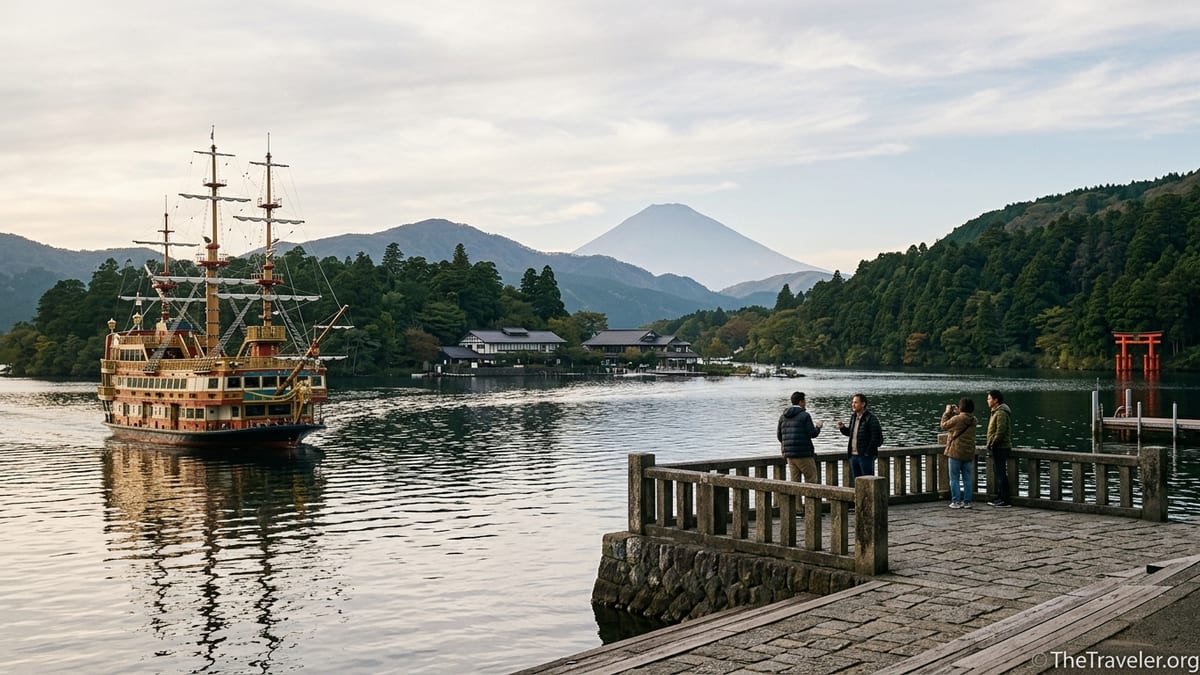
If your dream Kanto day trip is all about Mount Fuji and volcanic landscapes, Hakone is the clear winner. On clear days, the Hakone Ropeway segment between Owakudani and Togendai offers textbook views of Fuji towering behind Lake Ashi, with plumes of volcanic steam rising from the Owakudani valley. Even on hazier days, the experience of riding cable cars over sulfur vents, sampling black “onsen eggs” cooked in the hot springs, and feeling the crisp air on the lake cruise feels uniquely volcanic and immersive.
Nikko, by contrast, is a destination for grand architecture and spiritual atmosphere. The UNESCO World Heritage complex that includes Toshogu Shrine, Rinnoji Temple and Futarasan Shrine is dense with intricately carved wooden buildings set among towering cedar trees. Toshogu in particular is famously ornate: you walk past color-saturated carvings of animals and mythic figures, including the “Three Wise Monkeys” and the sleeping cat, then climb up shaded stone staircases to mausoleums and prayer halls. The drama comes less from wide-open views and more from the contrast between gold leaf, lacquer, and deep green forest.
Travelers who are primarily photographers should consider their style. Landscape and wide-angle shooters will enjoy Hakone’s combination of ropeway vistas, lakeside torii gates in Moto-Hakone and misty views over the Ashinoko shoreline, particularly during early morning in winter or on clear spring days. Those who prefer detailed shots of carvings, lanterns, mossy stone walls and kimono-clad visitors will find endless material in Nikko’s shrine precincts, especially if they arrive early enough to avoid midday tour groups.
Many people try to decide based purely on the chance to see Fuji. It is worth remembering that Fuji is often obscured by cloud or haze, especially in summer. If seeing the mountain is your top priority and you are flexible, watch the weather forecast day by day and only commit to Hakone on a day with good visibility. If your dates are fixed and fall in the height of the rainy season, Nikko’s evergreen forests and richly decorated buildings may offer a more dependable sense of “wow” even under overcast skies.
Onsen, Lakes and Outdoor Time: Hakone vs Nikko
Hakone is one of the Kanto region’s classic onsen areas, and for overnight trips it has a clear advantage. Towns such as Hakone-Yumoto, Gora and Sengokuhara host a dense mix of traditional ryokan with in-room baths, modern hotels with large rotenburo outdoor pools, and day-use bathhouses that welcome non-staying guests. A very typical experience for travelers is to arrive in the afternoon, ride the ropeway and cruise, then check into a ryokan for dinner and a soak. Even day trippers can sample this by visiting a public onsen near Hakone-Yumoto or Gora in the late afternoon before heading back to Tokyo.
Nikko does have hot spring areas, notably Kinugawa Onsen downriver and Yumoto Onsen high in Okunikko, but they are more spread out and less convenient for a quick visit. A traveler focused on culture may stay near the World Heritage area and skip onsen entirely, while hikers might base themselves in Yumoto and use simple inns with sulfurous baths after a day on the trails. For first-time visitors with only one night to spare, Hakone’s concentration of ryokan and the ease of combining baths with major sights make it more onsen-friendly.
When it comes to lakes, Hakone’s Lake Ashi and Nikko’s Lake Chuzenji each have a distinct feel. Lake Ashi sits within the main tourist circuit; you can step straight from the ropeway terminal at Togendai onto a sightseeing cruise, then disembark near the red Hakone Shrine torii that stands in the water. The experience is scenic and polished, but also undeniably busy on weekends and holidays. Lake Chuzenji, by contrast, feels more like a mountain resort with simple lakeside paths, small cafes and boat rentals, especially if you walk away from the main bus stop area near Kegon Falls.
For hiking, Nikko generally offers more substantial trails directly connected to the lake and mountain scenery. Routes around Senjogahara Marsh, up Mount Nantai, or around the smaller cascades above Kegon Falls attract hikers who want a full day on the trail. Hakone has pleasant walks along sections of the old Tokaido road lined with stone paving and cedar trees, as well as shorter forest paths and museum gardens, but most visitors focus on the ropeway and lake circuit rather than long-distance hikes.
Culture, Museums and Seasonal Highlights
Nikko is one of Japan’s standout destinations for history and religious heritage. Toshogu Shrine enshrines Tokugawa Ieyasu, the shogun who unified Japan in the early 17th century, and the lavish design of the complex reflects that political importance. A typical visit also includes Rinnoji’s reconstructed main hall, Futarasan Shrine’s older and more austere structures, and the stone Shinkyo Bridge spanning the Daiya River. Even without delving deeply into the history, the cumulative effect of gilded gates, drum bridges and cedar-lined avenues is powerful.
Hakone’s cultural draw leans more toward modern art and open-air experiences than classical architecture. The Hakone Open-Air Museum mixes sculpture with landscaped lawns and mountain backdrops, and the Pola Museum of Art combines a collection of impressionist and modern works with striking forest-edge architecture. For a traveler who wants a mix of art and nature, a morning at the Open-Air Museum followed by the ropeway and lake cruise makes for a satisfying and varied day.
In terms of seasons, both areas shine in autumn but in different ways. Nikko’s reputation for koyo autumn foliage is among the strongest in Kanto. The slopes around Lake Chuzenji and the Irohazaka winding road form a quilt of red and gold from roughly mid to late October, with the lower town and shrine areas turning slightly later. This also means intense crowds and long bus queues on peak weekends. Hakone’s foliage is a little more subdued but still lovely, particularly around Sengokuhara’s pampas grass fields and the hills above Lake Ashi, and crowds are somewhat more diffused across multiple transport modes and viewpoints.
Winter and shoulder seasons also differ. Hakone winters tend to be cold but relatively accessible, with occasional snow adding atmosphere to outdoor baths and lakeside views. Some Fuji views are at their clearest in crisp winter air. Nikko often sees more substantial snowfall, which can create beautiful scenes around Toshogu’s roofs and the cedars but may disrupt bus schedules to higher areas like Lake Chuzenji and Yumoto. Spring brings cherry blossoms to lower Nikko and Hakone’s valleys at different times, so if you are traveling in March or April, it is worth checking which region is predicted to be at peak during your dates.
Day Trip Practicality vs Overnight Potential
Both Hakone and Nikko can be done as day trips from Tokyo, but the rhythm of the day is different. A Hakone day trip is extremely common: you can leave Shinjuku around 8 or 9 in the morning, complete a full circuit of the Hakone Tozan Railway, cable car, ropeway and Lake Ashi cruise, fit in lunch at a lakeside restaurant and a quick soak at a day-use onsen, then be back in Tokyo by early evening. Frequent Odakyu departures and the integrated Freepass make it easy to adjust mid-day if you fall behind schedule.
Nikko day trips are also popular but benefit from an earlier start and more careful time budgeting. If you catch a limited express from Asakusa or Shinjuku between 7 and 8 in the morning, you can reach Tobu-Nikko by mid-morning, transfer to a bus, visit the main Toshogu complex and Rinnoji, perhaps include Shinkyo Bridge, and return to Tokyo on an evening train. Adding Lake Chuzenji and Kegon Falls to a same-day itinerary is possible but often feels rushed, especially in busy autumn periods when bus rides up and down the mountain can take significantly longer than the timetable suggests.
For overnight trips, both destinations open up more relaxed options, though the feel is different. A two-day Hakone stay allows you to split the loop, spending more time at the Open-Air Museum or Pola Museum on day one, then tackling Owakudani, the ropeway and the lake on day two, with long unhurried baths at your ryokan each night. In Nikko, an overnight near the World Heritage area lets you visit Toshogu early or late in the day, when tour groups are thinner, and then dedicate a full second day to Lake Chuzenji, Senjogahara or more remote waterfalls.
If your Japan itinerary already includes several onsen stays in places like Hakone, Kawaguchiko or Kusatsu, you might lean toward Nikko for variety and history. If this is your only chance to experience a full-service hot spring stay with kaiseki dinner and private baths, Hakone’s larger accommodation base and easier logistics make it the safer bet for an atmospheric overnight.
Who Should Choose What: Tailored Recommendations
History lovers and those fascinated by samurai-era Japan will get more out of Nikko. A full morning exploring Toshogu’s carvings and mausoleum, followed by Rinnoji’s halls and the quieter precincts of Futarasan Shrine, gives a concentrated immersion in Edo-period religious and political culture. Pair it with a walk along the cedar avenue near the shrine complex or a visit to one of the small local museums, and you have a day that is primarily about context and stories rather than rides and ropeways.
Couples looking for a romantic, slightly indulgent escape often gravitate to Hakone. The combination of scenic trains, ropeways, lake cruises and stylish ryokan with private open-air baths is tailor-made for a special night away from Tokyo. Many accommodations in Gora and along Lake Ashi offer rooms with private rotenburo baths on the balcony, multi-course dinners and late check-out, making it easy to build a 24-hour mini honeymoon around the Hakone Freepass route.
Families, especially with younger children, usually find Hakone simpler and more engaging. The transport itself becomes part of the fun: children tend to enjoy the switch from mountain railway to cable car to ropeway to pirate-style sightseeing ship, and many museums such as the Open-Air Museum offer kid-friendly installations and play areas. In Nikko, the highlights are more static and involve more stair climbing and formal shrine etiquette, which some younger kids may find less engaging after the first hour or two.
For photographers and foliage chasers, the choice hinges on priorities. If you are traveling in peak autumn and are willing to start early and cope with crowds, Nikko’s combination of scarlet maple leaves, golden ginkgo, misty lakes and richly decorated shrine buildings is hard to beat. If you are visiting at other times of year or want a more flexible schedule, Hakone offers a broader mix of subjects: Fuji views, lakeside torii, misty pampas grass, steam vents and onsen towns, with fewer potential bottlenecks on a typical weekday.
The Takeaway
If you crave grand history, ornate shrines and some of the region’s most celebrated autumn foliage, Nikko deserves your one big Kanto side trip. Expect around two hours each way from Tokyo, a mix of limited express trains and local buses, and a day centered on walking through temple and shrine precincts beneath towering cedars. Add Lake Chuzenji only if you are comfortable with a very early start and precise bus planning, or if you can stretch to an overnight stay.
If your ideal escape mixes onsen time, easy-to-navigate transport, Fuji views on clear days and a bit of modern art, Hakone is the more forgiving and versatile choice. The Hakone Freepass and Odakyu network make it straightforward to craft a full day or relaxed overnight loop with minimum stress, and the sheer variety of experiences packed into a compact area suits couples, families and first-time visitors alike.
For many travelers building a larger Japan itinerary, a simple rule of thumb works well: choose Nikko if this is your main deep dive into historical Japan outside Kyoto, and choose Hakone if this is your one chance at a classic onsen-and-mountain getaway with a bonus possibility of seeing Fuji. With that lens, the decision between Hakone and Nikko becomes less about which destination is “better” and more about which one matches the version of Japan you most want to experience on this trip.
FAQ
Q1. Is Hakone or Nikko better as a same-day round trip from Tokyo?
Hakone is usually better for a relaxed same-day round trip because trains and local transport run frequently, the classic sightseeing loop is compact, and the Hakone Freepass simplifies tickets. Nikko works as a day trip if you start early and focus on the World Heritage shrine and temple area, but trying to include Lake Chuzenji and Kegon Falls in the same day can feel rushed, especially in autumn.
Q2. Which destination is cheaper overall for a typical visitor?
For most short stays, Hakone and Nikko end up in a similar price range, but Hakone offers more control over costs. The Hakone Freepass can bundle major transport at a predictable cost, and you can choose anything from simple guesthouses to luxury ryokan. In Nikko, entry fees to multiple shrines plus bus fares to higher areas can add up, so you need to compare current pass prices against your exact plans to avoid surprises.
Q3. Where are my chances better to see Mount Fuji?
Hakone offers much better chances to see Mount Fuji, notably from the Hakone Ropeway and some sections of Lake Ashi, but visibility is always weather dependent. Nikko is too far north and oriented differently, so it is not a Fuji-view destination. If Fuji is a priority, monitor the forecast and pick Hakone on a clear, dry day if you can.
Q4. Which place is less crowded during peak seasons?
Both areas get busy in autumn and on holiday weekends, but crowds in Hakone tend to be spread out across multiple villages, ropeways and cruises. Nikko’s World Heritage area concentrates visitors into a relatively small number of shrine and temple precincts and bus routes, which can feel more congested at mid-day in peak koyo season. Traveling on weekdays, starting early and staying overnight all help mitigate crowds in either location.
Q5. Is Hakone or Nikko better for young children?
Hakone is generally better for young children because the journey itself is varied and entertaining, with trains, cable cars, ropeways and boats in quick succession. Attractions like the Hakone Open-Air Museum also give kids space to move and explore. Nikko, while beautiful, involves more stair climbing, quieter shrine spaces and longer stretches of standing or walking, which some younger children may find less engaging.
Q6. If I only care about onsen, which should I choose?
If onsen is your top priority, choose Hakone. It has a dense concentration of hot spring ryokan, day-use bathhouses and hotels in places like Hakone-Yumoto, Gora and along Lake Ashi, all well connected by public transport. Nikko’s main onsen areas, such as Kinugawa and Yumoto, are more spread out and usually work best for travelers specifically planning a multi-day stay in that part of Tochigi rather than a single quick soak.
Q7. Which is better in autumn: Hakone or Nikko?
Nikko is the stronger pure autumn foliage destination, especially around Lake Chuzenji and along the Irohazaka road, where mountain slopes turn vivid red and gold. That said, it also draws very large crowds and can see long bus queues. Hakone’s foliage is more moderate but still attractive, and the variety of viewpoints around Lake Ashi and Sengokuhara pampas fields, combined with easier crowd dispersion, can make for a more relaxed autumn day overall.
Q8. Do I need to reserve trains in advance for Hakone or Nikko?
For Hakone, you can ride regular Odakyu trains without reservation, but booking Romancecar seats in advance is advisable on weekends and holidays. For Nikko, reserving limited express services such as Spacia X, Spacia Nikko or other Tobu and JR limited express trains is strongly recommended, especially in busy seasons and for morning departures, because unreserved options can be less convenient or more time-consuming.
Q9. Which destination is better if I already have a Japan Rail Pass?
If you hold a Japan Rail Pass, you can reach both regions using JR lines part of the way, but the benefit is somewhat greater for Nikko. JR limited express services from Tokyo or Shinjuku toward Nikko are covered, though you may still use Tobu lines or local buses at the end. For Hakone, the Shinkansen from Tokyo to Odawara is covered, but many of the classic Hakone loop transports are non-JR and will still require separate tickets or a Hakone Freepass.
Q10. If I am a first-time visitor to Japan, which should I pick?
For most first-time visitors who want an easy, variety-filled escape from Tokyo, Hakone is the safer and more flexible choice thanks to its integrated Freepass, onsen culture, potential Fuji views and mix of activities. Choose Nikko instead if your main goal is to experience one of Japan’s most important shrine complexes and you are comfortable planning around specific train and bus schedules for a history-focused day.