


I went to Miyajima twice in the same week: once as a classic day trip from Hiroshima, and once staying the night in a ryokan near Itsukushima Shrine. Seeing the island both with daytime crowds and almost empty after the last ferries left completely changed how I feel about Miyajima. This is a practical comparison, grounded in real-world prices, timetables and tide charts, to help you decide whether to invest in an overnight stay or keep it as a few-hour stop from Hiroshima.
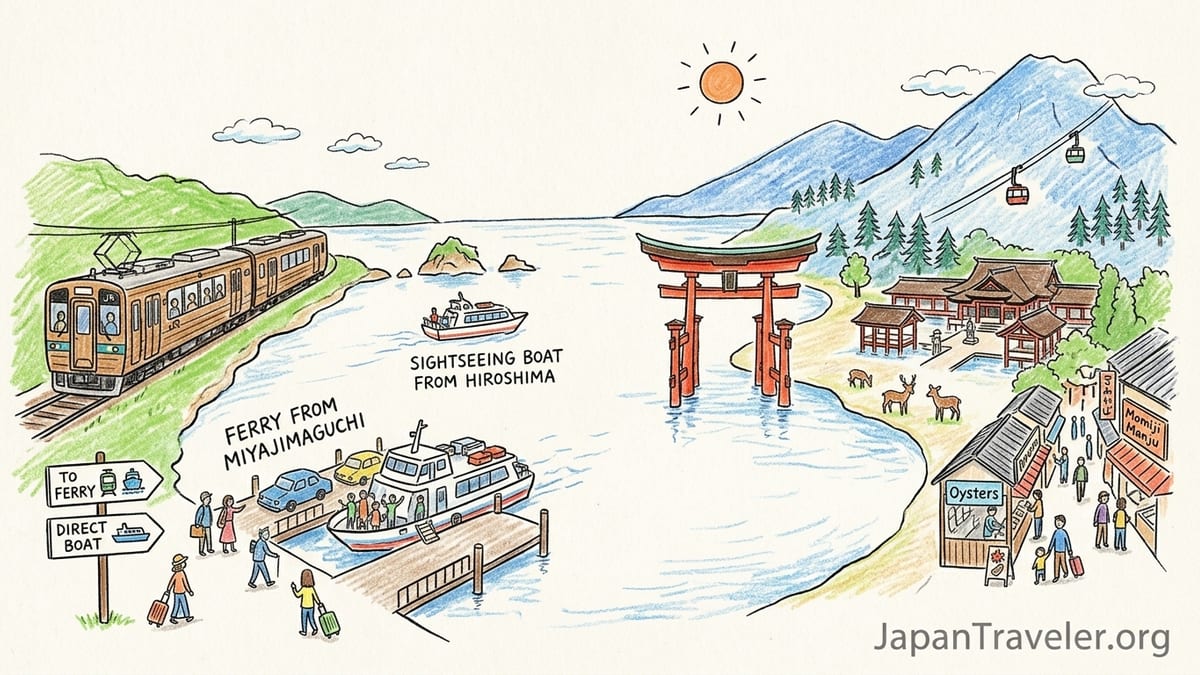
Getting to Miyajima: Ferry vs Sightseeing Boat From Hiroshima
The most common way to reach Miyajima from Hiroshima is the short ferry from Miyajimaguchi. From central Hiroshima Station, I took the JR Sanyo Line to Miyajimaguchi Station in about 25 minutes, then walked a few minutes to the pier. As of late 2026, the local JR train fare is modest, and the JR Miyajima ferry crossing itself takes about 10 minutes. The ferries run frequently during the day, roughly every 10 minutes at busy periods, and the entire door-to-door journey from Hiroshima Station to Miyajima island can be done in around 45 to 60 minutes if connections are smooth.
For my day-trip visit, I chose this Miyajimaguchi route because it mirrors what most first-time visitors do, especially those using a Japan Rail Pass that covers the JR-operated ferry. The experience felt like a suburban commute at first, with many tourists and local school groups on the train, but the mood shifted the moment the ferry pulled away from the pier. The view of the Seto Inland Sea, low hills and the distant Great Torii emerging from the water set the tone for a very classic Miyajima experience.
For the overnight stay, I tried a direct sightseeing boat from central Hiroshima. Operators run boats from near Hiroshima Peace Memorial Park to Miyajima, with a cruise that usually takes about 45 minutes to an hour. Tickets are significantly more expensive than the train-plus-ferry combination, but the convenience of boarding in central Hiroshima and sailing straight through the delta channels into the open bay is appealing. The ride feels more like a small coastal cruise, with commentary in at least Japanese and often English explaining the history of Hiroshima and Miyajima.
If you want to minimize transfers and start your day more relaxed, the sightseeing boat is a pleasant splurge, especially if you are staying near the Peace Memorial Park. For strict budget travelers, or those using rail passes, the Miyajimaguchi route makes more financial sense, especially once you factor in possible round-trip sightseeing boat costs for couples or families. Either way, both routes arrive at the same small Miyajima ferry pier, a few minutes’ walk from Omotesando Shopping Street and within easy reach of Itsukushima Shrine.
First Impressions and Expectations Before Arriving
Before my first visit, I pictured Miyajima as a serene, almost hushed place. All the iconic photos of the Great Torii and Itsukushima Shrine that I had seen looked calm, with misty mountains behind and maybe a few deer wandering peacefully on the shore. I expected to step off the boat into something close to a temple village, with soft bells and a handful of pilgrims rather than rows of souvenir shops and snack stands.
I also assumed that a well-timed day trip from Hiroshima would be more than enough. On paper, the island is compact. The walk from the ferry terminal to Itsukushima Shrine is short, and the main sights, including Omotesando Shopping Street, the shrine itself, Daisho-in Temple and the ropeway access to Mount Misen, all cluster on the same side of the island. My plan for the day trip was ambitious but common: arrive late morning, see the shrine and torii, wander Omotesando, ride the ropeway, visit Daisho-in on the way back and catch the ferry off the island before dinner in Hiroshima.
For the overnight stay, I went in with two main expectations. First, I hoped the island would feel completely different once most visitors left, quieter and more atmospheric, particularly around the shrine and the lantern-lit waterfront. Second, I expected photography opportunities to improve dramatically with softer dawn and dusk light and fewer people. I also assumed an overnight stay would be substantially more expensive, primarily due to ryokan rates and the cost of dinner and breakfast on the island.
Because the island tides are central to how the Great Torii and Itsukushima Shrine look, I checked official tide tables for both visits rather than assuming low tide would conveniently match my schedule. The torii is not walkable at all low tides and not all low tides happen in daylight. For both my day trip and overnight stay, I aimed for combinations of high and low tides, but could already see that fitting both into a rushed half-day would be challenging.
Miyajima as a Day Trip: Crowds, Queues and Atmosphere
Stepping off the mid-morning ferry on my day trip, I immediately understood why some travelers describe Miyajima as crowded. The short walk from the pier to Omotesando Shopping Street felt like entering a festival. Tour groups followed raised flags, school students moved in large clusters and almost everyone seemed to be heading in the same direction. The tame deer that wander the town lingered near food stalls and map boards, drawing clusters of people taking photos.
Omotesando itself was packed by late morning. Lines snaked in front of momiji manju shops that specialize in maple-leaf shaped cakes, including stalls selling freshly fried versions filled with custard or red bean. Oyster stands, some grilling large local oysters in the shell, had posted prices per piece that reflected Miyajima’s popularity as a tourist destination rather than a backstreet market. Restaurants serving set lunches with oysters, anago-meshi grilled conger eel on rice, and seasonal dishes posted picture menus at the entrance. Finding a table without a wait became harder as noon approached.
The approach to Itsukushima Shrine was equally busy. I joined a steady flow of visitors walking along the seafront, where the Great Torii stood in the water at mid-tide during my first pass. The shrine charges an admission fee, with a combined ticket available if you also plan to visit the nearby Treasure Hall. The line to purchase tickets moved reasonably fast, but inside the shrine, certain narrow corridors backed up as people paused to photograph the vermilion pillars reflecting in the water. Loudspeakers gently reminded visitors to keep moving and not stop in the middle of the walkway.
Queues were most noticeable at the Mount Misen Ropeway. I rode the ropeway in the early afternoon, when many day-trippers also target it. From the lower station, a short walk inland from the town center, I purchased a round-trip ticket at posted prices that, while not excessive, make the ropeway one of the more significant individual expenses on a Miyajima day trip. I waited in line as staff grouped passengers into gondolas. By the time I transferred at the middle station and reached the upper ropeway stop, the outing had taken a meaningful chunk of the day, leaving me watching the clock for my planned shrine and Daisho-in visits.
The Shrine and Great Torii at High and Low Tide
The character of Itsukushima Shrine and the Great Torii shifts dramatically with the tide. On my day trip, I first saw the shrine at around mid to high tide, when the building appears to float above the water. Corridors, painted a deep vermilion, hovered just above the sea, and the Great Torii rose from the water with its base completely submerged. Reflections rippled on the surface and the shrine looked very much like the classic “shrine on the sea” image that draws visitors to Miyajima.
Using the official tide tables for Hiroshima Bay, I had planned my day so that low tide would fall later in the afternoon. I returned to the waterfront near the Great Torii a few hours after my initial shrine visit and watched as the water retreated, exposing wet sand and the barnacle-covered base of the torii. By true low tide, groups of visitors were able to walk out across the flats to stand near the base of the gate, but even then, the water did not recede entirely evenly. Pools lingered and the torii was still surrounded by a mix of water and mud in places. The idea that you can always walk dry-shod to the torii at “low tide” is not accurate for every day or season.
On my overnight trip, I deliberately chose a date when published tide tables showed an early-morning low tide and a high tide closer to sunset. This meant that I saw the shrine and torii in three distinct states within about 24 hours: high tide at dusk, low tide at dawn and a gradual in-between phase at midday. Early in the morning, with the water pulled back and hardly anyone else on the shore, the exposed seabed and quiet lapping of distant waves gave the area a very different, almost austere feel, especially compared to the noisy afternoon scene.
Relying on the official tide forecasts matters more than guidebook generalizations. Night tides, seasonal differences and the exact timing of your boats or trains can all affect what you actually see. For travelers trying to combine high-tide photography, a walk out to the torii at low tide, the ropeway and Daisho-in, a single hurried day trip may feel compressed, particularly if you also plan to commute back to Hiroshima in time for dinner or evening commitments.
Staying Overnight: Ryokan Experience, Costs and Practicalities
For my overnight stay, I booked a mid-range ryokan within walking distance of the shrine and waterfront. Room rates on Miyajima vary widely depending on season, room size, and whether dinner and breakfast are included. In my case, a Japanese-style tatami room with shared bath facilities, including breakfast and an optional kaiseki dinner, came to a rate that was significantly higher than my business hotel in Hiroshima but reasonable compared to other well-known onsen and shrine towns in Japan.
Check-in started in the afternoon, so I timed my arrival on the island earlier in the day to drop luggage at the ryokan. Most properties on Miyajima are familiar with day-trippers turning into overnighters and will store bags before official check-in. The staff recorded my preferred dinner time, explaining that they serve kaiseki meals in set seatings, and confirmed breakfast hours, often starting early enough to allow a shrine walk or brief temple visit before crowds build.
The kaiseki dinner was the biggest single cost addition but also the most distinctive part of staying on the island. The meal featured local seafood, including Hiroshima oysters, sea bream and seasonal vegetables, arranged across multiple small courses. Many ryokan on Miyajima promote views of the sea or torii from their dining rooms, though the specific angle and quality of the view varies. Breakfast the next morning consisted of a traditional Japanese set, with grilled fish, rice, miso soup and pickles, which would have cost less if purchased a la carte in Hiroshima but came packaged with the ryokan stay.
Luggage logistics were straightforward because I traveled light, but visitors with large suitcases should factor in the short walk from the ferry terminal to their accommodation along mostly flat streets. There are coin lockers near the ferry and at some train stations, but leaving bags at your Hiroshima hotel and returning there the next day can also simplify things. Overall, the overnight stay introduced higher costs in exchange for the convenience of waking up on the island, not having to rush for a late ferry, and having meals and rest built into the schedule.
Evening and Early Morning on Miyajima Without Crowds
The most striking difference between my day trip and overnight stay was the atmosphere after dusk. In the late afternoon, as I watched groups cluster at the pier for return ferries to Miyajimaguchi, the streets around Omotesando slowly emptied. By early evening, many of the shops that had been crowded with snack-hunting visitors had already closed or were preparing to close. Restaurants that remained open tended to serve hotel guests or had limited hours, and the vibrant daytime crush settled into a quiet that felt closer to the Miyajima I had imagined.
Walking near Itsukushima Shrine after dark was a completely different experience from the midday visit. Lanterns along parts of the waterfront and around the shrine cast a soft glow, and I could hear waves and footsteps more clearly than voices. The Great Torii, illuminated against the dark sea at high tide, looked more dramatic than in daytime photos, and I shared the viewpoint with only a handful of other people. Photography was easier, not just for capturing scenes without crowds, but also for experimenting with longer exposures and reflections without being jostled.
There were trade-offs. Many casual eateries and souvenir shops on Omotesando close relatively early, especially outside peak seasons or weekends. This can make the island feel slightly inconvenient in the evening if you have not arranged dinner at your ryokan or preselected a restaurant that serves later. Convenience stores are limited, and last orders at some restaurants happen earlier than visitors from larger cities might expect. Planning where you will eat dinner becomes more important when you are staying the night rather than leaving on a late ferry.
The next morning, I set out around dawn to walk toward the shore and Daisho-in. The difference from the prior day’s midday crowds was dramatic. I encountered only a few photographers and local residents out for walks. The shrine area, still outside normal opening hours for the paid interior, felt serene. At low tide, I could walk across wider areas of exposed shore with almost no one else around, framing the torii with empty foregrounds. My unhurried early visit to Daisho-in, climbing its stone steps and passing rows of small statues in near silence, became one of the most memorable parts of the trip, and it would have been hard to fit in the same way on a half-day schedule.
Cost Comparison: Day Trip vs Overnight from Hiroshima
From a cost perspective, traveling to Miyajima as a day trip from Hiroshima is clearly cheaper. My baseline day-trip expenses included the train from Hiroshima Station to Miyajimaguchi and back, the ferry to Miyajima round trip, admission to Itsukushima Shrine, and a Mount Misen Ropeway round-trip ticket. On top of that came lunch on the island and snacks on Omotesando, such as grilled oysters and momiji manju. The total, while not negligible, was still comparable to a normal full sightseeing day in Japan that includes a major attraction and a cable car or ropeway.
Adding an overnight stay changed the budget structure entirely. Instead of an inexpensive Hiroshima business hotel, I paid a higher rate for the Miyajima ryokan, which effectively bundled dinner and breakfast into the daily cost. The sightseeing itinerary was similar in terms of shrine admission and ropeway usage, and transportation between Hiroshima and Miyajima still had to be paid, whether via train and ferry or sightseeing boat. While I could spread some attractions over two days, the core expenses of transport and major entry fees did not double, but accommodation and meals clearly did.
For couples or families, the jump in cost can be particularly noticeable. Two or more people paying for an upgraded ryokan room with kaiseki dinner adds significantly to the daily travel budget, especially in high-demand seasons such as cherry blossom time or autumn foliage. Day trippers staying in Hiroshima can take advantage of frequent inexpensive dining options in the city, from casual izakaya to ramen shops, and may find that returning for dinner provides more choice and better value.
On the other hand, when I compared my total two-day cost for Hiroshima plus Miyajima with and without the overnight, I realized that the added expense of the ryokan and meals purchased something that day trippers simply do not experience: empty shrine approaches at dawn, night-time photography of the illuminated torii, and unhurried early-morning temple visits. Depending on your priorities, that experiential value can justify the financial premium, especially if Miyajima is a once-in-a-lifetime visit rather than a casual side trip.
What Surprised Me Most and Whether I Would Stay Again
My main surprise during the daytime visit was how busy the core of Miyajima can feel, even outside absolute peak holiday periods. I had expected crowds, but the concentration of visitors around Omotesando, the shrine entrance and the ropeway stations made the island feel more like a theme-park main street than a quiet temple town for several hours in the late morning and early afternoon. The deer, which feature in many romanticized descriptions and photos, often hovered near food and rubbish bins, making it clear they are as much a part of the crowd dynamic as the scenery.
The overnight difference was more extreme than I had anticipated. I expected things to calm down, but the contrast between mid-afternoon and post-dinner streets was almost jarring. In some stretches of the waterfront, I could walk for several minutes with no one else in sight, even though only a couple of hours earlier I had been navigating through shoulder-to-shoulder groups. The quiet did not feel eerie or abandoned, more like a historical stage set after the audience had gone home.
Costs also surprised me, particularly around dining. While I anticipated that a kaiseki dinner would be a splurge, I had underestimated how limited evening options would be if I had skipped the ryokan meal and tried to dine casually on the island. Some restaurants either closed early or gave priority to guests staying in associated accommodations. If you are budgeting carefully, pre-booking a stay that clearly outlines whether dinner is included can avoid last-minute expensive decisions.
Asked whether I would stay again, my answer is yes, but not on every trip. If I were escorting first-time visitors who had only one full day in Hiroshima, a well-planned day trip could still deliver the core highlights at a lower cost. For a return visit focused on photography, quiet walks or a more reflective experience of the shrine and Daisho-in, I would very likely choose to spend at least one night on Miyajima again, ideally timed with favorable tides and clear weather.
The Takeaway: Who Should Day Trip and Who Should Stay Overnight
Looking back, my expectations evolved through three stages. At first, I believed Miyajima would be a peaceful place that I could fully experience in a single rushed day trip from Hiroshima. During the daylight visit, I realized how structured and crowded the island can feel during peak hours, with lines at the ropeway, busy shrine corridors and a tightly packed main shopping street. With the overnight stay, I discovered the quieter side of Miyajima, where lantern light softens the shrine, early-morning hush settles over Daisho-in and the Great Torii stands almost alone at low tide.
Daytime crowds are the biggest practical difference between a quick visit and an overnight trip. In the middle of the day, especially when Mount Misen is operating and weather is good, you are likely to share the island with tour groups, school trips and large numbers of independent travelers. Planning in advance, choosing lunch early or late to avoid peak times, and pre-checking tide and ropeway operating information can help, but there is no way around the fact that you will be moving through a popular destination.
The overnight difference is less about adding new attractions and more about stretching time. Staying on the island lets you slow down. You do not have to watch the last ferry schedules quite as nervously, you can explore the streets when shops are shuttered and the soundscape has changed, and you can align your photography or quiet moments more precisely with favorable tides and light. The trade-offs are higher accommodation and meal costs and slightly fewer dining choices in the evening compared with Hiroshima city.
What cost more than expected was not transport or entry fees but the combination of ryokan rates and on-island dining, especially once I considered that my Hiroshima hotel would have been cheaper and city dinners more flexible. Even so, the intangible value of seeing Miyajima nearly empty, with the Great Torii rising from calm water at night and the shrine approaches silent at dawn, made the overnight stay feel worthwhile. For travelers passionately interested in photography, cultural atmosphere or a slower pace, that premium is easier to justify than for those simply checking a highlight off a list.
Would I stay again? Yes, particularly if I could time the trip with a day of clear weather and a favorable pairing of a dramatic high tide at dusk and a dawn low tide. If I had only one day in Hiroshima and needed to choose between Miyajima and other city sights, I might still day trip, but with realistic expectations about crowds and limited time. For a second or deeper visit, I would treat at least one night on Miyajima less as a basic accommodation decision and more as a conscious investment in a quieter version of the island.
FAQ
Q1. Is Miyajima worth visiting as just a day trip from Hiroshima?
Yes, a well-planned day trip lets you see Itsukushima Shrine, the Great Torii, Omotesando and either Daisho-in or the Mount Misen Ropeway, but the schedule can feel rushed and crowds are heaviest during late morning and afternoon.
Q2. How early do I need to leave Hiroshima for a good Miyajima day trip?
Leaving Hiroshima in the morning, aiming to reach Miyajima by late morning at the latest, gives enough time for the shrine, Great Torii views and one major extra like the ropeway or Daisho-in before returning in the evening.
Q3. Does staying overnight on Miyajima really change the experience?
Yes, the island becomes far quieter after most day visitors leave, and overnight guests can enjoy lantern-lit walks, early-morning shrine approaches and less crowded photography around the torii.
Q4. How much more expensive is an overnight stay compared to a day trip?
Overnight costs are significantly higher mainly because ryokan or hotel rates and included dinners and breakfasts exceed what many travelers would spend on a Hiroshima business hotel and city meals.
Q5. Are restaurants and shops open late on Miyajima?
Many souvenir shops and casual eateries on Omotesando close by early evening, and some restaurants focus on serving their lodging guests, so options become limited if you do not have dinner arranged.
Q6. Can I always walk out to the Great Torii at low tide?
No, whether you can walk close to the torii depends on the exact tide level and timing, which vary day by day, so it is essential to check official tide tables rather than rely on general assumptions.
Q7. Is the Mount Misen Ropeway included in any passes?
The ropeway requires a separate ticket and is not typically bundled with standard transport passes, so you should budget for it as a distinct cost in your Miyajima visit.
Q8. Which is better for photographers, a day trip or an overnight stay?
Overnight stays offer better conditions for photography, with fewer people at dawn and dusk, softer light and more opportunities to capture the illuminated torii and quiet shrine approaches.
Q9. Is Miyajima suitable for families with children?
Yes, families can enjoy the deer, waterfront walks and ropeway, but crowded streets and queues during the day, plus early restaurant closing times, mean parents should plan breaks and meals carefully.
Q10. What if I have only one full day in Hiroshima?
If you have just one day, a day trip to Miyajima combined with key Hiroshima city sights is still realistic, but you may need to prioritize and accept that you will not see the island at its quietest.