


The Ryukyu Islands can feel like one destination on a map, but they behave like several different trips in real life: a city-and-street-food break in Naha, a full-service beach week on Okinawa’s resort coast, and then smaller outer islands where dinner options thin out after sunset and ferry schedules quietly become your itinerary. That’s why I’m organizing this hotel guide by travel purpose rather than island. One catch: I can’t honestly claim personal overnight testing here. I did not complete genuine overnight stays at the properties below during reporting, so everything in this article is research-only and should be treated as a planning shortlist, not a first-person review.
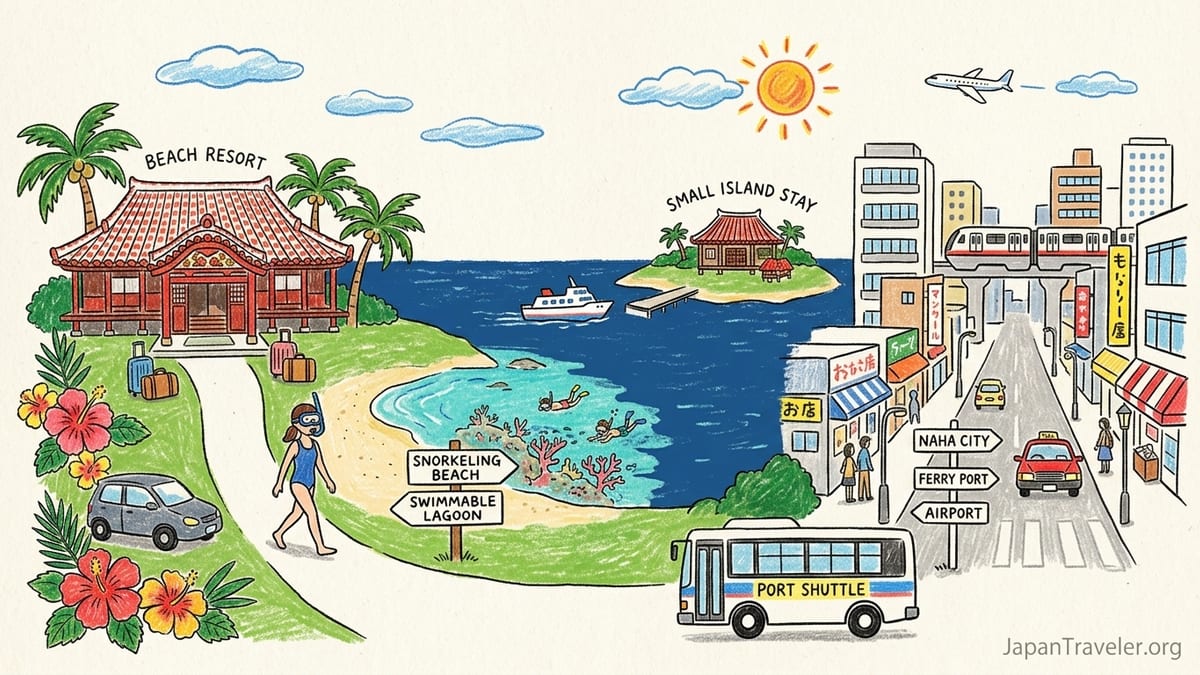
Before You Book: What “Beachfront” Really Means in the Ryukyus
In the Ryukyus, “beachfront” can mean three very different things: true walk-out sand with a swimmable lagoon, a rocky shoreline with dramatic ocean views, or a protected bay where the water is beautiful but swimming is limited by boat traffic or local rules. You should treat the word as a marketing label until you confirm the exact shoreline in front of the hotel and whether it’s practical for casual swimming.
Also, even at a resort, you may still need a car. On larger islands, a resort can be perfectly positioned for a quiet pool day but inconvenient for dinner off-property, sunset points, or grocery runs. On smaller islands, you may not need a car at all, but you will need to sync your arrival and departure with flights, ferries, and any included hotel shuttles.
Finally, note that Okinawa has announced a new accommodation tax effective February 1, 2027. If your trip is after that date, recheck the final tax details when you book, especially if you are comparing package rates, points bookings, or prepaid deals.
Best Beach Resort: Halekulani Okinawa (Research-Only)
If your goal is to minimize friction and maximize resort time, Halekulani Okinawa is one of the most structured “everything in one place” options on the main island’s resort coast. The property describes two main accommodation areas, including a Beach Front Wing and a Sunset Wing, with a large overall inventory that reads more like a full resort campus than a boutique hideaway.
Room sizing is a practical strength here. The hotel’s own fact sheet indicates guest rooms extend to at least 538 square feet, which is a meaningful difference in a region where standard resort rooms can be tighter than travelers expect. Higher categories scale up substantially, including suites and villas, and some villa categories are listed with private pools and natural hot spring baths. If you are sensitive to humidity, it’s smart to verify in advance what in-room systems are provided beyond standard air-conditioning, such as dehumidification or humidifying air purifiers, because comfort can swing dramatically season to season.
For trip planning, the key question is whether “beachfront” equals easy swimming. Halekulani positions some rooms as ocean front and explicitly places the Ocean Terrace Suite in the Beach Front Wing. That signals direct proximity to the shore, but swimmability is still something you should confirm based on the exact beach conditions during your travel window. If you want snorkeling straight off the sand, ask whether coral access is realistically reachable from shore or whether you should plan a short drive to a known swim area instead.
Car necessity: likely yes if you want freedom beyond the property. The resort coast is designed for hotel-to-hotel movement, but dining variety, sightseeing, and spontaneous beach hopping are much easier with a rental. Parking availability, any daily fee, and valet policies should be confirmed at booking. Also ask about late-night atmosphere. Big resorts can feel calm and self-contained after dark, which is ideal for some travelers and isolating for others.
Best Urban Base: Naha City Hotels for Food, Transit, And Late Nights
Naha is where the Ryukyus behave like a real city: quick meals, convenience stores, bars, and the kind of “let’s go out for one more bowl of soba” spontaneity that is harder to pull off from a resort strip. If your itinerary includes multiple islands, an urban base can reduce logistics fatigue, especially around early flights or ferry connections.
Hotel Collective is a research-only pick worth shortlisting if you want a modern room size by Japanese city standards. The hotel’s room information highlights a 30-square-meter superior twin, and third-party booking listings for breakfast plans describe a clear breakfast window and in-room amenities that are useful in humid climates, including a humidifying air purifier. Those details matter in Naha because you may come back drenched from a summer downpour and want your room to recover quickly.
Hyatt Regency Naha Okinawa is another research-only candidate if you value a full-service international-brand base. Hyatt’s room materials reference club-floor breakfast in the lounge, and suites listed at 56 square meters. For many travelers, that combination translates to a smoother morning routine, especially if you are stepping out early for a day trip and want breakfast handled without hunting down a café.
Car necessity: often no in Naha itself, depending on your plans. If you’re staying primarily for food, shopping streets, and city exploration, you can rely on taxis or transit and rent a car only for a day trip. Parking is still relevant, though. If you plan to pick up a car at the airport and keep it, confirm on-site parking availability and nightly cost. After dark, Naha generally feels more active than resort areas, which is a plus if you dislike quiet nights or want flexible dining.
Best Small-Island Stay: HOSHINOYA Taketomi Island (Research-Only)
For travelers who want to feel like they’ve left the “main Okinawa” circuit behind, Taketomi Island offers a small-island rhythm that’s hard to replicate on bigger islands. HOSHINOYA Taketomi Island is frequently positioned as a high-comfort way to experience that slower pace without giving up resort-level service.
One of the biggest practical advantages here is transfer clarity. The official property information states the hotel bus runs between Taketomi Port and the resort aligned with the ferry schedule. That is a big deal on a small island, because if you land at the port and then have to improvise a ride with luggage, the charm can wear off fast.
Car necessity: generally not. This is the rare Ryukyu “resort stay” where a rental car can be more burden than benefit. Instead, your real planning variables are ferry timing, how you’ll get dinner, and what you want to do after dark. Many travelers love small islands in daylight and then realize the island gets very quiet at night. You should ask the property what dining options are open nightly, whether reservations are essential, and whether you will feel effectively “on property” after sunset.
Beachfront and snorkeling reality check: Taketomi is about atmosphere as much as water access. Even if a property is relatively close to the coastline, coral access and safe snorkeling conditions can vary by beach and season. If snorkeling is your priority, confirm whether the hotel arranges guided trips or recommends specific shore entries and safety rules, and be honest with yourself about whether you are comfortable planning around weather and tides.
Best Snorkeling Or Diving Property: Club Med Kabira Ishigaki (Research-Only)
If your version of a perfect trip is “wake up, grab gear, get in the water,” Club Med Kabira Ishigaki stands out as a research-only candidate because it directly promotes snorkeling from the beach within a designated safety zone. That kind of explicit statement is useful in the Ryukyus, where some beaches are visually stunning but not practical for coral viewing from shore.
Snorkeling is not just about coral. It’s also about entry conditions and how quickly you can reach marine life without a boat. Club Med’s own messaging emphasizes that marine life can be found just meters from shore in the designated area, which suggests this property is built for casual, repeatable water time rather than “one big snorkel excursion” and then back to the pool.
From an amenities standpoint, the all-inclusive model can reduce decision fatigue: meals on property, activities included, and less pressure to rent a car just to find dinner. Restaurant availability is part of the core offering, and the property also promotes a wide range of sports and fitness activities. For families or groups with mixed priorities, that breadth matters because not everyone wants to snorkel for four hours.
Two cautions to research carefully before booking: first, what “beach access” means in practice for swimming. Ishigaki has bays where water is clear but swimming can be restricted in certain areas. Second, how the resort feels after dark. A self-contained all-inclusive can be wonderfully easy, but it can also feel isolated if you’re the type of traveler who wants to pop out for a late-night bar, ramen, or a casual walk through town.
Best Family Resort Versus Best Romantic Stay (And Why They’re Often Different)
The Ryukyus reward matching the property to the trip mood. A family-focused stay is about predictability: easy breakfasts, a pool schedule that fits nap time, and dinners that don’t require complex transportation. A romantic stay is often the opposite: fewer crowds, quieter corridors, and evenings that feel special without leaving the property.
For a family-leaning research-only pick, Club Med Kabira Ishigaki deserves a look because it explicitly supports a wide range of included activities and advertises snorkeling from the beach within a safety zone. For families traveling with teens, the “what are we doing today?” question can be answered without arranging daily tours. Confirm room configurations, bed types, and whether bathrooms are separated into wet and dry areas, which can be a real quality-of-life upgrade when multiple people are getting ready at once.
For romance, Halekulani Okinawa is a research-only contender because it leans into high-end room sizes and suite and villa categories, including options described with private pools and natural hot spring baths. That said, romance isn’t just about amenities. Ask whether the resort has enough restaurant variety for multiple nights and whether it feels lively or sleepy after dark. Some couples love a quiet property where the day ends at the bar. Others want at least one walkable alternative for dinner.
Humidity control and air-conditioning deserve a specific callout for both categories. In the Ryukyus, you’re not just cooling down. You’re drying out swimsuits, keeping cameras from fogging, and trying to sleep comfortably in a climate where the air can feel heavy. Before booking, check whether rooms include systems like air purifiers with dehumidification or other humidity-control support, and confirm whether the bathroom ventilation is strong enough to avoid a damp-room feel.
Best Value Versus Best Splurge: How To Decide Without Regretting It
In the Ryukyus, “value” is not always the lowest nightly rate. Value can mean a city hotel that eliminates car rental costs, a beach resort that reduces paid excursions, or an all-inclusive that makes your on-island spending more predictable. “Splurge,” meanwhile, is only worth it if it removes friction you’d otherwise fight all week, such as long drives for food, crowded public beaches, or rooms that never quite dry out.
For value, Naha-based hotels can win because they let you skip a car for several days. Hotel Collective’s research-only room sizing at 30 square meters, plus commonly bundled breakfast plans, fits a traveler who wants comfort without paying resort premiums. If your itinerary includes day trips, the money you save on nightly rates can become your tour budget: a guided day to snorkeling beaches, a food crawl, or a private transfer when you’re tired.
For a splurge, Halekulani Okinawa is the clearest research-only example in this shortlist because of its published room sizes and suite and villa categories, including private-pool villa types. The practical “splurge test” is whether you’ll use the premium features. If you plan to spend most days driving to different beaches, the splurge may not land emotionally. If your dream is to stay put, take long breakfasts, and live in the pool and sea, a larger room and stronger resort facilities can genuinely improve the trip.
Regardless of category, demand clarity on basics: bed type, bathroom layout (separate toilet is a meaningful upgrade), air-conditioning performance, laundry options for wet gear, breakfast style and hours, pool hours, beach entry conditions, coral access, parking details, and transfer logistics. Also ask the unglamorous question: does the property feel isolated after dark, or are there walkable alternatives? That single detail often decides whether a “beautiful resort” feels relaxing or confining.
The Takeaway
The most “trip-improving” stay in the Ryukyus is the one that reduces the kind of friction you personally hate: long drives for dinner, unpredictable beach access, damp rooms, or complicated transfers. Use Naha as your control center when you want variety and nightlife. Use a resort coast property when you want everything handled. Use a small island when you want the rhythm shift and are comfortable with quiet nights.
Because I did not complete genuine overnight stays for this reporting period, treat the properties above as research-only shortlists and verify the room configuration and on-the-ground realities before committing. Most booking regret in the Ryukyus comes from assumptions about “beachfront,” underestimating the need for a car, and realizing too late that a stunning location can feel isolated after sunset.
And if your trip falls on or after February 1, 2027, remember that Okinawa’s newly announced accommodation tax should be rechecked at booking, particularly for prepaid rates and packages where taxes may be handled differently.
FAQ
Q1. What does “Ryukyu Islands” include for travelers?
It commonly refers to Okinawa Prefecture’s island chain, including Okinawa Main Island, Miyakojima, Ishigaki, and smaller Yaeyama islands like Taketomi.
Q2. Is “beachfront” in Okinawa always swimmable?
No. Some beachfront properties face rocky coasts or have ocean views without an easy, sandy swim entry, so confirm the exact beach conditions in front of the hotel.
Q3. Which base is easiest if I’m island-hopping?
Naha is often the simplest logistics base for flights and connections, especially if you want restaurants and convenience without relying on a resort schedule.
Q4. Do I need a rental car if I stay at a resort in Okinawa?
Often yes if you plan to explore beyond the property. Resorts can be self-contained, but dinner variety and sightseeing are much easier with a car on larger islands.
Q5. Can I snorkel from the beach at a resort?
Sometimes. For example, Club Med Kabira Ishigaki promotes snorkeling directly from its beach within a designated safety zone, but conditions still vary by weather and season.
Q6. What’s the big risk with small-island stays like Taketomi?
After-dark isolation. Dinner options can be limited and the island gets quiet early, so confirm on-property dining availability and ferry-aligned transfers.
Q7. What room details matter most in Okinawa’s humidity?
Strong air-conditioning, helpful humidity control, good bathroom ventilation, and laundry access for swimsuits and rash guards can impact comfort more than décor.
Q8. Is breakfast worth adding at Okinawa hotels?
Often yes, especially at resorts or on islands where morning café options are limited. Also check hours if you have early tours or flights.
Q9. Are pools a must in the Ryukyus?
Not always, but pools become valuable during rough sea days, jellyfish seasons, or when you want a late-afternoon swim after sightseeing.
Q10. What should I know about Okinawa’s accommodation tax for 2027 trips?
Okinawa has announced a new accommodation tax effective February 1, 2027, so travelers should recheck the tax details when booking stays that occur after that date.