


I went to the Ryukyu Islands expecting one “best” island. What I found instead was a set of completely different trips hiding under the same prefectural umbrella: a culture-heavy base around Naha, reef-clear day trips minutes away, beach resorts built for doing almost nothing, and jungle islands where you can be wet, bitten, muddy, and ridiculously happy before lunch. This is not a catalogue of every inhabited island. It’s the small set of island groups I’d choose again because I genuinely spent nights there, and because each one delivered a specific kind of trip, with real trade-offs you should know before you book flights, ferries, and hotels.
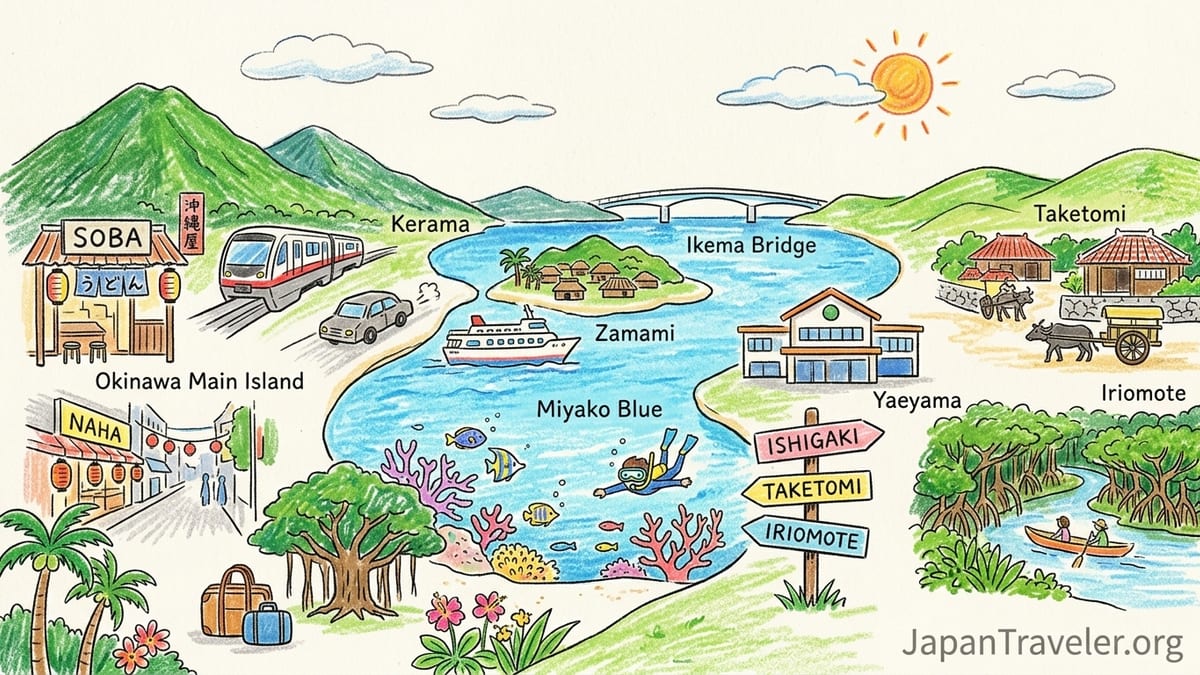
How I Chose: Not “Best Island,” But Best Trip Type
I’m picky about islands for one simple reason: two islands can look identical on Instagram and feel totally different at 10 p.m. when you want dinner, a drink, or a quiet walk, and you realize your last bus already left. So I’m choosing only the island groups where I actually stayed overnight and felt like I learned the rhythm of the place, not just the postcard angle.
My short list is built around what most travelers are really deciding between. Do you want culture and broad sightseeing with the easiest logistics and the deepest bench of restaurants? Do you want resort beaches and that specific “Miyako blue” water? Do you want marine life and a gateway that makes island hopping painless? Or are you looking for a short escape from Naha where the ocean is the whole point?
One more note before we get into my picks: this archipelago punishes under-planning and also rewards flexibility. Weather can change quickly, ferries can be sold out at peak times, and some islands feel amazing for two nights but start repeating themselves on night four unless you’re there for diving or pure downtime. I’ll tell you exactly how many nights I stayed in each place, what I could have cut, and what I wish I’d added.
Okinawa Main Island (Naha and the North): The Culture-and-Infrastructure Base
Nights I spent: 5. Did it feel sufficient? It felt like the minimum for a first trip if you want more than beaches. Okinawa Main Island is where I would start if you’re new to the Ryukyus, because it’s the easiest place to land, the easiest place to eat well without planning, and the place with the broadest mix of history, museums, neighborhoods, and day trips.
Ease of arrival is unbeatable: you fly into Naha, ride the monorail into town, and you can immediately do city things. On my first night, I did the kind of Okinawa dinner you can only do here with this much choice: Okinawan-style soba, followed by a second stop for awamori (the local spirit) in a compact bar where the owner actually wants to talk you through what you’re drinking. That’s the Main Island advantage: the food and drink scene is not just “available,” it’s varied enough to make every night different.
Car dependence is the big trade-off. In Naha itself, I didn’t need a car. But the moment I wanted the north, I did. This is where many first-timers get tripped up: the island is long, and the best “big sights” aren’t clustered. A day in the north is easy with a car, much harder if you’re relying on limited schedules. I went north for Ocean Expo Park and Okinawa Churaumi Aquarium, where the adult admission price is listed as 2,180 yen. That day worked because I could choose my timing, arrive early, and pair it with other stops rather than spending the whole day in transit.
Beaches and marine activities on the Main Island can be excellent, but they’re not the simple, walk-off-the-plane beach holiday that Miyako can be. I treated the Main Island as a “base plus day trips” island: cultural sightseeing and neighborhoods in the south and central area, then one or two big north days for scenery, beaches, and major attractions. Nightlife is strongest here, too. If you want a lively evening that isn’t just a resort hotel bar, this is the island group to pick.
Kerama Islands (Zamami Base): My Favorite Short Escape From Naha
Nights I spent: 2 on Zamami. Did it feel sufficient? Yes for a first taste, but I wanted a third night for a slower pace. The Kerama Islands are the cleanest, quickest “I need reef water now” answer when you’re based in Naha. You’re not committing to a whole separate flight and luggage shuffle. You go from Naha’s Tomari Port to the islands by boat, and suddenly the water color shifts into that unreal gradient travelers come here for.
Ease of arrival is straightforward but not effortless. You have to reach Tomari Port, keep an eye on sea conditions, and accept that schedules can change. I booked Zamami because it gave me a compact village base and beaches I could actually reach without turning the trip into a driving vacation. Once I arrived, I immediately felt why people do Kerama as a “reset”: it’s ocean-forward, walkable in the village core, and the day revolves around swims, snorkels, and sunsets.
Car dependence was low for the kind of trip I wanted. I walked, used short rides when needed, and focused on beaches and in-water time. Restaurant choice is limited compared with Naha, and that’s one of the trade-offs you should embrace. I had nights where dinner was more about what was open than what I was craving. If you’re the kind of traveler who wants endless dining options and late-night cafés, this isn’t that. Nightlife exists, but it’s small-scale and early.
Did it stay interesting after two or three days? For me, yes, because I’m happy repeating the same beach when the snorkeling is good. But if you need constant new “sights,” Kerama can start to feel like a beautiful loop: beach, lunch, beach, sunset, dinner. That is either the dream or the reason you should keep it as a two-night add-on to an Okinawa Main Island itinerary.
Miyako Islands (Miyakojima Base): The Beach-First, Resort-Ready Holiday
Nights I spent: 4 on Miyakojima. Did it feel sufficient? For me, 3 to 5 nights is the sweet spot depending on whether you’re diving or just beaching. Miyako delivered the most consistent, most “vacation-looking” beaches of my Ryukyu trip. This is where I’d send someone who says, “I want my main activity to be the ocean, and I want it to be easy.”
Arrival can be very easy if you time flights well. There are direct flights from Tokyo Haneda to Miyakojima on major carriers, and when you land, you’re close to beach time fast. One of the concrete reasons Miyako works is how quickly you can go from airport to sand. Yonaha Maehama Beach is the headline for a reason: it’s described as a pristine seven-kilometer stretch, and on the ground it feels like a long runway of pale sand and shallow, clear water. I drove over and immediately understood why people build an entire trip around a single shoreline here.
Car dependence is high if you want freedom. You can technically stitch things together with taxis and limited transport, but my enjoyment jumped the moment I had a car. Many of the beaches and viewpoints that make Miyako special are the kind you want to hit at different times of day, including late afternoon when the light softens. A car also solved the dinner problem: there are restaurants, but they’re spread out, and I didn’t want every meal to be whatever was nearest to my hotel.
Trade-offs and disappointments: Miyako is not where I’d go first for culture, museums, or layered city life. Even when I found local food I liked, the overall trip leaned resort and nature rather than “urban exploration.” Nightlife felt quiet unless you’re staying somewhere with its own scene. After two or three days, the island stayed interesting because I leaned into variety: one day purely beach, one day snorkeling, one day driving the coastline and hopping viewpoints, one day slowing down and letting the best beach simply be the best beach again. If you’re the kind of traveler who gets restless without new neighborhoods, you’ll either need a shorter stay or you’ll want to pair Miyako with a second island group.
Ishigaki Island: The Yaeyama Hub That Lets You Build Your Own Trip
Nights I spent: 3 on Ishigaki. Did it feel sufficient? It was enough to understand the island and still have time for outlying islands, but I would happily do 4 to 6 if I were using it as a diving base or doing more island hopping. Ishigaki is the island I’d choose when someone says, “I want variety, but I don’t want to keep changing hotels every night.” It’s developed enough to have real restaurant choice and a sense of town, but it’s also the jumping-off point for smaller islands that feel like a different planet.
Official tourism information describes Ishigaki as the main Yaeyama hub, and in practice you feel that immediately at the port. The Ishigaki Port Remote Island Terminal is where island hopping becomes simple rather than stressful, because so much inter-island travel routes through it. I stayed close enough that I could do an early ferry without turning it into a dawn marathon, which is the kind of small logistical decision that makes island hopping feel fun instead of punishing.
Car dependence on Ishigaki depends on what you value. In town, I could walk to plenty of meals and convenience stores. But for beaches and scenic drives, I preferred having a car. What I liked most was the “choose your own energy level” structure: I could spend a morning swimming and still be back in town for a proper dinner, or I could make a full day out of a drive and a beach stop without losing access to good food at night.
Trade-offs: Ishigaki is a gateway, and that can mean you’re tempted to treat it like a place you sleep and leave. I think that’s a mistake. The island has enough going on to deserve its own time, especially if you care about dinner options, casual nightlife, and not being trapped in a resort bubble. The disappointment, if you’re expecting a tiny quiet island, is that Ishigaki can feel busy around the port area. If you want the quiet village feeling, you’ll use Ishigaki as your logistics base and get that calm from day trips or a couple nights on a smaller neighbor.
Yaeyama Outliers From Ishigaki: Taketomi for Culture, Iriomote for Jungle
Nights I spent: 1 on Taketomi and 2 on Iriomote. Did it feel sufficient? Taketomi was perfect as one night, while Iriomote deserved at least two and could easily take three. This is the part of the archipelago where your trip can pivot from “island vacation” into something more textured. Ishigaki makes it possible because you can do these islands without complicated planning, and ferries are the normal way people move around here.
Taketomi delivered the “small Ryukyu village life” feeling I wanted, with an immediate contrast to Ishigaki’s busier port area. For a traveler, this is the classic short escape: you arrive, slow down, and the evening becomes quiet early. Restaurant choice was limited compared with Ishigaki, which is exactly why one night was enough for me. I didn’t need Taketomi to entertain me. I needed it to reset my pace and give me a different texture of Okinawa: low-key, traditional-feeling, and walkable. After two days, I suspect I would have started repeating myself unless I was intentionally seeking that repetition.
Iriomote was the opposite: bigger, wilder, and more activity-driven. The logistics are also more “real travel.” There are two main ports (Uehara and Ohara), and conditions can affect which routes run, so you have to be comfortable adapting. Iriomote is where I booked guided activities rather than trying to DIY everything, because the value is in getting into mangroves, jungle edges, and places you won’t reach casually. This is the island group choice when you want the trip to be about nature as an experience, not nature as scenery.
The trade-offs are worth saying plainly. On Iriomote, you don’t go for nightlife, and you don’t go for endless restaurant variety. You go because you want the day to be physical and green and wet. Beaches exist, but my strongest memories here were not “best beach ever.” They were the feeling of being somewhere that still resists easy tourism. After two or three days, Iriomote stayed interesting because the island has enough different nature experiences to keep the days distinct, but only if you plan at least one or two structured activities rather than assuming you’ll just show up and be entertained.
The Takeaway: How I’d Build Your Ryukyu Itinerary
If you want one island group and you want the easiest, broadest trip, I’d choose Okinawa Main Island and base yourself in or near Naha. You’ll get the deepest restaurant bench, the strongest nightlife, and the most variety in sightseeing. You can add a Kerama day trip or a two-night Kerama escape if your priority is reef water without extra flights.
If you want a beach-first holiday where the day’s biggest decision is which shade of blue you want, I’d choose the Miyako Islands with Miyakojima as the base, and I’d rent a car. Three to five nights is where it shines: long enough to settle into the rhythm, short enough that you don’t start wishing for city energy. Pair it with Okinawa Main Island if you want culture, shopping, and nightlife to bookend the beach days.
If you want variety and you like the idea of building a trip with day trips and a couple of smaller island stays, I’d choose Ishigaki as the base and use it the way it’s meant to be used: as the Yaeyama hub. Do three nights on Ishigaki minimum, then decide whether your add-on is Taketomi for village calm and culture texture, Iriomote for jungle and guided nature, or both for a balanced mini island-hop. That combination, more than any single “best island,” is what made the Ryukyus click for me.
FAQ
Q1. If I only have 4 nights total, which island group should I choose?
For the easiest, most varied trip, do all 4 nights on Okinawa Main Island with a Naha base and one north day. For pure beaches, do 4 nights on Miyakojima.
Q2. How many nights did you actually stay on each island group you recommend?
Okinawa Main Island: 5 nights. Zamami (Kerama): 2 nights. Miyakojima (Miyako Islands): 4 nights. Ishigaki: 3 nights. Taketomi: 1 night. Iriomote: 2 nights.
Q3. Which island group is best if I don’t want to rent a car?
Naha on Okinawa Main Island works best without a car. Zamami can also work well if you’re happy staying near the village and focusing on beaches and snorkeling.
Q4. Which island felt most worth it beyond two or three days?
Okinawa Main Island stayed interesting the longest because of neighborhoods, food variety, and big sightseeing. Ishigaki also held my attention because it doubles as an island-hopping base.
Q5. Which island should I pick for a resort-style beach holiday?
Miyakojima delivered the most consistent beach-first vacation feeling for me, especially around iconic stretches like Yonaha Maehama Beach.
Q6. What’s the best island group for snorkeling and clear water close to Naha?
The Kerama Islands are the quickest way to get reef-clear water from Naha, using boats from Tomari Port.
Q7. Is Ishigaki really the main hub for the Yaeyama Islands?
Yes. In practice, the Ishigaki Port Remote Island Terminal is the center of most inter-island ferry travel, which is why Ishigaki works so well as a base.
Q8. What disappointed you the most in the Ryukyus?
The main disappointments were logistical: needing a car more often than first-timers expect, and having fewer restaurant choices on smaller islands than I was sometimes craving.
Q9. If I want jungle and nature tours, which island should I prioritize?
Iriomote is the pick for a jungle-leaning trip. It’s where I felt guided nature activities made the biggest difference.
Q10. Can I combine Miyako and Yaeyama (Ishigaki) in one trip?
You can, but I’d only do it if you have enough time to justify two flight legs plus at least a few nights in each base. Otherwise, pick one group and go deeper rather than rushing.