

Tokyo can easily fill an entire itinerary, but some of Japan’s most rewarding experiences lie just beyond the capital. The wider Kanto region offers onsen towns with steaming streets, temple cities in the mountains, nostalgic Edo era streetscapes and modern harbor skylines. This guide compares the key destinations most travelers weigh up around Tokyo, and helps you decide where to go, for how long, and in what season.
How to Choose Your Kanto Side Trip
When you start looking at a map around Tokyo, it can feel like every second place is billed as a perfect day trip. In reality, each Kanto destination suits a different kind of traveler and a different amount of time. Hakone is ideal if you want hot springs with a chance of Mount Fuji views. Nikko excels for lavish UNESCO listed shrines and cool mountain air. Kamakura pairs history with easy walks and coastal breezes. Yokohama offers a soft landing into Japan’s second city and a relaxed waterfront. Kusatsu is for travelers who want to immerse themselves in onsen culture, not just try a bath once. Kawagoe gives you an Edo era town feel without leaving the Tokyo suburban rail network, while Chichibu and parts of Chiba and Ibaraki add mountains and quiet coastline when you want nature over neon.
A practical way to choose is to start from your priorities. If this is your first time in Japan and you only have one spare day from Tokyo, Hakone, Nikko or Kamakura are usually the strongest bets because they balance distinctive sights with relatively simple logistics. Hakone and Kamakura can work well at short notice. Nikko, Kusatsu and some coastal areas in Chiba or Ibaraki reward at least one night because travel times are longer and the appeal often lies in early mornings and evenings after the buses go home.
Transport costs also influence your choice. For example, a return trip to Hakone on the Odakyu Limited Express from Shinjuku plus a Hakone Freepass will usually run to several thousand yen per person, comparable to a Nikko excursion on Tobu Railway when you add a local pass. By contrast, a quick trip to Kawagoe on a private railway from Ikebukuro can be done for roughly the price of a Tokyo subway round trip and does not require reservations. Deciding what experience you want for the time and budget you have will help narrow your options fast.
Hakone: Onsen, Classic Fuji Views and Circular Sightseeing
Hakone is one of the most popular getaways from Tokyo for good reason. It sits within the Fuji Hakone Izu National Park and combines milky hot spring baths, museum hopping and open air scenery into a compact loop. Many visitors tackle the classic Hakone circuit in one day, riding the Odakyu train from Shinjuku, switching to the mountain railway, then continuing by cable car and ropeway over the Owakudani volcanic valley before cruising across Lake Ashi and returning by bus or boat. On a clear day the combination of lake, torii gate and Mount Fuji on the horizon can feel like the postcard version of Japan you have seen in guidebooks.
As a day trip, Hakone works best if you are comfortable with some time pressure. From central Tokyo to Hakone Yumoto station by Limited Express can take about 85 minutes one way, and the round trip plus the full sightseeing loop can keep you moving all day. Travelers who want to include a proper soak in an onsen often choose a facility near Hakone Yumoto or Gora that accepts day visitors, such as a public bathhouse or a ryokan bath open to non staying guests at set hours, and then build the rest of the itinerary around that reservation. This makes Hakone a realistic one day choice if your priority is to try a hot spring and see some scenery without committing to an overnight stay.
Hakone really comes into its own with at least one night in a ryokan. Staying near Gora or along the Hakone Tozan Railway means you can check in mid afternoon, change into yukata and move between indoor and outdoor baths before and after a traditional kaiseki dinner. If Mount Fuji views are high on your wish list, having two days gives you a better chance to catch a clear window of weather, since the mountain can disappear behind clouds for hours at a time. A two day stay also allows time for the Hakone Open Air Museum, the Pola Museum of Art or a relaxed walk on the old stone Tokaido highway section rather than racing from one transport mode to another.
Nikko: Heritage Shrines, Mountain Air and When to Stay Overnight
Nikko pairs some of Japan’s most elaborately decorated shrines and temples with a backdrop of cedar forests and mountains. Toshogu Shrine, where Tokugawa Ieyasu is enshrined, is the main draw with its intricately carved gates, bright lacquer and famous “see no evil, speak no evil, hear no evil” monkey carvings. Nearby, Futarasan Shrine and Rinnoji Temple round out a UNESCO listed group of religious sites strung along sloping stone paths and towering trees. The setting feels markedly different from Tokyo, especially on misty or snowy days when the forest absorbs much of the city noise and visual clutter.
Most visitors from Tokyo attempt Nikko as a day trip using Tobu Railway from Asakusa or JR lines from Ueno and Tokyo Station. The ride typically takes around two hours each way, so a same day visit means four hours on trains before you start walking through the shrine area or venturing into the Okunikko region. If your aim is to see Toshogu and a handful of neighboring sites, this is feasible, especially if you arrive on an early train and take a bus or walk directly from the station to the shrine complex. Local passes sold at the station often combine round trip bus fares to the World Heritage area, which can save money compared with paying for each ride separately.
However, Nikko becomes a different trip once you stay overnight. An evening walk through the town, or a soak in an onsen hotel in the higher Okunikko area near Lake Chuzenji, feels far removed from the day trip crowds. Autumn is a strong season for overnight stays because the surrounding mountains turn shades of red and gold and buses up the Irohazaka winding road can be crowded in the middle of the day. Sleeping in Nikko lets you visit popular viewpoints early or late, when the light is best and tour buses are fewer. It also gives you space to fit in a short hike to waterfalls like Kegon Falls or Ryuzu Falls, which can easily be sacrificed on a rushed day trip if trains run late or the weather turns.
Kamakura: Temples, Trails and the Pacific Coast
Kamakura sits about an hour south of Tokyo by local train and feels surprisingly relaxed for a city that once served as the political center of Japan. Today it is best known for its large outdoor Buddha statue at Kotokuin, atmospheric Zen temples such as Engakuji and Kenchoji, and gentle hiking trails that link temple districts through pockets of forest. Many visitors combine a temple walk with a stop at Hasedera temple for sea views and hydrangeas in June, then continue on to Yuigahama or Zaimokuza beach to watch locals surfing or families picnicking on the sand.
As a day trip, Kamakura is one of the most forgiving options from Tokyo. Trains from Tokyo and Shinagawa run frequently on the JR Yokosuka Line, and the Enoshima Electric Railway connects Kamakura with Enoshima Island and beachside stations, so you can adapt your plan on the fly depending on the weather and your energy levels. A typical day might look like arriving mid morning, walking from Kita Kamakura station through a chain of temples, stopping for soba near Tsurugaoka Hachimangu Shrine, then taking the Enoden line to Hase to see the Great Buddha and finish with sunset on the beach. Comfortable walking shoes are important, since temple steps and unpaved paths can add up to many kilometers over the course of the day.
An overnight stay in Kamakura makes the most sense for travelers who want quieter hours in the temple districts or who are treating Kamakura as a base for a beach break close to Tokyo. Small guesthouses and boutique hotels near the ocean offer a slower rhythm, with early morning strolls to the shoreline before day trippers arrive and café hopping in residential neighborhoods. Summer weekends see the beaches fill up and seaside bars open, while winter stays deliver clear skies and, on some days, distant views of Mount Fuji across Sagami Bay. Compared with destinations like Nikko or Hakone, Kamakura does not demand an overnight visit, but it can be justified if you value atmosphere over ticking boxes.
Yokohama: An Urban Waterfront Break from Tokyo
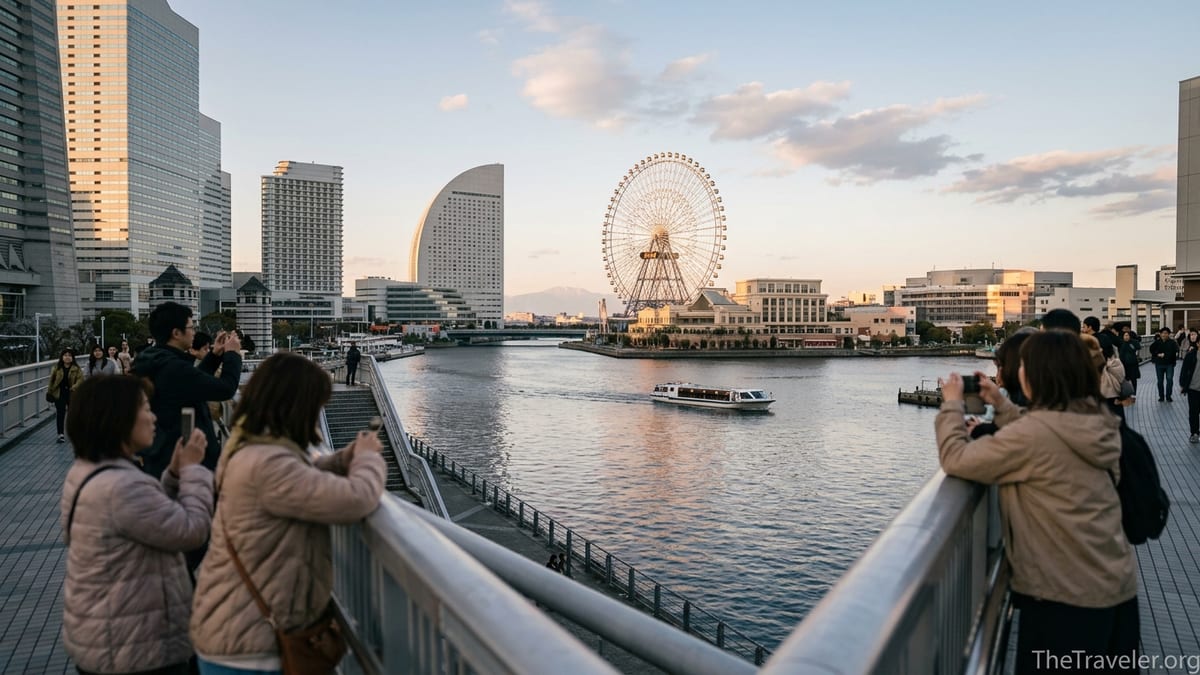
Yokohama often gets overlooked as “just another city” next to Tokyo, but its compact waterfront makes it a worthwhile change of scene. The Minato Mirai 21 district wraps around the harbor with a skyline marked by Landmark Tower, the Cosmo Clock 21 Ferris wheel and the sail-shaped Yokohama Grand InterContinental Hotel. At ground level you find wide promenades, shopping centers, an amusement park and pockets of green space like Rinko Park, where office workers and visitors eat convenience store lunches while looking over the bay. The nearby Yokohama Red Brick Warehouse repurposes old port buildings as an atmospheric shopping and event space, with seasonal markets and illuminations in winter.
From Tokyo, Yokohama is the easiest side trip on this list. You can reach Yokohama Station from Shibuya, Shinjuku or Tokyo Station in around half an hour or less on various JR and private lines, usually without any need for seat reservations. This turns the city into a low pressure half day or evening excursion. You can spend an afternoon strolling from Sakuragicho Station through Minato Mirai, ride the Ferris wheel, grab dinner in Japan’s largest Chinatown nearby, and be back at your Tokyo hotel before midnight. This makes Yokohama ideal for days when you have already checked out of your hotel but still have time before a late flight out of Haneda, since the rail link from Yokohama to the airport is straightforward.
Staying overnight in Yokohama is less about logistics and more about mood. Hotels in the harbor area often offer rooms with floor to ceiling windows looking over the bay, and rates can be competitive with central Tokyo, especially on weekdays. If you enjoy photography, booking a night lets you capture the skyline at blue hour and early morning when the light is soft and the promenades are almost empty. It also makes Yokohama a good base for travelers who want to explore both Tokyo and the Shonan coast, since commuter trains fan out from here in multiple directions.
Kusatsu: For a Dedicated Onsen Town Stay
Kusatsu in Gunma Prefecture is one of Japan’s most famous hot spring resorts and is best thought of as a destination for onsen immersion rather than a quick soak. At the center of town sits the Yubatake, a steaming hot spring field where mineral rich water gushes through wooden channels and cools slightly before it is piped to the surrounding baths. The streets around the Yubatake are lined with ryokan, small shops and public bathhouses, and the whole area smells faintly of sulfur, especially on cool evenings when steam hangs in the air. The town also stages traditional yumomi performances, where attendants stir the scalding water with long wooden planks while singing, to demonstrate old methods of cooling the springs to bathing temperature.
Reaching Kusatsu from Tokyo typically involves a combination of train and bus. Common options include riding the Hokuriku Shinkansen to Karuizawa then taking a highway bus to Kusatsu, or using a limited express train to Naganohara Kusatsuguchi followed by a local bus up into the mountains. These journeys usually take around three to four hours door to door even with good connections. That travel time makes Kusatsu marginal as a day trip and, in practice, most visitors report that attempting Kusatsu there and back in one day from Tokyo feels rushed, with little time to enjoy the baths or the town’s atmosphere.
For this reason Kusatsu is best approached as a one or two night stay. A typical pattern is to arrive in the early afternoon, drop bags at the ryokan and then wander around the Yubatake area, sampling a free public footbath or small municipal onsen before returning to the inn for dinner. The next day can include a visit to Sai no Kawara Park, where outdoor baths sit among rocks and forest, or a short hike in the surrounding highlands if the weather cooperates. Because many ryokan include both breakfast and a multi course dinner in the room rate, prices can look high compared with simple business hotels in Tokyo, but for travelers who want to experience Japan’s hot spring culture at its most concentrated, Kusatsu is one of the strongest choices in Kanto.
Kawagoe and Chichibu: Edo Streets and Mountain Seasons in Saitama
Kawagoe, often nicknamed “Little Edo,” offers a glimpse of a historical merchant town within easy reach of Tokyo. Its Kurazukuri Street is lined with thick walled storehouses rebuilt after a major fire in the late nineteenth century, which now house shops selling sweet potato snacks, pottery, soy sauce and local crafts. The Toki no Kane bell tower rises above the tiled roofs and still chimes the time, while nearby Taisho Roman Street adds later era architecture and cafés with retro interiors. On weekends you may see visitors strolling in rental kimono, browsing traditional confectionery along Candy Alley or queuing for soft serve ice cream flavored with purple sweet potato.
From Ikebukuro Station, Kawagoe is reachable in roughly thirty minutes on the Tobu Tojo Line or similar services, and the historic district lies a short bus ride or around a twenty minute walk from the main stations. This makes Kawagoe one of the most effortless half day trips from Tokyo. You can leave mid morning, spend three or four hours wandering the old streets, have a casual lunch at a local soba shop or café, and be back in the city by late afternoon. No special passes or reservations are usually needed, and the town is compact enough that you can improvise rather than follow a rigid itinerary.
Chichibu, farther into Saitama’s mountains, trades Edo townscapes for seasonal landscapes. In spring, Hitsujiyama Park above Chichibu City becomes famous for its shibazakura, or moss phlox, when hundreds of thousands of pink, white and purple flowers form patterns across the hillside, usually from mid April to early May. In autumn, the surrounding hillsides turn vivid from late October into November, and winter brings blankets of snow to nearby valleys. The town is also known for Chichibu Shrine and for local festivals, including a night festival with illuminated floats in early December that draws large crowds and gives the small city a surprisingly grand atmosphere.
Because Chichibu sits around 80 to 90 minutes by train from central Tokyo depending on the line and service you choose, it is still very manageable as a day trip. Many travelers catch a morning express train, spend midday at Hitsujiyama Park or walking through town, then return to Tokyo after an early dinner. An overnight stay becomes more appealing if you want to see a specific seasonal event, such as the night festival, or if you prefer slower travel that includes hiking in the nearby Nagatoro area and soaking in a small local onsen. In that case, staying in a simple ryokan or guesthouse lets you appreciate the quiet after the last trains have left and the hills have turned dark.
Chiba and Ibaraki: Coastal Air and Open Nature
Chiba and Ibaraki wrap around Tokyo on the Pacific side and offer a mix of sandy beaches, fishing ports, rice fields and low mountains that appeal to travelers seeking space and sea air more than famous temples or city skylines. In Chiba, areas along the Boso Peninsula such as Kujukuri Beach provide long stretches of sand popular with surfers, especially on weekends when people drive out from the capital. Small seaside towns offer simple minshuku style accommodation, where seafood dinners feature local sashimi and grilled fish. Meanwhile the interior holds spots like Nokogiriyama, where a ropeway carries visitors up to dramatic cliffside viewpoints and a large carved Buddha figure set into the rock.
Ibaraki, north of Chiba, is best known among travelers for seasonal flower displays and coastal scenery. Hitachi Seaside Park becomes a social media favorite in spring when its hills are covered in blue nemophila flowers, and again in autumn when red kochia bushes turn the slopes into rounded scarlet mounds. Along the coast, the Oarai area combines wide beaches with a seaside shrine whose torii gate stands on rocks facing the ocean, making sunrise particularly striking on clear days. Inland, Mount Tsukuba offers a relatively low and accessible peak with cable car and ropeway options, giving Kanto visitors an easy taste of mountain hiking without traveling deep into the Japan Alps.
Both prefectures are reachable by a mix of JR and private railway lines as well as highway buses from Tokyo and its airports, but travel times vary widely depending on where you go. A beach in western Chiba reachable by commuter rail might make sense for a spontaneous summer afternoon trip, while a journey to the tip of the Boso Peninsula or to Hitachi Seaside Park in Ibaraki can easily exceed two hours each way, especially on busy holiday weekends. These longer routes become more comfortable as one or two night escapes, especially if you are traveling with children or carrying surfboards or other bulky gear, since you avoid spending more time on trains than in the sea air you came for.
The Takeaway
Choosing the best place to visit in Kanto is less about finding a single “must see” and more about matching destinations to your time, budget and interests. If you want archetypal Mount Fuji scenery and are happy to keep moving, Hakone makes an efficient and memorable day trip that turns into a richer experience with one or two nights in a ryokan. For ornate shrines and cool mountain air, Nikko rewards at least an overnight stay so you can venture beyond the core temple area and avoid feeling rushed. Kamakura, with its combination of temples, trails and nearby beaches, is one of the easiest day trips and can stretch to a simple coastal break if you stay longer.
Urban minded travelers might reach first for Yokohama, whose harbor views and relaxed promenades sit just half an hour from Tokyo and work well even if you only have an afternoon free. Onsen enthusiasts will find Kusatsu one of the most satisfying places in Kanto to settle for two nights and live in yukata, moving from bath to bath in a town built entirely around hot water. Closer to Tokyo, Kawagoe adds historical character to a light schedule, while Chichibu, coastal Chiba and Ibaraki give you fresh air, flowers and open horizons when you want a slower pace.
In practice, many visitors combine two or three of these destinations across a ten day or two week itinerary, for example pairing a Hakone overnight with a Kamakura day trip and a half day in Kawagoe. Others build a repeat visit around a seasonal draw, such as autumn leaves in Nikko or spring flowers in Chichibu and Ibaraki. Whatever you choose, planning with realistic travel times and a clear sense of what each place is best for will help ensure your Kanto side trips feel like highlights in their own right, not just boxes ticked on the way back to Tokyo.
FAQ
Q1. Is Hakone better as a day trip or an overnight from Tokyo?
For a first visit, Hakone works as a long day trip if you want to ride the classic loop and visit a single onsen. However, staying one night in a ryokan lets you enjoy the baths without rushing, adds flexibility for Mount Fuji views in case of clouds and gives time for museums or short walks that are easy to skip when you are watching train schedules.
Q2. Can I see Nikko properly in one day from Tokyo?
You can visit Toshogu Shrine and a few nearby sites in one day if you leave early, but the four hours of round trip train travel limit how much you can see. If you want to explore the Okunikko area around Lake Chuzenji or include short hikes and waterfalls, plan at least one night in Nikko so you are not squeezing everything between train times.
Q3. How does Kamakura compare with Nikko for a short trip?
Kamakura is closer to Tokyo and has a gentler pace, with temples, small alleys and beaches instead of a single main shrine complex. It is ideal if you like walking and want a mix of culture and coast in one day. Nikko feels more like a dedicated heritage and nature excursion, with more travel time but also grander architecture and higher mountains.
Q4. Is Yokohama worth visiting if I am already staying in Tokyo?
Yes, especially if you enjoy waterfront cityscapes. Yokohama’s Minato Mirai area, Red Brick Warehouse and Chinatown offer a different urban feel to central Tokyo, and the trip takes about half an hour. It is easy to slot into an afternoon or evening, and the harbor views at sunset or after dark can be a highlight for photography and casual strolling.
Q5. Should I choose Hakone or Kusatsu for onsen?
Choose Hakone if you want to combine hot springs with a variety of transport experiences, museums and possible Mount Fuji views in a single region. Pick Kusatsu if your main goal is onsen culture itself and you can spare at least one night, as the entire town revolves around its hot spring field and public baths, making it more immersive but also more remote.
Q6. Is Kawagoe a good alternative if I cannot reach Kyoto?
Kawagoe will not replace Kyoto, but it does give a taste of older Japan with its preserved kurazukuri warehouses, bell tower and traditional sweets shops. It is particularly good if you want a historical atmosphere without the time and cost of a long distance trip, since it is only about thirty minutes from Tokyo and can be enjoyed in half a day.
Q7. When is the best time to visit Chichibu?
Chichibu is attractive year round, but the most popular times are mid April to early May for the shibazakura flower carpets at Hitsujiyama Park and late autumn for foliage in the surrounding hills. If you prefer festivals, early December brings the night festival with illuminated floats, which makes an overnight stay especially rewarding.
Q8. How do Chiba and Ibaraki compare for coastal scenery?
Chiba’s Boso Peninsula offers long surf friendly beaches and small fishing towns, while Ibaraki combines beaches with seasonal flower parks and coastal shrines. Chiba can feel more like a casual sea break with local seafood and waves, whereas Ibaraki often appeals to travelers planning around specific seasonal displays like nemophila or kochia.
Q9. Which of these destinations are easiest to visit spontaneously?
For spur of the moment trips, Yokohama, Kamakura and Kawagoe are the simplest because they use frequent commuter trains and do not usually require reservations. Hakone, Nikko, Chichibu, Kusatsu and more distant parts of Chiba and Ibaraki benefit from checking timetables in advance, especially for limited express trains and buses.
Q10. If I only have two free days from Tokyo, what combination works best?
A balanced two day pairing is Hakone plus Kamakura or Hakone plus Yokohama, giving you one day centered on onsen and Fuji views and another on coastal temples or an easy harbor city walk. Alternatively, you could spend one night in Nikko for heritage and mountain scenery, then use the second free day for a lighter outing to Kawagoe or Yokohama before returning to Tokyo.