


I used to think “best time to visit the Ryukyu Islands” was a simple answer: show up when it’s hot, swim, eat, repeat. Then the weather started rewriting my itineraries. On my trips through Okinawa’s main island and the Kerama Islands, it wasn’t the averages that mattered. It was the day the humidity turned my camera lens into a fogged-up blur, the morning a ferry schedule quietly changed because the swell didn’t care about my hotel checkout time, and the afternoon a sudden rain band flattened beach plans but made a museum day feel like a lucky save. What follows is not a month-by-month climate chart. It’s the real way rain, heat, wind, typhoons and sea conditions changed what I could do, where I could get to, and whether the beaches stayed enjoyable.
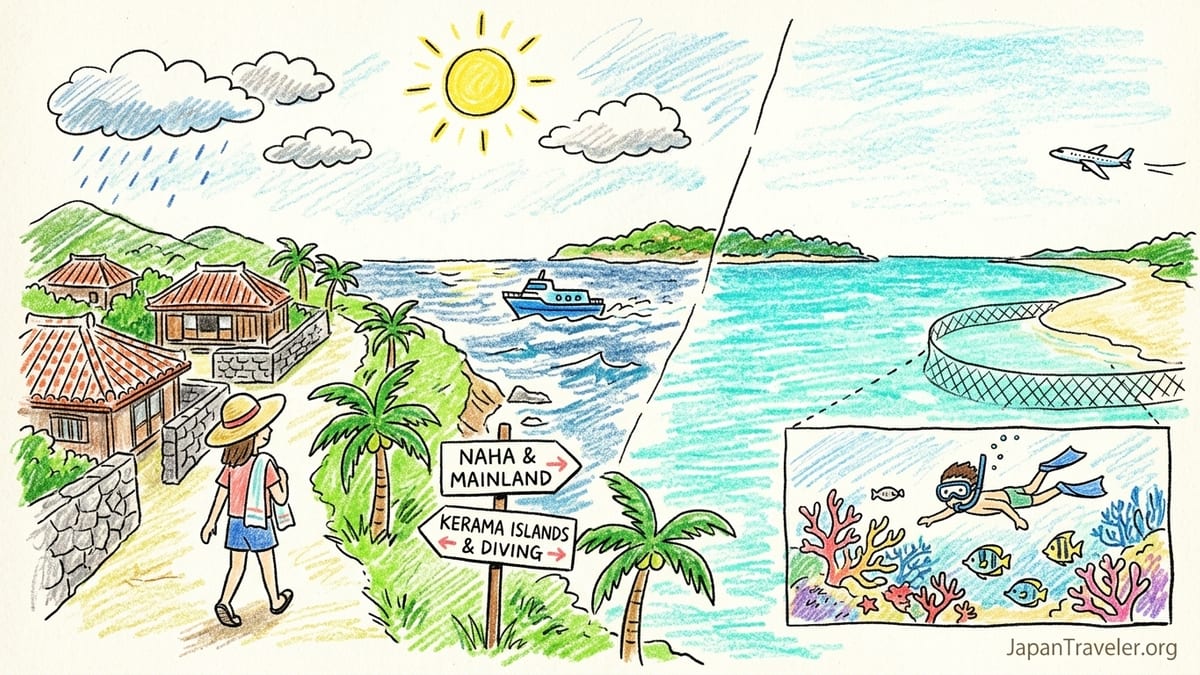
What “Best Time” Means In The Ryukyus (And Why I Stopped Trying To Pick One Month)
The Ryukyu Islands are a chain, not a single destination. Even when I based myself around Naha, the experience changed dramatically depending on whether I stayed on Okinawa’s main island, hopped to Tokashiki or Zamami in the Keramas, or planned day trips that depended on open water crossings. The “best time” depends on what you want most: beach swimming, diving and snorkeling, whale watching, culture and food, or island hopping that relies on flights and ferries staying on time.
I learned quickly that Okinawa’s official seasonal signposts are useful, but they don’t predict how a specific trip feels. Official guidance in Okinawa frames the rainy season as roughly early or mid-May through late June, with typhoons possible from June through October and most common in August and September. Sea temperatures vary widely across the year, from roughly 21°C in February to nearly 30°C in August. Those baselines helped me pack and plan, but my actual “best time” call always came down to risk tolerance: how much schedule disruption I could absorb, and how much humidity I could enjoy without feeling like I was wearing the air.
One more honesty note before we get into it: I have personally traveled the Ryukyus in late spring and summer, including the rainy-season edge and peak-heat weeks. I have not personally visited during winter or during an actual typhoon impact window. Those winter and peak-typhoon sections below are clearly labeled as researched guidance, because the whole point of this story is that the weather details have to be lived, not copied from a chart.
Late Spring Into Early Rainy Season: When I Could Still Swim, But I Planned My Days Like A Chess Game
My most instructive trip started in late spring, when the air was already warm but the weather couldn’t decide what mood it wanted. I’d walk out of my hotel in Naha into sunshine, then get caught in a hard, quick shower that felt like someone had turned on a hose for ten minutes and then stopped. The heat wasn’t the brutal midsummer kind yet, but the humidity arrived early enough that I started carrying a small towel everywhere, not as a cute travel accessory but as survival gear.
This is the season where I stopped booking my days like a straight line. I’d schedule anything time-sensitive, like a reserved lunch or a dive boat check-in, earlier. Then I’d keep a flexible backup for the afternoon: a museum, a café crawl around Kokusai Dori, or a long sit-down meal where waiting out the rain didn’t feel like defeat. The surprise was that beach time could still be great. When the rain paused, the light could come back fast, and the water could look unreal again, especially if I moved away from busy roadside beaches and toward clearer-water areas like the Kerama day-trip routes.
Water visibility was the biggest variable for me in this shoulder season. After heavier rain, near-shore snorkeling on the main island could look slightly washed out, and the color changed from the postcard turquoise to a softer, milkier blue-green. It wasn’t always bad enough to cancel plans, but it did change the experience. When I wanted a “wow” snorkel day, I learned to prioritize spots known for clearer open-water conditions and to accept that a sudden rain band the night before might nudge me toward a cultural day instead.
Beaches remained enjoyable, but I adjusted how I used them. Instead of long, all-day beach sprawls, I treated the beach like a window. I would go for a two-hour swim and snorkel when the weather gave it to me, then get out before the wind picked up or the sky went slate-gray again. Late spring felt like the Ryukyus warming up, not fully stable, but still generous if I stayed nimble.
June’s Reality Check: When Rain Became The Main Character And My Plans Had To Shrink
I’ve had June days in Okinawa that were bright and beachable, and I’ve had June days where the rain dictated everything. In the wettest stretch, the experience wasn’t just “it rains more.” It was the feeling that the air stayed damp even indoors, and that stepping outside instantly made my clothes cling. Umbrellas were common, but I often saw locals opting for rain jackets or quick-dry layers that didn’t turn into heavy, soggy fabric after a downpour.
The most frustrating part was not getting wet. It was the way rain compressed the day. A rain band could make the beach unpleasant not because the water was unsafe, but because everything around it became inconvenient: wet sand that stuck to feet, wind that made towels useless, and cloudy skies that flattened the color of the sea. When I did swim in this kind of weather, the water itself could still feel warm and inviting, but the beach vibe was simply not the one I came for.
June also made me pay attention to what happens after rain. On days after heavier showers, I chose clearer-water excursions and avoided the temptation to “just snorkel anywhere.” In the Ryukyus, the water can be gorgeous, but it is also responsive to runoff, swell and wind direction. When I wanted better underwater visibility, I leaned on local operators and asked a simple question before committing: if we go today, will we actually see the color we came for, or is it a low-visibility day where the smarter move is tomorrow?
This is also where I started building my jellyfish precautions into the packing list even when I wasn’t sure I’d need them yet. Okinawa warnings frequently emphasize box jellyfish, known locally as habu kurage, with advisories commonly issued during the high-risk summer window and first-aid guidance that centers on vinegar. I didn’t treat that as a trivia fact. I treated it as a reason to stop assuming I could safely free-swim anywhere, anytime, without thinking about nets, beach management, or what was in my day bag.
July Through Early August: When The Sea Looked Unreal, The Heat Got Bossy, And Beach Days Were Back (With Caveats)
By midsummer, the Ryukyus delivered the version most travelers imagine: water that looks lit from underneath, long bright afternoons, and a sea that invites you in the moment you see it. On my hottest stretch, the biggest shift was psychological. I stopped “planning for the weather” and started planning around heat management. I learned to do anything active early, then build in shade breaks, convenience-store hydration runs, and a real lunch indoors where air conditioning wasn’t a luxury, it was a reset button.
The heat and humidity together changed how I packed. Breathable fabrics mattered more than style. I also started bringing a dry bag for beach days because sudden squalls still happened, and because nothing is more annoying than realizing your phone and ferry tickets are living in a wet backpack. The upside was that beach time became easy again. Even when it was too hot on the sand, the ocean felt like relief, and swimming stayed genuinely enjoyable rather than something I did just to say I did it.
Sea temperature in high summer made long water sessions realistic. I wasn’t sprinting in and out the way I do in cooler seas. I could snorkel longer, float longer, and actually relax. This is the time when I understood why many people chase the Ryukyus specifically for swimming and snorkeling, not just sightseeing. The water itself becomes part of the comfort plan, not an added activity.
But midsummer also came with two caveats I couldn’t ignore. First, the jellyfish conversation got real. Okinawa-area guidance commonly flags the June to September peak window for habu kurage risk, and I saw the practical side of it in beach infrastructure: nets at managed beaches, warning signage, and the way some locals and families favored rash guards and protective swimwear rather than minimal coverage. Second, the typhoon backdrop was always there. Even when skies were clear, I found myself checking forecasts more often because I knew a single system could scramble flights, ferries and visibility in a day.
Island Hopping In Practice: How Wind And Waves Changed My Ferry Days (Even Without A Typhoon)
If you are island hopping in the Ryukyus, you’re not just booking transportation. You are negotiating with the sea. I learned this most clearly on Kerama-style itineraries, where boats from Naha’s Tomari Port connect travelers to islands like Zamami and Tokashiki. On paper, it’s simple: pick your departure, arrive, check in, start island time. In reality, wind and wave conditions can force cancellations or schedule changes, and you might not know until close to departure.
On one trip, I planned a neat sequence: check out of my Naha hotel, store luggage, ride out to the port, catch a boat, arrive in time for a lunch reservation. The sea had other ideas. The day didn’t become a disaster, but it became a lesson. When boats run on a safety-first basis due to strong wind or high waves, “tight connections” stop being clever. They become stress. After that, I always built slack into ferry days: earlier departures, fewer fixed bookings, and a plan for what I would do in Naha if a boat didn’t go.
Even when the ferry ran, the crossing conditions affected the first half of my island day. A rougher ride meant more travelers arriving pale and quiet, and it made me grateful I hadn’t scheduled anything intense immediately after arrival. I also noticed how much a choppy day impacts water time: if the wind is up, even a beautiful beach can feel less swimmable, especially for relaxed snorkeling where you want calm surface conditions and clear visibility.
Beaches could still be enjoyable on windy days, but the enjoyment shifted. I would choose more sheltered coves and spend more time walking viewpoints or photographing color changes rather than committing to long snorkels. The main point is that island hopping is not only about choosing the right season. It’s about choosing an itinerary that survives a weather pivot without falling apart.
Typhoon Season And Winter: Researched Guidance I Would Use If I Went Again (Not Personal Experience)
I have not personally visited the Ryukyus during a typhoon impact period or in mid-winter, so I won’t pretend I have a “this is what happened to my flight” story from those months. What I can do is tell you how I would plan based on official Okinawa guidance and the practical realities that ferry operators and local authorities state clearly: typhoons can occur from June through October and are most common in August and September, and Okinawa sits in a region where storms can bring prolonged wind and rain that disrupt transportation and marine activities.
If I were booking a trip in August or September for beaches and diving, I would treat trip insurance, flexible hotel policies, and buffer days as part of the budget, not optional add-ons. I would also avoid a multi-island itinerary that requires back-to-back ferry transfers with no slack. If the point of your trip is island hopping, the best “typhoon-season strategy” is structural: pick one island as a base and do day trips only when conditions allow, rather than committing to a chain of nonrefundable moves.
For winter, the big draw is whale watching. Multiple Okinawa tourism sources frame humpback whale season around late December into April, with January through March commonly highlighted as prime viewing around the Kerama Islands. If I went in winter, I’d build the trip around that, and I’d also assume that cooler, windier conditions could make open-water crossings less comfortable and sometimes less reliable. I would pack a windbreaker, accept that beach lounging might be limited, and focus on the specific winter wins: whales, clearer air, fewer crowds, and water activities that don’t require the beach to feel like summer.
Finally, I would treat “best time” as a menu rather than a verdict. For beach swimming and long snorkel sessions, I’d still favor the stable, hot stretch after the rainy season. For diving visibility, I’d talk to operators about recent rain and runoff patterns and choose sites accordingly. For culture, food and city wandering, I’d happily go in a shoulder season when the weather forces slower days that fit museums, markets and cafés. And for whale watching, I’d plan a winter trip specifically for that purpose rather than trying to make it a beach vacation too.
The Takeaway
The best time to visit the Ryukyu Islands depends on what you want the sea to do for you. On my late-spring and summer trips, the most enjoyable days weren’t always the hottest days, they were the days when weather risk matched my itinerary. Late spring gave me swimmable windows and fewer heat penalties, but demanded flexibility. June made rain the main character and forced backup plans. July and early August brought the sea color I came for and the easiest beach swimming, but added real heat stress and sharper jellyfish and typhoon awareness. And even without a storm, wind and waves could rewrite an island-hopping day, especially when ferries were involved.
If you’re coming primarily for beach swimming and snorkeling, prioritize stable summer conditions, then plan your beach time around managed areas, safety signage, and what the sea is actually doing that day. If you’re coming to dive, treat visibility as a moving target influenced by rain and swell, not a promise. If you’re coming for whales, build a winter trip around whale-watching season and accept that it’s a different style of Okinawa. And if your dream is hopping between islands, your best time is the one where you can afford a delay, because in the Ryukyus, the ocean always gets a vote.
FAQ
Q1. What months felt best for beach swimming on your trips?
On my trips in late spring and summer, the most consistently enjoyable beach swimming was in midsummer, when the sea stayed warm enough for long sessions and beach days were easy to plan.
Q2. Did the rainy season ruin your trip?
No, but it changed the rhythm. The problem was not getting wet, it was how rain and wind compressed the day and sometimes dulled beach conditions even when swimming was still possible.
Q3. What weather detail surprised you most in Okinawa?
How quickly conditions could flip. I had mornings that began bright and ended with sudden showers, and I learned to plan flexible afternoons and avoid overbooking.
Q4. How did humidity affect your day-to-day travel?
It affected everything from comfort to logistics. I carried a towel, planned indoor breaks, and prioritized breathable clothes because the air could feel heavy even when temperatures were not at peak.
Q5. Did you notice changes in water visibility after rain?
Yes. After heavier rain, near-shore snorkeling on the main island could look less clear, which pushed me toward clearer-water excursions or toward swapping the day for cultural plans.
Q6. What did you do for jellyfish precautions?
I treated it as a packing and beach-choice issue: protective swimwear when appropriate, attention to managed beaches with nets, and keeping vinegar-based first-aid guidance in mind rather than assuming it was a rare risk.
Q7. Are ferries between Okinawa’s main island and the Keramas reliable?
They can be reliable in good conditions, but operators explicitly note cancellations and schedule changes can happen due to strong wind and high waves. I now build buffer time and avoid tight connections on ferry days.
Q8. Is typhoon season a dealbreaker for visiting?
Not automatically, but it raises the risk of flight and ferry disruption and can quickly reduce beach and water time. If you go, plan with flexible bookings and avoid fragile, multi-hop itineraries.
Q9. When is whale watching best in Okinawa?
Researched guidance consistently points to winter into early spring, with many sources highlighting January through March as prime months around the Kerama Islands.
Q10. If you could redo your planning, what would you change?
I would stop treating beach days like all-day commitments. I’d schedule water time in the best weather windows, keep backup indoor plans ready, and build ferry and flight buffer time into every island hop.