


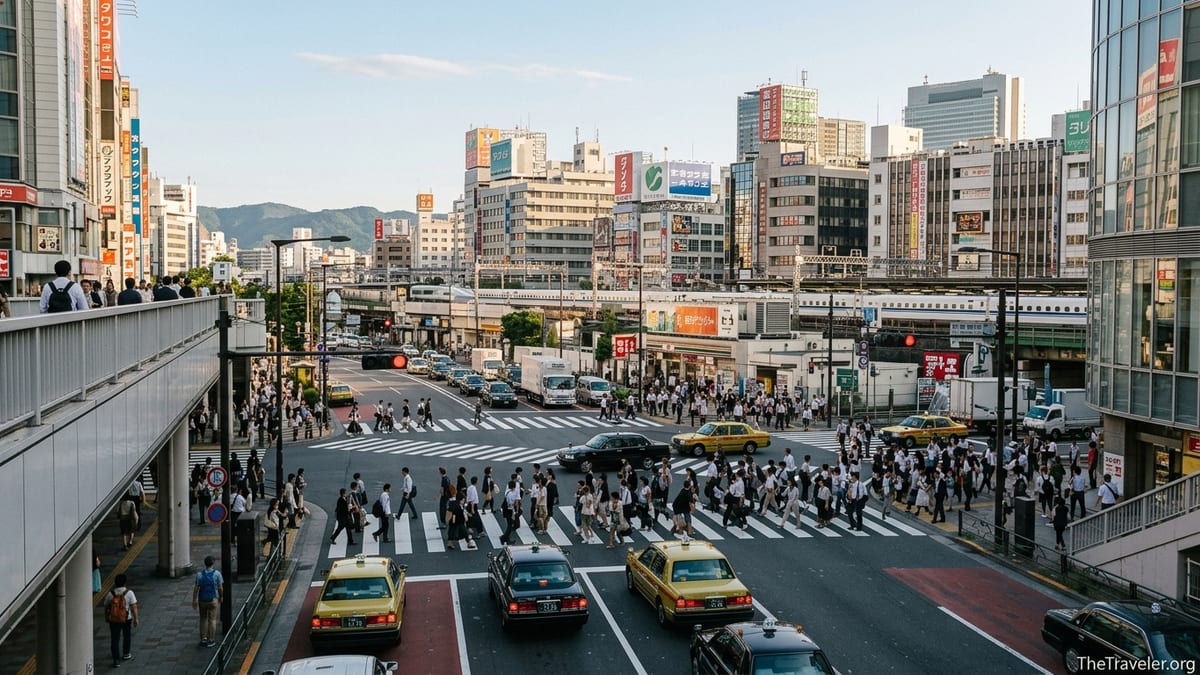
The Kanto region is where most first-time visitors to Japan land, and many never look beyond Tokyo’s neon streets and famous crossings. Yet within two hours of the capital you can soak in mountain hot springs, walk through cedar forests to UNESCO shrines, eat ramen on a harbor promenade, or watch waves crash against wild Pacific cliffs. Using Tokyo as your base, Kanto becomes an easy introduction to Japan’s balance of megacity energy and quiet, traditional landscapes.
Understanding Kanto and Using Tokyo as Your Hub
For most international travelers, Kanto begins at Tokyo’s airports and major train stations. Tokyo Station, Shinjuku, Shibuya, Ueno and Ikebukuro act as the main launchpads for regional trips, with Shinkansen bullet trains, private railways and highway buses fanning out across the region. You can sleep in Tokyo for most of your stay and still reach places like Nikko, Hakone or Kamakura as easy day trips, typically in 60 to 120 minutes each way.
Because Kanto’s rail network is dense, the key decision is not whether you can get somewhere but how you travel. Shinkansen and limited express trains cost more than local services, but they cut travel times dramatically. For example, the Tohoku Shinkansen from Tokyo to Utsunomiya for Nikko takes around 50 minutes before a short local transfer, while slower local trains can double that. Many visitors choose passes such as the JR Tokyo Wide Pass, which gives three consecutive days of unlimited travel on designated JR lines and some through-services to Nikko and other destinations, making longer day trips more affordable if you cluster them together.
Tokyo’s position in the middle of Kanto also means you can easily mix contrasting experiences. You might spend one day at museums in Ueno, the next soaking in Hakone’s hot springs under Mount Fuji, and another strolling the old warehouse streets of Kawagoe. Returning to the same Tokyo hotel each night keeps logistics simple, especially if you are not comfortable moving with large luggage on crowded trains. For farther-flung mountain onsen like Kusatsu, or for coastal stays on the Boso Peninsula, building in one or two overnight trips can slow the pace and reduce backtracking.
When planning, think in travel time rather than distance. A place that looks close on the map may still require multiple transfers. In contrast, somewhere slightly farther like Kusatsu Onsen can still be reached in around three and a half to four hours from Tokyo by a mix of express train and bus, which is reasonable for a one- or two-night escape. Understanding these patterns will help you decide which areas are realistic for your first Kanto itinerary.
Tokyo: Base Camp for Every Kind of Traveler
Tokyo itself deserves at least three full days on a first trip, and many travelers comfortably stay a week or more. The city’s different districts feel like separate destinations: Shibuya’s youth culture and famous crossing, Asakusa’s Sensoji Temple and traditional shopping streets, Odaiba’s futuristic bayside skyline, and Shinjuku’s mix of skyscrapers, alleyway bars and major transport interchange. Staying near a large station such as Shinjuku, Tokyo or Ueno keeps regional travel straightforward because many day-trip lines start or pass through them.
Accommodation in Tokyo ranges from simple business hotels with compact but efficient rooms to high-end international brands and traditional-style ryokan in quieter neighborhoods. First-time visitors often choose Shinjuku or Shibuya for nightlife and restaurant options, or Ueno for easier access to northern Kanto destinations like Nikko and Kusatsu. If you plan several JR-based day trips, choosing a hotel within walking distance of a major JR station can save both time and confusion when catching early trains.
Tokyo’s transport cards and passes work together with regional rail. Most visitors use a rechargeable IC card such as Suica or PASMO for city subways and buses, then buy separate tickets or passes for longer regional journeys. For example, on a Nikko day trip you might tap Suica to reach Tokyo Station or Asakusa, then use a separate limited express ticket for the long-distance segment. This flexibility allows you to keep one foot in Tokyo’s urban world while stepping out into the rest of Kanto whenever the mood strikes.
Because Tokyo is such a comprehensive hub, it is wise to sketch your regional excursions before you book hotels. If your priority is hot springs and mountains, you might cluster nights at a Shinjuku-area hotel for convenient access to Odakyu Line trains to Hakone and highway buses to Yamanashi or Nagano. If you are more interested in history, Ueno or Asakusa make it easy to reach Nikko, Kawagoe and the older districts of northeastern Tokyo itself. Aligning your base with your likely routes will make your days feel smoother and less rushed.
Onsen and Mountains: Hakone, Kusatsu and Chichibu
Hakone in Kanagawa Prefecture is one of the easiest introductions to Japanese hot springs and mountain scenery. From Shinjuku, the Odakyu Railway offers direct limited express services to Hakone-Yumoto in around 85 minutes, or slightly longer by regular express trains. Many travelers purchase a Hakone Freepass, which combines round-trip transport from Tokyo on Odakyu with unlimited use of local mountain transport such as the Hakone Tozan Railway, ropeways, cable cars and certain buses. Hakone works well as either a long day trip or a one-night stay, but staying in a ryokan with kaiseki dinner and private onsen often transforms the visit into a highlight.
Farther into the interior of Gunma Prefecture, Kusatsu Onsen is a classic hot spring town surrounded by higher mountains and forests. Reaching Kusatsu typically involves a JR limited express train from Ueno or Tokyo to Naganohara-Kusatsuguchi, taking roughly two and a quarter hours, followed by a local bus of about 25 minutes to Kusatsu Onsen Bus Terminal. There are also direct highway buses from Tokyo stations that take around four hours. Because of the travel time and the atmosphere of the town’s central Yubatake hot spring field at night, Kusatsu is best visited as a one- or two-night trip rather than a day outing.
Closer to Tokyo, the Chichibu area in western Saitama offers a softer mountain landscape with rivers, seasonal flowers and smaller onsen. From Ikebukuro, Seibu Railway’s limited express services reach Seibu-Chichibu Station in about 80 minutes, making it realistic as a day trip. Many visitors come for the Nagatoro River valley, where you can take traditional flat-bottomed boat rides in mild seasons, hike to viewpoints, or visit mossy shrines. In winter, the region hosts illuminated festivals, while in spring the Shibazakura (pink moss phlox) fields near Hitsujiyama Park provide a colorful change of pace from Tokyo’s dense streets.
When choosing between these mountain and onsen destinations, consider how much travel you want in a single day and whether you want a traditional ryokan stay. Hakone is ideal if you prefer a short journey, varied transport such as cable cars and pirate ships on Lake Ashi, and clear views of Mount Fuji on good days. Kusatsu is more about concentrated hot spring culture and a compact atmospheric town. Chichibu offers lighter hiking, river scenery and seasonal events. On a first Kanto trip, many travelers pair a Hakone overnight with a Chichibu or Nikko day trip rather than trying to cover every onsen town in one visit.
History and Culture: Nikko, Kamakura, Kawagoe and Yokohama
Nikko in Tochigi Prefecture is among Kanto’s most important cultural destinations, famous for Toshogu Shrine and its richly decorated buildings set in deep cedar forest. From Tokyo, travelers typically reach Nikko by a mix of JR and Tobu Railway trains in around two hours. One common route is taking the Tohoku Shinkansen from Tokyo or Ueno to Utsunomiya, then changing to a local JR Nikko Line train. Another is using Tobu Railway limited express services from Asakusa. Many visitors treat Nikko as a long day trip, but an overnight stay allows time to continue into the nearby Oku-Nikko area for waterfalls, marshlands and lakeside walks, which are particularly beautiful in autumn.
South of Tokyo, Kamakura in Kanagawa Prefecture offers a more compact historical landscape, combining Buddhist temples, shrines and coastal walks. From Tokyo Station or Shinjuku, JR lines reach Kamakura Station in roughly one hour. The city’s highlights include the Great Buddha at Kotoku-in, bamboo groves at Hokokuji Temple and the wooded avenue to Tsurugaoka Hachimangu Shrine. Because everything is concentrated, Kamakura is easy to enjoy as a day trip, and it pairs naturally with nearby Enoshima Island for sunset sea views before you ride the local Enoden railway back through town.
Kawagoe in Saitama Prefecture is often called “Little Edo” for its preserved warehouse streets and traditional merchant houses. It sits only about 30 minutes from Ikebukuro by Tobu Tojo Line or around the same time via JR and private lines, making it one of the fastest cultural day trips from Tokyo. Visitors stroll along Kurazukuri Street, listen to the city’s historic bell tower and try sweet potato snacks that are a local specialty. Unlike Nikko or Kamakura, Kawagoe’s draw is everyday Edo-era town life rather than grand temples, so it works well as a half-day visit combined with evening back in Tokyo.
Yokohama, Japan’s second-largest city, blends history with modern harbor life. From central Tokyo, JR lines reach Yokohama Station in about 25 minutes, and the Minato Mirai waterfront area with its red brick warehouses, amusement park rides and skyline views is just a short hop beyond. Yokohama’s Chinatown, cup noodle museum and many craft beer bars provide a relaxed contrast to Tokyo without requiring extensive planning. Because trains run late and frequently, you can treat Yokohama as an extended evening out or a flexible day trip focused on food, shopping and harbor views rather than formal sightseeing.
Coast, Flowers and Rural Escapes: Chiba, Ibaraki and the Boso Peninsula
While many visitors fly into Narita Airport and pass straight through Chiba Prefecture, the Boso Peninsula to the south is a worthwhile coastal escape. From Tokyo Station, limited express and local JR lines reach towns like Tateyama and Kamogawa typically within two to two and a half hours. Along the way you trade high-rises for rice fields and fishing ports. Once on the peninsula, you can visit cliffside temples overlooking the Pacific, stroll along sandy beaches, or sample seafood at local markets. An overnight stay at an oceanfront ryokan or simple minshuku allows time to explore at a slower pace and watch the sunrise over the water.
Ibaraki Prefecture, northeast of Tokyo, is known among domestic travelers for seasonal flower parks and coastal scenery. Hitachi Seaside Park, near Katsuta Station, becomes a sea of blue nemophila flowers in spring and fiery kochia bushes in autumn. From Tokyo, the JR Joban Line’s limited express services reach the area in around 80 to 90 minutes, making it a manageable day trip if you start early. Farther north, the Oarai coast offers rugged shorelines and beaches, while inland areas have quiet temples and shrines with far fewer crowds than Kamakura or Nikko.
Closer to Tokyo, parts of northern Chiba offer gentler rural landscapes and small towns that feel a world away from the capital. Local trains and buses connect farm stands, small temples and river valleys where you can cycle or walk without heavy traffic. While these areas are less famous internationally and information in English can be limited, they can be rewarding if you are comfortable improvising and traveling without a strict checklist of sights.
For first-time visitors, the main decision is whether to invest the time in reaching these coastal and rural zones. If your trip is short, you might prioritize more classic destinations like Hakone and Nikko. On a longer stay, adding a night on the Boso Peninsula or a day trip to Hitachi Seaside Park can balance your itinerary with open horizons, ocean air and seasonal blooms that you will not find inside Tokyo’s ring of expressways.
How Regional Trains and Passes Work in Kanto
Kanto’s rail network combines Japan Rail (JR) lines with numerous private railways such as Odakyu, Tobu, Seibu and Keikyu. On a practical level, this means you often use a mix of operators in a single day. For example, a traveler going from Shinjuku to Hakone might ride an Odakyu limited express the whole way, while someone heading to Nikko might start on JR from Tokyo, then continue on a JR or Tobu line. Ticket machines and station maps clearly mark which gates serve which companies, and IC cards usually work across most of them for base fares, but longer-distance discount passes tend to be issued by specific operators.
The JR Tokyo Wide Pass is one of the most useful options for first-time visitors focusing on Kanto. Valid for three consecutive days, it covers unlimited rides on eligible JR trains within a wide area around Tokyo, including some Shinkansen sectors and through-services onto private lines for destinations such as Nikko and certain mountain or onsen areas. Prices and precise coverage occasionally change, so it is wise to confirm details shortly before purchase, but the pass often pays off if you plan two or three longer round trips, for instance Tokyo to Nikko, a Shinkansen outing to a farther town, and a journey into the mountains within the same three-day window.
Private railways offer their own passes tailored to specific regions. The Hakone Freepass from Odakyu typically includes a round trip from Tokyo’s Shinjuku Station to Hakone, plus two or three days of unlimited use on designated local transport such as mountain trains, ropeways and sightseeing boats around Lake Ashi. Tobu Railway sells Nikko-themed passes that bundle rail and bus access around the shrines and further into Oku-Nikko. These passes are designed so you do not have to buy separate tickets every time you board a bus or cable car, which simplifies sightseeing on busy days when you might ride multiple short segments.
For shorter or more flexible trips, single tickets and IC cards may be more economical than a pass. A one-way limited express ticket from Tokyo to Kamakura or Yokohama costs relatively little compared with Shinkansen journeys, and you might only ride one long-distance train on a given day. Before buying any pass, sketch your likely routes and check approximate standard fares using station fare charts or official apps. If the sum of your planned individual tickets is close to the pass price, the pass can still be worthwhile for the convenience and flexibility it offers, especially if you decide on a side trip at the last minute.
Planning Day Trips vs Overnight Stays
When choosing between day trips and overnight stays, focus on both travel time and the character of the destination after dark. Places like Yokohama, Kamakura and Kawagoe are close enough that returning to Tokyo in the evening is straightforward and you will not miss much by leaving after dinner. Trains run frequently and late into the evening, and the main attractions are easily seen in daylight hours. In these cases, sleeping in Tokyo keeps your luggage in one place and maximizes flexibility.
Hakone sits in a middle category. The journey from Shinjuku is short enough for a full day of sightseeing, but the atmosphere of a hot spring ryokan, multi-course kaiseki dinner and early morning soak is hard to experience properly without staying overnight. Many visitors compromise by doing Hakone as a one-night loop: leaving Tokyo in the morning, riding the mountain railway and ropeways, arriving at their ryokan by late afternoon, then returning to Tokyo the following day after a relaxed breakfast and perhaps a short lakeside walk.
Destinations like Kusatsu Onsen, parts of the Boso Peninsula and deeper areas of Nikko and Oku-Nikko are best enjoyed with at least one night. Travel times of three to four hours each way mean that trying to visit and return in a single day would leave you rushing from station to bus to bath with little time to linger. An overnight stay also lets you experience evening townscapes, such as Kusatsu’s Yubatake steaming in the dark or small fishing ports on the peninsula settling into silence after the day’s catch is landed.
Season and weather also influence the balance between day trips and overnight stays. In peak autumn foliage around Nikko, for example, roads and buses can become crowded, lengthening travel times between the station and key viewpoints. Staying locally allows you to start earlier or explore quieter side trails while day trippers are still arriving. In winter, on the other hand, returning to a familiar Tokyo base each night may be more comfortable if you are not used to driving or walking in snow, with the exception of dedicated onsen stays where enjoying the cold air from a steaming hot bath is part of the appeal.
Choosing Your Kanto Experiences: City, History, Onsen, Mountains and Coast
Because Kanto is so varied, a useful way to design your first itinerary is to choose a few themes and match them with specific destinations. For high-energy city experiences, Tokyo and Yokohama provide more than enough neighborhoods, restaurants and shops to fill several days. You might spend a Tokyo morning in the electronics and anime stores of Akihabara, then ride to Yokohama’s Minato Mirai area for an afternoon harbor walk and dinner in Chinatown, returning to your Tokyo hotel by late evening.
If history and religion are your priorities, combining Nikko, Kamakura and Kawagoe gives a strong overview of shrines, temples and old townscapes. A typical pattern would be one full day for Nikko’s Toshogu shrine complex and forest setting, one day for Kamakura’s temples and coastal trail, and a half day for Kawagoe’s Edo-period warehouses and backstreets. Staying in Tokyo between these trips makes it easier to adjust your plans if weather changes or you simply want a slower day visiting museums in Ueno instead.
Travelers drawn to hot springs and mountains can blend Hakone, Chichibu and, time permitting, Kusatsu. A common first-time approach is to book a Hakone ryokan stay with private onsen, then make a separate day trip to Chichibu for river scenery and light hiking. Kusatsu is more suitable if you have an extra night to spare and are comfortable managing the train and bus transfer. Bringing a small overnight bag and leaving larger luggage at your Tokyo hotel or in station coin lockers keeps these excursions manageable even on a compact schedule.
For coastlines, flowers and open spaces, consider devoting at least a day to either Ibaraki’s flower parks and Pacific views or the Boso Peninsula’s beaches and fishing towns. Travelers visiting in spring may time their Ibaraki trip for nemophila blooms at Hitachi Seaside Park, while autumn visitors might prefer the peninsula’s milder climate and sea views after mountains around Nikko and Gunma grow colder. The key is not to attempt everything. Even on a 10-day Kanto-focused trip, selecting three or four major regional outings in addition to Tokyo will usually feel more satisfying than rushing through a longer checklist.
FAQ
Q1. Is it realistic to use Tokyo as a base for all my Kanto day trips?
Yes, for most popular spots like Nikko, Kamakura, Yokohama, Kawagoe, Chichibu and even Hakone, Tokyo works well as a base, since typical one-way journeys range from 30 to 120 minutes on frequent trains.
Q2. Which Kanto destinations really deserve an overnight stay instead of a day trip?
Hakone, Kusatsu Onsen, parts of Oku-Nikko and coastal areas on the Boso Peninsula are better with at least one night, as travel times are longer and evening onsen or seaside atmospheres are part of the experience.
Q3. Do I need a JR Tokyo Wide Pass or other rail pass for Kanto?
No, passes are optional. A JR Tokyo Wide Pass or regional private railway pass can save money if you plan several longer trips in three days, but for only one or two short day trips, single tickets and an IC card often cost less.
Q4. How far in advance should I book trains and ryokan in places like Hakone or Nikko?
For weekends and busy seasons such as cherry blossoms and autumn foliage, booking limited express seats and popular ryokan several weeks ahead is wise. On weekdays outside peak times, you often find availability closer to your travel date.
Q5. Is it difficult to manage transfers between trains and buses in rural Kanto areas?
Most major destinations like Hakone, Nikko and Kusatsu Onsen have clear signage and coordinated bus links from the station, though English information may be limited in smaller towns, so allowing extra transfer time and checking schedules in advance helps.
Q6. Can I visit both Nikko and Kamakura on the same day from Tokyo?
It is technically possible but not recommended, as each deserves most of a day to explore comfortably. Splitting them into separate days allows you to enjoy the temples and shrines without rushing between long train rides.
Q7. What is the best area of Tokyo to stay in for regional day trips?
Shinjuku is convenient for Hakone and western Kanto, Tokyo Station and Ueno are ideal for northern destinations like Nikko and Gunma, and Shibuya or Shinagawa give easy access south toward Yokohama and Kamakura.
Q8. Are there good onsen options near Tokyo if I do not want long travel times?
Yes, Hakone and the Chichibu area are both within roughly 90 minutes of central Tokyo by train, offering a range of day-use hot spring facilities and traditional ryokan without the longer journey required for Kusatsu.
Q9. Is renting a car recommended for exploring Kanto?
Most first-time visitors find trains and buses sufficient, especially for popular spots. Driving can be useful in rural parts of Chiba or Ibaraki, but navigating Japanese roads and parking rules adds complexity if you are unfamiliar with the country.
Q10. How many regional trips beyond Tokyo should I plan on a 7 to 10 day visit?
Planning three or four regional outings in addition to dedicated Tokyo days works well for most visitors, for example combining Hakone, Nikko, Kamakura or Yokohama, and one more destination such as Chichibu, Kawagoe or a coastal area.