


The first time I “did” the Japanese Alps, I made the classic mistake: I treated the Alps like a single destination, when it is really a long, complicated system of valleys, seasonal roads, bus-only corridors, and one-way crossings that quietly eat your days. I still saw jaw-dropping scenery, but I also spent more time than I expected dragging luggage to bus terminals, watching the clock for last departures, and arriving in lovely onsen towns too late to enjoy them. After traveling the region, this is how I’d divide 5, 7, or 10 days now, with enough margin for weather, fewer hotel changes, and at least one experience that feels like you actually crossed the mountains rather than just visiting viewpoints.
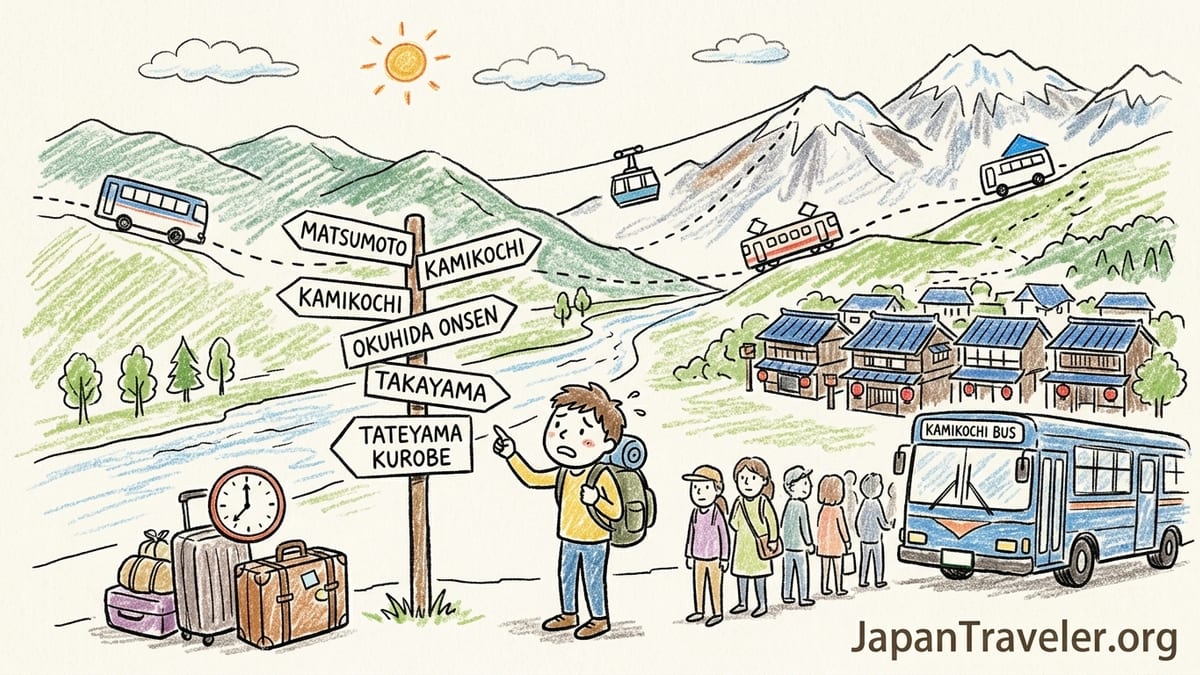
My Actual Route: The Bases, The Transfers, And What Got Tiring
My original plan tried to stitch together “everything famous” in one pass: Matsumoto as the first gateway, Kamikochi as the must-see valley, an onsen base in Okuhida, then Takayama for old-town evenings, plus a Tateyama Kurobe Alpine Route crossing as a headline day. On paper it was elegant. In practice, it meant too many bases for too few nights and too many transport segments that only run at certain seasons and certain hours.
The trip had four accommodation bases and more hotel changes than the scenery deserved. Every move day had the same rhythm: check out, find a coin locker or forward luggage, queue for a bus, transfer again, then arrive with just enough time to locate dinner. Even when buses were punctual, I felt like I was always budgeting mental energy for “What if I miss the last one?” rather than enjoying where I was.
The Japanese Alps reward slow mornings and flexible hiking decisions, but my first route punished both. Kamikochi is a place you want to linger with an early walk to Myojin Pond or a long riverside stroll toward Tokusawa, not a place you want to speed-run because your next bus is fixed. Tateyama Kurobe was similarly absorbing; even when you do it efficiently, the official one-way traverse from Tateyama Station to Ogizawa is commonly treated as a 6 to 7 hour commitment, before you add any time at Murodo or Kurobe Dam.
What I’d do differently now is simple: pick fewer bases, keep luggage light, and build one real “crossing” into the middle of the trip. If you are only allocating five to seven days, the most tiring choice is trying to include both a deep Southern Alps-style sequence and a Northern Alps crossing in the same short window.