

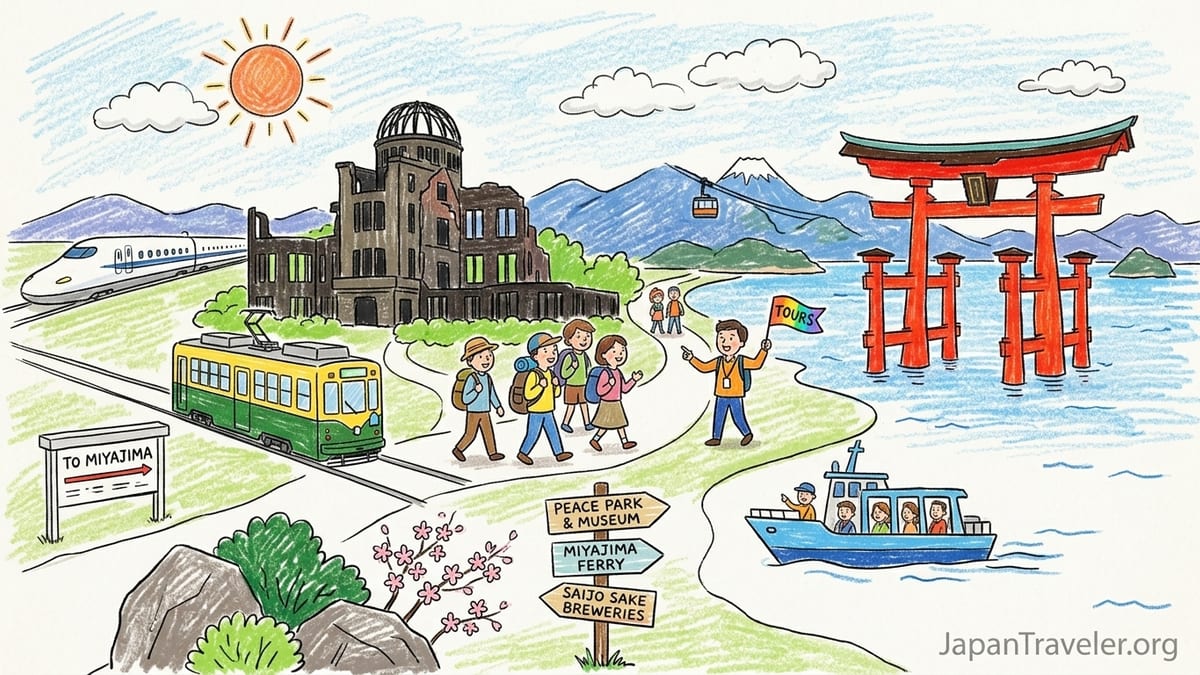
The Chugoku region on Japan’s main island of Honshu delivers some of the country’s most powerful contrasts: the solemn weight of Hiroshima’s Peace Memorial Park, the timeless beauty of Miyajima’s floating shrine gate, the quiet brewery streets of Saijo and the remote coasts and countryside of Shimane and Tottori. With growing numbers of organized tours and day trips, it has never been easier to experience this part of western Japan, yet choosing the right guided experience can make the difference between a rushed checklist and a genuinely meaningful journey.
Why Guided Tours Matter in Hiroshima and Western Japan
Hiroshima and the wider Chugoku region are places where context matters as much as scenery. Standing beneath the Atomic Bomb Dome, or in front of the vermilion torii gate of Itsukushima Shrine on Miyajima, is powerful on its own. Yet travelers consistently report that guided tours add depth, help navigate transport and timings, and create more personal connections with local people. This is especially true around Peace Memorial Park, where licensed guides and storytellers weave survivor testimonies and local history into what can otherwise feel like an overwhelming museum visit.
On a practical level, the region’s highlights are spread out. Miyajima requires a local train or tram plus a ferry, Saijo’s sake breweries sit in a small city east of Hiroshima, and rural Shimane and Tottori often involve infrequent trains or mountain roads. Many travelers are comfortable using the Japan Rail Pass or IC cards, but for first‑time visitors, a full‑day tour that includes reserved train seats, ferry tickets, and local transport can remove a lot of uncertainty. Typical full‑day Hiroshima and Miyajima tours bundle bullet train or local train travel, tram or bus connections, the Miyajima ferry and sometimes entrance fees into a single easy package.
Because demand for Hiroshima and Miyajima has grown, the marketplace now lists well over one hundred distinct Miyajima activities, from classic full‑day group tours to private photography walks and evening food tours. That variety means there is a tour for almost every style and budget, but it also means choosing carefully. The sections below focus on the experiences where a guide or organized transport genuinely adds value, rather than excursions you could easily replicate alone.
Hiroshima & Miyajima Full‑Day Tours: The Region’s Flagship Experience
The most popular way to see the region is a combined Hiroshima and Miyajima full‑day tour, usually around eight to ten hours. A typical itinerary starts mid‑morning at Hiroshima Station or a central hotel, then moves to Peace Memorial Park and the Atomic Bomb Dome, followed by lunch and an afternoon on Miyajima. Many group tours promise visits to the Peace Memorial Museum, Children’s Peace Monument and Cenotaph before heading out to Itsukushima Shrine by ferry. Travelers who prefer not to plan train and ferry times themselves often choose these packages for convenience.
On major platforms, full‑day group tours from Hiroshima that cover both Hiroshima and Miyajima commonly run in the range of 15,000 to 20,000 yen per person for a shared group, sometimes excluding lunch and museum admission. Private versions that include a dedicated English‑speaking guide, flexible pacing and hotel pickup frequently range upwards from around 40,000 to 70,000 yen for two to four people, depending on inclusions and season. Some tours marketed from Osaka or Kyoto bundle round‑trip shinkansen tickets with a local guide, pushing the price into the upper tens of thousands of yen per person but largely eliminating logistics.
When comparing options, look carefully at what transport and entrance fees are included. In some itineraries, the Miyajima ferry and local tram rides are covered, but the Peace Memorial Museum ticket is not. Others include every transport segment yet leave lunch open so you can choose local specialties like Hiroshima‑style okonomiyaki. If you already have a rail pass and feel comfortable navigating Japan’s trains, a locally departing tour that starts at Hiroshima Station tends to offer better value than one including long‑distance shinkansen. If you are nervous about transfers or traveling with children or older relatives, a fully inclusive package with hotel pickup and return may be worth the extra cost.
Peace Memorial Park & Museum Tours: Depth, Context and Sensitivity
For many visitors, Hiroshima’s Peace Memorial Park and Museum form the emotional core of their trip. Guided walking tours here typically last between two and four hours and focus on the Atomic Bomb Dome, the Cenotaph, the Children’s Peace Monument and the main museum. Recent visitor reviews often highlight the impact of guides who share family stories, explain the symbolism of monuments and answer difficult questions about the bombing and its aftermath.
There is a growing choice of small‑group and private walking tours around the park. A representative small‑group option might cost around 6,000 to 9,000 yen per person for a three to four hour walk, usually excluding the museum ticket but including an audio system so you can hear the guide clearly. Private experiences for couples or families tend to start somewhere above 15,000 yen per group, rising with the length of the tour and the guide’s experience. Some private guides in Hiroshima now advertise four‑hour “storytelling walks” that begin in a tranquil garden or at Hiroshima Castle to set the pre‑war scene before entering the park, which many guests find helps frame the museum visit.
Experienced guides also help manage the practical side of an emotionally heavy site. The Peace Memorial Museum can be crowded, especially in the middle of the day and during school trips. Guides often advise starting right at opening time or late in the afternoon, structure the order of exhibits, and suggest where to pause for reflection away from the busiest sections. When you compare tours, notice whether the provider specifies timed entry to the museum, group size limits and pacing. For travelers who prefer a quieter or more reflective visit, a private walking tour with the flexibility to stop, step outside or take breaks is often worth the premium.
Private Miyajima Guides: Shrines, Views and Local Flavor
Miyajima, officially Itsukushima, is one of Japan’s most photographed islands. Guided tours here range from simple half‑day walking visits to full‑day private explorations including hiking, photography and food stops. Many travelers still choose a combined Hiroshima and Miyajima day tour, but a growing number opt for a dedicated Miyajima guide to slow the pace and explore beyond the shrine and shopping street.
Typical private Miyajima walking tours last three to six hours and might include Itsukushima Shrine, Daisho‑in Temple, quiet backstreets, viewpoints over the Seto Inland Sea and time for oysters or momiji manju sweets. Pricing often starts around 20,000 to 30,000 yen for a half‑day private tour for two to four people, with full‑day options climbing higher if they include the ropeway up Mount Misen or extended hiking. Some guides offer tailored experiences such as early‑morning visits to catch low crowds around the torii gate, sunset photography walks or kid‑friendly itineraries that shorten shrine time and focus on animals, nature and casual food.
Given there are now roughly a hundred distinct Miyajima activities on major booking platforms, it helps to filter by what is genuinely hard to manage alone. For most visitors, navigating the JR train from Hiroshima and the ferry is straightforward, so tours that simply “escort” you without much commentary may feel unnecessary. Instead, look for guides who advertise in‑depth knowledge of local history, access to viewpoints away from the main paths or language support at small restaurants and shops. Small‑group tours with eight or fewer participants can be a good compromise between price and personal attention, while larger groups may feel rushed, particularly in peak seasons like autumn and spring.
Saijo Sake Brewery Tours: Tasting Local Culture
About 35 minutes by local train east of Hiroshima lies Saijo, one of Japan’s most respected sake brewing districts. The compact brewery area, often referred to as Sakagura‑dori or Sake Brewery Street, features multiple historic kura buildings with distinctive red‑brick chimneys, wells of pure spring water and tasting rooms. While it is possible to stroll the area self‑guided, English information can be limited, and individual breweries often have different rules for tastings and tours. Organized Saijo sake tours streamline the experience and open doors that a casual visitor might not even notice.
Recent offerings include short guided walks that visit two or three breweries, explain the basics of sake production and finish with tastings. A common format is an approximately 80 to 90 minute English‑guided tour visiting three named breweries with several tasting samples included, often priced in the low thousands of yen per person. More in‑depth half‑day experiences visit multiple breweries, local shrines associated with brewing and sometimes brew houses that are normally closed to the public. These premium tours can run in the mid‑thousands of yen range per person and usually require advance booking, particularly in high season or around the Saijo Sake Festival in autumn.
Group sizes matter in Saijo. Small groups allow guides to answer questions about brewing styles and regional differences and to adjust stops if a particular brewery is unexpectedly busy or closed. Some tours meet directly at Saijo Station, which works well for travelers staying in Hiroshima and taking the train out for a half day. Others bundle round‑trip transport from Hiroshima city or even include Saijo as part of a longer day trip that might also cover a coastal town or nearby historical district. Because alcohol is central to the experience, using an organized tour or at least public transport is strongly recommended rather than driving yourself.
Rural Shimane and Tottori: When Organized Transport Really Helps
Shimane and Tottori prefectures offer a more rural, slow‑travel side of western Japan, with highlights like the Izumo Taisha grand shrine, the castle town of Matsue, the Tottori Sand Dunes and less visited coastal and mountain villages. Public transport exists but is less frequent than around Hiroshima, and many scenic areas require buses with limited daily departures or long walks from small stations. This is exactly where guided excursions with organized transport add outsized value.
From Hiroshima or Okayama, some operators offer full‑day or overnight trips that include Izumo Taisha, Matsue Castle, or the Tottori Sand Dunes. These tours often use chartered minibuses or coaches, allowing them to link spots that would be awkward by train in a single day. Prices tend to be higher than standard city walking tours due to the distances involved and highway tolls, with full‑day group excursions often starting in the mid‑tens of thousands of yen per person and private versions costing more depending on party size.
Travelers based in Matsue or Yonago will also find local tour companies and licensed guides offering half‑day walking tours of castle towns, guided visits to samurai districts or seasonal experiences such as traditional crafts and rural homestays. In these areas, English availability is more limited than in Hiroshima, so organized tours can provide not just transport but essential language support. When booking, check whether entrance fees to major sights, such as Matsue Castle or the Adachi Museum of Art, are included or payable on the spot, and confirm pickup points because rural accommodations can be spread out.
Multi‑Day Western Japan Tours Including Hiroshima and Miyajima
For travelers with limited time who want a structured overview of western Japan, multi‑day tours that bundle Hiroshima, Miyajima and neighboring cities are increasingly common. Typical itineraries of three to five days might start in Osaka or Kyoto, then head by shinkansen to Hiroshima for the Peace Park and Museum, continue to Miyajima for an overnight stay, and finish with stops in Okayama, Kurashiki, or even onward into Kyushu. These packages often use a mix of bullet trains and chartered coaches and can appeal to those who prefer not to manage hotel reservations and luggage transfers on their own.
Price ranges vary widely, from mid‑range escorted group tours that include mid‑level hotels and some dinners, to higher‑end small‑group or private itineraries with boutique ryokan stays on Miyajima or in onsen towns. Multi‑day tours usually represent better value on a per‑day basis than booking separate single‑day excursions, particularly when they include a Japan Rail Pass or equivalent transport in the package. The trade‑off is flexibility: time in each destination is often fixed, with only a few hours allocated for the Peace Memorial Museum or for wandering Miyajima’s side streets.
When evaluating longer tours, pay attention to the balance between guided content and free time. Strong itineraries typically include a guided visit to Peace Memorial Park and the museum, a structured orientation walk on Miyajima, and at least one local cultural experience such as a sake tasting in Saijo or a visit to a rural town. Less compelling packages may simply transport you to Hiroshima, hand you museum tickets, and regroup later with minimal guidance. Reading recent reviews from other travelers is useful here, as they often mention how much time was actually spent at each key site and whether guides felt rushed.
Group vs Private Tours: Choosing What Works for You
Across Hiroshima, Miyajima, Saijo and the rural Chugoku region, travelers generally face a similar choice: join a shared group tour at a lower per‑person price or pay more for a private guide and custom pacing. Small‑group city walking tours, such as a three‑hour Peace Memorial Park walk or a half‑day Miyajima visit, can offer strong value if you are comfortable moving at a shared pace and sticking to a fixed schedule. In contrast, private tours are particularly attractive for families with children, travelers with mobility considerations, or those with a strong interest in specific topics like history, photography or food.
With group tours, check the advertised maximum group size and language arrangements. Experiences capped at around eight to ten people tend to feel more personal, while buses with dozens of participants can mean less individual interaction and more time spent on logistics. Group tours often meet at central points like Hiroshima Station or in front of the museum, so they may not include hotel pickup. Entrance fees and lunches are frequently additional, which keeps the sticker price lower but can surprise those expecting a fully all‑inclusive day.
Private tours generally include more flexibility in meeting points, with many guides offering pickup from city hotels, cruise ports or specific train platforms. They also allow for on‑the‑spot adjustments. If the Peace Memorial Museum is unexpectedly crowded, a private guide can choose to start outdoors and return later, or rearrange the order of Miyajima sights based on tide times or weather. The higher cost per person often drops when split among three or four travelers, making private options competitive with mid‑range group tours in some cases. As with any experience, the key is to read recent reviews, understand what is included and decide how much you value personalization versus price.
The Takeaway
The Chugoku region rewards travelers who look beyond the obvious and choose their guided experiences with care. Hiroshima and Miyajima deserve unhurried time and thoughtful context, whether you join a small‑group full‑day tour that handles all your train and ferry connections or invest in a private storytelling walk and dedicated Miyajima guide. Saijo’s sake breweries come alive when an expert explains local water sources and brewing traditions and helps navigate tastings, while rural Shimane and Tottori often become viable day trips only when someone else handles the driving and schedules.
In a landscape with dozens of Hiroshima and Miyajima tours and roughly a hundred ways to explore Miyajima alone, there is no single right choice. Instead, match the tour style to your priorities. If convenience and cost matter most, focus on well‑reviewed small‑group options that bundle key transport and highlight the Peace Memorial Park and Itsukushima Shrine. If you seek deeper understanding, flexibility or access to rural corners, lean toward private guides and curated multi‑day itineraries. With the right tour, western Japan’s stories, landscapes and flavors can feel both accessible and unforgettable.
FAQ
Q1. Is it worth booking a combined Hiroshima and Miyajima full‑day tour, or should I visit independently?
For confident travelers used to Japanese trains, visiting independently works well and can be cheaper, especially if you already have a rail pass. However, a combined full‑day tour is usually worth it if you want structured historical context in Peace Memorial Park, help with timing the museum and Miyajima visit in one day, or the convenience of bundled transport and guidance.
Q2. How much time do I need in Hiroshima Peace Memorial Park and Museum with a guide?
Most guided walks around the park and museum last between two and four hours. A common approach is about 60 to 90 minutes outdoors at the dome, monuments and cenotaph, followed by 60 to 90 minutes inside the museum. If you are particularly interested in history, plan additional free time after the tour to revisit exhibits at your own pace.
Q3. Are private Miyajima tours worth the higher cost?
Private Miyajima tours are especially worthwhile if you want to explore quieter backstreets and temples, are interested in photography or hiking, or are traveling with children or older relatives who may need a slower pace. Guides can adjust the route for tides, crowds and weather, and help with local restaurants, which many travelers find justifies the higher price compared with generic group tours.
Q4. Can I combine Saijo sake tasting with a Hiroshima or Miyajima visit in one day?
Yes, it is possible but requires careful planning. Many travelers devote a morning or afternoon to Saijo sake tasting and spend the rest of the day in Hiroshima city, using the frequent local trains between them. Combining Saijo, Peace Memorial Park and Miyajima in a single day tends to feel rushed, so if you hope to do all three with tastings and a museum visit, consider spreading them over two days or joining a structured tour.
Q5. Do most Hiroshima and Miyajima tours include hotel pickup and entrance fees?
Not always. Some higher‑priced private and small‑group tours offer hotel pickup and include local transport and key entrance fees, but many standard group tours meet at Hiroshima Station or near the museum and expect guests to pay their own museum tickets and meals. It is important to read the inclusions section carefully and factor in additional costs for entrances and food when comparing prices.
Q6. When is the best time of day to visit the Peace Memorial Museum?
Guides and recent visitors often recommend arriving right at opening time or later in the afternoon to avoid the heaviest crowds and school groups. Mid‑morning and early afternoon can be busy, particularly in spring and autumn. If your tour schedule is flexible, ask your guide to help time the museum visit for a quieter window, with outdoor sites before or after.
Q7. How difficult is it to navigate to Miyajima without a tour?
The journey is straightforward: most travelers take a JR train or local tram from central Hiroshima to Miyajimaguchi Station, then board the short ferry to the island. Signs and announcements are clear, but trains and ferries can be crowded at peak times. A tour is less about navigation and more about commentary, pacing and help with decisions about what to see once you arrive.
Q8. Are Saijo sake tours suitable for people who are new to sake?
Yes, many Saijo tours are designed for beginners. Guides typically explain basic terms such as junmai, ginjo and daiginjo, demonstrate tasting techniques and introduce local brewing history. Portions are usually modest and spitting is accepted, so even those who drink lightly can enjoy the educational side of the experience.
Q9. How far in advance should I book Hiroshima and Miyajima tours?
For peak seasons such as late March to early April and late October to November, it is wise to book popular tours several weeks in advance, especially private guides or small‑group experiences with limited capacity. In quieter months, you may find availability a few days out, but booking at least a week ahead still offers more choice of start times and tour styles.
Q10. What should I look for in a good rural Shimane or Tottori excursion?
Look for clear information about transport, group size and language support. Strong tours specify whether they use a minibus or private car, list approximate driving times between sights, and indicate if your guide is licensed and fluent in your language. It is also helpful if the itinerary includes a mix of headline attractions and smaller local experiences, such as a farm visit or traditional workshop, rather than only brief photo stops.