


Kyushu has quietly become one of Japan’s most rewarding regions for travelers who like to mix food, hot springs, nature and road trips. With roughly several thousand bookable properties across the island and Fukuoka, Beppu and Yufuin alone offering well over a couple of thousand choices, picking the right base can feel overwhelming. This guide narrows the field to the most practical city bases and onsen towns, and then compares the main hotel types you will actually encounter on the road: luxury hotels, station hotels, family stays, onsen ryokan and simple but efficient roadside accommodation.
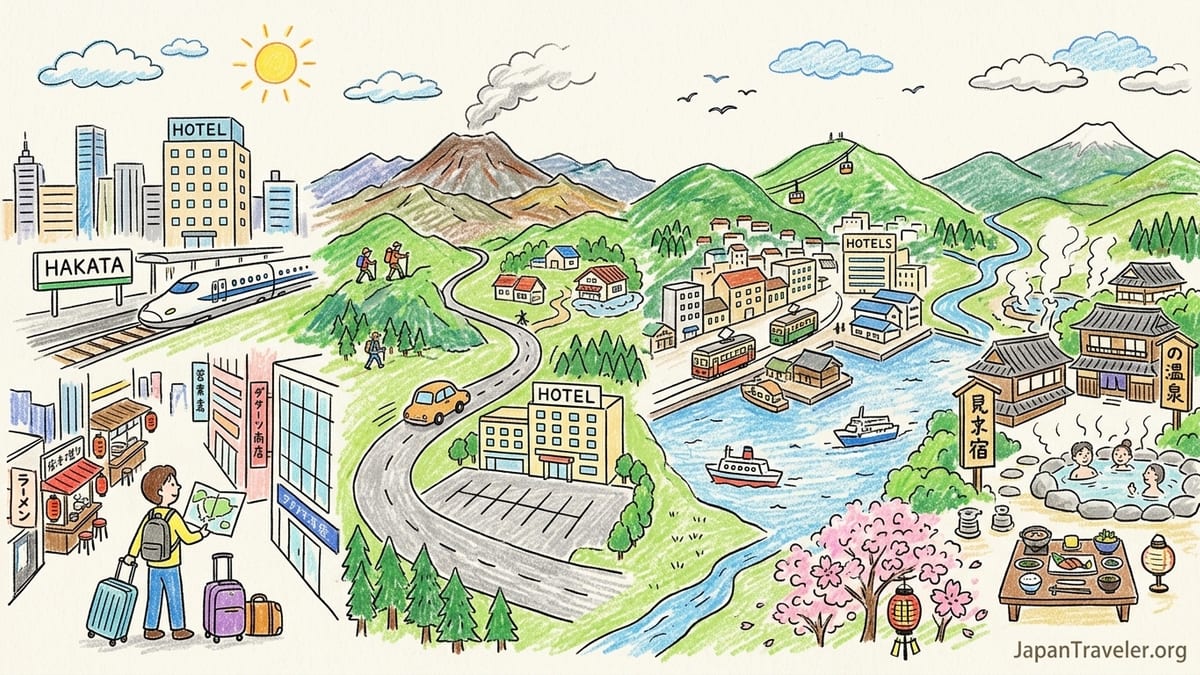
How to Choose Your Kyushu Base and Hotel Style
Most travelers use Fukuoka as their entry point to Kyushu, then branch out to Nagasaki, Kumamoto, Beppu and Yufuin, and finally down to Kagoshima. The key decision is whether you want a single city base with day trips, or a loop with two or three overnight stops. City hotels near the main stations, like Hakata in Fukuoka or Kumamoto Station, make public transport effortless, while onsen towns such as Beppu and Yufuin reward slower, two‑night stays focused on hot springs and kaiseki dinners.
Accommodation in Kyushu falls into several clear categories. Luxury hotels tend to cluster around major stations or waterfronts, with Western‑style rooms, strong air‑conditioning and international breakfast buffets. Business and station hotels emphasize efficiency, coin laundries and compact rooms, ideal for one‑night hops between cities. Traditional ryokan, especially in Beppu, Yufuin and smaller rural villages, offer tatami rooms, multi‑course dinners and hot spring baths. On the road you will also see simple roadside hotels and “resort” properties with large parking lots, convenient for self‑drivers exploring Mount Aso or the Kirishima highlands.
When comparing actual hotels, focus on a few very practical details instead of just photos. Check whether breakfast is included or easy to add at a reasonable price, since hunting for early‑morning cafes in smaller Kyushu towns can be frustrating. Look carefully at parking: many city hotels charge separate nightly fees or have very limited spaces. If you are traveling by train, note the walking time to the station and whether there is level access for rolling suitcases. Finally, for itineraries that involve onsen bathing, see if your hotel has a public bath on site or a partnership with a nearby facility, which can save both money and time.
Luggage storage is another important factor. In the big hubs like Hakata or Beppu Station, you will find coin lockers, but they often fill up on weekends and holidays. Many hotels in Kyushu will store luggage before check‑in or after check‑out at no cost, which is extremely useful if you want to wander luggage‑free between trains or while driving out to an attraction before returning. If you plan side trips with overnight bags, consider using a station‑area hotel that you return to, leaving your main suitcase with them while you explore places like Yufuin or Nagasaki with a smaller backpack.
Fukuoka: Kyushu’s Main Gateway and Station‑Hotel Heaven
Fukuoka is where most international visitors land, and it has the largest hotel inventory on the island. The most convenient area for first‑timers is around Hakata Station, which combines the shinkansen, local JR lines, the subway to Fukuoka Airport and long‑distance buses for the rest of Kyushu. Here you will find a dense cluster of modern station hotels ranging from efficient business brands to full‑service properties with rooftop baths. Typical nightly rates near the station start around the budget and midrange tiers on weeknights, then climb during weekends and festival periods such as Hakata Gion Yamakasa in July.
Luxury travelers who want a stress‑free start or finish to their trip tend to choose high‑end hotels directly opposite or within a short walk of Hakata Station. These properties usually offer larger‑than‑average rooms, high‑quality bedding and often executive floors that include evening drinks and snacks. One standout near the shinkansen gates pairs 30‑square‑meter rooms with a natural hot spring bath on the roof, which is rare for a station hotel in a big city and ideal if you are arriving after a long flight into Fukuoka Airport and want a soak without leaving the building. Buffet breakfasts here are heavy on local specialties such as mentaiko, Hakata udon and seasonal seafood.
Midrange and family‑friendly options around Hakata and Tenjin balance comfort with price. Many have triple rooms or connecting rooms that work well for families with children who are not used to futons. Street‑level convenience stores, late‑night ramen shops and department store food halls make meal planning easy. Several midscale hotels now include simple public baths, sometimes separated by gender with indoor and small outdoor tubs. These are not atmospheric ryokan onsens, but they are perfect for a quick soak at the end of a day spent exploring Ohori Park, Canal City or the seaside Momochi area.
For travelers arriving late or departing early by air, airport access is a major selling point. Fukuoka Airport is only a few subway stops from Hakata Station, so any station‑area hotel offers a realistic 20–30 minute door‑to‑gate journey. If your flight out of Kyushu leaves at dawn, staying right at Hakata instead of near the airport usually gives you more dinner options and easier luggage storage. Many hotels will hold bags after check‑out, so you can spend a last luggage‑free afternoon in Tenjin or along the Naka River before collecting your suitcases for the subway ride to the airport.
Nagasaki: Harbor Views, Streetcar Access and Compact Comfort
Nagasaki is more compact than Fukuoka, with hotels concentrated around Nagasaki Station, the harborfront and the historic districts served by the city’s vintage streetcars. The station area is the most practical base if you are arriving on the Kamome or Relay Kamome limited express from Hakata. Hotels here emphasize easy access to the station concourse and to the tram stops that connect you to Chinatown, Dejima, the Peace Park and Mount Inasa ropeway. A station‑adjacent business hotel will typically offer small but efficient rooms with a desk, strong Wi‑Fi and coin laundry, ideal for one‑night stays on a wider Kyushu loop.
Travelers willing to spend more can look at harborfront and hillside properties that trade station proximity for sweeping views. Several midrange and upscale hotels face Nagasaki Port, with rooms overlooking ferries coming and going to the Goto Islands and the night lights along the waterfront. These hotels often provide shuttle buses to Nagasaki Station, which can be convenient if you have heavy luggage and do not want to navigate trams with suitcases. Buffet breakfasts here lean heavily toward Western and Japanese options, with plenty of fresh bread, salad bars and local fish.
Nagasaki is not primarily an onsen destination, but some hotels include public baths or small spa areas. These are generally indoor sento‑style baths rather than natural hot spring onsens, but they provide the same relaxing end‑of‑day ritual. Families should check room layouts carefully, as many Nagasaki hotels cater to business travelers with mostly twin and double rooms. Look for properties that explicitly offer triple rooms or Japanese‑Western hybrids with tatami corners, which give children space to move and sleep on futons if needed.
Parking in Nagasaki can be tight and expensive. The downtown is hemmed in by hills and harbor, so multi‑storey car parks and narrow streets are standard. If you are driving a rental car, choose a hotel that clearly lists on‑site parking or a dedicated nearby lot, and budget extra time to navigate one‑way roads. Some hotels cap their parking spaces and operate first‑come, first‑served systems, so on busy weekends it may be worth arriving earlier in the afternoon. If your main Nagasaki sightseeing is along the tram lines, consider parking at a suburban hotel with free parking and then using trains or trams to reach the central areas.
Kumamoto and Rural Aso: Efficient Bases for Castles and Volcanoes
Kumamoto works best as both a city stop and a gateway to the rural landscapes of Mount Aso. Around Kumamoto Station you will find a cluster of business and midrange hotels connected by tram to Kumamoto Castle and the downtown arcade. Station‑area hotels are ideal for one‑night stays on rail itineraries, with typical amenities such as coin laundry, simple breakfast buffets and occasionally a small public bath. Some properties advertise access to hot springs in nearby suburbs, so check whether they are true onsens or regular baths if that matters to you.
Closer to the rebuilt Kumamoto Castle and the Kamitori and Shimotori shopping arcades, there is a second concentration of hotels and serviced apartments. These suit travelers who want to walk to evening dining options without riding the tram. Family‑oriented properties sometimes offer larger corner rooms, sofa beds or Japanese‑style rooms that can sleep four on futons. Breakfasts here mix local specialties such as basashi (horse meat sashimi) and regional vegetables with standard Japanese and Western items. If you are renting a car, be aware that parking around the arcades is usually in contracted lots and can add a noticeable nightly cost.
For a more rural experience, the wider Aso region has pensions, guesthouses and onsen resorts scattered through green valleys and along the slopes of the caldera. Self‑drivers often choose modest roadside hotels or hot spring inns that include dinner and breakfast so they do not have to drive at night in unfamiliar mountain roads. Many of these properties have large free parking areas and simple but generous meals featuring local beef and vegetables. Hot spring baths range from indoor stone tubs to open‑air baths with views into the caldera, perfect after hiking around the crater rim or cycling through Aso’s grasslands.
Because the Aso area is vulnerable to weather‑related disruptions, flexibility is important. Look for accommodators that clearly communicate in English or have recent reviews mentioning helpful staff during volcanic alerts or heavy rain. When driving, verify late‑check‑in policies so you can detour safely if conditions change. Several smaller rural inns are family‑run and may not offer 24‑hour front desks, so confirm arrival times in advance and store your main luggage at a larger Kumamoto hotel if needed, bringing only an overnight bag into the countryside.
Beppu and Yufuin: Onsen Capitals and Ryokan Experiences
Beppu and Yufuin, both in Oita Prefecture, are Kyushu’s most famous hot spring destinations. Beppu is larger and more varied, with multiple distinct onsen districts spread between the bay and the hills. You will find everything from classic ryokan with landscaped gardens to big resort hotels with water parks and buffet halls. In recent years, several contemporary onsen hotels have opened that blend minimalist interiors with natural hot springs, often overlooking Beppu Bay. These properties typically include at least one large public bath per gender, sometimes with outdoor pools, and many offer rooms with private open‑air baths on balconies.
Beppu Station area is the most convenient base for travelers arriving by train from Fukuoka or Oita Airport. Station‑side business hotels make it easy to roll in with luggage, check in and then head by bus or taxi to attractions such as the “hells” hot spring area or the sand baths along the coast. Many of these hotels include free luggage storage before and after your stay, and some have partnerships that allow discounted entry to nearby public baths. If you want a full ryokan experience with kaiseki dinner but still value station access, look for traditional inns within a short taxi ride that offer pickup services from Beppu Station at fixed times.
Yufuin, about 30 minutes inland by train or bus, has a very different feel. The town sits in a broad valley beneath Mount Yufu, with narrow streets lined by cafes, small museums and artisanal shops. Ryokan here are generally smaller and more intimate than their Beppu counterparts, often with only a dozen or so rooms and strong emphasis on seasonal kaiseki cuisine. Many Yufuin ryokan offer private hot spring baths either attached to rooms or bookable by the hour, making them popular with couples and families who prefer privacy. Prices tend to be higher than in Beppu for similar room sizes, reflecting the boutique atmosphere and strong domestic demand.
Because Yufuin’s station is small and the town spreads out, think carefully about luggage and walking distances. Some of the most desirable hillside ryokan are a 15–25 minute walk or a short taxi ride from the station, with slopes that are not ideal for large suitcases. Most ryokan will hold luggage before check‑in, and several provide station pickup if arranged in advance. Coin lockers at Yufuin Station are limited, so on busy weekends and holidays it is wiser to leave big bags at a hotel in Beppu or Fukuoka and travel into Yufuin with an overnight bag. Self‑drivers enjoy more freedom, as many ryokan include free parking, but roads can be narrow and dark at night, so it is better to arrive before sunset.
When choosing between Beppu and Yufuin for an overnight stay, consider your priorities. Beppu suits travelers who want a wide choice of price points, bigger resort hotels and easy public baths that welcome day visitors, including families with children who love variety. Yufuin is better for travelers who want a slower pace, more traditional ryokan, and scenic morning walks past rice paddies, with mist often lingering over Lake Kinrin in cooler months. If your schedule allows two nights, spending one in Beppu for the variety and one in Yufuin for the atmosphere gives a balanced introduction to Kyushu onsen culture.
Kagoshima and Southern Kyushu: Volcano Views and Onsen Detours
Kagoshima, at the southern tip of Kyushu, rewards travelers who make the extra journey with views of the active volcano Sakurajima and easy access to both urban comforts and rustic hot springs. Most visitors base themselves near Kagoshima‑Chuo Station or along the tram line toward the waterfront. Station‑area hotels are ideal if you are arriving by shinkansen from Fukuoka or Kumamoto, with straightforward tram connections to the port for Sakurajima ferries and the Tenmonkan dining district. Business hotels here follow the familiar Kyushu pattern of compact rooms, coin laundry and simple breakfast buffets, with rates that tend to be a bit lower than in Fukuoka.
Upscale travelers may prefer harborfront or hillside properties that showcase Sakurajima. Several hotels and ryokan around Kagoshima offer rooms and baths that look directly across Kinko Bay at the volcano, especially dramatic at sunrise or on days when steam and ash rise from the crater. These properties often combine Western‑style rooms with Japanese touches, such as tatami seating corners and onsen baths using local hot spring water. Breakfast spreads usually highlight Kagoshima specialties including sweet potatoes, kurobuta pork and seasonal fish, and some hotels offer early‑opening buffets to accommodate ferry schedules.
Self‑drivers exploring southern Kyushu have a wealth of rural onsen and small resort hotels to choose from. Areas like Ibusuki, known for its hot sand baths, and the Kirishima highlands, with forested hot springs, are dotted with ryokan and larger hotels with big parking areas. Many of these properties are designed around road‑trippers: check‑in is often flexible, parking is included, and dinner and breakfast plans can be added at reasonable surcharges. Rooms range from simple tatami layouts to Western‑style twins with balconies. Public baths often feature multiple pools at different temperatures, sometimes with outdoor baths looking over valleys or toward distant Sakurajima on clear days.
Kagoshima’s airport lies inland, connected to the city by express buses that terminate at Kagoshima‑Chuo Station. If you have an early morning flight, consider staying at a station‑adjacent hotel with 24‑hour front desk service and easy bus access, rather than trying to base near the airport itself, where hotel choice is limited. Many Kagoshima hotels will store luggage after check‑out, allowing you to take a half‑day side trip to Sakurajima or the Shiroyama observatory before picking up bags and catching the airport bus. As elsewhere in Kyushu, parking conditions vary widely, so confirm whether your chosen hotel has on‑site parking, a contracted lot or no parking at all before committing.
Secondary Rural Bases and Road‑Trip‑Friendly Hotels
Beyond the main cities and marquee onsen towns, Kyushu’s appeal lies in its rural landscapes: terraced fields, cedar forests, river gorges and volcanic plateaus. These are best explored by rental car, which in turn changes the kind of accommodation that makes sense. Instead of prioritizing station proximity, you will want easy parking, flexible check‑in and clear driving directions. Smaller towns across Kyushu, from the highlands around Mount Aso to remote coastal communities in Miyazaki or northern Kagoshima, are dotted with family‑run minshuku, pensions and modest resort hotels that cater primarily to domestic road‑trippers.
Rural properties come in several flavors. Traditional farm stays and minshuku usually offer tatami rooms, shared bathrooms and home‑cooked dinners featuring vegetables and meat from nearby farms. Larger roadside hotels along national highways provide Western‑style rooms, big parking lots and public baths, often at very reasonable prices compared with city centres. Onsen villages tucked into valleys may have a mix of high‑end ryokan and no‑frills guesthouses that all tap into the same hot spring source. In these areas, English signage and staff proficiency can vary widely, so recent reviews are particularly valuable for non‑Japanese‑speaking visitors.
Because rural public transport in Kyushu can be sparse, especially in the evenings, road‑trip travelers should think of their nightly base as both lodging and dining hub. Properties that include dinner and breakfast simplify logistics, since restaurants may close early or be spread out along unlit roads. Parking is usually free and abundant, but winter and rainy‑season conditions can make mountain roads tricky, so consider daytime arrival plans. Luggage handling is typically informal: many inns will help carry bags up narrow staircases, but elevators are not guaranteed, so compact luggage is more practical than large hard‑shell suitcases.
For those who want a “deep” onsen experience, secondary bases like smaller onsen villages near Beppu and Yufuin or local hot spring clusters around Aso and Kirishima are highly rewarding. Staying at a rural ryokan with only a handful of rooms, communal dinners and baths shared with a small circle of guests can feel very different from a big Beppu resort. These stays are also where traditional etiquette matters most, from changing into yukata robes before dinner to rinsing thoroughly before entering the bath. If you are unsure, staff are usually happy to guide you, and many properties now provide simple illustrated instructions in English.
Comparing Hotel Types: Luxury, Station, Family and Onsen Stays
Choosing the right property in Kyushu is largely about matching hotel type to your itinerary. Luxury hotels, typically in Fukuoka, Beppu, Yufuin and Kagoshima, suit travelers who prioritize comfort and amenities over price. Expect spacious rooms by Japanese standards, high‑end mattresses, well‑equipped bathrooms and multilingual staff. Many luxury properties in onsen areas offer rooms with private open‑air baths and elaborate kaiseki dinners, which can turn a night’s stay into the highlight of a trip. These hotels are ideal for special occasions such as honeymoons, anniversaries or the final night before flying home from Fukuoka.
Station hotels are the backbone of Kyushu travel for those using trains and buses. Located within a few minutes’ walk of major stations like Hakata, Nagasaki, Kumamoto and Kagoshima‑Chuo, they make arrivals and departures almost effortless. Rooms are compact but functional, with reliable Wi‑Fi, strong showers, coin laundries and optional breakfast buffets. Many now include small public baths, which are particularly welcome in winter. For travelers who plan to spend most of the day out sightseeing and only need a comfortable, efficient place to sleep, station hotels often represent the best value on the island.
Families and small groups face a slightly different set of decisions. Western‑style chain hotels may not always have rooms for four, so Japanese‑style ryokan or hybrid hotels with tatami areas can actually be more comfortable. In places like Beppu and Yufuin, booking a family room or a ryokan suite with both beds and futons allows everyone to share one large space, often with a private bath that makes bathing children easier. Breakfast buffets with both Western and Japanese items are particularly valuable for families with picky eaters, as is on‑site coin laundry during longer trips.
Public baths are a defining feature of many Kyushu properties, even those that are not formal onsen ryokan. In cities, these may be regular hot‑water baths designed for relaxation rather than sourced from a natural spring, while in onsen areas they often tap into local hot spring systems. For road‑trippers, properties with public baths provide a welcome break after long drives. Travelers with tattoos should check each hotel’s policy, as attitudes vary: some are fully accepting, others request covering smaller tattoos with patches, and a few still prohibit visible tattoos in shared baths. Private family baths available by reservation are a practical workaround if you prefer more privacy.
The Takeaway
Kyushu’s hotel scene is broad enough to accommodate nearly every kind of traveler, from backpackers stringing together station‑area business hotels to couples splurging on private open‑air baths in Yufuin or Beppu. The island’s rail and highway networks make it easy to combine big cities like Fukuoka and Kagoshima with smaller onsen towns and rural valleys, provided you choose bases that match your transport mode and comfort expectations. Rather than chasing a single “best” hotel, think of Kyushu as a chance to sample different styles: a polished station hotel in Fukuoka, a traditional ryokan in an onsen town, and a practical roadside inn in the mountains.
Across all of these options, common considerations such as luggage storage, parking, breakfast and proximity to stations or airports will shape how relaxed your days feel. A hotel that will hold your bags while you explore, that offers breakfast before early trains, or that has free on‑site parking can be more valuable than an extra bit of room decor. With a bit of planning, you can use Kyushu’s rich accommodation mix to support whatever kind of trip you are planning, whether that is an efficient rail loop, an onsen‑heavy escape or a long road trip across one of Japan’s most varied islands.
FAQ
Q1. Is it better to base in Fukuoka or move between cities when traveling around Kyushu?
For short trips of three or four nights, basing in Fukuoka and doing day trips to places like Dazaifu or Kitakyushu can work well. For longer itineraries or if you want onsen experiences in Beppu or Yufuin and scenery around Aso or Kagoshima, moving every one or two nights usually gives a richer experience and cuts down total train and bus time.
Q2. How close should I stay to Hakata Station in Fukuoka?
If you plan to use trains and the subway frequently, staying within a five to ten minute walk of Hakata Station is ideal. It makes airport access simple, reduces the need for taxis with luggage and gives you easy access to shops and restaurants inside the station complex, especially useful in bad weather or after a late arrival.
Q3. Do most Kyushu hotels offer luggage storage before check‑in and after check‑out?
Yes, midrange and larger hotels across Kyushu almost always store luggage for guests on the day of arrival and departure, often at no extra charge. Smaller ryokan and minshuku usually do as well, but it is wise to confirm in advance, especially if you plan to leave bags while taking a side trip and returning later.
Q4. Is renting a car necessary for visiting Beppu and Yufuin?
No, both Beppu and Yufuin are reachable by train and highway bus from Fukuoka and Oita, and local buses and taxis cover most tourist areas. A rental car becomes more useful if you want to link these towns with more rural onsen areas or Mount Aso, or if you are traveling as a family and prefer the flexibility and door‑to‑door access that driving provides.
Q5. What should I expect from breakfast at Kyushu hotels and ryokan?
City hotels usually serve buffet breakfasts with a mix of Japanese and Western items such as rice, miso soup, eggs, salad and bread. Onsen ryokan tend to offer set Japanese breakfasts with grilled fish, rice, pickles and seasonal side dishes. In smaller towns, booking breakfast with your stay is recommended because nearby cafes may open late or not at all.
Q6. Are public baths and onsen in Kyushu suitable for children and families?
Yes, families regularly use public baths and onsen in Kyushu, and many hotels explicitly welcome children. Young children typically bathe with a same‑gender parent in the communal baths. For families who prefer more privacy, look for properties that offer reservable private baths or rooms with their own small onsen tubs.
Q7. How do parking arrangements usually work at Kyushu hotels?
In big cities like Fukuoka, Nagasaki and Kumamoto, hotels often have limited paid parking or arrangements with nearby lots, charged per night. In onsen towns and rural areas, hotel and ryokan parking is more often free and on‑site. When renting a car, check parking details during booking so you can factor any extra cost and avoid surprises on arrival.
Q8. Are there good hotel options near Kyushu’s airports?
Yes, but the most convenient choice is often a hotel near the main station connected to the airport by rail or limousine bus, such as Hakata Station for Fukuoka Airport or Kagoshima‑Chuo Station for Kagoshima Airport. These areas have a wider selection of hotels, restaurants and shops than the immediate airport surroundings, while still offering easy access to flights.
Q9. Should I choose a ryokan with dinner included, or eat out in town?
In rural areas and smaller onsen towns, including dinner is usually the better option, as restaurants may be limited or close early. In larger cities such as Fukuoka or Kagoshima, room‑only or breakfast‑only plans give you more freedom to explore local dining scenes. In Beppu and Yufuin, both approaches work, but a full kaiseki dinner at least once is part of the classic ryokan experience.
Q10. How far in advance should I book popular hotels and ryokan in Kyushu?
For peak seasons such as cherry blossom, Golden Week in early May, autumn foliage and New Year, booking several months in advance is wise, especially for high‑end ryokan in Beppu, Yufuin or rural onsen areas. In quieter periods, city hotels can often be reserved closer to arrival, but unique properties and rooms with private onsen still tend to sell out early.