


Northern Japan is one of the country’s great hot spring frontiers. From lantern lit riverside towns buried in snow to secluded mountain baths reached only by shuttle bus, the onsen of Tohoku and Hokkaido combine deep tradition with wild landscapes. This guide compares some of the region’s most distinctive hot spring areas, including Ginzan Onsen, Zao Onsen, Nyuto Onsen and Naruko in Tohoku, plus Noboribetsu and Jozankei in Hokkaido, so you can choose the right destination for your itinerary, budget and travel style.
Understanding Northern Japan’s Onsen Regions
When people talk about “Northern Japan onsen,” they usually mean two regions: Tohoku, the rural north of Honshu, and Hokkaido, Japan’s northernmost island. Tohoku’s hot spring towns such as Ginzan, Zao, Nyuto and Naruko lean into nostalgia, quiet and heavy snow. They pair well with rail journeys on the Tohoku Shinkansen, using hubs like Sendai, Morioka or Akita. Hokkaido’s onsen, with Noboribetsu and Jozankei the best known, sit inside broad national park landscapes and are often combined with ski trips to Niseko or city breaks in Sapporo.
For most travelers, the practical question is where to invest a precious overnight stay and where a day trip is sufficient. Some towns, like Ginzan Onsen and Nyuto Onsen, really shine after dark or in the early hours, when staying guests have the streets and baths almost to themselves. Others, like Zao Onsen or Jozankei, are easy day trips thanks to frequent buses from regional cities. Keeping this distinction in mind will help you match each onsen with the right slot in your itinerary.
Another defining feature of northern onsen is the climate. Snow typically blankets these regions from roughly December to March, producing the classic image of steaming outdoor baths framed by deep drifts of powder. In Zao you can pair soaking with skiing and the famous “snow monsters,” while in Nyuto and Ginzan the appeal is more about rustic wooden inns half buried in white. If you visit outside winter, expect lush greenery, cool evenings and fewer crowds, but also a slightly different mood.
Ginzan Onsen: Taisho Romance and Storybook Snow
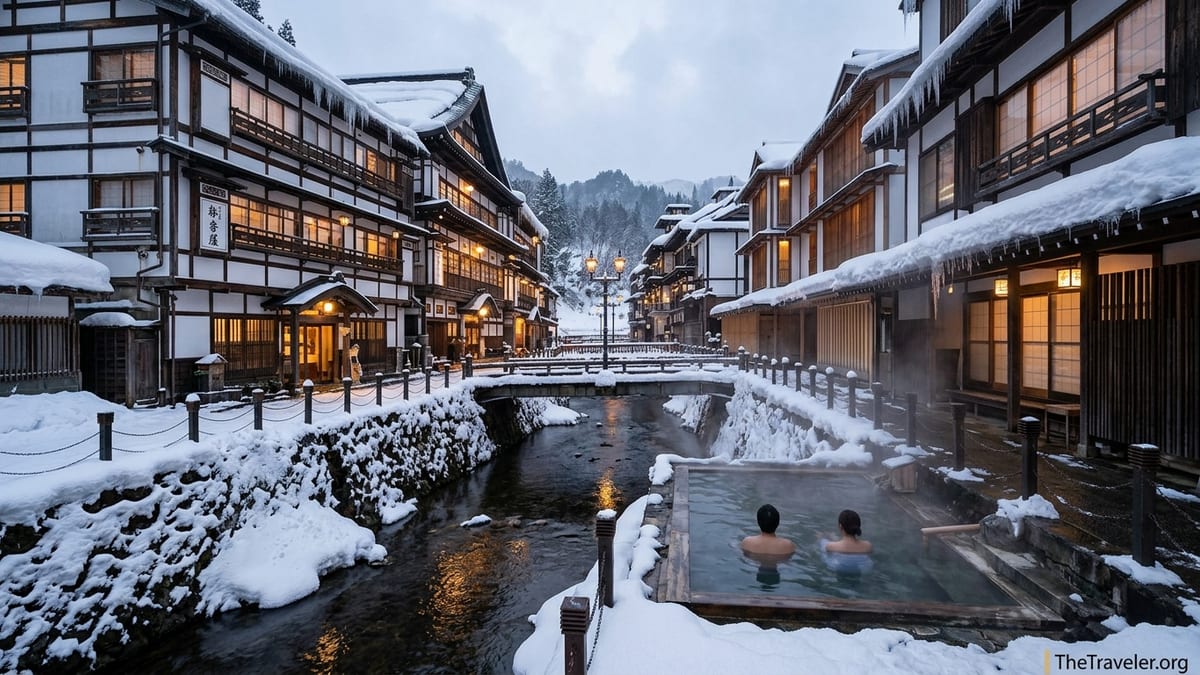
Ginzan Onsen in Yamagata Prefecture is the most photogenic of the Tohoku onsen towns. A short bus ride from Oishida Station on the Yamagata Shinkansen, it consists of a single narrow street of three and four story wooden ryokan that line both banks of a small river. In winter, the entire street is covered with snow and lit by gas style lanterns, creating an almost theatrical atmosphere that many visitors describe as “time travel” to early 20th century Japan.
Most of Ginzan’s ryokan are mid to high end, and rooms with private open air baths can sell out months ahead for peak winter weekends. Expect typical rates that start around the upper mid range per person for a half board plan including kaiseki dinner and Japanese breakfast, with prime rooms costing substantially more. Notoya Ryokan, the most photographed inn in town, is known for elaborate architecture and private underground baths reserved for staying guests, while nearby properties like Ginzanso sit slightly up the hill with more modern facilities and additional private family baths that can be reserved by the hour.
Ginzan works best as an overnight stay, particularly in snow season. Day trippers can enjoy the public bathhouse and a small foot bath on the river, but much of the magic happens after the last buses leave and overnight guests stroll the street in yukata and geta. Access is reasonably straightforward by train and bus, but in heavy snow the narrow road into the valley may be subject to traffic control, so allow buffer time and avoid tight same day train connections.
Tattoo policies in Ginzan tend to be conservative, with many ryokan preferring guests without large visible tattoos in shared baths. Travelers with ink regularly choose rooms with attached private baths or reserve rentable family baths where available. If tattoos are a concern, confirm policies directly with your ryokan in advance and be ready with a rash guard or waterproof covers for smaller designs if requested.
Zao Onsen & Naruko: Sulfur Springs and Easy Rail Access
Zao Onsen, on the Yamagata side of the Zao mountain range, is one of Japan’s classic sulfur hot springs. The village sits above Yamagata City and is reached in about 40 minutes by bus from Yamagata Station, itself around two and a half hours from Tokyo by Yamagata Shinkansen. The town has multiple public bathhouses, foot baths and a mix of small ryokan and larger hotels, many of them with sweeping views of the slopes and the valley below.
What sets Zao apart is the combination of skiing, rugged onsen and winter scenery. Between roughly late December and early March, skiers come for the Zao Onsen Ski Resort and its famous snow covered trees known as “snow monsters.” After runs, visitors soak in cloudy, strongly acidic sulfur water that locals praise for its skin benefits. Many hotel baths are outdoors, with simple stone tubs that look out to dark forests and ski runs. Some properties, such as larger resort hotels on the upper side of town, offer private baths that can be reserved by the hour, which is useful for couples or tattooed guests.
Compared with Ginzan, Zao is more flexible for day trippers. You can leave Tokyo in the morning, transfer at Yamagata Station to the local bus and be in a hot bath by early afternoon, then return the same evening. The atmosphere is more functional than dreamy, with concrete buildings, ski shops and bright signage mixed with older inns, but in the depths of winter the snowy backstreets are still atmospheric. Outside ski season, hiking and visits to the crater lake on the Miyagi side round out the experience.
Naruko Onsen, in Miyagi Prefecture, is another strong Tohoku choice that pairs well with rail travel. The small town sits on the JR Rikuu East Line, usually reached via a local train after a Shinkansen ride to Furukawa. Naruko is known for its diversity of springs, with several different water types in a compact area and numerous small ryokan where overnight rates can be more affordable than in Ginzan. The town has a lived in feel, with traditional wooden inns side by side with everyday shops. For many travelers it makes a good one night stop between Sendai and northern Tohoku, or a relaxed day trip focused on trying multiple public baths rather than one blockbuster ryokan.
Nyuto Onsen: Rustic Hideaways in the Snowy Forest
Nyuto Onsen, in Akita Prefecture, is a cluster of several small ryokan scattered through forest at the base of Mount Nyuto, part of Towada Hachimantai National Park. The most famous inn, Tsurunoyu, is regularly featured in tourism materials for its thatched roofs and milky white outdoor pools surrounded by snow. Other lodgings such as Taenoyu, Kuroyu or Ganiba are spread along a narrow valley of birch and beech trees, with a shared shuttle bus connecting them to a central visitor facility near the main road.
The atmosphere in Nyuto is very different from a compact onsen town. There is no real “street” and after dark everything becomes very quiet, with little to do beyond soaking, eating and sleeping. For many visitors that is exactly the appeal. Outdoor baths here often feel wild, with minimal lighting, simple rock borders and only the sound of the river and wind in the trees. In deep winter, snow walls can rise waist high around the tubs, and falling snowflakes vanish in the steam.
Reaching Nyuto typically involves taking the Akita Shinkansen to Tazawako Station, then a bus to a small roadside stop and a shuttle or pickup arranged by your ryokan. In winter, bus schedules can be sparse and roads icy, so planning connections carefully and staying overnight is strongly recommended. This is not a convenient day trip from Tokyo or Sendai, but it combines beautifully with a loop through Akita and northern Tohoku.
Nyuto is also one of the more relaxed areas when it comes to tattoos, especially in outdoor mixed baths that have long traditions. Policies still vary by property, so it remains wise to check when booking, but many overseas visitors with tattoos report being welcomed provided they behave respectfully and follow etiquette. Because baths can be shared between staying guests of multiple inns through onsen pass systems, it is worth confirming rules not only at your accommodation but also for any neighboring baths you intend to visit.
Noboribetsu & Jozankei: Hokkaido’s Signature Hot Springs
Noboribetsu Onsen is Hokkaido’s best known hot spring town and one of the most famous in all of Japan. Built beside the steaming volcanic landscape of Jigokudani, or Hell Valley, it offers a huge variety of mineral rich waters in a compact resort area. Large ryokan hotels dominate the main street, with some properties featuring dozens of indoor and outdoor pools at different temperatures and compositions, from cloudy sulfur to iron rich brown water.
For many travelers, Noboribetsu is the most practical multi night base in Hokkaido for serious soaking. From Sapporo it is roughly one and a half hours by limited express train to Noboribetsu Station, then a short local bus ride up into the onsen zone. Some hotels welcome day use visitors for a fee, allowing you to sample a famous bath complex in the afternoon even if you are based in Sapporo or en route to Hakodate. Because it is popular with international tour groups, expect buffet style meals and larger buildings rather than intimate machiya style streetscapes.
Jozankei Onsen, by contrast, feels more like an escape valve for Sapporo residents. Located along the Toyohira River in Shikotsu Toya National Park, it is reached in around an hour by highway bus from central Sapporo. The town has a mix of mid sized hotels and smaller ryokan, along with casual day use facilities and foot baths scattered near the river. Autumn foliage season is particularly beautiful, when the surrounding hills turn vivid red and yellow and steam rises from outdoor baths between maple trees.
Both Noboribetsu and Jozankei work very well as day trips, though staying overnight lets you enjoy quieter late night or early morning soaks. Jozankei is especially convenient if you are already in Sapporo and want to experience onsen without reworking your itinerary, since buses run regularly from the city and many hotels sell daytime bathing plus lunch plans. Noboribetsu requires a bit more commitment in time and cost, but rewards you with a far larger selection of baths and the dramatic volcanic scenery of Hell Valley just a short walk from most lodgings.
Atmosphere, Scenery and Ryokan Quality Compared
Each of these destinations has a distinct feel. Ginzan Onsen is all about nostalgic architecture: narrow lanes, bridges over a small river and rows of wooden inns that glow warmly at night. In winter, snow piles high on the balconies and lanterns, creating the postcard image many people associate with Northern Japan’s hot springs. Nyuto is the opposite in layout but similar in emotional impact, offering scattered farm like clusters of buildings, dark forest and a sense of retreat from the modern world.
Zao and Naruko have more lived in, everyday atmospheres. Zao’s main street has ski rental shops, convenience stores and concrete hotel blocks mixed in with older inns, while Naruko feels like a small regional town that happens to have many public baths. This can make them less romantic in photos, but more flexible in practice, especially for travelers who value easy logistics, lower prices and the ability to arrive without months of advance planning.
On the Hokkaido side, Noboribetsu feels like a classic resort town with large hotel complexes and bustling lobbies, but the volcanic landscape around it is uniquely dramatic, with plumes of steam venting from ocher colored cliffs. Jozankei, with its river gorge and wooded slopes, looks softer and more alpine, particularly in autumn. Ryokan quality in both can be very high at the top end, with spacious rooms, elaborate buffets or course dinners and extensive bathing facilities, while more modest business hotel style rooms are available at lower price points.
If your priority is a once in a lifetime ryokan experience, consider splurging on a high end inn with a private open air bath in Ginzan, Nyuto or Noboribetsu. If you want to sample different baths and keep costs reasonable, pairing a solid mid range hotel in Zao, Naruko or Jozankei with day visits to public facilities can provide a lot of variety without committing to a single expensive property.
Access, Day Trips and Overnight Strategy
From Tokyo, Ginzan and Zao are among the easiest northern onsen areas to reach. Both rely on the Yamagata Shinkansen, with onward buses from Yamagata Station to Zao and from Oishida Station to Ginzan. A typical traveler might leave Tokyo on a morning train, drop bags at a ryokan by early afternoon and still have time for several long soaks before dinner. Ginzan’s bus schedule is less frequent than the Zao line, so it is wise to time your train carefully or be prepared for some waiting at the station, especially in winter when delays can ripple through the network.
Nyuto and Naruko require a bit more planning. Nyuto is best approached via the Akita Shinkansen to Tazawako, then a local bus and ryokan pickup or shuttle. Bus services do not always align perfectly with train timetables, and in snow season roads can be slow, so many people commit to at least one night and often two. Naruko’s local line trains are slower and less frequent than mainline services, but because the town is compact and has a number of affordable ryokan and guesthouses, it can work as a spontaneous one night stop if you find availability.
In Hokkaido, Noboribetsu and Jozankei tie neatly into a Sapporo based itinerary. Jozankei is the classic half or full day excursion, with highway buses running from near Sapporo Station or central city hotels. Some travelers choose to head out in the late morning, enjoy a lunch and soak package at a hotel, then return in the evening. Noboribetsu usually demands a full day at minimum, counting the limited express train and local bus legs, and truly shines as a one or two night stay, particularly if you want time to walk the Hell Valley trails or visit nearby lakes.
When planning, consider clustering your onsen nights so you are not unpacking and repacking daily. For example, a Tohoku loop might include a night in Zao followed by a night in Ginzan or Nyuto, then onward to Morioka or Aomori. A Hokkaido trip might place a Noboribetsu stay between Sapporo and Hakodate, with a separate Jozankei day trip slotted on a free day in Sapporo. Booking popular ryokan three to six months ahead for peak winter weekends is common, while shoulder seasons often allow more flexibility.
Tattoos, Private Baths and Onsen Etiquette
Travelers with tattoos need to pay special attention when choosing onsen in Northern Japan. In more traditional towns like Ginzan and some parts of Zao and Naruko, large visible tattoos can still be associated with organized crime, and many public baths or ryokan communal facilities either discourage or quietly refuse tattooed guests. In Hokkaido, attitudes vary: some large hotels in Noboribetsu have become more accommodating, especially toward overseas visitors, while in Jozankei the simplest option is often to book a room with a private bath or rent a family bath for exclusive use.
If you have visible tattoos and want to enjoy onsen stress free, prioritize accommodations that offer in room rotenburo or clearly advertised private family baths that can be reserved by the hour. These are widely available at the higher end of the market in Ginzan, Nyuto, Zao and Noboribetsu, and at selected properties in Naruko and Jozankei. Contact your chosen inn in advance, explain your situation briefly and ask whether tattoos are acceptable in private facilities even if they are not allowed in shared baths. Many places are happy to host tattooed guests under these conditions.
Basic onsen etiquette is similar across Tohoku and Hokkaido. You undress completely in the changing room, leaving swimsuits and underwear in a basket or locker. Before entering any bath, you must wash yourself thoroughly at the shower stations using the stools, handheld showers and provided soap and shampoo, taking care not to splash neighbors. Small modesty towels can be used to cover yourself while moving between showers and tubs, but should not be dipped into the water; instead fold the towel and place it on your head or on the edge of the bath.
Talking quietly is fine, but loud voices, phones and photography are not. Hair should be tied up to avoid touching the water, and people with long hair often use an extra towel or hair band. If you feel dizzy from the heat, step out, rinse with cooler water and rest in the changing area rather than forcing yourself to stay in. Finally, when you finish, most locals lightly rinse off soap but leave the mineral rich hot spring water on their skin to continue its effects, then dry thoroughly before returning to the dressing room so as not to drip everywhere.
The Takeaway
Northern Japan offers an exceptional range of onsen experiences, from the romantic riverside inns of Ginzan to the rustic snowscapes of Nyuto, the sulfur steam and ski slopes of Zao, the approachable local charm of Naruko and the national park scale landscapes of Noboribetsu and Jozankei. Each destination has its own character, seasonality and balance of convenience versus seclusion, and the “best” choice depends more on your priorities than on any ranking.
For a once in a lifetime winter scene, Ginzan or Nyuto with a private open air bath is hard to beat. For travelers who want reliable access by public transport and the option of a day trip from Tokyo, Zao and Naruko make practical, atmospheric stops. In Hokkaido, Noboribetsu is the strongest all round choice for serious soaking, while Jozankei is perfect when you want to experience hot springs without going far from Sapporo.
Whichever you choose, give yourself enough time to slow down. Onsen culture is not about rushing from bath to bath but about letting the rhythm of soak, rest, eat and sleep reset your sense of time. Plan your transport connections with margins for winter weather, confirm tattoo and bathing policies before you go, and then allow Northern Japan’s steam and snow to do the rest.
FAQ
Q1. Is Ginzan Onsen worth visiting if I cannot stay overnight?
Ginzan Onsen is most atmospheric at night when lanterns are lit and day trippers have left, so an overnight stay is ideal. However, if booking a ryokan is not possible, a winter or autumn day trip still gives you the scenic street, public bathhouse and riverside foot bath, as long as you are prepared for bus schedules and potential crowds.
Q2. Which onsen town is the easiest day trip from Tokyo by public transport?
Zao Onsen is one of the easiest options, reached by Yamagata Shinkansen to Yamagata Station and a roughly 40 minute bus ride into the village. With an early start you can enjoy several hours of soaking and a meal before returning the same evening. Naruko Onsen is also accessible by combining the Tohoku Shinkansen with a local line, but travel times are longer.
Q3. Where should I go if I want the most dramatic snowy open air baths?
For classic snow scenes, Nyuto Onsen and Ginzan Onsen stand out, with outdoor baths that can be surrounded by deep snow walls in mid winter. Zao’s baths are also very atmospheric when combined with a ski trip, and in Hokkaido, large outdoor pools at some Noboribetsu hotels offer impressive winter views over forests and volcanic hillsides.
Q4. Are there tattoo friendly onsen in Noboribetsu and Jozankei?
Attitudes are slowly relaxing and some larger Noboribetsu hotels are more open to overseas guests with tattoos, especially if you use private or reserved baths. In Jozankei, policies vary widely by property. The safest approach in both areas is to book accommodations with in room baths or private family baths and confirm in advance that tattoos are acceptable in those spaces even if communal baths have restrictions.
Q5. Do I need a car to visit Nyuto Onsen or can I rely on buses?
You can reach Nyuto Onsen without a car by taking the Akita Shinkansen to Tazawako Station and transferring to a local bus and then a ryokan shuttle or pickup. Schedules can be limited, especially in winter, so it is important to check times and arrange any necessary shuttles with your accommodation. A car offers more flexibility but is not essential for most visitors.
Q6. How far in advance should I book ryokan in these popular onsen towns?
For peak winter weekends and national holidays, booking three to six months in advance is prudent for high demand ryokan in Ginzan, Nyuto and Noboribetsu, especially if you want a room with a private open air bath. For shoulder seasons and weekdays, you often have more flexibility, though booking at least a few weeks ahead is still recommended to secure your preferred property and room type.
Q7. Can I visit multiple different baths in one town on the same day?
Yes, in places like Zao, Naruko and Noboribetsu it is common to try several public baths or hotel facilities that accept day visitors. Some areas sell onsen pass tickets that provide entry to multiple baths, while others charge individually at each location. In small, secluded clusters like Nyuto, you may be able to access baths at neighboring inns depending on agreements and passes, but always confirm current arrangements locally.
Q8. What should I bring with me for a day trip to an onsen?
Most public baths and ryokan provide basic toiletries such as body soap and shampoo, and often rent towels for a small fee. For comfort and budget, many travelers bring their own small towel, a change of clothes, a plastic bag for wet items and a bottle of water, since bathing can be dehydrating. In winter, warm outer layers and good footwear are essential because streets and paths between baths can be icy or buried in snow.
Q9. Is it possible to enjoy onsen if I am shy about nudity?
If you are uncomfortable with shared nude bathing, look for accommodations that offer private family baths or rooms with attached hot spring tubs, which are available in all of the featured destinations at various price levels. Visiting during less busy times of day, such as just after opening or late in the evening, can also make shared baths feel less intimidating, and many people find that after one or two visits, the experience feels more natural.
Q10. Are these onsen towns suitable for children and families?
Yes, most of the towns described welcome families, and many larger ryokan in places like Zao, Noboribetsu and Jozankei cater specifically to multi generational groups with family rooms, buffets and shallow or slightly cooler baths. In more rustic areas like Nyuto, facilities are simpler and evenings quieter, which can be ideal for some families but may feel limited for others. Check age rules for specific baths and be prepared to supervise children closely around hot water and slippery surfaces.