


Northern Japan rewards travelers who slow down. Instead of racing straight from Tokyo to Sapporo, building a thoughtful route through Tohoku and southern Hokkaido lets you experience samurai towns, onsen villages, fishing ports and big northern cities without spending your whole trip in transit. This guide walks you through a practical northbound itinerary using Sendai, Hiraizumi or Morioka, Aomori or Hirosaki, Hakodate, Noboribetsu and Sapporo as anchors, while always showing you how to simplify the route if you prefer fewer stops.
Understanding the Tokyo to Sapporo Corridor
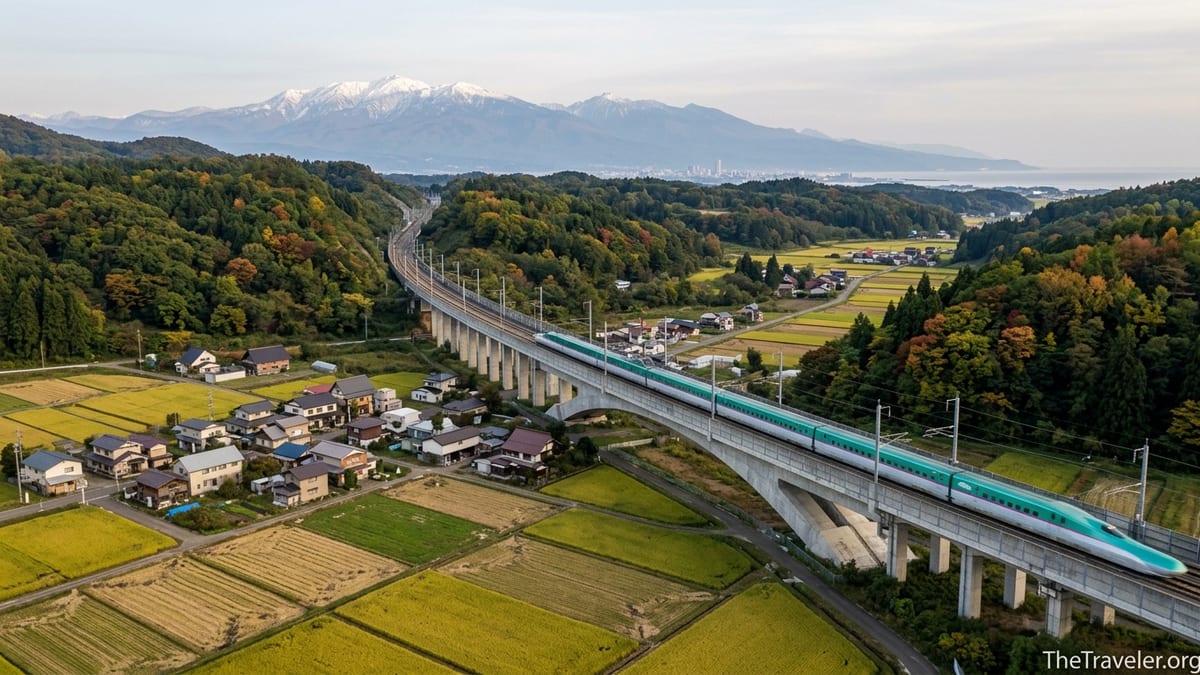
The backbone of a northern Japan itinerary is the high speed rail link that runs from Tokyo up the Tohoku Shinkansen to Shin Aomori, continues as the Hokkaido Shinkansen through the Seikan Tunnel to Shin Hakodate Hokuto, and then connects by limited express trains across Hokkaido to Sapporo. The fastest trains from Tokyo to Sendai take around 90 to 100 minutes, and reaching Shin Aomori from Tokyo on a Hayabusa service typically takes just under 3 hours. From Shin Aomori to Shin Hakodate Hokuto the Hokkaido Shinkansen can be as fast as about 1 hour, making the whole Tokyo to Shin Hakodate Hokuto journey around 4 hours in the best case.
From Shin Hakodate Hokuto, most travelers transfer to the Limited Express Hokuto bound for Sapporo. This leg normally takes about 3.5 hours, depending on the service and intermediate stops. Allowing for transfers, going all the way from Tokyo to Sapporo by train in a single day is realistic but tiring, so using intermediate stops in Tohoku and southern Hokkaido breaks the journey into much more enjoyable sections. A typical reserved Shinkansen ticket from Tokyo to Sendai costs around 11,000 yen one way, and longer legs like Tokyo to Shin Hakodate Hokuto will usually climb into the mid 20,000 yen range depending on seat type and season.
Domestic flights compete strongly with rail on this route. Nonstop flights from Tokyo’s Haneda or Narita airports to New Chitose Airport near Sapporo usually take about 90 minutes in the air, and low cost carriers sometimes sell one way tickets for the equivalent of 6,000 to 12,000 yen if booked in advance. However, you must factor in the 60 to 90 minutes needed to reach the airport from central Tokyo, security and boarding time, and the 40 minute train ride from New Chitose into central Sapporo. The rail versus air choice becomes important when deciding whether to loop back to Tokyo at the end or fly home from Sapporo.
Several regional rail passes can significantly reduce costs if you are riding multiple long distance trains. For example, the Japan Rail Pass, the JR East Pass and the JR East South Hokkaido Pass often cover Shinkansen runs from Tokyo through Tohoku and the Hokkaido Shinkansen sector to Shin Hakodate Hokuto. Many travelers who plan to visit both Tohoku and Hokkaido on the same trip find that a JR East South Hokkaido style pass is more economical than buying single tickets, particularly if they are adding side trips from Sendai or Morioka.
Choosing Your Core Stops and Trimming the Route
When looking at a map, it can be tempting to try to include every major city between Tokyo and Sapporo. In reality, most travelers will be happier choosing three or four key bases and leaving the rest for a future trip. A classic long route might read Tokyo, Sendai, Hiraizumi or Morioka, Aomori or Hirosaki, Hakodate, Noboribetsu and Sapporo. That looks manageable on paper, but in practice it means packing, checking in and out and moving almost every day. Instead, decide which experiences matter most and delete stops that overlap.
If you want one Tohoku base and one Hokkaido base, a streamlined version could be Tokyo, Sendai, Hakodate and Sapporo. You would use Sendai as your hub for exploring Matsushima Bay, nearby onsen towns like Akiu or Sakunami, and day trips to Hiraizumi’s temples. Then you would ride the Shinkansen north to Shin Aomori, change for the Hokkaido Shinkansen to Shin Hakodate Hokuto, and finish the day in Hakodate. After a couple of nights in this compact port city, you would board the Limited Express Hokuto to Sapporo and finish your trip there.
Travelers who are particularly interested in rural history or autumn foliage might choose Morioka and Hirosaki instead of Sendai and Hakodate. In that case, the route could be Tokyo, Morioka, Hirosaki and Sapporo, skipping the Hakodate detour entirely by flying from Aomori Airport to New Chitose Airport. Similarly, if your priority is volcanic hot springs, you might focus more on Noboribetsu, which lies on the Limited Express line between Hakodate and Sapporo. In that case, you could keep the train route but stay one night in Noboribetsu onsen instead of spending two nights in Hakodate.
The easiest way to simplify is to remove one of the mid way Tohoku cities and one of the southern Hokkaido stops. For example, many first timers are satisfied with Sendai as their only Tohoku base plus Hakodate and Sapporo in Hokkaido. Others skip Hakodate when traveling in winter, when sea views are limited and coastal winds can be harsh, and instead spend additional nights in Sapporo and nearby Otaru. As you choose, keep in mind that every stop you delete buys you almost a full day of relaxed exploration somewhere else.
How to Use the Shinkansen and Limited Express Trains
Most northbound itineraries start with the Tohoku Shinkansen from Tokyo Station or Ueno Station. Services like Hayabusa, Hayate and Yamabiko run frequently to Sendai, Morioka and Shin Aomori. For example, travelers often take a mid morning Hayabusa from Tokyo, arrive in Sendai just after lunch in about 1.5 hours, and spend the afternoon exploring the city’s tree lined boulevards before checking into a hotel near Sendai Station. If you are continuing further north the next day, you simply board another Shinkansen from the same station to Morioka or Shin Aomori.
From Shin Aomori you connect to the Hokkaido Shinkansen bound for Shin Hakodate Hokuto. Trains such as Hayabusa or Hayate continue through the Seikan Tunnel, completing the journey in roughly one hour on the fastest services. At Shin Hakodate Hokuto, a dedicated local service called the Hakodate Liner shuttles passengers to and from central Hakodate Station in as little as 15 minutes, which is helpful if you are carrying luggage or arriving after dark. With good timing you can leave Tokyo in the morning, transfer in Shin Aomori and Shin Hakodate Hokuto, and still reach Hakodate in late afternoon in time for dinner at the morning market area.
Beyond Hakodate, the Limited Express Hokuto operates between Hakodate and Sapporo. Modern Hokuto services typically cover the distance in around 3.5 hours. Many travelers book a mid morning departure from Hakodate, have a bento box lunch on board while watching volcanoes and Lake Toya pass by, and arrive in Sapporo in mid afternoon. If you wish to stop in Noboribetsu, you simply book the Hokuto as far as Noboribetsu Station, then transfer by local bus or taxi up the hill to the onsen town.
Seat reservations on Shinkansen and limited express trains are strongly recommended, especially at busy times such as Golden Week in early May, the Obon holiday in August and the New Year period. You can buy tickets from English language machines at major JR stations, from ticket counters indicated by the green “Midori no Madoguchi” sign, or in advance through official booking sites. Visitors using passes that allow optional seat reservations can make bookings for individual legs such as Tokyo to Sendai, Sendai to Shin Aomori, or Hakodate to Noboribetsu without extra cost, subject to the pass’s terms.
When It Makes Sense to Fly Home From Sapporo
A key decision for this route is whether you will return to Tokyo at the end or fly home directly from Sapporo. If your international ticket is open jaw, letting you arrive in Tokyo and depart from Sapporo’s New Chitose Airport, you can avoid a full day of backtracking. For many travelers this is the most efficient use of time, especially when they only have 10 to 14 days in Japan. For example, a visitor from North America might land at Haneda, spend a few days in Tokyo and Tohoku, then use the train network to reach Sapporo and finally fly home via New Chitose with a same day connection through Tokyo or another Asian hub.
If your ticket is round trip to Tokyo, it still may be worth booking a separate domestic flight from Sapporo back to Tokyo on the final day, instead of retracing the Shinkansen route. Flying from New Chitose to Haneda or Narita takes about 90 minutes, and even taking into account airport transfers and security, many travelers find the total door to door time is roughly comparable to the 7 to 8 hours needed to return by train via Hakodate and Shin Aomori. Low cost carriers operating between Sapporo and Tokyo frequently run sales where one way fares under 10,000 yen appear, especially outside peak holiday periods.
The main reason to choose rail both ways is if you have a rail pass that makes additional long distance Shinkansen journeys effectively free after the initial purchase. For example, someone with a nationwide Japan Rail Pass or a JR East South Hokkaido style pass might decide to ride back from Sapporo to Tokyo over two days, breaking the trip with an overnight stay in Aomori or Morioka. This approach turns the return leg into an opportunity to see a different side of Tohoku, perhaps catching rural winter landscapes or cherry blossoms depending on the season.
Another factor is weather disruption. In midwinter, airports in Hokkaido and northern Honshu occasionally experience delays due to snow and icy conditions, while Shinkansen services are usually more resilient but not completely immune to weather and maintenance disruptions. When planning a critical international departure, it is sensible to schedule your last night in Japan either in Tokyo or at least in Sapporo or another city with frequent onward connections, rather than in a small onsen town several hours away.
Seasonal Priorities and How They Shape the Route
Spring, summer, autumn and winter each highlight different parts of this route. In late April and early May, cherry blossoms in northern Tohoku and Hokkaido lag behind Tokyo by a few weeks. This staggered timing lets you chase the sakura northward. For instance, you could see nearly finished blossoms in Tokyo, then ride the Shinkansen to Morioka or Hirosaki, where castle parks might still be in full bloom, and finally continue to Hakodate or Sapporo for late season blossoms in parks like Goryokaku or Maruyama.
Summer favors the cooler climates of Tohoku’s inland mountains and Hokkaido’s open landscapes. July and August are popular for hiking in areas like the Bandai Asahi National Park accessible from Tohoku bases, or for exploring Hokkaido’s flower fields and lakes. In this season you might shorten your time in big cities and add extra nights in rural areas reached from hubs like Morioka or Noboribetsu. For example, from Noboribetsu you can explore volcanic valleys and lake resorts such as Lake Toya, enjoying long daylight hours and mild evenings.
Autumn is one of the best times for this entire corridor. Tohoku’s forests usually turn brilliant red and gold in October, and the color slowly spreads north to Hokkaido. Travelers who want to maximize foliage could spend several nights in Sendai or Morioka, using local trains and buses to reach famous koyo spots in nearby mountains, then continue to Hakodate and Sapporo as the season advances. In this period, it is often worth dropping one city in favor of staying longer at a base that offers multiple day trips into the countryside.
Winter brings deep snow to much of this route. Cities like Aomori, Hakodate and Sapporo become gateways to snow festivals, illuminations and hot springs. If you are visiting for events such as the Sapporo Snow Festival in early February, you might design the whole itinerary around reliable access to Sapporo, favoring Shinkansen and limited express trains that have strong snow clearance systems. In midwinter, some travelers skip small Tohoku mountain towns that are harder to reach and instead focus on cities with robust transport and accommodation options, while still sampling onsen in places like Noboribetsu or near Sendai.
Sample Itineraries With Built In Flexibility
To make these principles concrete, consider a traveler with 10 nights in Japan. One practical route would be: Tokyo 3 nights, Sendai 2 nights, Hakodate 2 nights and Sapporo 3 nights, then fly home from Sapporo. On day 1 they arrive in Tokyo, adjust to the time zone and explore neighborhoods like Shinjuku and Asakusa. On day 4 they take a mid morning Shinkansen to Sendai, spend the afternoon in the city and the next day on a day trip to Matsushima Bay or Hiraizumi. On day 6 they ride Shinkansen up to Shin Aomori and continue on the Hokkaido Shinkansen to Shin Hakodate Hokuto, reaching Hakodate by late afternoon.
After two nights in Hakodate, including an evening ride up Mount Hakodate for the night view and a morning stroll through the seafood market, they board the Limited Express Hokuto on day 8 and arrive in Sapporo mid afternoon. They then spend three nights exploring Sapporo’s parks, the historic canal town of Otaru, and perhaps a half day in the hot springs at Jozankei. On the final morning they take an airport train from Sapporo Station to New Chitose Airport and fly out, either directly home if schedules allow or via a connection in Tokyo.
If the same traveler decided to simplify further, they could remove Hakodate and add those nights to Sendai and Sapporo. The route would become Tokyo 3 nights, Sendai 3 nights and Sapporo 4 nights, with a single long Shinkansen day from Sendai to Sapporo via Shin Aomori and Shin Hakodate Hokuto. They would lose Hakodate’s night view and historic streets but gain a full extra day for day trips from Sendai, perhaps fitting in both Hiraizumi and a hot spring town, and more relaxed time in Sapporo’s cafes and markets.
Travelers with a strong interest in hot springs might prefer a variation that inserts Noboribetsu. For example, Tokyo 3 nights, Sendai 2 nights, Hakodate 1 night, Noboribetsu 2 nights and Sapporo 2 nights. On the Hakodate to Noboribetsu segment, they would ride the Hokuto to Noboribetsu Station and transfer to a local bus climbing into the volcanic valley. Many ryokan here include elaborate kaiseki dinners and outdoor baths overlooking the steam vents, so one or two nights can feel like the highlight of the trip. They then continue by Hokuto to Sapporo for a couple of urban nights before flying out.
The Takeaway
Connecting Tokyo to Sapporo through Tohoku and southern Hokkaido is most rewarding when you resist the urge to squeeze in every stop. Use the Tohoku and Hokkaido Shinkansen lines to cover the long distances quickly, then slow down at a few strategic bases rather than hopping every day. Sendai or Morioka makes sense for exploring Tohoku, Aomori or Hirosaki suits those who want a taste of the far north, Hakodate adds a compact port city flavor, and Noboribetsu or Sapporo anchor the Hokkaido section. Removing one or two of these stops often leads to a better paced journey.
Think carefully about whether you will loop back to Tokyo or fly home from Sapporo. In many cases, an open jaw ticket or a separate domestic flight out of New Chitose Airport saves you a day of backtracking and lets you end the trip in a relaxed way. Seasonality should guide your choices as well, from cherry blossom chasing in spring to snow festivals in winter. With a clear sense of your priorities, a rough idea of Shinkansen and flight timings, and the willingness to trim your route, you can turn the long northbound line from Tokyo to Sapporo into an itinerary that feels rich rather than rushed.
FAQ
Q1. How many days do I need for a Tokyo to Sapporo trip via Tohoku?
Most travelers find that about 10 to 14 days works well if they want to include at least one stop in Tohoku and one or two in Hokkaido without rushing, such as Tokyo, Sendai, Hakodate and Sapporo.
Q2. Is it better to take the train or fly between Tokyo and Sapporo?
In pure travel time, flying usually wins because the flight is about 90 minutes, but when you add airport transfers and check in, the total time becomes similar to the fastest Shinkansen plus limited express combination. The choice comes down to price, rail pass options and whether you want to see places along the way.
Q3. Which Tohoku city should I choose if I only have time for one stop?
Sendai is often the most practical single base because it has frequent Shinkansen services from Tokyo and easy day trips to Matsushima Bay, Hiraizumi and nearby hot spring towns, but Morioka is a good alternative if you prefer a smaller city with quick access to rural scenery.
Q4. Can I do Tokyo to Sapporo by train in one day?
Yes, it is possible to leave Tokyo in the morning and reach Sapporo in the evening by taking a Tohoku Shinkansen to Shin Aomori, the Hokkaido Shinkansen to Shin Hakodate Hokuto and a Limited Express Hokuto train to Sapporo, but most people find this a long travel day and prefer to break it with a stop in Aomori or Hakodate.
Q5. Do I need to reserve seats on the Shinkansen and limited express trains?
Seat reservations are strongly recommended, particularly in busy seasons like early May, mid August and New Year. You can usually book in advance at JR ticket machines or counters, and rail pass holders can often make reservations without additional fees, subject to their pass rules.
Q6. How do seasons affect which stops I should prioritize?
In spring you might focus on Sendai, Morioka or Hirosaki for cherry blossoms, in summer on cooler highland areas and Hokkaido lakes, in autumn on Tohoku’s foliage routes, and in winter on cities like Aomori, Hakodate, Noboribetsu and Sapporo that combine snow with good transport and hot springs.
Q7. Is Hakodate worth including if I am short on time?
Hakodate is compact and rewarding, with a famous night view, historic harbor streets and a lively morning market, but if you have less than 10 days total you may prefer to skip it and spend the extra nights in Sendai or Sapporo to avoid frequent hotel changes.
Q8. How does Noboribetsu fit into the route between Hakodate and Sapporo?
Noboribetsu lies on the Limited Express Hokuto line between Hakodate and Sapporo. You get off at Noboribetsu Station and transfer by bus or taxi to the onsen town, making it an easy one or two night stop for volcanic hot springs and walking trails.
Q9. Should I book an open jaw ticket arriving in Tokyo and departing from Sapporo?
If prices and schedules work for you, arriving in Tokyo and flying home from Sapporo usually saves a full day of backtracking. Many travelers find that the extra flexibility is worth a modest fare difference compared with a strict round trip to Tokyo.
Q10. Are there rail passes that cover both Tohoku and southern Hokkaido?
Several regional passes offered by JR companies typically include travel on the Tohoku Shinkansen up to Shin Aomori and the Hokkaido Shinkansen to Shin Hakodate Hokuto, as well as limited express trains in Hokkaido. These products change over time, so it is wise to compare current pass details and your planned route before you buy.