


Northern Japan in winter feels like a different country from Tokyo and Kyoto. Snow piles higher than doorways, hot spring towns glow under gas lamps, powder skiers disappear into Hokkaido’s famous drifts, and whole cities turn into outdoor galleries of snow and ice. Planning a trip around these conditions takes more thought than a standard Golden Route itinerary, but the payoff is a deeply atmospheric cold‑weather journey that is only possible in the north.
Why Northern Japan Feels Different in Winter
From December to early March, regions such as Tohoku and Hokkaido receive some of the heaviest reliable snowfall on earth. Inland cities like Aomori and Akita can see several meters of snow over the season, and smaller towns in Yamagata or Hokkaido often manage daily life with snowbanks taller than parked cars. Temperatures routinely sit between about minus 10 and 0 degrees Celsius in midwinter in places like Sapporo and Niseko, and can drop colder in rural areas or at altitude. For visitors used to the milder winter climate of Tokyo or Osaka, this level of cold and accumulation changes everything about how you move, pack and choose where to go.
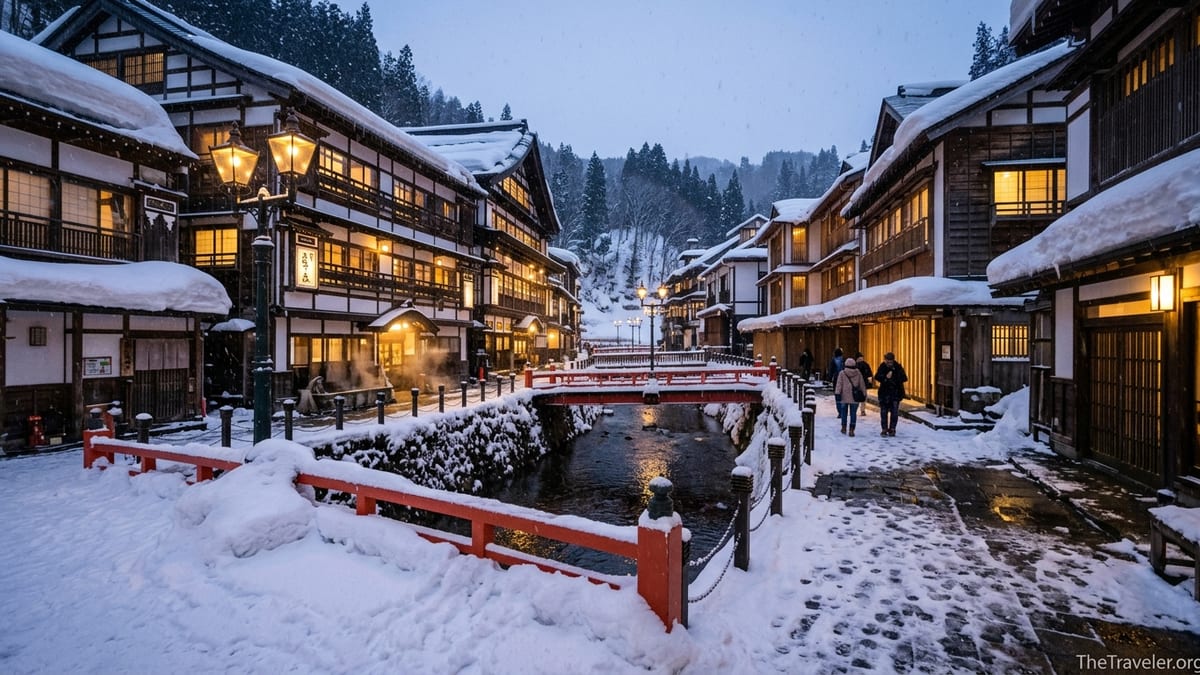
The payoff is that many of northern Japan’s best experiences simply do not exist, or feel far less special, at other times of year. You walk down a Ginzan Onsen side street lined with century‑old ryokan whose balconies are stacked with snow, soak in a steaming outdoor bath while flakes fall on your hair, or ride a ropeway through the famous Zao “snow monsters,” trees encased in ice and rime. These are not side trips from Kyoto temples. They are the main event, and the rest of your planning should revolve around them.
Because winter is serious business here, Japan’s rail networks and airports are generally very good at operating in snow. Shinkansen services between Tokyo and northern cities are engineered for cold and usually keep running even when planes and highways are delayed. Local buses and roads, however, can close during storms or be reduced in frequency. The most reliable winter trips in the north are those that lean on trains and well‑established resort or onsen areas rather than remote, self‑drive itineraries that depend on clear roads every day.
Humidity and wind also shape the experience. Coastal areas on the Sea of Japan side can feel brutally cold when wind chill kicks in, while inland resorts benefit from lighter, drier powder. Sapporo on a still, clear night at minus 8 degrees Celsius can feel comfortable with proper clothes, while a windy day near Lake Towada or the Oirase Gorge can feel harsher at similar temperatures. Building room in your schedule for indoor breaks, onsen sessions and shorter walking days will help you enjoy the beauty of the snow rather than just enduring it.
Onsen & Historic Snow Towns: Ginzan and Beyond
Ginzan Onsen in Yamagata Prefecture is the image that often sells travelers on a northern winter. This compact hot spring village sits in a narrow valley, lined with early 20th‑century wooden ryokan whose facades overlook a small river. In winter, these buildings disappear under heavy snow that clings to roofs, railings and bridges, while old‑style gas lamps cast a warm yellow glow at night. Access involves taking the Yamagata Shinkansen from Tokyo to Oishida Station and then a short bus or taxi ride into the valley, which can take around 40 minutes in heavy snow. The town restricts casual visitor car access on certain winter days, both to reduce congestion and to avoid accidents for drivers unused to deep snow, so overnight guests arriving by public transport or taxi have a smoother experience.
Staying at a ryokan here is not just about the bath. Many inns include half‑board, with elaborate kaiseki dinners that feature Yamagata beef, river fish and mountain vegetables. In winter, a typical plan might cost the equivalent of roughly 25,000 to 40,000 yen per person per night, depending on room type and how fancy the meals are. That makes Ginzan a splurge for many travelers, but for a one‑ or two‑night stay as the centerpiece of an onsen‑focused itinerary it feels justified. Bookings can be tricky, since some smaller ryokan still only take reservations by phone in Japanese or release a small number of rooms on major hotel platforms, so planning several months ahead is wise.
On the practical side, winter in Ginzan rewards minimal but smart packing. Streets in the core of the village are cleared, but snow and ice linger at the edges, and the walk from the bus stop to your ryokan often involves a few minutes on packed snow. Rolling a full‑size suitcase along can be awkward; a more comfortable strategy is to use a medium suitcase and keep a smaller backpack or overnight bag for Ginzan, leaving the bulk of your luggage at a Tokyo or Sendai hotel using luggage storage or a courier service. Footwear matters: insulated, ankle‑high waterproof boots with good tread are far more useful here than fashionable sneakers, and basic clip‑on traction cleats can give you extra confidence on icy sections.
If Ginzan is booked out or over budget, other onsen towns in the north offer a similar blend of snow, history and steaming baths with easier availability. Places like Nyuto Onsen in Akita, Zao Onsen in Yamagata or Noboribetsu Onsen in Hokkaido are all accessible by train and bus, each with multiple ryokan and outdoor baths buried in snowbanks in January and February. These alternatives can feel less polished or less Instagram‑famous than Ginzan, which often translates into slightly lower room rates and more last‑minute openings while still delivering that core experience of soaking outside as the snow falls around you.
Zao’s Snow Monsters & High‑Snow Mountain Scenery
Above the onsen streets of Zao Onsen, the upper slopes of Mount Zao host one of northern Japan’s most distinctive winter sights: the juhyo, or “snow monsters.” These are conifer trees plastered by freezing winds and rime until they become ghostly, bulbous figures scattered across the ridge. The phenomenon tends to peak from late January through February, depending on the year, and is best seen by taking the Zao Ropeway up from the village to the high plateau. At the top station, an outdoor viewing deck and groomed trails allow visitors who are not skiing to walk among the shapes for short distances, though windchill at the summit can feel far colder than in the village below.
Conditions up here are true mountain winter. While Zao Onsen itself often sits just below freezing during the day, the upper ropeway station can drop to minus 10 degrees Celsius or lower with strong winds. Even on a “fine” day, the combination of glare on the snow and gusting ice crystals makes proper gear important. Ski goggles or wraparound sunglasses, a windproof shell, insulated gloves and warm, waterproof boots are the difference between a quick photo and an enjoyable hour of wandering. Local visitors often rent basic ski wear from shops in the village for the day, and travelers doing the same avoid having to pack heavy outerwear just for this one stop.
Zao’s ski area is large enough to serve both serious skiers and casual visitors who just want a few scenic runs. For skiers, the reward is being able to traverse directly through the juhyo fields on marked pistes, something few other resorts in the world can offer. Even intermediates can manage some of the classic routes through the snow monsters on wide, gentle slopes. Non‑skiers can still enjoy the night illumination events, when the juhyo are lit in shifting colors and the ropeway runs after dark, though visibility depends heavily on cloud and snow conditions. It is wise to keep plans flexible, scheduling a couple of nights in Zao so you can choose the clearest evening for a ropeway ride.
Compared with heavily touristed areas like Niseko, Zao Onsen’s village has a pleasantly old‑fashioned feel, with narrow, steep streets and sulfur‑rich baths that date to long before skiing arrived. Snow improves this experience, turning every walk between onsen into a quiet, muffled nighttime stroll. It can also make navigation trickier; sidewalks are sometimes only partially cleared, and stairways can be slick. Many ryokan provide rubber over‑shoes or lend walking poles to older guests for peace of mind. For independent travelers, staying right in the compact center reduces the need to climb hills or negotiate unlit side roads in the evening.
Lake Towada & Oirase: When Snow Enhances and Limits Access
Lake Towada and the Oirase Gorge in Aomori Prefecture are celebrated for autumn foliage, but in deep winter they become a quieter, more subtle landscape of frozen waterfalls, snow‑capped river rocks and mist rising from the lake. Road access can be limited by snow, and large sections of the gorge walking path that are easy in October turn into backcountry terrain in January. For most visitors, the safest and most practical way to experience the area in winter is to rely on scheduled buses from regional hubs such as Hachinohe or Towada City rather than renting a car, unless you are experienced with driving in heavy snow and comfortable with potential closures.
In recent seasons, a special winter bus service has linked Hachinohe, Towada City and Lake Towada on selected days from around late December to early March. Seats must usually be reserved in advance, with a small booking fee, but the system is straightforward and often compatible with rail passes. This setup makes it possible to base yourself in Hachinohe or another city on the Tohoku Shinkansen line, then day‑trip into the lake area for a guided snowshoe walk or lakeside event. Snow depth and ice conditions vary by year, so local tourism offices and visitor centers become important sources of up‑to‑date detail once you arrive.
Here, snow is both the main attraction and the main limitation. Waterfalls along the Oirase Stream partially freeze, creating elaborate ice curtains and icicles, but the same cold can coat informal paths with rock‑hard ice under a layer of powder, obscuring hazards. Independent travelers who want to walk into the gorge in winter should consider joining guided excursions, which typically provide snowshoes or spikes and keep to sections of trail that remain safe. Without that support, even a short walk away from bus stops can feel surprisingly serious in a storm, with rapidly changing visibility and few other people around.
Accommodation choices shape how easy this region feels. Lakefront hotels, some with onsen, offer the satisfaction of looking out over a completely frozen scene at dawn, but they are more exposed to storms and sometimes have limited dining options in midwinter. A city base in Hachinohe or Aomori trades lakeside romance for better transport resilience, more restaurants and the ability to pivot plans if conditions at the lake deteriorate. For a winter itinerary built around flexible experiences rather than specific dates, this balance of snow access and retreat can make the difference between a serene trip and a stressful one.
Sapporo Snow Festival & Northern Winter Events
Every February, Sapporo transforms into a citywide celebration of snow and ice. The Sapporo Snow Festival typically runs for about a week in early February, with the main site stretching for roughly one and a half kilometers through Odori Park in the city center. Here, teams carve massive snow sculptures inspired by architecture, pop culture and global themes, surrounded by dozens of smaller works, food stalls and nighttime illuminations. A second site in the Susukino entertainment district focuses on detailed ice sculptures, which glow beautifully in the evening under streetlights and colored spotlights. A third, more family‑oriented venue on the outskirts of the city usually offers snow slides, tubing lanes and indoor rest areas.
For visitors planning a festival‑focused trip, the key is to anchor dates firmly around the official schedule rather than assuming weekend coverage. In recent years, main Odori Park displays have been open from around February 4 or 5 to roughly February 11, with final dates confirmed closer to the season. Sculptures remain on display all day, but the atmosphere shifts after dark when projection mapping shows and light‑ups begin. Staying within walking distance of Odori Park or Susukino lets you visit the festival in short bursts over several days, dipping back into heated underground shopping arcades or cafés whenever the cold bites.
Winter in Sapporo is cold but manageable with city‑friendly gear. Daytime temperatures in early February usually hover several degrees below freezing, dropping further at night. Sidewalks are cleared but often covered with packed snow or black ice, especially at intersections. Local residents commonly wear insulated boots with aggressive soles or slip‑on cleats and favor long coats, down jackets and earmuffs or hats. Travelers can adapt by packing knee‑length socks, thermal leggings under jeans, a mid‑length down coat and gloves that still let you operate a phone camera. Heat packs, sold cheaply in convenience stores, slip into pockets or boots and can make long evenings at the festival more comfortable.
Sapporo makes a strong base for combining urban winter culture with side trips. During the festival period, extra trains and buses operate to nearby events like the Otaru Snow Light Path, where old stone warehouses and canals are lit by thousands of candles and small snow lanterns. Day trips to Kiroro or other nearby ski areas let you sample Hokkaido powder without committing your whole itinerary to a resort stay, and seafood markets around the city serve winter delicacies such as crab and uni at their seasonal best. For many travelers, a festival‑centered journey might look like three or four nights in Sapporo itself, plus one or two nights in Otaru or a coastal onsen town before or after.
Hokkaido Powder, Ski Towns and Winter Seafood
Hokkaido’s reputation for deep, dry powder is well‑earned. Resorts like Niseko, Rusutsu, Furano and Kiroro benefit from frequent snowstorms that blow in off the Sea of Japan and deposit fresh snow night after night. Over a full winter, some areas see on the order of a dozen or more meters of cumulative snowfall, though exact amounts vary by resort and year. For skiers and snowboarders, this means that even short trips stand a good chance of including at least one day of soft, forgiving powder, especially between late December and late February. Many international visitors build entire itineraries around this, splitting a week between Niseko and another Hokkaido resort and finishing with a night or two in Sapporo.
Compared with European or North American resorts, Hokkaido’s ski areas often feel compact but snow‑rich. Niseko, made up of several interconnected resorts on Mount Annupuri, offers generous off‑piste and tree skiing suited to intermediates and advanced skiers who are comfortable with variable terrain. Rusutsu spreads its runs across multiple peaks, balancing long groomers with deep sidecountry pockets. Furano and Asahikawa‑area hills like Kamui Ski Links see fewer foreign visitors and can offer quieter slopes, especially on weekdays. Lift passes tend to be competitive by global standards, though high season in Niseko in particular has become expensive, with peak‑period day tickets, rentals and lessons approaching big‑name resort prices elsewhere.
Winter seafood is one of the strongest arguments for ending a ski trip in Hokkaido’s cities. Between roughly November and March, markets in Sapporo, Otaru and Hakodate showcase crab, scallops, uni and fatty seasonal fish landed in nearby waters. Casual breakfast spots near central markets serve kaisendon rice bowls piled high with sashimi, while izakaya focus on grilled seasonal species and nabe hotpots. Even convenience stores carry limited‑time winter flavors, from oden simmer pots to regional ice creams. Compared with summer, winter menus lean heavier and richer, a welcome match for long days outside on the snow.
Transport logistics for a ski‑focused itinerary depend heavily on whether you want independence or simplicity. Direct buses link New Chitose Airport and Sapporo with resorts like Niseko and Rusutsu throughout the main season. These coach services are designed for foreign visitors, with English booking platforms and space for ski bags, and are generally reliable even in storms because they use major, well‑maintained highways. Trains serve some areas, but resort access often still involves a final bus or taxi leg from the nearest station. Self‑drive in Hokkaido winter is best left to travelers who are comfortable with snow and ice, white‑out conditions and long, monotonous drives in the dark, particularly in the interior. For most ski visitors, shuttles and resort buses strike the best balance of flexibility and low stress.
Packing, Footwear, Daylight and Train Reliability
Planning for northern Japan’s winter begins with accepting that you will be repeating the same layers every day. A base of thermal underwear, a warm sweater or fleece, a windproof insulated jacket and lined pants or jeans over leggings will serve you in most situations, supplemented by a hat, scarf, gloves and warm socks. Outer shells that are at least water‑resistant are important in coastal areas where snow can turn wet around freezing, while inland resorts benefit from breathable materials that handle dry powder. Rather than packing multiple heavy coats, most travelers are better off bringing one serious winter jacket and washing base layers during the trip.
Footwear is the single most important gear choice. In places like Ginzan Onsen, Zao or Sapporo during the snow festival, streets are either packed snow or polished ice for weeks on end. Insulated boots with grippy soles, ideally mid‑calf height, keep feet warm and dry when stepping through slush at crosswalks or walking along unplowed side streets. Many visitors purchase simple rubber cleats that stretch over shoes, sold at local drugstores or outdoor shops in Sapporo and Sendai for a modest price, and find that they dramatically reduce slipping incidents. Standard urban sneakers, even high‑end ones, quickly soak through and slide on ice, turning scenic walks into nerve‑wracking experiences.
Daylight hours are shorter than many travelers expect. In January, sunrise in Sapporo is roughly around 7 am, with sunset close to 4:30 pm. By late February, afternoons lengthen, but if you are used to squeezing sightseeing into long summer days, you will need to adjust. Building itineraries around two or three main activities per day rather than four or five keeps you from ending up on unlit rural roads or empty station platforms after dark. The flip side is that evenings are perfect for onsen sessions, long dinners and slow festival walks, which do not depend on daylight at all.
Rail remains your strongest ally in winter. Shinkansen lines from Tokyo to northern cities such as Sendai, Morioka and Shin‑Aomori are designed to run in snow and rarely cancel outright, though they may slow during heavy storms. Limited express and local trains in Hokkaido and Tohoku sometimes drop individual services when snowfall is extreme, but cancelations are generally well communicated on station screens and staff help with rerouting. Roads, by contrast, are more vulnerable to closures, especially mountain passes and local routes near lakes and gorges. If your plan depends on driving a particular rural road on a specific day, you have less margin for error than if you can simply wait for the next train.
Building Your Winter Itinerary by Experience Type
For travelers who want an onsen‑and‑snow journey, a classic structure might start with a night or two in Tokyo for arrival and gear shopping, then head north by Shinkansen. Combining Ginzan Onsen with another hot spring area such as Zao or Nyuto creates a rhythm of travel day, soak day, travel day, soak day. You might spend two nights in Zao Onsen with a ropeway ride to the snow monsters, then move on to Ginzan for a one‑ or two‑night splurge. From there, dropping into Sendai or Morioka for a night before returning to Tokyo breaks up the journey and gives you a taste of regional city life. This type of itinerary uses snow to intensify the sense of retreat, with transport legs kept mostly on robust rail lines.
Festival‑focused trips revolve around fixed dates and crowd patterns. One approach is to fly into Sapporo’s New Chitose Airport just before the Sapporo Snow Festival begins, stay three to four nights within walking distance of Odori Park, and then extend the trip with a few nights in Otaru or a nearby onsen. Alternatively, you can weave the festival into a longer northern circuit, timing it midway through a route that also includes Lake Towada, Aomori or Hachinohe, and a Tohoku onsen town. In that case, you might travel up the Tohoku Shinkansen, spend several nights exploring snowbound rural areas using buses, then head across on domestic flights or trains to Sapporo in time for the festival, before finishing with a few days of Hokkaido skiing.
For skiing‑first travelers, it makes sense to pick one or two hubs rather than chasing every famous hill. A simple pattern is to arrive at New Chitose Airport, transfer directly by ski bus to Niseko for five or six nights, then move to Sapporo for two or three nights of urban winter and festival time if dates align. Those seeking a more Japanese, less resort‑driven vibe can swap Niseko for Furano or the Asahikawa area, linking smaller resorts by train and local bus, at the cost of some convenience. Because heavy snow that delights skiers can temporarily disrupt roads and even some local trains, building slack days into ski itineraries is smart. If one planned transfer is delayed, you still have time to catch up without sacrificing irreplaceable lift days or flights home.
Whichever focus you choose, keeping luggage manageable and plans flexible will let you respond to winter rather than fight it. Choosing accommodations close to train stations or festival venues, prioritizing walkable neighborhoods over remote but photogenic spots, and accepting that you may have to swap a remote ice canyon for an extra onsen session if a storm rolls in all help to keep stress low. Northern Japan rewards that willingness to improvise, often with unexpected highlights: an unplanned afternoon in a local bathhouse, a train ride through fields turned into blank white sheets, or a quiet evening in a small bar watching the snow continue to fall outside.
The Takeaway
Northern Japan in winter is shaped by its snow. Rather than treating the cold and storms as obstacles to endure on the way to a checklist of sights, the most satisfying trips build around what the season does best: buried onsen streets, frozen lakes, jubilant citywide snow festivals and bottomless powder. A Tokyo and Kyoto itinerary can show you historic buildings and refined gardens. A northern winter journey shows you how people live with deep cold, and how hot spring culture, festival creativity and resourceful transport systems combine to make that life not just bearable, but joyful.
Success lies in matching your plans to that reality. Those who want quiet and retreat gravitate toward Ginzan and other onsen towns, layering hot baths and snow‑muffled walks. Festival seekers anchor around Sapporo in early February, using efficient trains and underground passages to make cold nights festive rather than punishing. Skiers follow the storms into Hokkaido, accepting that a blizzard that shuts a minor road might also deliver the best turns of the season. With realistic expectations about temperatures, footwear, daylight and transport, winter stops being a risk factor and becomes the reason to go north at all.
FAQ
Q1. When is the best time to visit northern Japan for deep snow but reliable transport?
Mid January to late February usually offers the best combination of deep, stable snow cover and relatively predictable train and bus operations. December can feel thin at lower elevations, while early March brings more daylight and softer conditions but may see thawing in some coastal or lowland areas.
Q2. Do I really need special boots, or will regular sneakers work with care?
Regular sneakers are not recommended for cities like Sapporo or towns such as Ginzan Onsen in winter, because sidewalks and streets stay icy for weeks. Waterproof, insulated boots with grippy soles or add‑on cleats make a big difference to safety and comfort, especially when carrying luggage or walking after dark.
Q3. How cold does it actually feel during the Sapporo Snow Festival?
During the festival in early February, daytime temperatures in Sapporo are often a few degrees below freezing and can drop to minus 10 degrees Celsius or lower at night with windchill. With a proper winter jacket, hat, gloves and warm boots, most visitors find it cold but manageable for several hours at a time.
Q4. Is it safe to rent a car for winter driving in Hokkaido or Tohoku?
Rental cars in these regions are usually equipped with snow tires, but conditions can include heavy snowfall, white‑outs, ice and narrow local roads. Travelers without regular winter driving experience are generally better off using trains and long‑distance buses, especially in rural mountain areas and around lakes and gorges where roads can close suddenly.
Q5. Do trains in northern Japan often stop running because of snow?
High‑speed shinkansen lines are engineered to run in heavy snow and rarely cancel completely, though they may slow down during storms. Local lines and limited express services can experience delays or occasional cancellations when snowfall is extreme, but information is posted clearly at stations and staff help passengers rebook or reroute.
Q6. How many nights should I spend in an onsen town like Ginzan or Zao?
One night is enough to enjoy a full dinner, onsen soak and nighttime walk, but two nights give you a full day with no check‑in or check‑out, which is valuable if you want time to explore or ride the ropeway without feeling rushed. For many trips, two to four total onsen nights split between two towns works well.
Q7. Can I visit Lake Towada and the Oirase Gorge on a winter day trip?
Yes, if you use scheduled winter buses from hubs such as Hachinohe or Towada City and plan around their limited departure times. Expect a shorter, more curated experience than in summer, often focused on guided walks or lakeside viewpoints rather than long independent hikes along the gorge trail.
Q8. Is Hokkaido powder skiing suitable for beginners, or only for experts?
Most major Hokkaido resorts have plenty of gentle groomed runs for beginners and lower‑intermediate skiers, along with English‑speaking ski schools. The famous deep powder and off‑piste terrain mainly benefits confident intermediates and advanced riders, but first‑timers still enjoy forgiving snow and clear run layouts.
Q9. How should I manage luggage when moving between cities, onsen towns and ski resorts?
Using Japan’s luggage forwarding services or hotel storage to separate what you need for each leg from bulky items keeps transfers manageable. Many travelers travel to compact onsen towns with a small suitcase or backpack while sending a larger case directly from one city hotel or ski resort to the next.
Q10. Does heavy snow make northern Japan less enjoyable for independent travelers?
Heavy snow limits some activities and can disrupt self‑drive plans, but it also creates the atmosphere that makes onsen towns, festivals and ski resorts so special. Independent travelers who lean on trains and scheduled buses, book central accommodation and keep itineraries slightly flexible usually find that snow enhances rather than diminishes their trip.