


Kansai is one of Japan’s densest travel regions: neon Osaka, temple-filled Kyoto, port-side Kobe, deer-dotted Nara, mountaintop Koyasan and classic onsen towns like Kinosaki and Arima. In 2026, search results are full of one question: should you base yourself in Osaka or Kyoto and day-trip everywhere, or move between multiple bases? This guide looks at how people actually travel now, compares real hotel and transport patterns, and helps you choose a base that matches your budget, sleep style and sightseeing priorities.
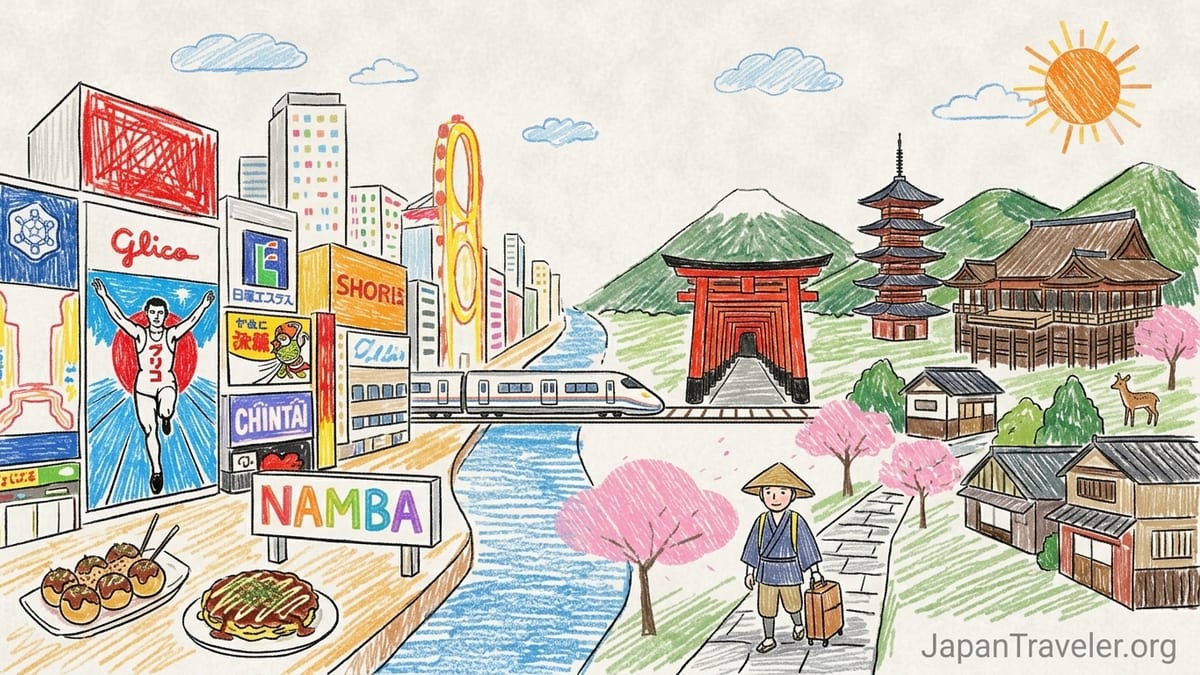
Osaka vs Kyoto: Choosing Your Main Kansai Base
If your trip is five to seven nights in Kansai, your first decision is whether to sleep mostly in Osaka or Kyoto. Both are less than 30 minutes apart by rapid train, but they feel very different on the ground. Osaka is a lively modern city, strong on food, nightlife and hotel value. Kyoto is smaller and more traditional, but its core sights are spread out and increasingly crowded from mid-morning onward.
For many travelers in 2025 and 2026, Osaka works slightly better as a single base if you care about nightlife, varied dining and easy day trips across the region. Mid-range business hotels around Namba or Umeda often start around the equivalent of 9,000 to 13,000 yen per room on weeknights, with frequent promotions outside peak seasons. Kyoto hotels, especially near Higashiyama and Gion, tend to price higher for similar quality, and popular weekends or foliage season push rates up quickly.
Kyoto, on the other hand, is the better base if your priority is early-morning access to temples, shrines and traditional streets. Staying near Higashiyama, Gion or even close to Kyoto Station lets you walk or take short buses to Fushimi Inari, Kiyomizu-dera or the Philosopher’s Path at sunrise before the day-trippers from Osaka arrive. That can be the difference between a peaceful shrine visit and inching through narrow lanes in a crowd.
A practical approach that mirrors how many recent visitors plan: use Osaka as your main base if you have a mixed Kansai itinerary that includes Kobe, Nara or Universal Studios Japan, then give Kyoto one or two nights in the middle of the trip to enjoy the city before or after day-trippers arrive. If your trip is mostly “Kyoto dreams” with only a quick look at Osaka’s neon, reverse it: stay in Kyoto and visit Osaka for one late-night dinner and Dotonbori stroll.
When Osaka Makes the Stronger Base
Osaka is an efficient hub when your days range widely: maybe Nara one day, Himeji the next, and Universal Studios Japan after that. From Osaka Station / Umeda, JR and private lines spread out toward Kyoto, Kobe and Nara, and Kansai International Airport is a direct ride away by Haruka express or airport trains. This web of lines makes it possible to return to the same hotel every night while still reaching most Kansai highlights in 60 to 90 minutes door to door.
Hotel choice is another reason Osaka dominates many recent itineraries. Around Namba you find modern mid-range chains, capsule hotels, hostels and serviced apartments in a dense grid of streets. Travelers regularly find clean, central rooms at prices that would buy only a smaller or older property in Kyoto’s traditional quarters. In Umeda, international business hotels and higher-floor properties offer calmer surroundings but still price competitively compared with central Kyoto.
Osaka also comes into its own after dark. Dotonbori’s neon, late-night yakitori alleys near Namba, and long-opening hours in areas like Shinsaibashi mean you can eat and wander until late without watching bus timetables. For example, a couple can step out of a Namba hotel at 9.30 p.m., grab takoyaki and okonomiyaki along the canal, then finish with a drink in a backstreet bar without worrying about the last train. Back in Kyoto, many residential neighborhoods get quiet and restaurants close earlier.
If you are nervous about frequent hotel changes, Osaka is the easier choice. You can land at Kansai International Airport, head straight to Namba or Umeda, stay there six or seven nights, and radiate out: two or three Kyoto days, one Nara day, maybe a Kobe afternoon or a Universal Studios day. You will spend time on trains, but you avoid repacking and re-checking in, which is especially appealing for families or travelers with large suitcases.
When Kyoto Should Be Your Home Base
Kyoto still deserves to be your main base if your mental picture of Kansai is sunrise at a shrine, lanterns in old alleyways and quiet gardens. Although Osaka to Kyoto by rapid train is only around half an hour, the real travel time from an Osaka hotel door to a specific temple gate can creep toward one to one and a half hours once you add walking, transfers and buses. Do that return trip for two or three days in a row and it becomes tiring.
Staying inside Kyoto lets you structure the day around the city rather than the train. One common pattern is to leave a Higashiyama guesthouse at 7.00 a.m., walk 15 minutes to Kiyomizu-dera before the tour groups arrive, then wander down the traditional Sannenzaka and Ninenzaka streets as shops slowly open. After an early lunch, you might continue to Fushimi Inari or Gion, then be back at your hotel by mid-afternoon to rest before dinner. Doing this while commuting from Osaka each time is possible but less pleasant.
Kyoto also suits travelers who are less interested in nightlife and more in atmospheric evenings. After sunset, Gion and Pontocho alleys are still busy, but the mood is different from Osaka’s noisy neon. You might linger over kaiseki in a small restaurant, listen to jazz in a low-lit bar, or simply walk along the Kamo River. For many, that feels more consistent with a temple and garden heavy itinerary than returning each night to Dotonbori’s crowds.
Finally, Kyoto can be more convenient if Kansai is only one part of a longer Japan itinerary that includes other regions by rail. Shinkansen trains from Kyoto Station run to Nagoya, Tokyo and Hiroshima, and staying near the station cuts down on early-morning transfers. A traveler finishing in Kyoto might spend three nights near Higashiyama, then move to a hotel by Kyoto Station for the final night to make a fast departure on the morning bullet train.
Osaka vs Kyoto Neighborhoods: Namba, Umeda, Shin-Osaka and Kyoto’s Key Areas
Once you have chosen your main base city, the next decision is which neighborhood to sleep in. In Osaka, most visitors choose between Namba, Umeda (Osaka Station area) and Shin-Osaka. In Kyoto, the main choices are near Kyoto Station, central downtown around Kawaramachi and Shijo, and the Higashiyama district on the eastern hills.
Namba is Osaka’s nightlife and food hub. Stay near Nankai Namba Station and you have a direct train from Kansai International Airport, plus easy access to Dotonbori, Shinsaibashi shopping and late-night restaurants. Hotel prices range from budget capsules and hostels to mid-range business hotels, and you pay a small premium for being right in the heart of the action. This area favors travelers who want to step straight into Osaka’s energy each evening and who do not mind slightly longer day-trip times to Kyoto or Kobe.
Umeda, wrapped around Osaka Station, is more businesslike but superb for day trips. JR, Hankyu and Hanshin lines converge here, making it faster to reach Kyoto, Kobe and Himeji. Typical travelers staying in Umeda describe evenings of shopping mall dining, high-rise views and quieter streets compared with Namba. Hotel rates here can edge a little higher, but the time savings on regional trains often balance this, especially if you will ride to Kyoto or beyond multiple times.
Shin-Osaka is the shinkansen station one stop north of Umeda. The surrounding area is practical rather than charming, with offices and business hotels, but it excels if your itinerary involves frequent bullet train rides: perhaps day trips to Hiroshima or Okayama, or arrival and departure by shinkansen from Tokyo. Hotels around Shin-Osaka often price slightly lower than central Umeda, which appeals to budget-conscious travelers who prioritize connection over neighborhood character.
In Kyoto, staying near Kyoto Station offers similar advantages. You have buses, local JR lines and shinkansen services at your door, plus department stores and simple dining inside the station complex. Downtown around Kawaramachi and Shijo gives a more atmospheric city feel close to Nishiki Market and Pontocho. Higashiyama, stretching from Gion toward Kiyomizu-dera, trades some transport convenience for charm: narrower streets, traditional houses and shorter morning walks to several top sights, at the cost of higher nightly rates and more competition for rooms during busy seasons.
Price, Nightlife, Early Sightseeing, Airport Access and Day-Trip Convenience
Looking across Namba, Umeda, Shin-Osaka, Kyoto Station, downtown Kyoto and Higashiyama, each cluster has clear strengths. If budget is your main concern, Shin-Osaka and some parts of Namba and Kyoto Station often show the lowest average rates among well-reviewed business hotels. You may find functional double rooms under the equivalent of 10,000 yen on off-peak weekday nights. Higashiyama and Gion, in contrast, often command higher prices for boutique ryokan-style stays and small guesthouses.
For nightlife, Namba is the straightforward winner. It combines dense restaurants, bars, arcades and canal-side promenades that stay lively late. Downtown Kyoto has pockets of nightlife in Pontocho and Kiyamachi, but the overall feel is quieter and more compact. Umeda sits in between: there are many bars and restaurants, yet the district is less chaotic and more spread out, appealing to travelers who want options without crowds at their doorstep.
Early sightseeing favors Kyoto bases, especially Higashiyama and areas south toward Fushimi Inari. Being able to walk or take a short bus to major temples at 7.00 or 8.00 a.m. transforms the experience. By contrast, starting from Osaka means catching an early train, navigating Kyoto Station, then further buses or local trains. If you dream of near-empty paths beneath torii gates or quiet moments at a Zen garden, one or two nights in Kyoto are worthwhile even if Osaka is your primary base.
Kansai International Airport access is slightly easier from Osaka, particularly Namba, which connects directly by Nankai trains, and Tennoji, which is a Haruka express stop. Umeda also has straightforward airport limousines and train links. From Kyoto, the Haruka limited express connects the station to the airport, but journey times are longer than from central Osaka. For very early morning or late-night flights, many travelers prefer a final night in Osaka to reduce risk and travel time.
Day-trip convenience depends on your goals. If your itinerary includes Kobe, Himeji and frequent Kyoto visits, Umeda or even Shin-Osaka is efficient thanks to JR and private rail links in all directions. If your day trips are mostly within Kyoto itself, plus a single Nara visit, then a Kyoto base makes more sense and you can visit Osaka once in the evening rather than commuting repeatedly.
When to Give Kobe, Nara, Koyasan and Onsen Towns Their Own Night
Not every Kansai highlight fits neatly into a day trip. Kobe, Nara, Koyasan, Kinosaki Onsen and Arima Onsen each reward at least one overnight in specific situations. The key is to look at both travel time and the kind of experience you want after dark.
Kobe and Nara are closest to Osaka and Kyoto and are easy day trips for most itineraries. Many visitors ride to Nara in the morning, spend a day between Todai-ji, Nara Park and the old Naramachi district, then return to Osaka for dinner. Kobe works similarly, coupled with its harborfront at Meriken Park and the hillside Kitano area. You might only choose to overnight in these cities if you find a special hotel deal, want a slower pace, or are attending an event.
Koyasan, by contrast, almost always deserves a night. Reaching the mountaintop temple town involves a train and cable car journey, followed by a short bus ride, and the atmosphere changes dramatically once day visitors leave. Staying in a shukubo temple lodging means eating a vegetarian temple dinner, joining early-morning prayers and walking the Okunoin cemetery in the evening light. For many, this is one of the most memorable nights in Kansai and difficult to re-create as a rushed day trip from Osaka.
Onsen towns such as Kinosaki Onsen and Arima Onsen also work best as overnight stays. Kinosaki, on the Sea of Japan side, is a classic hot spring resort where most ryokan stays include dinner, breakfast and passes to roam between multiple public bathhouses in yukata. Many mid-range ryokan here price in the broad range that reflects both meals and the onsen experience, with winter crab season often more expensive. Arima Onsen, tucked into the mountains above Kobe, is closer to Osaka and Kyoto and can be done as a long day trip, but staying the night allows time for unhurried soaks and a kaiseki dinner.
As you decide, consider not just train times on paper but how it feels at the end of the day. After climbing through temple precincts, bathing in hot springs or walking long distances, returning to a room just a few minutes away is very different from facing multiple connections back to Osaka or Kyoto. When a place’s main magic lies in its evening or early-morning atmosphere, push yourself to give it at least one night.
Making a Base Decision by Travel Style
There is no single “right” choice between Osaka, Kyoto and the surrounding towns. Instead, match your base to your style. If you are a first-time visitor who values simplicity, consider choosing a single base city and only one “special” one-night detour, such as Koyasan or an onsen town. For example, four nights in Osaka plus one in Koyasan keeps hotel changes manageable yet diversifies your experiences.
Repeat visitors or slower travelers might build a chain of bases across Kansai. A common pattern is three nights in Kyoto, two in Osaka and one in Kinosaki or Arima, with luggage forwarded between accommodations using a takkyubin delivery service. This reduces the strain of carrying bags on local trains and lets you experience both Kyoto’s historic streets and Osaka’s modern sprawl at a relaxed pace.
Family trips often benefit from predictable evenings and shorter walks. In that case, Umeda or Kyoto Station areas, with their integrated shopping centers, food courts and clear station signage, may trump the charm of smaller neighborhoods. Parents with strollers or older relatives appreciate being able to grab dinner without crossing busy nightlife zones or navigating tiny alleys late at night.
Budget-focused backpackers, on the other hand, might favor Namba in Osaka or central Kyoto hostels for their mix of dorm beds, guest kitchens and social atmosphere. Japanese capsule hotels near major stations also offer single travelers affordable, safe and clean places to sleep while keeping them close to early trains and late-night food.
The Takeaway
In 2026, the repeated Osaka versus Kyoto question has a simple answer: both cities work, but in different ways. Osaka offers superior value, nightlife and rail connections, making it a practical home base when you want to sample Kobe, Nara, Himeji or Universal Studios without constant hotel changes. Kyoto offers early access and atmosphere around its temples and traditional streets, which becomes increasingly important as the city grows busier through the day.
Within each city, neighborhoods refine the choice. Namba is best for food and nightlife, Umeda for day-trip logistics, Shin-Osaka for shinkansen efficiency. Kyoto Station excels at rail access, downtown Kyoto at urban atmosphere, and Higashiyama at charm and early-morning walks. Onsen towns and Koyasan deserve an overnight when you want immersion in hot springs or temple life rather than a tick-box day trip.
If you are unsure, treat Osaka as your default base, then carve out one or two nights in Kyoto or an onsen town for contrast. That pattern mirrors how many recent travelers structure their Kansai journeys: one practical hub, plus a carefully chosen stay where the magic lies in the hours before the first buses arrive or after the last day-trippers have gone. Build around that rhythm and your Kansai trip will feel coherent, unhurried and memorable.
FAQ
Q1. Is it really worth changing hotels between Osaka and Kyoto?
It depends on your priorities. If you want multiple early mornings at Kyoto temples, spending one or two nights in Kyoto cuts down on commuting fatigue. If you prefer simplicity and do not mind longer train rides, basing entirely in Osaka and day-tripping can work well.
Q2. How many nights should I stay in Kansai for a first visit?
Many first-time visitors spend five to seven nights in Kansai. That usually allows two or three days focused on Kyoto, one or two for Osaka itself, and an extra day or two for Nara, Kobe, Universal Studios Japan or an onsen town.
Q3. Is Namba or Umeda better if I want to use Osaka as a base?
Namba is better for nightlife and direct airport access, while Umeda is better for day trips to Kyoto, Kobe and Himeji thanks to its concentration of JR and private rail lines. Choose Namba if evenings matter most, or Umeda if you expect to ride regional trains repeatedly.
Q4. Is Shin-Osaka too boring to stay in?
The Shin-Osaka area is mostly business hotels, offices and simple restaurants, so it lacks the atmosphere of Namba or Umeda. It is, however, very convenient for frequent shinkansen travel and can be a good fit if you value easy train access over neighborhood character.
Q5. Where should I stay in Kyoto for early temple visits?
Higashiyama and nearby Gion are excellent for early visits to Kiyomizu-dera and surrounding streets. Areas near Fushimi Inari or along the eastern hills also shorten morning journeys, though they may have fewer hotel options than Kyoto Station or downtown.
Q6. Do Kobe and Nara deserve overnight stays?
Most travelers visit Kobe and Nara as day trips from Osaka or Kyoto. You might consider an overnight if you find an attractive hotel deal, want a slower pace, or are attending a festival or event, but for many itineraries a day trip is enough.
Q7. How many nights should I spend in an onsen town like Kinosaki or Arima?
One night is usually enough to enjoy the onsen experience: check in mid-afternoon, bathe before and after dinner, stroll in yukata and depart late the next morning. A second night can be pleasant if you want to slow down or if travel times from your base are long.
Q8. Is Koyasan possible as a day trip from Osaka?
It is possible but rushed. Travel involves trains, a cable car and buses, and much of Koyasan’s appeal lies in evening walks and early-morning temple activities. Staying one night in a temple lodging creates a far richer experience than a quick day visit.
Q9. Which area is best if my flight in or out of Kansai is very early?
Staying your final night in Osaka, especially near Namba, Tennoji or even close to Kansai International Airport, reduces stress for early departures. Kyoto is connected by the Haruka express, but travel times are longer and leave less margin for delays.
Q10. Can I visit both Osaka and Kyoto in a single day from one base?
You can, but it often feels rushed. A more comfortable pattern is to dedicate individual days to each city, even if you are sleeping in the same place, so you are not spending too much time shuttling between them in a single day.