


Osaka, Kyoto and Nara sit less than one hour apart, yet choosing how to package them for a Kansai vacation can feel surprisingly complex. For 2026 and 2027, tour operators, rail companies and online agencies are all pushing multi-day Kansai products: escorted group tours, flexible rail-inclusive passes, independent flight plus hotel deals and small-group cultural trips that promise “local” access. This guide breaks down what those packages typically include, what is left out, and when you are genuinely better off booking trains and hotels on your own.
Understanding the Classic Osaka–Kyoto–Nara Routing
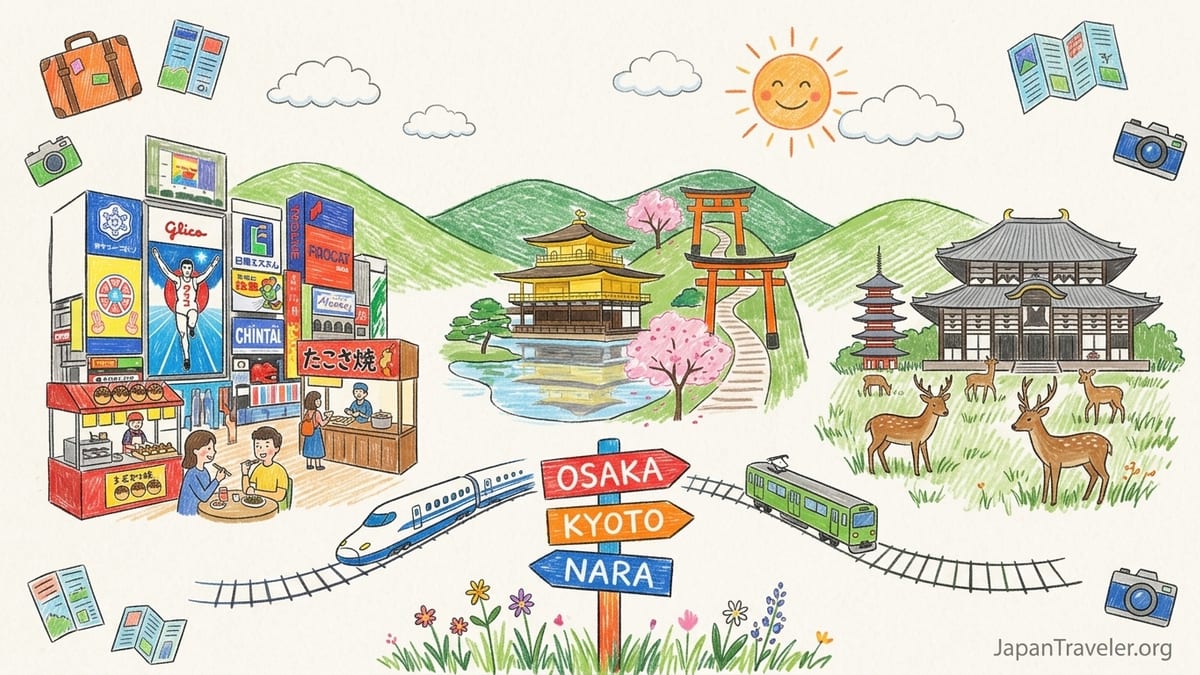
Most Kansai vacation packages, whether sold by large online agencies or niche Japan specialists, are built around a simple triangle: Osaka for food and nightlife, Kyoto for temples and tea houses, and Nara for deer-filled parks and early Buddhist heritage. Japan’s national tourism office often promotes this trio as the core Kansai itinerary, and the pattern shows up in real-world tours now on sale for 2026 and 2027. A typical structure is five to seven days in the region, with three or four nights in Kyoto or Osaka and a day trip to Nara.
For example, several Asian and North American tour operators currently market 6 days 5 nights Kansai-focused trips where guests fly into Kansai International Airport, spend two or three nights in Osaka, then two or three nights in Kyoto with a half or full day in Nara. Prices for these packages in 2026 commonly start around the equivalent of 1,400 to 2,000 US dollars per person excluding international flights, rising to more than 3,000 dollars for private or small-group versions with upgraded hotels. Those prices cover hotels, transfers and guiding, but the details of what is included vary more than first-time visitors expect.
Because travel times within the triangle are short, independently planning a Kansai itinerary is relatively easy. A local train from Osaka to Kyoto usually takes around 30 minutes, and Osaka to Nara is a similar ride, so DIY travelers can comfortably base themselves in one city and day trip to the others. That convenience is the benchmark against which every package has to prove its value.
Escorted Group Tours: What You Actually Get
Escorted group tours remain the most visible Kansai products for 2026/27, especially for first-time visitors and multi-country trips that connect Kansai with Tokyo or Mount Fuji. These tours tend to be operated by mid-size regional companies or pan-Asian brands, and they usually gather 20 to 40 participants on a coach with a full-time tour leader. Brochures typically highlight “Osaka–Kyoto–Nara highlights,” but the fine print reveals how the experience really works.
Hotel changes on these escorted tours are frequent. A common pattern on current itineraries is one or two nights in Osaka, followed by two or three nights in Kyoto, sometimes with a transit night in Nagoya or another city if the tour continues towards Tokyo. That means handling your bags at least once or twice, although larger operators sometimes include hotel-to-hotel baggage transfers on the coach so that guests only move luggage between their room and the bus. Luggage forwarding by courier, which many independent travelers use on trains, is less common on basic escorted group products.
Guided sightseeing on these packages is intensive. In Kyoto, for instance, guides often combine Kiyomizu-dera, Fushimi Inari Shrine and Kinkaku-ji into a single day, with photo stops and short walks rather than in-depth visits. Nara usually appears as a half-day excursion that covers Nara Park, Todai-ji temple and the Great Buddha, sometimes adding Kasuga Taisha Shrine if time allows. In Osaka, itineraries cluster around Osaka Castle, the Umeda area and an evening in Dotonbori. Time for independent exploration is often limited to one afternoon or evening per city.
Meals are a major inclusion selling point. Many 6-day escorted Kansai tours now on sale bundle daily hotel breakfasts, set-menu lunches on full sightseeing days and several group dinners, often at tourist-oriented restaurants that can handle large groups. That simplifies budgeting but can dilute the food experience in Osaka, which is famous for its casual street snacks and small local eateries. Airport transfers from Kansai International Airport into Osaka are usually included on fixed arrival dates; travelers arriving outside the scheduled window may need to pay extra for a private transfer or navigate trains on their own.
Independent Flight + Hotel Packages: Flexibility With Limits
Flight plus hotel bundles are everywhere on major booking platforms for Kansai in 2026 and 2027. They usually allow you to select international flights, choose from a list of hotels in Osaka and Kyoto, and sometimes add pre-packaged excursions such as a Kyoto and Nara day tour. These are not escorted tours: you travel independently but benefit from packaged pricing on airfare and accommodation.
Inclusions in these independent packages are straightforward. You typically get round-trip flights, hotel stays and all taxes, sometimes with breakfast included depending on the property. Airport transfers are not always bundled, especially for budget options, so you may need to pay separately for the train from Kansai Airport into the city. Guided sightseeing is optional, purchased as add-ons such as a full-day small group Kyoto and Nara tour departing from Osaka or Kyoto. You are responsible for daily transport between cities, which you can cover with individual train tickets or rail passes.
The number of hotel changes depends entirely on how you build the package. Many travelers choose three or four nights in Kyoto plus one or two in Osaka, while others stay the whole time in one city and day trip to the others. Because distances are short, basing yourself in Kyoto or central Osaka is practical for the entire stay. Luggage transfers are usually not part of these bundles, but Japan’s door-to-door courier services make it easy to send a suitcase between hotels for a modest fee, which is useful if you add other regions before or after Kansai.
In value terms, these independent packages can be competitive, particularly for long-haul travelers from North America and Europe who benefit from airline discounts when flights and hotels are packaged together. However, once you are on the ground the experience is essentially DIY. You will need to research local trains, reserve seats where necessary and plan your own sightseeing. For confident travelers who enjoy that freedom, this is often the best balance of cost and flexibility in Kansai.
Rail-Inclusive Kansai Packages and Passes
The third category is rail-inclusive packages, which combine hotel stays in Kansai with rail passes issued by JR West or other rail operators. The most recognizable products here are the JR West regional passes, including Kansai Area Passes and wider options that extend towards Hiroshima or beyond. These can be sold directly or embedded within tour operator packages aimed at visitors who want to focus on Western Japan.
Kansai-focused rail passes are designed for unlimited rides on designated JR lines within a fixed number of days, typically between one and four days for basic Kansai passes and up to five days or more for expanded versions. Recent pricing updates suggest that a multi-day Kansai pass still sits in the rough range of several thousand yen for adults, with child fares around half the adult price. While exact numbers are subject to regular reviews, they remain attractive if you are making several intercity trips such as multiple Osaka–Kyoto returns plus an excursion to Nara or Kobe.
Some tour operators build these passes into their packages. A common 2026 offering is a 5 or 6-night Osaka–Kyoto–Nara itinerary that includes hotels, breakfast, a Kansai rail pass and a few guided half-day tours. In such packages, luggage transfers are usually left to the traveler, but the rail pass covers most local and intercity trains within the region, reducing the need to buy individual tickets. Airport transfers by rail may or may not be included, depending on whether the pass covers dedicated airport lines.
The key value question is whether a rail-inclusive package is better than simply buying a pass yourself. For many travelers, the advantage is convenience: the pass is organized in advance, sometimes exchanged by a representative on arrival, and combined with hotels that are located near major stations. If you are comfortable purchasing a rail pass online or at a station, you can often replicate these packages on your own, pairing your preferred hotel with the rail product that best matches your itinerary and travel pace.
Small-Group Cultural Tours: Fewer People, Deeper Experiences
Small-group cultural tours in Kansai have grown quickly, with 2026/27 departures already on sale from specialist operators in North America, Europe and Southeast Asia. These itineraries typically cap group size at around 8 to 16 guests and emphasize slower travel, neighborhood walks and hands-on experiences such as tea ceremonies or cooking classes. Prices are higher than large escorted tours, often starting around 3,000 US dollars per person for a 6 or 7-day Kansai-focused trip excluding international flights.
Inclusions on small-group cultural tours are more generous and curated. Hotel changes are kept to a minimum, most commonly two bases: several nights in Kyoto plus two or three nights in Osaka. This reduces packing and unpacking and allows the group to explore each city in more depth. Some operators include luggage forwarding between the two bases, using Japan’s courier services so that guests travel between cities with only a day pack while their suitcases are transported separately.
Guided sightseeing is more flexible than on large-bus tours. Instead of ticking off as many famous sites as possible each day, small-group itineraries might spend a full morning in one Kyoto neighborhood or schedule time in lesser-known temples and markets. In Nara, for example, the group may visit a traditional machiya townhouse or local workshop in addition to the major temples. Meals emphasize local restaurants, izakaya and family-run establishments, often with several dinners and some lunches included but leaving a few evenings free for independent exploration.
Airport transfers vary. Higher-end small-group packages often include a private or shared transfer from Kansai Airport to the first hotel and back again at the end of the tour. Others simply instruct guests on which train to take and meet them at the hotel or station. Given the higher price level and added services such as luggage transfers and specialty guides, these small-group tours can offer good value for travelers who prioritize comfort, cultural depth and logistical support over the lowest possible cost.
Comparing Luggage Transfers, Hotel Changes and On-the-Ground Comfort
How many times you change hotels during a Kansai trip has a direct impact on comfort. Large escorted tours tend to involve at least one move, often more if Kansai is only part of a longer Japan itinerary. Independent flight plus hotel packages allow you to limit moves but do not automatically prevent over-scheduling; it is easy to book one night in Osaka, one in Nara and two in Kyoto without realizing how tiring daily check-in and check-out can be.
By contrast, small-group cultural tours and well-planned DIY trips often base travelers in one or two cities for the entire Kansai stay. Many experienced visitors choose four or five nights in Kyoto, using day trips to Osaka and Nara, or the opposite: a week in central Osaka with two or three day trips to Kyoto and at least one to Nara. This approach minimizes packing and maximizes the sense of settling into a neighborhood, especially useful after a long international flight.
Luggage transfers are a key differentiator. Basic escorted tours and flight plus hotel packages rarely include door-to-door courier services, although participants can usually purchase them separately. Moderate and higher-end small-group tours are more likely to include at least one instance of luggage forwarding between cities. Independent travelers increasingly rely on these services when moving around Japan; sending a suitcase from an Osaka hotel to a Kyoto ryokan for delivery the next day is a common pattern and is reasonably priced for most budgets.
On-the-ground comfort also depends on how you move between cities. Package tours typically use private coaches between Osaka, Kyoto and Nara, avoiding the need to navigate stations with luggage but sometimes sitting in traffic. Independent travelers using rail passes enjoy frequent trains and predictable travel times, but need to be comfortable reading signs and occasionally standing on busy commuter services. The choice between these modes often comes down to personal preference and willingness to trade autonomy for simplicity.
Cost and Value: Package vs Booking Trains and Hotels Yourself
Price comparisons between packages and DIY travel in Kansai are nuanced because inclusions vary so widely. A 6-day large-group escorted Osaka–Kyoto–Nara tour in 2026 might advertise a per-person cost in the mid four figures in US dollars including most meals, entrance fees, guiding and coach transport within Japan, but not international flights. An independent traveler who books mid-range hotels directly, adds a Kansai-area rail pass and pays for individual day tours could spend significantly less overall, but they will also need to budget time and effort for planning.
Rail costs are an important factor. Buying point-to-point tickets between Osaka, Kyoto and Nara for a 5 or 6-day stay usually adds up to a modest amount, especially if you are not making long-distance Shinkansen trips within the same period. Regional rail passes start to make financial sense when you stack multiple intercity journeys or connect Kansai with cities such as Hiroshima. Tour operators that include these passes in their packages can achieve small savings through volume, but the bigger advantage is convenience, not dramatic price reductions.
Meals and entrance fees also influence the value equation. Packages that include daily breakfasts and several lunches and dinners reduce uncertainty around food costs, which can be appealing to travelers on tightly controlled budgets. However, they also lock you into pre-selected menus, often at restaurants that cater to groups rather than locals. DIY travelers who are comfortable exploring Osaka’s food neighborhoods or Kyoto’s backstreets may find that eating where locals eat both improves the experience and contains costs.
Ultimately, packages offer the best value for travelers who particularly dislike planning, are nervous about language barriers or are traveling with relatives who would struggle with station navigation and ticket machines. Independent booking suits those who value flexibility, want to choose their own hotels and restaurants, and are willing to spend a few evenings researching routes and timetables. Because Kansai’s core cities are so well connected, the financial savings from DIY travel are often moderate rather than dramatic, but the qualitative difference in freedom can be significant.
How to Choose the Right Kansai Package Style for You
Selecting between escorted tours, independent flight plus hotel bundles, rail-inclusive packages and small-group cultural tours starts with an honest assessment of your travel style. If you prefer clear structure, fixed wake-up times and the reassurance of a tour leader, a large escorted tour offers that predictability. You can expect more hotel changes, less free time and more included meals, but very little logistical stress once you land in Japan.
Travelers who enjoy autonomy often gravitate towards independent flight plus hotel packages or purely DIY journeys. In practice, many combine elements: booking international flights and Kansai hotels on their own, buying a regional rail pass separately, and then adding one or two organized day tours such as a small-group Kyoto and Nara heritage day. This hybrid model delivers guided insight on key days while preserving flexibility on the rest of the trip.
Small-group cultural tours sit in the middle. They suit travelers who do not want to handle logistics themselves but dislike the bustle of big coaches and rigid schedules. These tours typically cost more than both large escorted tours and DIY travel, yet they deliver strong value in terms of depth, comfort and the chance to interact meaningfully with guides and fellow guests. For repeat visitors to Japan who have already seen Tokyo and the main Osaka sights, a focused small-group Kansai itinerary can be especially rewarding.
Whatever you choose, scrutinize the inclusions. Pay attention to how many hotel changes are involved, whether luggage transfers are offered, how much guided sightseeing is provided versus free time, which meals are actually included and how airport transfers are handled. Comparing two or three real packages side by side, line by line, usually makes the differences clear and helps you decide whether to pay for structure or build your own Kansai adventure.
The Takeaway
Osaka, Kyoto and Nara are close enough together that almost any traveler can handle the logistics independently with a little preparation. Yet the explosion of Kansai vacation packages for 2026 and 2027 shows that many visitors still prefer some level of structure, whether in the form of escorted tours, rail-inclusive bundles or small-group cultural itineraries.
For travelers who want maximum simplicity and do not mind moving hotels or following a set schedule, large escorted tours deliver a straightforward experience with most costs paid in advance. Those who prioritize flexibility without giving up value often do best with independent flight plus hotel arrangements, supplemented by a regional rail pass and a few carefully chosen day tours. Meanwhile, small-group cultural trips offer an appealing middle path, combining low-stress logistics with deeper, slower exploration of Kansai’s neighborhoods and traditions.
The right choice depends less on geography and more on how you like to travel, how much you enjoy planning and how important spontaneity is to your experience. By understanding what different Kansai packages really include, you can pick the format that supports your ideal balance of comfort, cost and cultural immersion across Osaka, Kyoto and Nara.
FAQ
Q1. Is it cheaper to book an Osaka–Kyoto–Nara package or arrange everything myself? In many cases, arranging your own hotels and train tickets in Kansai is slightly cheaper, especially if you choose mid-range or budget accommodation and avoid long-distance Shinkansen travel. Packages can still be good value when they include extensive guiding, most meals and convenient transfers, but they rarely undercut a carefully planned DIY trip by a large margin.
Q2. How many hotel changes should I expect on a typical escorted Kansai tour? Most large escorted tours that include Osaka, Kyoto and Nara involve at least one or two hotel changes within Kansai, often starting with a stay in Osaka followed by a move to Kyoto. If the tour continues to other regions, there may be additional hotel changes as you travel across Japan.
Q3. Do Kansai vacation packages usually include luggage transfers between cities? Basic escorted tours and flight plus hotel packages do not always include formal luggage forwarding services. Higher-end small-group cultural tours are more likely to provide at least one luggage transfer between Osaka and Kyoto. Independent travelers can easily add courier services themselves for a modest fee whenever they change bases.
Q4. Are airport transfers from Kansai International Airport normally included? Many escorted tours include shared or coach transfers from Kansai International Airport on designated arrival days. Independent flight plus hotel packages vary, and budget deals often leave airport transfers to the traveler. Small-group cultural tours at higher price points are more likely to include either a private transfer or clear rail instructions as part of the package.
Q5. Is a Kansai rail pass worth it if I only visit Osaka, Kyoto and Nara? A Kansai rail pass can be worthwhile if you plan multiple intercity trips within a short period, such as several Osaka–Kyoto returns plus a day in Nara and possibly Kobe. If you only make one or two simple trips between these cities during your stay, buying individual tickets is usually just as economical and sometimes simpler.
Q6. Can I base myself in just one city and day trip to the others? Yes. Many travelers stay entirely in Kyoto or central Osaka and make day trips to the other cities. Trains between Osaka, Kyoto and Nara are frequent, and journey times are typically under an hour, making single-base itineraries practical and comfortable for most visitors.
Q7. What kind of guided sightseeing is included in most Kansai tours? Escorted group tours often focus on major highlights: in Kyoto, temples such as Kiyomizu-dera and Kinkaku-ji; in Nara, Nara Park and Todai-ji; in Osaka, Osaka Castle and Dotonbori. Small-group cultural tours tend to add neighborhood walks, local markets and more time in fewer places, while independent packages rely on optional day tours that you can add or skip as you prefer.
Q8. How many meals are usually included in Kansai vacation packages? Large escorted tours typically include daily hotel breakfasts and several group lunches and dinners, especially on full sightseeing days. Small-group cultural tours also include many meals but often leave more evenings free. Independent flight plus hotel packages may include breakfast only, with other meals paid out of pocket as you go.
Q9. Are small-group cultural tours in Kansai worth the higher price? For travelers who value deeper cultural experiences, smaller groups and help with logistics, small-group cultural tours can justify their higher cost. They usually offer fewer hotel changes, more thoughtful restaurant choices and more flexible guided time than large-bus tours, which many find enhances the overall experience in Kansai.
Q10. When should I book a Kansai package for travel in 2026 or 2027? Booking six to twelve months in advance is a sensible window for most Kansai packages, especially if you plan to travel during popular seasons such as cherry blossom or autumn foliage. This timing helps secure preferred departure dates and hotel categories while still allowing some flexibility to adjust flights or add extra nights before final payments are due.