


For many travelers, soaking in a steaming onsen while looking out at forests, snow or even Mount Fuji is the dream image of a Japanese getaway. The one hesitation is often bathing naked with strangers. The good news: across Japan’s classic onsen regions, more and more ryokan now offer private in-room hot spring baths or reservable private baths that let you enjoy the full experience with far more privacy. This guide walks through the key regions, how private onsen actually work, what to expect from a traditional ryokan stay, and which types of properties fit couples, honeymooners, food lovers, snow seekers and first-time guests.
How Private Onsen at Ryokan Actually Work
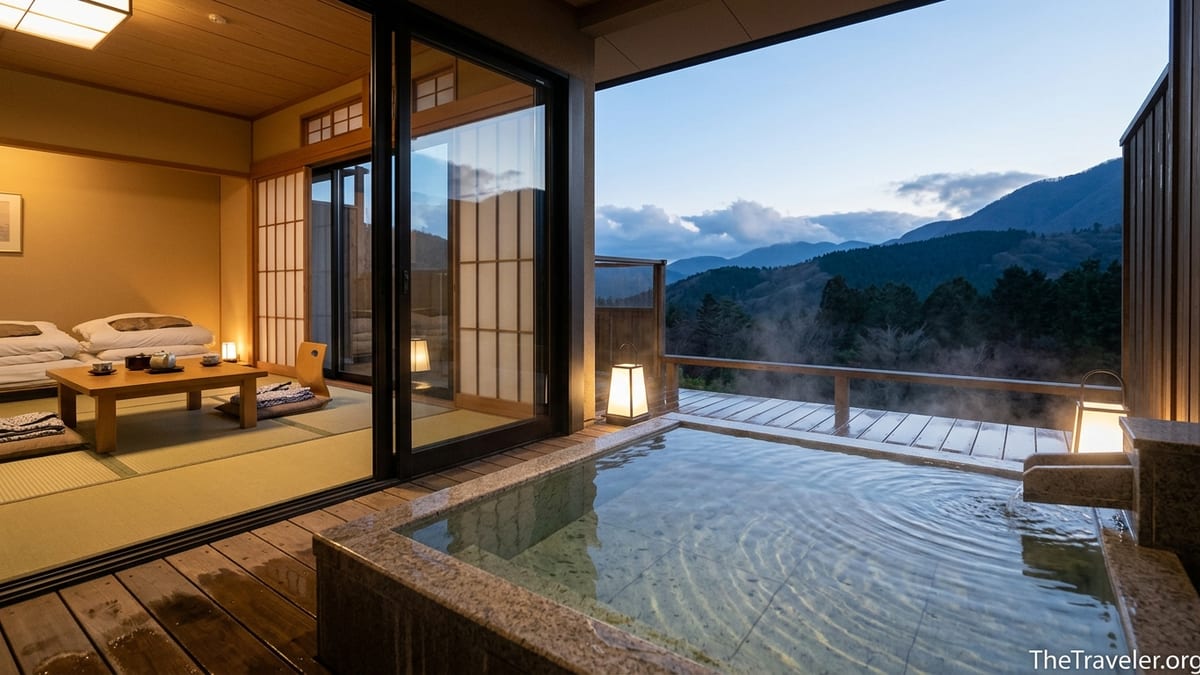
When you see “private onsen” in a listing, it can describe several different setups. The most luxurious is an in-room rotenburo, an open-air stone or wooden tub built on your balcony or terrace and continuously fed by natural hot spring water. Properties such as Gora Kadan in Hakone or top-tier suites at FUFU Kawaguchiko near Mount Fuji offer this style, usually at premium nightly rates that can easily exceed the mid to high hundreds of dollars for two with dinner and breakfast included. You step out from your tatami room straight into your own hot spring, with no need to reserve a time slot.
The second common style is a private indoor bath in your room that is connected to the hot spring source. The tub might be a deep cypress barrel or a modern stone basin in a windowed bathroom. Some rooms at lakeside Fuji ryokan like Konansou and many midrange Hakone inns follow this model. These still give you complete privacy, though the atmosphere is different from soaking outdoors in crisp mountain air.
More affordable ryokan often offer kashikiri, or reservable private baths that you book by the hour. For example, some traditional inns in Okuhida, Nagano and Kyushu advertise two or three outdoor family baths that guests can lock for 40 to 60 minutes at a time. In practice, you check the schedule board in the hallway, slide your room plaque into an open time slot, and enjoy your own session without strangers. This option is ideal if you want true onsen water but do not need a tub attached to your room.
It is important to distinguish true onsen from simple heated water. A genuine onsen bath is filled with geothermally heated mineral water that meets Japan’s legal standards for hot springs, often piped from a named source such as Gora Onsen or Kurokawa Onsen. Some in-room baths, especially in urban hotels, are simply regular water heated by the property’s system. Listings sometimes describe these as “private bath” rather than “private onsen.” If soaking in real mineral water matters to you, look for wording that explicitly mentions hot spring sources and check property descriptions carefully.
Hakone: Classic Private Onsen Near Tokyo
Hakone is the most convenient traditional hot spring escape from Tokyo, reachable in roughly 90 minutes by train. It has long been known for its large onsen hotels, but a growing number of modern ryokan now combine serious hot spring credentials with private soaking options. At the very top of the market, Gora Kadan, a former imperial villa in the Gora district, offers suites with outdoor baths on private decks, meticulous kaiseki dinners and English-speaking staff. Stays for two with meals typically run into high three-figure or low four-figure nightly rates, especially on weekends and holidays.
Travelers looking for guaranteed in-room private baths at a slightly lower price point often consider properties like Hakone Kowakien Tenyu, where every guest room includes a Shigaraki pottery tub on the balcony fed by hot spring water. Many rooms at contemporary-style ryokan in Gora such as Hakone Airu or Bettei Koyoi also feature outdoor baths, with per-person rates that can be more accessible on weekdays or shoulder seasons. These properties offer the convenience of soaking whenever you like, then heading down to larger communal rotenburo if you feel comfortable trying them.
Budget-conscious visitors who still want privacy can focus on ryokan that offer kashikiri baths instead of in-room tubs. Smaller inns around Sengokuhara, Miyanoshita and Tonosawa often have two or three reservable family baths that can be booked at check-in, sometimes free of charge or for a modest fee added to your bill. For example, traditional properties in Okuhida and other onsen towns advertise “two private outdoor onsen” that guests can reserve, providing the experience of a true hot spring soak without the cost of a luxury suite.
Because Hakone is extremely popular with both domestic and international travelers, booking windows and pricing can be competitive. Top ryokan with private onsen often release rooms three to six months in advance and can sell out quickly for cherry blossom season, autumn foliage and long weekend holidays. If you hope to secure a specific room type with outdoor bath and kaiseki dinner, plan ahead and be prepared for rates that climb substantially on Saturday nights compared with midweek stays.
Fuji, Izu and Other Regions for Views, Ocean and Nature
For many visitors, the ultimate image of a private onsen stay is soaking in a hot spring while looking at Mount Fuji. Around Lake Kawaguchi, a number of ryokan now design rooms specifically to capture that view. High-end properties such as FUFU Kawaguchiko feature suites with expansive windows, volcanic-stone baths on the terrace and fireplaces, making them particularly appealing for honeymoons and anniversaries. More midrange lakeside ryokan like Konansou and Hotel Asafuji also offer a selection of rooms with private baths and Fuji views, though these book out early at peak times.
Compared with compact Hakone valleys, the Fuji Five Lakes area feels more open and resort-like. Many ryokan here combine tatami rooms and futons with modern beds, so couples who worry about sleeping on the floor can choose hybrid layouts. Dinner often features local freshwater fish, wagyu beef from nearby regions and seasonal mountain vegetables served in kaiseki style. Because the region also attracts day-trippers and self-drive travelers, you will find a wide range of price points, from simpler inns with shared baths and no meals up to design-forward luxury suites with full-course dinners and private outdoor tubs.
South of Tokyo, the Izu Peninsula offers a different flavor of private onsen stay, shaped by its coastline and milder climate. On the eastern side around Atami and Ito, many ryokan perch on cliffs above the Pacific, and it is common to find rooms with semi-open-air baths facing the sea. Onsen towns like Shuzenji in central Izu lean more traditional, with wooden bridges, temple districts and classic inns that may offer kashikiri baths alongside river-view communal rotenburo. While some Izu baths use true hot spring water, others, particularly in hotel-style resorts, rely on heated regular water, so check descriptions if natural onsen is a priority.
Other strong destinations for nature-focused stays with private soaking include Kusatsu in Gunma, Yudanaka and Shibu Onsen near the snow monkey park, and smaller onsen towns in Nagano and Gifu. In these areas, a ryokan with one or two private outdoor baths shared by reservation can be an excellent balance between tradition and privacy. You can stroll lantern-lit streets in yukata, sample different local springs and still retreat to a private tub for a final soak at night.
Kyushu and Hokkaido: Atmospheric Ryokan for Snow, Forest and Volcanoes
For travelers willing to fly or take longer trains, Kyushu and Hokkaido offer some of Japan’s most atmospheric ryokan with private onsen. In Kyushu’s Kurokawa Onsen, a small valley lined with wooden inns and steaming rivers, luxury properties such as Gekkoju offer villa-style suites with both indoor and outdoor hot spring baths set in private gardens. With only a handful of suites, these ryokan can feel more like standalone retreats than hotels, and dinner highlights Kyushu regional produce, wagyu and river fish in elaborate kaiseki courses served either in-room or in private dining spaces.
Elsewhere in Kyushu, onsen areas like Yufuin and Beppu also feature many ryokan that blend traditional rooms with private soaking. It is common to see listings advertising detached villas or maisonette-style suites, each with its own open-air tub overlooking rice fields or mountain slopes. Because Kyushu’s climate is relatively mild, you can enjoy outdoor bathing much of the year, but evenings in winter still feel cool enough that stepping into your own steaming rotenburo is an indulgent experience.
In Hokkaido, the combination of deep winter snow and volcanic activity creates striking hot spring environments. Noboribetsu Onsen is one of the island’s classic resort towns, with sulfurous steam rising from Hell Valley and a mix of large hotels and smaller design-focused ryokan. At the luxury end, properties highlighted by regional tourism boards include suites with private onsen baths, contemporary interiors and kaiseki dinners that lean heavily on Hokkaido seafood, dairy and mountain vegetables. In ski hubs like Niseko, a handful of boutique ryokan and villa-style lodgings now incorporate private hot spring baths into their design, catering to visitors who want to soak after a day on the slopes without using crowded hotel facilities.
Because Kyushu and Hokkaido onsen areas are more spread out than Hakone, it is worth considering how you will arrive and get around. Some ryokan run scheduled shuttles from the nearest station or bus stop, particularly in winter when roads are snowy or icy. Many guests choose half-board plans that include both dinner and breakfast to avoid needing to leave the property at night. Private onsen options in these regions can range from rustic, lantern-lit outdoor tubs in forest glades to sleek stone baths framed by floor-to-ceiling windows, so browsing photos carefully will help you match the atmosphere to your expectations.
What Makes a Ryokan Stay Different: Rooms, Meals and Etiquette
Even when a ryokan advertises features that resemble a Western-style hotel, such as private baths or beds, the overall stay usually follows traditional patterns. Most classic ryokan rooms are floored with tatami mats and furnished with low tables, sliding shoji screens and futon bedding that staff lay out in the evening. Some contemporary properties offer combinations of futons and low platform beds, but you will generally remove your shoes at the entrance and wear slippers inside. Many guests change into a cotton yukata robe after check-in and wear it to dinner and through the corridors, which is both comfortable and part of the cultural experience.
A highlight of most ryokan stays, especially midrange and luxury ones, is kaiseki dinner. This is a multi-course seasonal meal that might include sashimi, simmered dishes, grilled fish, small appetizers, local vegetables, a hot pot and dessert, all served in a carefully considered order. In high-end properties such as Gora Kadan, luxury Kyushu retreats or top Hokkaido ryokan, kaiseki presentations can be elaborate and artistic. In simpler inns, the format is more straightforward but still substantial. Dinner is usually served at a set start time, and it is important to arrive punctually; staff may call your room if you are late because dishes are timed to be eaten at specific temperatures.
Check-in and bathing etiquette at ryokan can feel unfamiliar to first-time visitors but quickly becomes intuitive. Arrival windows are often in the mid-afternoon, typically between 3 pm and 6 pm, because staff need time to prepare rooms and dinner service is coordinated across the property. At check-in, you may be offered tea and sweets, then shown to your room, where staff explain how the private bath and communal facilities work. In communal onsen, you will wash thoroughly at shower stations before entering the tub, and you must keep your small towel out of the water. If you are primarily using a private in-room or reservable bath, the same washing etiquette applies; ryokan provide stools, buckets and toiletries beside or near the tub.
Tattoo policies are another important consideration. Many traditional communal baths still restrict visible tattoos, though in recent years some onsen towns and individual properties have softened their stance. Even when communal spaces are strict, reservable private baths and in-room onsen are generally fine for guests with tattoos because no other bathers are present. If tattoos are significant for you and you wish to try communal bathing, look for properties that explicitly describe themselves as tattoo friendly or focus your search on inns with robust private options so you will not feel limited.
Luxury Ryokan vs Simpler Traditional Inns
The gap between an ultra-luxury ryokan and a simple family-run inn can be as wide as the difference between a five-star international hotel and a local guesthouse. At the top of the market, you can expect spacious suites, often 50 square meters or more, with private indoor and outdoor onsen baths, high-thread-count linens, carefully curated interior design and elaborate kaiseki meals showcasing regional ingredients. Properties like Gora Kadan in Hakone, Gekkoju in Kurokawa Onsen or design-focused Hokkaido ryokan highlighted by regional tourism boards fall into this category. Nightly prices reflect this, particularly in peak seasons, and stays may include extras such as welcome drinks, in-room check-in and private dining rooms.
Midrange ryokan, which many travelers find the best balance of value and experience, might offer a mix of room types, from standard tatami rooms with access to communal baths up to a few suites with private tubs. Kaiseki-style dinner is still usually included, though courses are simpler and dining rooms may be shared. Service tends to be warm and personal rather than highly choreographed. Prices in this tier can vary widely by region and season, but it is often possible to find rooms with access to reservable private baths or even in-room tubs at rates comfortable for a special-occasion night.
Simpler traditional inns, sometimes called minshuku or small ryokan, are where you will most likely use shared baths exclusively and sleep in compact tatami rooms. These properties may not pipe hot spring water to every bath, relying instead on heated regular water, and dinners, while hearty, are more home-style than formal kaiseki. For travelers who are unsure about communal bathing, these stays can still be rewarding if the inn offers at least one kashikiri bath that can be reserved. In many countryside onsen towns, this is the format that locals themselves have used for generations when traveling with family.
When deciding which level suits you, consider not only budget but also how much time you will spend on-site. If your itinerary already includes intense city sightseeing, investing in one or two nights at a luxury or strong midrange ryokan where you plan to arrive early, soak frequently and linger over meals may be more satisfying than scattering several quick, lower-cost stays. For a first-time visit, even a single night with a private onsen and kaiseki dinner can create lasting memories and give you confidence to explore more traditional options in future trips.
Choosing the Right Private Onsen Ryokan for Your Trip Style
Certain ryokan and regions naturally lend themselves to specific types of travelers. Couples and honeymooners often gravitate toward suites with private open-air baths and romantic views. In Hakone, that might mean a splurge on a Gora Kadan suite or a room at Hakone Kowakien Tenyu facing forested ravines. Around Fuji, lakeside ryokan such as FUFU Kawaguchiko, Konansou or selected rooms at smaller inns with Fuji-facing terraces create dramatic backdrops for anniversaries and proposals. In Kyushu’s Kurokawa Onsen, villa-style suites with garden rotenburo feel secluded and intimate.
Snow lovers and winter travelers may prioritize Hokkaido or mountainous regions like Nagano, where you can move directly from cold air and powdery slopes into a steaming bath. In Hokkaido, boutique ryokan near Niseko or Noboribetsu combine private hot spring tubs with ski access or atmospheric winter landscapes. In Nagano, some ryokan near the snow monkey park or in highland onsen villages offer reservable outdoor baths that take on a magical quality when snow accumulates on rock edges and surrounding trees.
Food-focused travelers might weigh their decision heavily on the quality of kaiseki cuisine. Reputation matters here: long-established Hakone ryokan, upscale Fuji properties and selected Hokkaido and Kyushu inns are known for multi-course dinners that highlight local seafood, wagyu, seasonal mountain vegetables and regional specialties. Reading recent guest impressions and looking at sample menus can help you identify where dinner is a true highlight rather than just an inclusion. Because most ryokan include breakfast and dinner in standard plans, upgrading to a property renowned for its kitchen can significantly shape your overall experience.
For first-time ryokan guests, a midrange property in an accessible area such as Hakone or the Fuji Five Lakes is often ideal. Look for clear explanations in English, several room categories including at least a few with private baths, and a mix of communal and kashikiri options. This lets you start with your private onsen, then, if you feel comfortable, try the larger shared baths. The experience of wearing yukata, navigating tatami spaces, and enjoying kaiseki dinner will be new but manageable, and after one stay you will better understand whether your next trip should lean more luxurious, more rustic or toward a different region entirely.
FAQ
Q1. What is the difference between a private onsen and a private bath in Japan?
A private onsen uses natural hot spring water that meets legal onsen standards, while a private bath may simply be heated tap water. Many urban hotels advertise private baths but not all are true onsen. To be sure, look for descriptions that mention a specific hot spring source or clearly state that the tub is fed by onsen water.
Q2. Are in-room onsen better than reservable private baths?
In-room onsen are more convenient because you can soak any time without booking, which is ideal for couples or honeymooners. Reservable private baths, often called kashikiri, are more affordable and still offer complete privacy for set time slots. If your budget is limited but you want genuine hot spring water, a ryokan with good kashikiri baths can be the best compromise.
Q3. How much does a night at a ryokan with private onsen usually cost?
Prices vary widely by region and season, but midrange ryokan with private baths often start around moderate three-figure amounts per night for two people with dinner and breakfast. Luxury ryokan such as Gora Kadan, Gekkoju or design-led Hokkaido properties can run into high three figures or more, especially for suites with large outdoor tubs and peak-season dates.
Q4. Do I have to sleep on the floor at a traditional ryokan?
Many classic ryokan use futons on tatami floors, which staff lay out while you are at dinner. However, more modern properties around Hakone, Fuji and other popular regions now offer rooms with low beds or a mix of bed platforms and tatami seating areas. If you are concerned about sleeping on the floor, look for room descriptions that clearly state there are beds rather than only futons.
Q5. Are tattoos a problem if I book a ryokan with private onsen?
Tattoos can still be an issue in some communal baths, but private options usually remove this concern. In-room onsen and reservable kashikiri baths are generally fine for guests with tattoos because you are not sharing the space with others. If you want to use communal baths as well, it is safest to choose a ryokan that mentions being tattoo friendly or to contact the property in advance.
Q6. What should I wear at a ryokan and to the onsen?
At check-in you will usually receive a yukata robe and sometimes a light jacket or coat to wear over it. Guests commonly wear yukata around the property, to dinner and to the baths. In the onsen area you undress completely, leaving your yukata in the locker room, and bring only a small towel to the washing area. Swimsuits are typically not allowed in most traditional baths.
Q7. Is one night at a ryokan enough to experience it properly?
One night is usually enough to get a full sense of the ryokan experience, especially if you arrive soon after check-in opens. You can soak in your private onsen before dinner, visit the larger baths later in the evening or early the next morning, and enjoy both dinner and breakfast in kaiseki style. Many travelers combine one or two ryokan nights with several nights in city hotels.
Q8. How far in advance should I book a ryokan with private onsen?
Popular ryokan in Hakone, Fuji and famous onsen towns often release rooms several months in advance and book out quickly for weekends and peak seasons. For stays that require a specific room type with private outdoor bath, booking three to six months ahead is sensible, and even earlier for holidays like New Year, cherry blossom weeks or autumn foliage periods.
Q9. Can families with children use private onsen at ryokan?
Yes, private onsen are often a good solution for families, especially if children are shy about communal bathing. Many ryokan allow families to reserve kashikiri baths by the hour so parents and children can soak together. It is still important to supervise children closely, as onsen water is hot and tubs are deep, and to keep noise levels considerate of other guests.
Q10. What is the main difference between a luxury ryokan and a simple inn?
Luxury ryokan offer larger rooms or suites, refined design, elaborate kaiseki meals and more personalized service, often with in-room or private outdoor onsen. Simpler inns focus on basic tatami rooms, home-style meals and shared baths, sometimes with one or two reservable private tubs. Both can be rewarding, but luxury stays emphasize comfort and detail, while simpler inns highlight everyday local hospitality.