


Chugoku’s hot spring towns offer a quieter, more traditional alternative to Japan’s headline onsen destinations, with riverside bathhouses, tatami rooms and kaiseki dinners that still feel rooted in their communities. From Shimane’s storybook Tamatsukuri Onsen to the rejuvenated streets of Nagato Yumoto in Yamaguchi, this corner of western Honshu is dense with characterful ryokan. Many are listed with the Japan Ryokan and Hotel Association as part of a genuine regional product, and work well as bases for surrounding castles, shrines and coastal scenery. This guide focuses on where to stay, how the baths actually work in practice, and what to expect around tattoo policies, meals and access.
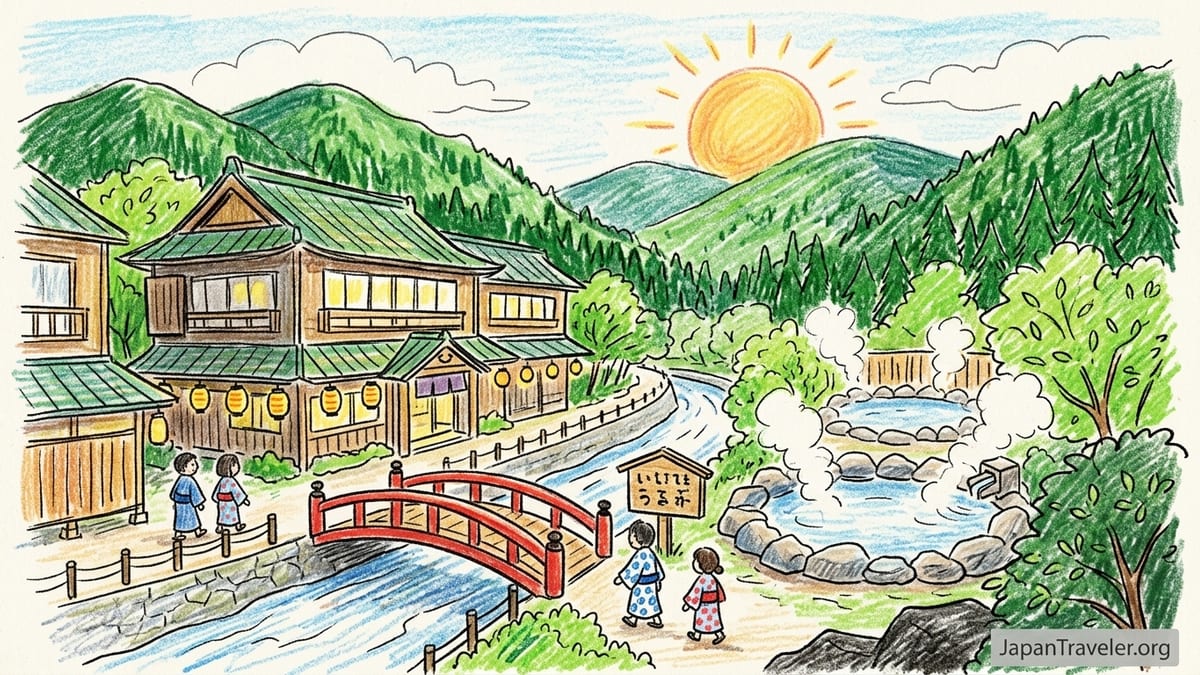
Tamatsukuri Onsen, Shimane: Classic Izumo Hot Spring Stay
Tamatsukuri Onsen, a compact hot spring town on the outskirts of Matsue in Shimane Prefecture, is often the first Chugoku onsen that domestic travelers recommend. The town runs along the Tamayu River, with a string of mid-sized ryokan and a landscaped riverside promenade dotted with free footbaths. Many properties belong to the Japan Ryokan and Hotel Association and lean traditional, with tatami rooms, yukata and elaborate dinners built around Izumo’s seafood and Shimane wagyu. It works well as a base for Matsue Castle, Izumo Taisha Grand Shrine and Lake Shinji, all reachable in roughly 30 to 60 minutes by train or bus plus short taxi rides.
For a full traditional experience, travelers often look at ryokan that balance classic atmosphere with renovations. Properties such as Kasuien Minami or Chikuyo Tei pair tatami guest rooms with both large communal baths and a selection of private onsen that can be reserved by the hour. A typical plan for two people with one night, kaiseki dinner and Japanese breakfast might run from the mid-20,000 to mid-40,000 yen range depending on season, room type and whether a private open-air bath is attached. Many houses draw water directly from the local sulfate-rich spring, known historically as a “beauty bath,” and keep late-night hours so guests can bathe after an evening stroll.
Public versus private bathing is a key decision point in Tamatsukuri. Communal baths tend to be spacious and include multiple pools at different temperatures, plus rotenburo open-air baths framed by lanterns and stonework. These are ideal if you are comfortable with Japanese bathing etiquette and want to soak for longer. Private baths, either attached to certain guest rooms or available as rentable “family baths,” allow couples or friends to bathe together and are often chosen by those with tattoos or travelers new to onsen culture. Tattoo policies here vary; some larger hotels quietly accept small tattoos if covered with a patch, while others encourage tattooed guests to reserve private baths instead. It is safest to confirm in advance by email, especially during busy seasons.
Reaching Tamatsukuri is straightforward: from Matsue Station, the local train to Tamatsukuri Onsen Station takes around 10 minutes, followed by a short taxi ride or shuttle bus provided by some ryokan. This makes it easy to use as a hub for day trips. One common itinerary is to check in early, soak before dinner, then on the following day visit Izumo Taisha and the Shimane Museum of Ancient Izumo, returning to Tamatsukuri for a second night. The combination of relatively easy access, refined but not overly formal service and good connections to cultural sights makes Tamatsukuri one of Chugoku’s most versatile onsen towns for first-time visitors.
Misasa Onsen, Tottori: Mountain Ryokan and Radium Springs
Misasa Onsen in central Tottori Prefecture feels distinctly rural, with wooden ryokan lining a narrow river in a forested valley. The hot spring is famous for its naturally radioactive radium waters, long marketed for therapeutic benefits, and the town still has a quirky, nostalgic air. Many of the inns here, including long-established properties such as Izanro Iwasaki and Misasakan, combine Meiji or Taisho era architecture with modern guest wings and renovated bath facilities. Footbaths and small public bathhouses are scattered along the river, and the mixed riverside open-air bath, Kawara-buro, is a local symbol for those comfortable with very traditional bathing.
Staying in Misasa is particularly rewarding if you want to pair onsen time with hiking and temple visits. Mount Mitoku’s Nageiredo Hall, a wooden temple dramatically perched on a cliff, is within day-trip range by local bus or taxi, conditions permitting. Many ryokan offer shuttle pickups from Kurayoshi Station, about 20 to 30 minutes away by road, making it realistic to arrive on a limited express train from Okayama or Tottori City and reach your futon before dinner. Once checked in, guests typically spend the late afternoon trying different baths within the property; a large ryokan such as Misasakan might have multiple indoor pools and landscaped outdoor baths, plus rentable private baths for families.
Meals in Misasa tend to be generous, with kaiseki dinners highlighting Tottori beef, local river fish and seasonal wild vegetables. Winter brings crab-focused menus sourced from the Sea of Japan, often reflected in higher seasonal pricing. Standard one-night half-board plans can start in the high teens of thousands of yen per person at simpler inns and rise to over 30,000 yen at larger, amenity-rich ryokan with more elaborate course dinners. Tatami rooms are the norm, and older wings might offer creaky floorboards and shoji screens that appeal to travelers seeking a sense of history rather than slick minimalism.
Public versus private bathing in Misasa follows similar patterns as elsewhere, but the town’s therapeutic reputation means some properties attract guests planning multiple short soaks each day. Communal baths are widely used, and mixed bathing is still present at certain locations like the riverside bath, though ryokan themselves generally separate baths by gender. Tattoo policies vary by property and can be more conservative at older inns, so those with larger tattoos often gravitate to rooms with attached outdoor baths or reserve-time family baths. As a base, Misasa is best suited to travelers focused on nature walks, temple visits and slow town exploration rather than rapid multi-city sightseeing.
Kaike Onsen, Tottori: Seaside Springs Facing the Sea of Japan
Kaike Onsen occupies a low sandbar on the coast of Yonago in western Tottori, so many ryokan here look directly over the Sea of Japan. This beach-on-one-side, onsen-on-the-other layout creates a different feel from mountain hot spring towns. In summer, families combine days on the sand with evening baths, and in winter guests watch heavy waves roll in from the comfort of steaming outdoor pools. The hot spring water is salty and warm, drawn from coastal wells, and many properties promote it as beneficial for the skin and circulation. The town is compact, with a main street of hotels and ryokan leading to the waterfront promenade.
Accommodation ranges from simple retro inns to larger oceanfront hotels such as International Hotel Kaike and Kaike Tsuruya, where many rooms feature sea views and tatami layouts. A typical ocean-facing tatami room with kaiseki dinner and breakfast might cost from the low-20,000 yen range per person in quieter months. Many guests choose room plans that include access to both large communal baths and at least one outdoor rotenburo where you can soak while watching the horizon. Private baths are more limited in number than in some inland resorts, so travelers who prefer reserved baths should check plan details or seek rooms with attached open-air tubs.
Kaike works well as a base if you want both onsen and easy sightseeing. Yonago Station is about 15 minutes away by bus or taxi, connecting you to Matsue, Sakaiminato and the sacred volcano Daisen. Day trips to Adachi Museum of Art in neighboring Shimane or to the dunes around Tottori City are possible for those comfortable with train transfers. After a day out, returning to a sea-facing rotenburo is one of Kaike’s main pleasures. For families, the combination of beach access and casual, kid-friendly tatami rooms is appealing, especially in late spring and summer.
Public baths dominate the experience in Kaike, with many properties featuring wide indoor pools designed to handle tour groups. Peak times before dinner can be busy, but early mornings and late evenings are quieter. Tattoo policies will differ by property; some larger hotels have begun to quietly accept tattoos, especially for international guests, while others still ask guests with visible body art to use private facilities only. Because competition between ryokan is strong here, service standards are generally solid, and many front desks can assist with arranging taxis, rental bicycles or simple transfers to Yonago Station or the nearby airport.
Yuda Onsen, Yamaguchi City: Urban Hot Spring Hub
Yuda Onsen in Yamaguchi City presents a different atmosphere from rural hot spring towns. Here, the springs bubble up in a relatively flat urban district with broad streets, izakaya and convenience stores, yet there are several long-established ryokan threaded between modern hotels. The sulfurous water is naturally hot and piped to both accommodation and public bathhouses, so you can easily combine sightseeing at Rurikoji Temple’s five-story pagoda or the former Saigo Takamori-related sites with evening soaks back at your inn.
Because of its city setting, Yuda offers a wide price spectrum. Modest business hotels tap into the hot spring source, while traditional-style inns provide tatami rooms and kaiseki dinners. Ryokan such as Matsudaya Hotel, with a history stretching back more than a century, focus on garden views and multi-course meals served in-room, while more modern properties might offer buffet breakfasts and Japanese-Western rooms. Standard two-meal plans in a classic tatami room might start in the mid-20,000 yen range per person and rise with private open-air baths or higher-end kaiseki featuring pufferfish from nearby Shimonoseki.
Public versus private bathing in Yuda is influenced by the urban customer base. Communal baths can be busy with business travelers, especially on weekdays, but they are usually efficient, with long operating hours and straightforward facilities. Some ryokan have responded to changing tastes by adding reservable family baths or suite rooms with semi-open-air tubs, useful for couples or families seeking privacy. Tattoo policies, as elsewhere, are set by each property; urban locations sometimes have more flexible attitudes, but there is no firm rule, so confirmation before booking remains important.
As a base, Yuda Onsen is very practical. Yudaonsen Station lies on a JR line that connects to Shin-Yamaguchi, a Shinkansen stop, in a short ride, and many ryokan offer shuttle transfers or can call taxis easily. From Yuda, day trips to Akiyoshido Cave, Hagi’s preserved samurai quarter, or even Tsunoshima Bridge on the Sea of Japan coast are feasible with a car or a combination of bus and train. Travelers who want onsen comfort without sacrificing urban conveniences often find Yuda appealing, especially in cooler months when evening strolls between bars, ramen shops and footbaths give the area a neighborhood feel.
Nagato Yumoto, Yamaguchi: Revitalized Riverfront Onsen Town
Nagato Yumoto Onsen, in the hills of Yamaguchi Prefecture, has undergone a notable transformation in recent years. Once a somewhat dated resort area, it has been the focus of an extensive “mirai” (future) revitalization project that reworked its riverfront, added pedestrian paths and created new communal spaces around the historic Onto public bath. Today, the town has a mix of long-running ryokan and newer design-forward accommodations, making it one of Chugoku’s most interesting onsen districts for travelers who enjoy both tradition and contemporary aesthetics.
Ryokan such as Tamasenkaku preserve the classic style with broad tatami rooms, kaiseki dinners highlighting Yamaguchi seafood and multiple in-house baths. Meanwhile, design properties operated under brands like Hoshino Resorts bring minimalist decor, curated local experiences and sophisticated lighting to riverside rooms. Communal baths at these properties often open onto gardens or the river itself, creating views that change with the seasons: fireflies in early summer, colored leaves in autumn and occasional snow flurries in winter. Prices reflect this higher-end positioning, with two-meal stays often starting in the upper-20,000 yen range per person and rising for river-view suites or rooms with private open-air tubs.
The town layout encourages walking. A riverside promenade connects ryokan with Onto and other small public baths, plus cafes and galleries that have appeared alongside the redevelopment. Guests might check in, slip into yukata and sandals provided by their inns, and stroll over small bridges to an evening soak or a dessert shop. Public versus private bathing is well balanced: many inns feature multiple shared baths, but private “kashikiri” baths and in-room tubs are common at mid-range and higher-end properties. Tattoo policies vary; given the presence of international guests at brand-name hotels, some accommodations have formal or informal guidelines allowing tattoos, especially in private baths, yet guests with large body art should still confirm before arrival.
Nagato Yumoto is also a strategic base for western Yamaguchi. By car or bus, you can reach the dramatic cliffs and torii gate of Motonosumi Shrine, the coast at Tsunoshima, or the temple town of Hagi within roughly an hour. Access from major hubs is via Nagato-Yumoto Station or Nagato City stations, with transfers from Shin-Yamaguchi or Asa on the Shinkansen line. With its combination of scenic riverside design, varied ryokan levels and strong regional connections, Nagato Yumoto suits travelers ready to spend a little more for atmosphere and convenience.
Scenic Ryokan Near Miyajima and Tomonoura
While Miyajima in Hiroshima Prefecture is most famous for its floating torii gate and World Heritage shrine, it also offers a small cluster of traditional-style inns that, although not all focused on hot springs, deliver many of the same elements as onsen ryokan: tatami rooms, multi-course dinners and communal baths. Properties such as Iwaso and Jukeiso, for example, are set on the hillside above town, with rooms overlooking maple trees or the Seto Inland Sea. Their baths use heated water rather than natural hot springs, but post-sightseeing soaks still feel restorative after a day of hiking Mount Misen or visiting Itsukushima Shrine. One-night stays with two meals often fall in the 30,000 to 40,000 yen per-person range for view rooms, particularly in peak foliage or cherry blossom periods.
Public versus private bathing at these Miyajima inns generally centers on standard communal baths, with a limited selection of private or family baths that can be reserved ahead of time. Because many guests stay only one night, schedules are tight; it is common to bathe once before dinner and again early the next morning. Tattoo policies are varied and can be somewhat more flexible at accommodations accustomed to overseas visitors, yet rules still differ by property. In terms of logistics, staying on Miyajima itself means walking distance access to the shrine and ropeway, but luggage handling requires ferry transfers, so some travelers instead choose hot spring hotels on the mainland in Miyajimaguchi and visit the island on a day trip.
Tomonoura, in Hiroshima Prefecture’s Fukuyama area, offers another scenic setting with a small but atmospheric selection of traditional inns. The town overlooks island-studded Tomonoura Bay and has preserved Edo-period streets that have appeared in films and anime. A handful of ryokan and small hotels occupy waterfront or hillside positions, many with tatami rooms looking over the harbor. Not all have natural hot springs, but most feature communal baths with bay views, along with set dinners built around local seafood such as tai sea bream. Because capacity is limited, prices can be relatively high for the size of rooms, reflecting the premium placed on location and historical ambience.
As a base, Tomonoura suits slower itineraries. Access is via bus or taxi from Fukuyama Station, which sits on the Sanyo Shinkansen line, so onward travel to Okayama, Hiroshima or even Osaka and Fukuoka is straightforward. Travelers might spend a day walking the town’s alleys and temples, take a short boat trip across the bay, then return for an evening bath and harbor-view dinner. Those seeking mineral-rich onsen might prefer to base themselves in nearby hot spring areas and visit Tomonoura as a side trip, but for photography and atmosphere, spending at least one night in a local ryokan is memorable.
Choosing Between Public and Private Baths, Kaiseki Meals and Tatami Rooms
Across Chugoku’s onsen towns, the core decisions for travelers usually come down to how comfortable they are with communal bathing, how important a full kaiseki dinner is, and whether they value traditional tatami rooms over Western beds. Public baths are integral to the ryokan experience, especially in Tamatsukuri, Misasa, Kaike, Yuda and Nagato Yumoto, where large indoor pools and landscaped outdoor baths are often a property’s pride. For many visitors, sharing these spaces with other guests, following quiet etiquette and observing seasonal decorations adds to the sense of being in a living Japanese tradition rather than a private spa.
However, private baths can dramatically change the experience for travelers who feel shy, are visiting as couples or families, or have tattoos. In Misasa’s larger ryokan, for instance, reservable private baths allow guests to enjoy the radium-rich waters without worrying about other bathers. In Tamatsukuri and Nagato Yumoto, higher-category rooms frequently come with semi-open-air tubs overlooking gardens or rivers, letting guests move between tatami sitting areas and their own hot spring without leaving the room. These upgrades typically add several thousand yen per person to a package but can be worth the cost if bathing privacy is a priority.
Kaiseki meals are another defining element. In Kaike and Tomonoura, dinners often highlight the Sea of Japan’s seafood, while in Yuda or Nagato Yumoto, chefs weave in regional specialties such as pufferfish, kawara soba or Yamaguchi beef. Classic ryokan serve these meals in-room or in private dining spaces, course by course, which can take two hours or more. Travelers who prefer flexibility or lighter meals sometimes opt for plans that include breakfast only and explore local izakaya instead, more feasible in urban locations like Yuda Onsen or the redeveloped streets of Nagato Yumoto. Tatami rooms with futons remain standard across the region, but many properties now offer hybrid Japanese-Western rooms, adding low beds on raised platforms or in adjacent spaces, a useful option for those with back issues.
Tattoo policies cut across all these choices and remain one of the most variable factors. Regulations are set by each ryokan rather than by towns or associations, and practices range from fully accepting any tattoos to only allowing covered or very small designs in public baths. Some places, particularly those used to international guests, note on their websites or booking pages that tattoos are permitted in private or family baths but not in larger communal facilities. Travelers with extensive body art will have the easiest time if they prioritize inns with private onsen, either in-room or rentable, and confirm policies directly by email or phone when booking.
Using Chugoku Ryokan as Bases for Regional Exploration
One advantage of focusing on Chugoku’s onsen towns is how well some of them function as hubs for wider exploration. Tamatsukuri Onsen, for example, allows easy day trips not only to Matsue Castle and Izumo Taisha but also to the art collections and landscape gardens of the Adachi Museum in neighboring Shimane. Guests can return in the evening to the same tatami room, avoiding the packing and unpacking associated with point-to-point itineraries. Kaike Onsen provides similar flexibility along the Sea of Japan coast, with access to Daisen, Sakaiminato’s port and seafood markets, and Matsue reachable by train.
In Yamaguchi Prefecture, Nagato Yumoto and Yuda Onsen form a complementary pair. Yuda’s urban location makes bus and train transfers straightforward, ideal for travelers continuing along the Sanyo Shinkansen corridor, while Nagato Yumoto’s quieter valley setting offers a more immersive hot spring town experience. A traveler might spend one night in Yuda on arrival, using it as a base for visits to Rurikoji Temple or Akiyoshido Cave, then continue by local train or rental car to Nagato Yumoto for two nights of slower-paced soaking and walks along the river promenade. From there, day trips to coastal viewpoints or the historic city of Hagi become manageable.
Misasa Onsen, by contrast, works best as a focused retreat rather than a rapid sightseeing base. Its rail and bus connections are fine but not as frequent or fast as those of Yuda or Tamatsukuri, and the appeal lies more in repeated soaks and nearby hikes than in multiple far-flung attractions. Travelers with limited time might plan one or two nights in Misasa combined with a night in Tottori City or Yonago before moving on. Around Hiroshima, a combination of a Miyajima ryokan night and a non-thermal but atmospheric stay in Tomonoura can serve as a gentle epilogue to a Chugoku onsen circuit before returning to major hubs such as Osaka or Tokyo.
The Takeaway
Choosing among Chugoku’s ryokan and onsen towns comes down to what kind of stay you want and how you plan to travel. Tamatsukuri and Kaike offer classic hot spring experiences with strong transport links and broad accommodation ranges, while Misasa focuses on therapeutic waters and mountain quiet. Yuda and Nagato Yumoto in Yamaguchi balance convenience and atmosphere, with the latter showcasing a notable example of contemporary onsen town revitalization. Around Hiroshima, Miyajima and Tomonoura trade intensive hot spring culture for heritage-rich coastal stays that still capture the essential rhythms of ryokan life.
Across these destinations, the core elements remain consistent: soaking in hot baths, sleeping on tatami, dining on seasonal kaiseki and sliding into yukata for an evening stroll. The differences lie in whether your rotenburo overlooks a river, a mountain or the sea, whether you prefer communal or private bathing, and how much emphasis you place on day-trip sightseeing. With around 60 ryokan and hotel properties in Chugoku registered with the Japan Ryokan and Hotel Association, and many more independent inns beyond that, travelers have ample scope to find a property that aligns with their preferences, comfort level and budget.
By thinking through practical details such as tattoo policies, transfer logistics from the nearest JR station, and the balance between formal kaiseki and flexible dining, you can turn a night in a ryokan into the centerpiece of a Chugoku itinerary rather than just a pleasant add-on. Whether your ideal stay is a radium-soaked retreat in Misasa, a sea-breeze bath in Kaike or a design-forward riverside room in Nagato Yumoto, the region rewards those who slow down, soak often and let the hot spring towns set the pace.
FAQ
Q1. How many nights should I spend at a Chugoku onsen town?
Most travelers find that one or two nights per town is ideal. One night works if you mainly want to experience ryokan dining and a few baths, but two nights allow time for day trips and more relaxed soaking without feeling rushed.
Q2. Which Chugoku onsen town is best for first-time visitors to Japan?
Tamatsukuri Onsen and Yuda Onsen are often the easiest starting points because they have good rail access, a range of ryokan and hotels, and straightforward connections to major sights like Matsue Castle, Izumo Taisha and Rurikoji Temple.
Q3. Are tattoos accepted in onsen in Chugoku?
Tattoo policies vary by ryokan and are not standardized by town. Some properties allow tattoos, others request that they be covered or used only in private baths. Travelers with larger tattoos should prioritize inns with private or family baths and confirm policies before booking.
Q4. Do all ryokan in these areas have natural hot springs?
Most ryokan in Tamatsukuri, Misasa, Kaike, Yuda and Nagato Yumoto use natural hot spring water. Around Miyajima and Tomonoura, some traditional inns offer heated bathwater rather than mineral springs, so travelers seeking true onsen should check property details.
Q5. How expensive is a typical ryokan stay with kaiseki meals?
Prices vary by town, season and room type, but in Chugoku’s main onsen areas, a one-night stay with kaiseki dinner and breakfast often ranges from the high teens of thousands of yen per person at simpler inns to over 40,000 yen at high-end properties.
Q6. Is it possible to visit these onsen towns as day trips?
Yes, some towns such as Tamatsukuri, Yuda and Kaike can be visited as day trips from nearby cities, and many ryokan or public bathhouses offer daytime bathing. However, the full experience of kaiseki dining and sleeping on tatami is best enjoyed with an overnight stay.
Q7. Do ryokan in Chugoku cater to vegetarian or other dietary needs?
An increasing number of ryokan can adjust meals for vegetarians or guests with allergies if notified in advance, but options are still more limited than in big cities. It is important to communicate requirements clearly when reserving and to confirm what can and cannot be accommodated.
Q8. What is the best season to visit these onsen towns?
Onsen visits are enjoyable year-round, but many travelers favor autumn for foliage and milder temperatures, and winter for enjoying hot baths in crisp air, especially at sea-facing Kaike or riverfront Nagato Yumoto. Spring brings cherry blossoms, particularly around Miyajima and Yamaguchi City.
Q9. Can I use these ryokan as bases without renting a car?
Yes, many travelers rely on trains, buses and taxis. Towns like Yuda and Tamatsukuri are very manageable without a car, while Misasa, Nagato Yumoto and Tomonoura can still be visited using public transport plus occasional taxis, though schedules may be less frequent.
Q10. How do I choose between a traditional tatami room and a Japanese-Western room?
Tatami rooms offer the most classic experience, with futons laid out at night and a low table for tea. Japanese-Western rooms add beds and are more comfortable for those with back or knee issues. Many ryokan now offer both, so you can select based on comfort and how immersive you want your stay to feel.