


Planning a ski trip from Tokyo and trying to choose between Hakuba, Nozawa Onsen, Shiga Kogen, Naeba and Kagura, Lotte Arai or the Myoko area can feel overwhelming. All promise good snow and mountain scenery, but the experience on the ground varies dramatically: from sprawling lift networks to compact onsen villages and powder-focused freeride resorts. This guide compares the leading Hokuriku Shinetsu destinations to help you match Nagano and Niigata’s very different ski-trip styles with the kind of holiday you actually want.
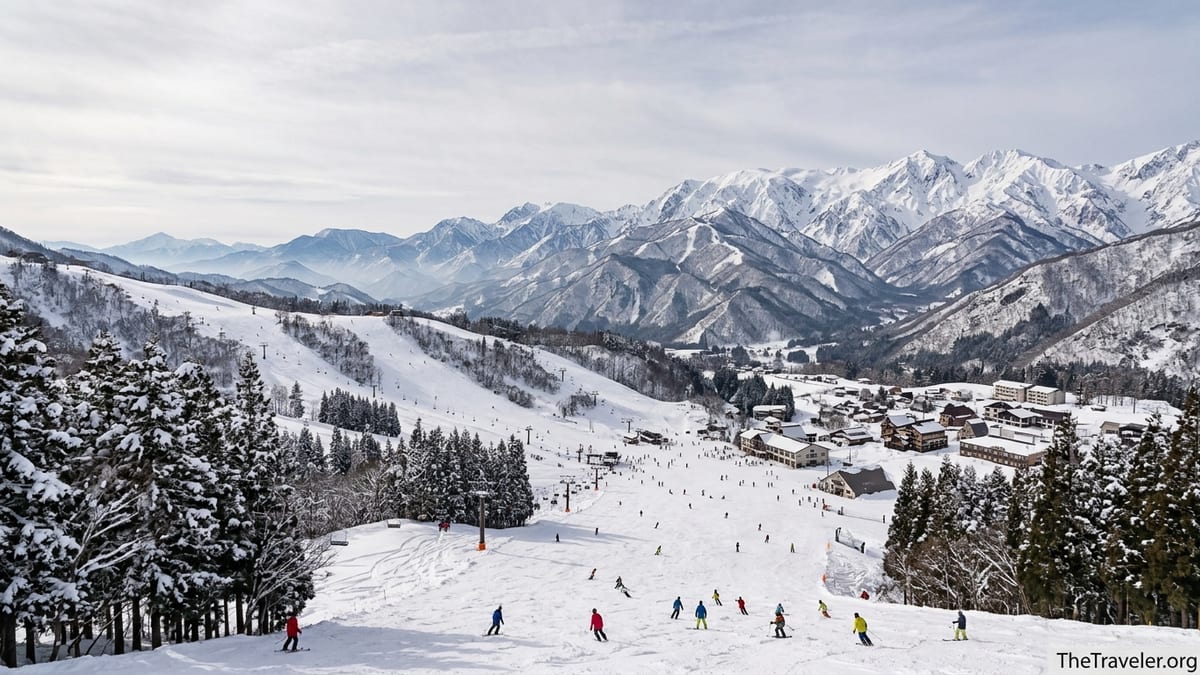
Nagano vs Niigata: Two Very Different Japow Trip Styles
Nagano and Niigata sit side by side in central Japan, and many international visitors bundle them together as one region. In reality they offer distinct ski cultures. Nagano’s big-name areas such as Hakuba Valley, Nozawa Onsen and Shiga Kogen are inland and higher, with dramatic alpine views and large linked trail networks. The feel often blends international infrastructure with traditional villages, particularly in Hakuba and Nozawa. Niigata’s resorts like Lotte Arai, Myoko Kogen and Naeba/Kagura sit closer to the Sea of Japan, catching heavier coastal storms that translate into deep, often wetter powder and huge mid-winter base depths.
Those differences shape your whole trip. A week based in Hakuba often feels like a classic international ski holiday: you pick a base village, buy a Hakuba Valley all-mountain pass and use valley buses to sample multiple resorts and après options. A stay in Nozawa Onsen revolves as much around wandering lantern-lit lanes, soaking in free public hot springs and eating at izakaya as it does around rack-up-the-vertical ski days. In Niigata, a powder hunter might spend three nights slopeside at Lotte Arai waiting for the next reset before shifting to a Myoko lodge or Naeba/Kagura for more snow and backcountry-style terrain.
Access from Tokyo is excellent to both prefectures, usually via shinkansen and a short bus. For example, Hakuba Valley markets itself as one of Japan’s largest international mountain resorts, spanning 10 ski areas with over 200 runs and a common pass system, accessible via the Hokuriku Shinkansen to Nagano then bus into the valley. Nozawa Onsen and Shiga Kogen are also reached from the same Nagano hub, while Naeba, Kagura and some Myoko resorts are tied instead to the Joetsu Shinkansen stops around Echigo-Yuzawa and Joetsu-Myoko. In practice, this means Nagano trips tend to orbit Nagano Station, and Niigata itineraries orbit Echigo-Yuzawa or Joetsu-Myoko.
When you are choosing, think not only about snow volume but also about what you want off the slopes. Nagano’s strength is the combination of terrain and atmosphere: Olympic heritage in Hakuba, historic hot-spring streets in Nozawa, and wide, quiet pistes in Shiga. Niigata’s appeal lies in deep snow and convenient, often ski-in ski-out developments like Arai and Naeba, plus the option to sample famous local rice and sake in nearby towns once you step away from resort hotels.
Hakuba Valley: Big-Mountain Terrain and International Village Energy
Hakuba Valley stretches along the eastern side of the North Japan Alps and brings together 10 separate ski areas, including Happo One, Hakuba Goryu, Hakuba 47, Iwatake and Tsugaike. The official valley information highlights long cruising runs up to around 8 kilometers, serious alpine faces and a total of more than 130 lifts across the network, all accessible on a single Hakuba Valley All-Mountain Pass. In practice, this gives confident skiers and riders a European-style sense of scale: you might lap the steeps under Happo’s Grat Quad in the morning, then ride mellow tree runs at Hakuba 47 in the afternoon if you are willing to move around on the shuttle system.
For powder and advanced terrain, Hakuba stands apart in Honshu. The high peaks and 3,000-meter relief of the Northern Alps funnel cold storms into steep back bowls and sidecountry zones, especially off Happo, Cortina and Norikura. Guided backcountry tours are common, with local outfits offering avalanche gear and routes into easily accessible glades. On-piste, the variety is huge: Tsugaike and Iwatake have broad intermediate slopes and gentle learning zones, while Happo has sustained reds and blacks that feel closer to the Alps than the shorter pitches found in many Japanese resorts.
Beginners and families will find good terrain but need a bit more planning. Lower Goryu and Tsugaike’s family areas are known for very wide, shallow gradients and dedicated kids’ zones. However, some Hakuba slopes, especially at Happo, can feel steep and crowded for true first-timers. The lift system is modern in the main resorts but still a patchwork of older chairs and a few gondolas, so transit times between sectors can be longer than in purpose-built European mega-resorts.
Off the mountain, Hakuba feels like a spread-out international ski town. Happo Village has most of the nightlife and foreigner-oriented restaurants, from craft beer bars to burger joints, supplemented by convenience stores and gear shops that rent everything from avalanche packs to high-end demo skis. English is widely spoken in rental shops, schools and hotels, and there are multiple English-language ski schools serving families. Prices for dinner can be higher than in nearby Japanese cities; a casual meal of ramen or curry might land around the equivalent of 10 to 15 US dollars per person, with Western options more. Nightlife centers on pub-style bars, izakaya and a few late-night venues rather than the full-blown party scene of Niseko.
Nozawa Onsen: Historic Village With Skiing Attached
Nozawa Onsen sits in northern Nagano and is often described, including by the Japan National Tourism Organization, as a historic hot spring town that happens to have a full-scale ski resort on its doorstep. The ski area rises directly above the village and offers a broad mix of terrain, including long groomed runs from the 1,650-meter summit down to the base, Olympic biathlon heritage and wide beginner-friendly plateaus around Uenotaira. Snow quality is typically excellent from top to bottom during mid-winter, with long, scenic descents that appeal to intermediates.
What makes Nozawa distinctive is not just the skiing but the structure of the village itself. Narrow streets lined with ryokan, small pensions and family-run eateries radiate around a cluster of public bathhouses. Local neighborhood associations maintain roughly a dozen free public onsen baths, each with its own character, where you wash, soak and step back onto streets scented with steam. After skiing, visitors often wander in yukata from their lodgings to an onsen, then to a soba shop or izakaya serving mountain vegetables, local rice and simple grilled dishes. The result is a ski holiday that feels immersed in traditional Japan rather than a self-contained resort.
For beginners and families, Nozawa is particularly attractive. The Uenotaira plateau area is a broad mid-mountain zone with gentle gradients, clear separation between beginner slopes and steeper runs, and several restaurants. English-language lessons are available through operators such as Canyons, which runs classes and kids’ programs in partnership with the resort. Families can use the Yu Road moving walkway from the village up to the Hikage base, avoiding steep walks in ski boots, and a kids’ park with sledding and tubing sits adjacent to the main beginner area. Many lodgings are walkable to lifts, though some require a short shuttle ride.
English-language infrastructure is reasonably good without overwhelming the local character. Trail maps, safety information and many menus appear in English, and a noticeable seasonal workforce of Australians and other foreigners helps bridge the language gap in rental shops and schools. At the same time, many older residents speak limited English, so you will still be using gestures and simple phrases in some restaurants. Nightlife is livelier than in Shiga Kogen but quieter than Hakuba: expect sake bars, small craft beer spots and a few late-running venues rather than a bar strip. Prices for accommodation vary from simple minshuku at modest nightly rates including breakfast and dinner to boutique lodges priced closer to Hakuba.
Shiga Kogen: Quiet, High, and Massively Linked
Reached by bus from Nagano via Yudanaka and the Jigokudani monkey park area, Shiga Kogen sits within Joshinetsu Kogen National Park and forms one of Japan’s largest high-elevation ski areas. A resort map from the Shiga Kogen Ski Association shows an interconnected network of more than a dozen ski fields, including Okushiga, Yakebitaiyama, Ichinose and Kumanoyu, spread across roughly 400 hectares of skiable terrain. A common lift ticket covers the entire area, and most sectors are physically linked by lifts or short connecting trails, creating a vast circuit of intermediate runs and cruisy pistes.
Snow here is reliable and typically dry, owing to the high base elevation compared with many other Honshu resorts. Advanced riders will find some good steep pitches, especially off Yakebitaiyama and Okushiga, and there are tree-skiing zones and sidecountry areas that reward exploration. The sheer size of the network also means you can ski all day without repeating many runs, a rare trait in Japan outside Hakuba. However, some of the connecting traverses can feel flat or even slightly uphill, which snowboarders sometimes comment on when trying to cross from one area to another.
Where Shiga Kogen differs most is atmosphere. Unlike Nozawa or Hakuba, there is no central village. Instead, a string of hotels, pensions and lodges line the road at different elevations, many of them with their own in-house onsen and restaurants open primarily to guests. English is used on maps, signage and in some hotel front desks, and the area recently joined several international multi-resort passes, bringing more foreign visitors. Daily life, though, feels quiet and self-contained: most people eat dinner in their hotel, have an onsen soak and sleep early to catch first lifts.
For families who like skiing above all else, Shiga can be ideal. The lack of nightlife, traffic and non-ski distractions keeps focus on the snow, and wide intermediate slopes make progression comfortable. On the other hand, if you want a walkable town with shopping streets and varied independent restaurants, Shiga will feel limiting. It suits groups that are happy with full-board hotels, relaxed evenings and big days racking up vertical across the linked network.
Naeba & Kagura: Tokyo-Friendly and Snow-Sure
Naeba and Kagura sit in Niigata’s Yuzawa area and are among the easiest serious ski areas to reach from Tokyo. The Joetsu Shinkansen from the capital to Echigo-Yuzawa can take little more than an hour on fast services, and from there buses and local trains fan out to Naeba, Kagura and nearby resorts such as Gala Yuzawa. Naeba itself is a sizeable resort owned by a major operator and known for hosting World Cup races and the Fuji Rock summer music festival. A high-capacity gondola marketed as the Dragondola connects Naeba with the Kagura ski areas, giving access to a larger combined domain.
Snow reliability is a strong suit. Kagura in particular sits high for the region and often opens earlier and closes later than many nearby areas, sometimes using snowmaking at lower elevations to extend the season. It has a reputation among Japan-based riders as a go-to choice in early December or late March when other resorts near Tokyo may be thin on coverage. Terrain includes a mix of intermediate pistes, long cruising runs and sidecountry pockets that appeal to powder hunters on storm days.
Naeba’s base area is built around a large slopeside hotel complex, with restaurants, shops, rental outlets and kids’ facilities under one roof or connected structures. That makes it extremely convenient for families who want to step from buffet breakfast to the slopes without managing village logistics. Structured kids’ programs and beginner zones are easily accessible, and English support is reasonable in the main hotel. The trade-off is that Naeba feels more like a self-contained resort complex than a traditional town; when lifts close, most guests drift back indoors to onsen, karaoke rooms and casual hotel bars instead of wandering independent streets.
For day-trippers and short stays from Tokyo, Naeba and Kagura are hard to beat. You can leave Tokyo after breakfast, rent gear at the base and be on the lift by late morning, then return on an evening shinkansen. Prices for lift tickets and rental gear are broadly in line with other large Honshu resorts, and packages that bundle shinkansen tickets with lift passes are sometimes available through Japanese travel agencies, making these areas attractive for cost-conscious visitors who prioritize easy logistics over deep cultural immersion.
Lotte Arai & Myoko: Powder-focused Niigata
Further north along the Hokuriku Shinkansen, the Joetsu-Myoko area of Niigata has become a magnet for powder-focused skiers and riders. Lotte Arai Resort, a modern redevelopment of an older resort, is often highlighted in Japanese ski media as a freeride paradise. Reports describe an annual snowfall on the order of many meters and a layout where roughly four-fifths of the terrain is ungroomed. The resort offers 14 marked courses plus a network of designated freeride zones patrolled for avalanche control, allowing advanced visitors to access tree runs and steep faces directly from lifts on deep days.
Arai’s infrastructure is polished and international. The slopeside hotel complex includes Western-style rooms, high-end restaurants, indoor and outdoor onsen, rental shops and guided backcountry services. Trail signage and safety information are in English and Japanese, and a significant share of winter guests are foreigners chasing “Japow.” For intermediates, long groomed runs descend from the 1,280-meter top station, but the primary draw is deep snow and steep freeride terrain. Families can still have fun here thanks to ski school, kids’ play areas and sheltered beginner slopes, but the overall vibe leans more toward adult powder hunting than village strolling.
Just across the prefectural border from Nagano, the Myoko Kogen area brings a more low-key, lodge-based style to Niigata powder. Resorts such as Akakura Onsen, Akakura Kanko, Suginohara and Seki Onsen share a common reputation for big snowfalls and tree-skiing potential, with a scattering of small lodges, pensions and ryokan in compact base villages. Akakura is the main hub, with a walkable main street of restaurants and bars, rental shops and a handful of onsen houses. English support has grown in recent seasons as more overseas visitors discover the area, but compared with Hakuba or Nozawa, Myoko still feels more rustic and locally run.
For advanced skiers and riders, Myoko’s appeal is the combination of forgiving sidecountry and the ability to chase conditions across multiple small resorts. You might spend a storm day at Seki Onsen, a tiny area famous among powder enthusiasts for its deep snow and limited grooming, then head to Suginohara for some of Honshu’s longest on-piste runs when the sun returns. Many visitors either rent cars or book with lodges that provide daily shuttles, since public transport between the individual Myoko resorts can be limited compared with Hakuba’s coordinated valley buses.
On the accommodation side, Niigata options around Arai and Myoko range from all-inclusive stays in the main Lotte hotel to simple Japanese-style rooms with shared bathrooms in older pensions. Prices can be competitive with Nagano for midweek stays, and some Myoko properties offer half-board deals that include hearty breakfasts and multi-course dinners centered on local rice, miso and seasonal fish, ideal for groups that are happy to stay put in the evenings after big snow days.
Comparing Powder, Terrain, Onsen, Nightlife and Access
All of these destinations deliver good Japanese snow, but the flavor of that snow and how you access it varies. Nagano’s Hakuba, Nozawa and Shiga tend to see slightly colder, drier conditions at higher elevations, especially on north-facing aspects. Niigata’s coastal influence often brings heavier but more abundant snowfall, which translates into very deep bases at Lotte Arai, Myoko and Kagura and frequent “reset” days where tracks fill in overnight. For pure powder frequency in lift-accessed freeride zones, Arai and some Myoko resorts have a strong case, while Hakuba’s true big-mountain lines require more knowledge and sometimes hiking or guiding.
Terrain variety is another key distinction. Hakuba Valley and Shiga Kogen are the standouts for large linked networks. Hakuba’s 10 resorts are not all physically linked by lifts, so you typically ride one or two per day and use valley buses to move between them. Shiga Kogen, by contrast, offers more continuous lift connections but with a stronger leaning toward intermediate pistes. Nozawa Onsen feels like a single large resort above one village, with enough variety for a week-long trip but not the multi-valley sprawl of Hakuba. Naeba and Kagura together give a mid-sized network ideal for two or three days, and Myoko’s terrain is spread across several separate hills best sampled over a longer stay.
Beginner and family facilities are strongest in Nozawa Onsen, Naeba, Shiga Kogen and the gentler corners of Hakuba. Nozawa’s Uenotaira plateau and kids’ parks, plus the convenience of the Yu Road moving walkway, make family logistics relatively smooth. Naeba’s all-in-one hotel complex provides easy ski school access, babysitting and rental gear in one place. Shiga’s wide intermediate runs and quiet slopes allow for low-pressure learning. Hakuba works well if you base near family-focused areas such as Tsugaike or lower Goryu, but first-timers will want to avoid inadvertently booking slopeside at one of Happo’s steeper faces.
In terms of English-language infrastructure, Hakuba and Nozawa lead, followed by Arai, Naeba and Myoko, with Shiga somewhat behind. Hakuba’s concentration of international schools, rental shops and guiding outfits makes it the safest bet for travelers who speak no Japanese and want lessons, rental and guiding booked online in English. Nozawa offers solid English support, though some village restaurants remain firmly local. Arai and Naeba’s corporate operations usually provide English signage and some English-speaking staff at front desks and ski schools, but the broader surrounding towns may feel more Japanese. Myoko and Shiga can require more patience and flexibility, although each season brings additional English-speaking operators as popularity grows.
Onsen, nightlife and accommodation styles also separate the resorts. Nozawa Onsen is the runaway winner for authentic hot-spring culture, with its cluster of free public baths and traditional ryokan lining the streets. Hakuba and Myoko have plenty of onsen-equipped lodges and hotels but not the same concentrated bathhouse culture. Arai and Naeba offer modern hotel onsen, often with outdoor pools facing the slopes. Nightlife ranges from Hakuba’s dispersed but reasonably lively bar scene and Nozawa’s cozy izakaya and sake bars to the very quiet evenings in Shiga Kogen, where most guests stay inside their hotels. Accommodation prices and styles are widest in Hakuba and Nozawa, from backpacker hostels and self-contained apartments to luxury chalets and high-end ryokan, while Naeba and Arai lean toward larger hotels and packaged stays.
How to Choose: Village, Linked Area or Powder Base
Thinking in terms of three trip styles can make the choice much easier. First is the “resort village” experience, where the town matters as much as the ski hill. Nozawa Onsen is the archetype: you spend your afternoons wandering between bathhouses and snack shops, your evenings in izakaya and small bars, and you might take a non-skiing day to join a cooking class or simply enjoy the atmosphere. Myoko’s Akakura and parts of Hakuba, especially around Happo, also fit this category, though they feel more like straightforward ski towns than historic hot-spring settlements.
The second style is the “large linked ski area,” where you prioritize mileage and exploration. Here, Shiga Kogen and Hakuba Valley are the prime candidates. Shiga suits visitors who want to ski from accommodation doorstep to doorstep across multiple sectors without worrying about buses or driving, accepting that evenings will be quiet. Hakuba suits those who enjoy variety and are comfortable using valley shuttles to cherry-pick the best resort for the day’s weather, trading some transit time for the chance to ride everything from alpine steeps to tree runs and terrain parks across the valley.
The third style is the “powder-focused destination,” where the goal is to maximize deep-snow days even if that means fewer restaurants and less off-slope entertainment. Lotte Arai stands at the front of this category for its extensive freeride zones and high snowfall, while select Myoko resorts and the Kagura area also fit for riders willing to hike short distances or explore sidecountry. A typical itinerary for this style might involve three nights slopeside at Arai, followed by a transfer to Myoko or Nozawa to mix in some culture and variety once legs are tired and the biggest storm has passed.
Families with mixed abilities often do best in Nozawa, Naeba or appropriate corners of Hakuba and Shiga, where gentle terrain, reliable English-language instruction and easy logistics combine. Advanced skiers and snowboarders chasing steeps and backcountry-style lines may lean toward Hakuba for big-mountain terrain and guiding options, or Niigata’s Arai and Myoko for consistent, lift-accessed powder. If your priority is minimizing travel time from Tokyo for a short break, Naeba/Kagura and the Yuzawa area are the most convenient, followed by Hakuba and Nozawa via Nagano Station, then Joetsu-Myoko for Arai and Myoko.
The Takeaway
Choosing between Hakuba, Nozawa Onsen, Shiga Kogen, Naeba/Kagura, Lotte Arai and the Myoko resorts is less about finding the single “best” place and more about matching the destination to your ski personality. Nagano’s inland mountains deliver dramatic alpine backdrops, established resort villages and a balance between skiing and culture, while Niigata’s coastal ranges provide some of Honshu’s deepest snow and a more explicitly powder-driven focus.
If you picture evenings in yukata strolling past steaming bathhouses, Nozawa Onsen should be at the top of your list. If you want big terrain and an international ski-town buzz, Hakuba will likely suit you better. For quiet, ski-all-day linked pistes, Shiga Kogen is hard to beat. When deep snow and convenience from Tokyo trump nightlife, Naeba/Kagura and Lotte Arai shine, with the Myoko area adding a more laid-back, lodge-based powder base.
Whichever you choose, the core ingredients remain the same: reliable winter storms, well-developed lift systems by Japanese standards, welcoming local hospitality and food that is often a highlight in its own right. By being honest about whether you value village atmosphere, linked mileage or bottomless powder most, you can build a Nagano or Niigata ski trip that feels tailored rather than generic, and spend your precious days off exactly the way you hoped.
FAQ
Q1. Which resort is best for first-time skiers from overseas?
Nozawa Onsen and Naeba are especially good for first-timers, thanks to wide beginner areas, clear English-language support and convenient access to ski schools and rentals.
Q2. Where should advanced skiers and snowboarders go for steep terrain?
Hakuba Valley offers the most substantial big-mountain terrain, with steep on-piste runs and extensive guided backcountry, while Lotte Arai and parts of Myoko provide deep powder and challenging freeride zones.
Q3. Which destination has the most authentic Japanese village atmosphere?
Nozawa Onsen stands out for its traditional hot-spring streets, free public bathhouses and compact, walkable village that feels like a historic onsen town with a ski resort attached.
Q4. Is Shiga Kogen suitable if I want nightlife and many restaurant options?
Shiga Kogen is better for quiet evenings than nightlife; most dining happens inside hotels, and there is no single busy village street, so it suits guests who prioritize skiing over après.
Q5. How easy is it to visit multiple resorts in Hakuba during one trip?
With a Hakuba Valley All-Mountain Pass and the valley shuttle buses, it is straightforward to ski different resorts on different days, though you typically focus on one area per day rather than resort-hopping hourly.
Q6. Which resort is quickest to reach from Tokyo for a short ski break?
Naeba and Kagura via Echigo-Yuzawa on the Joetsu Shinkansen are among the fastest, often allowing door-to-slope travel in just a few hours depending on your Tokyo departure point.
Q7. Where can families find the best combination of kids’ facilities and onsen?
Nozawa Onsen is ideal, with family-friendly slopes, kids’ parks, English-language lessons and numerous public and private onsen, while Naeba’s large hotel complex also offers extensive kids’ amenities.
Q8. Do I need to rent a car to ski in Hakuba or Myoko?
In Hakuba, valley shuttle buses and some hotel transfers make it possible without a car, though a vehicle offers more flexibility; in Myoko, many visitors rely on lodge shuttles or cars because public links between resorts are more limited.
Q9. Which areas are best if I mainly want lift-accessed powder without much hiking?
Lotte Arai, certain Myoko resorts such as Seki Onsen and the higher zones at Kagura are strong choices for frequent, lift-accessed powder laps inside or just beyond managed freeride zones.
Q10. How far in advance should I book accommodation in these resorts?
For peak periods such as New Year and weekends in January and February, booking several months in advance is wise, especially in Nozawa, Hakuba and Arai, where popular lodges and hotel rooms can sell out quickly.