


For skiers and snowboarders ready to look beyond Niseko’s crowds, Japan’s Tohoku region offers a different kind of winter escape. Stretching across northern Honshu, Tohoku combines deep, dry snow with quieter slopes, traditional hot spring towns and surprisingly easy Shinkansen access. This guide compares the region’s strongest ski areas, with a special focus on Appi Kogen, Zao Onsen and Hakkoda, plus a few nearby contenders worth building into a multi-resort powder trip.
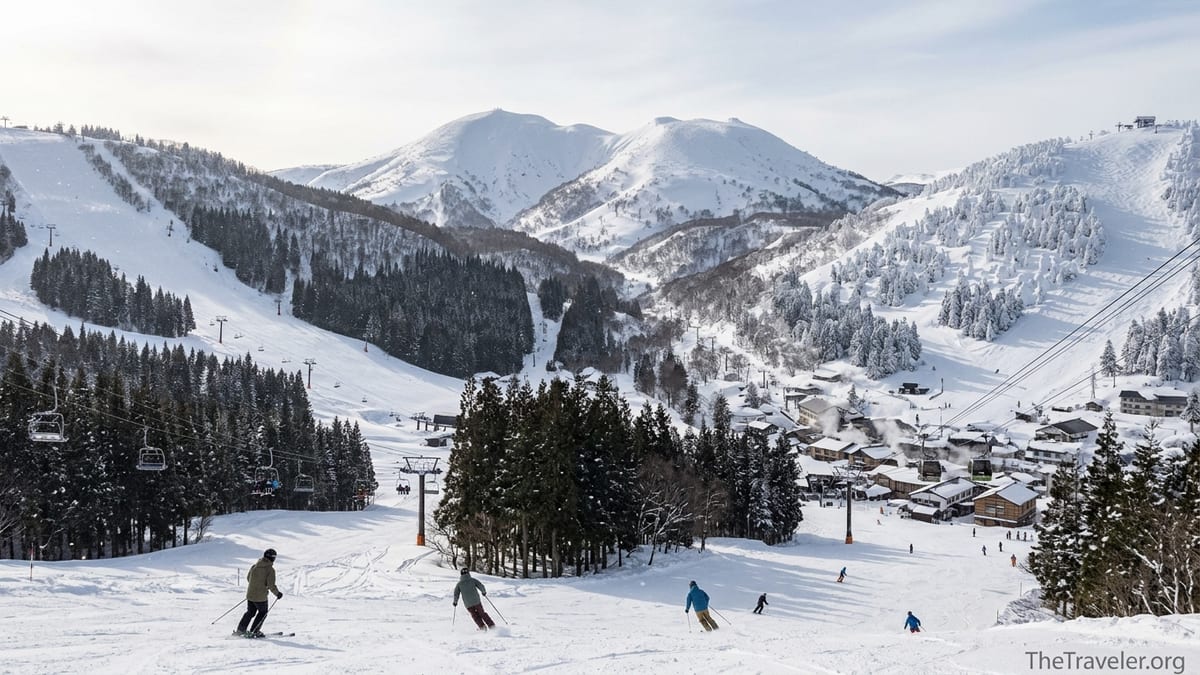
Why Tohoku Belongs On Your Japan Ski Shortlist
Tohoku still flies under the radar with many international travelers who default to Hokkaido. Yet its mountains catch the same Siberian storm systems that dump on Niseko, delivering frequent powder and long seasons, especially on the west-facing ranges of Iwate, Akita and Aomori. Resorts such as Appi Kogen, Zao Onsen and Hakkoda combine this snow reliability with a strong sense of place, where steaming outdoor baths, small family-run inns and quiet towns replace big-brand hotels and nightlife strips.
From Tokyo, the region is easier to reach than many first-timers expect. The Tohoku Shinkansen runs north from the capital to Morioka for Appi Kogen in around 2.5 hours, and to Shin-Aomori for Hakkoda in about 3 hours, with frequent services in peak winter. From Yamagata Station, reached by Yamagata Shinkansen in roughly 2.5 hours from Tokyo, buses make the short climb to Zao Onsen. This means you can land at Tokyo Haneda in the morning and be checking into a Tohoku ski hotel that same afternoon, without needing a rental car.
Prices also tend to be gentler than in Japan’s headline resorts. A typical high-season day pass at a major Tohoku resort such as Geto Kogen or Shizukuishi is often in the range of 4,000 to 5,500 yen, and on-mountain lunches might be a 1,200 yen bowl of local ramen rather than a premium burger. Accommodation spans simple business hotels near Shinkansen stations, mid-range ski-in ski-out properties and traditional ryokan in hot spring villages, giving budget-conscious travelers more control over total trip costs.
Perhaps the biggest draw is atmosphere. On a midweek powder day in January, it is still common to find yourself alone on tree-lined runs at places like Tazawako or Shizukuishi. Lift lines are usually short, English-language groups are smaller, and the overall feel is more low-key. For some travelers, fewer international après-ski bars is a feature rather than a bug, especially if the priority is first chair and untracked snow, followed by an early night after a long onsen soak.
Appi Kogen: Flagship All-Rounder With Modern Facilities
Appi Kogen in Iwate Prefecture is the most developed international-style resort in Tohoku. The mountain markets more than 20 runs and about 43 kilometers of skiable terrain, spread across two main peaks with a vertical drop of roughly 800 meters. The layout favors long, consistent fall-line pistes, including groomed runs of 2 to 5 kilometers that appeal to intermediates and advanced carvers who enjoy high-speed cruising.
For beginners and families, Appi’s lower slopes offer wide, gentle areas with conveyor belts and slow chairlifts, plus ski school programs that usually include English-speaking instructors during peak periods. Families might, for example, book a three-day package in January with rental gear and group lessons bundled through one of the large on-mountain hotels, simplifying logistics for first-time visitors. Child-friendly extras such as snow play zones and sledding hills make it easy to keep younger kids busy even when adults want a break from laps.
Appi’s snow quality is one of its calling cards. The resort promotes its dry “aspirin powder,” and on cold Iwate winter days the snow can feel surprisingly similar to Hokkaido. When storms line up, tree runs between the main courses and sidecountry routes accessed with local guides offer playful terrain for advanced riders, though in-bounds tree skiing is more controlled than at freeride destinations like Niseko. Skiers who prefer efficient lift infrastructure will appreciate that Appi has multiple high-speed lifts and gondolas, along with extensive night skiing on key runs.
Off the slopes, Appi functions as a compact, self-contained resort village. Several large hotels cluster directly at the base, including properties with indoor-outdoor onsen, kids’ playrooms, buffets featuring Iwate beef and sushi, and equipment rental counters in the lobby. A traveler might arrive on the Tohoku Shinkansen at Morioka Station, take a dedicated shuttle bus of about one hour to the resort, check into a slope-side hotel, rent skis downstairs and be on the afternoon lifts without ever stepping into a taxi. For visitors who want a straightforward, booking-friendly base with strong English support, Appi is one of the easiest choices in Tohoku.
Zao Onsen: Snow Monsters, Hot Springs And Classic Ski Charm
Zao Onsen in Yamagata Prefecture offers a very different experience from Appi. The ski area sprawls across the slopes of Mount Zao, linking several zones with a network of lifts and ropeways. While the vertical is similar, the terrain here feels more old-school, with a mix of narrow forested paths, open slopes and long connecting tracks. Zao is less about clocking high-speed laps and more about exploring a winter landscape that is firmly tied to its famous natural phenomena and onsen culture.
The headline attraction is the juhyo, or snow monsters. In midwinter, strong winds and heavy, wet snow from the Sea of Japan coat the Aomori fir trees near the upper ropeway stations, creating surreal white sculptures that can reach several meters high. Skiers can ride the ropeway to the upper stations, then cruise a long run of several kilometers past these formations down toward the village. Many visitors time their trip for January or February when night-time juhyo light-up events are held, allowing you to ski or walk among glowing snow monsters before soaking in a steaming bath.
The village of Zao Onsen itself is one of the most atmospheric in Tohoku. Streets are lined with ryokan and small hotels tapped into sulfur-rich hot springs, with open-air public baths sending clouds of steam into the cold air. It is common for travelers to book half-board plans that include kaiseki dinners featuring local Yamagata beef, mountain vegetables and regional sake. After skiing, guests often stroll in yukata and wooden geta sandals between their lodging and small izakaya or snack bars, giving a glimpse of Japanese ski culture that feels quite different from resort complexes built specifically for international tourism.
For families and beginners, Zao offers several gentle zones near the base, including wide practice slopes where local schools run ski camps. English-language instruction is not as consistently available as at Appi, but some hotels and local schools can arrange private lessons. Advanced skiers will find enjoyable ungroomed sections and side hits, though extensive off-piste tree skiing is more limited by local rules and terrain. Access is relatively straightforward: from Tokyo, travelers ride the Yamagata Shinkansen to Yamagata Station, then transfer to a bus that climbs into the resort in under an hour, making Zao a practical choice for those prioritizing hot springs and culture as much as skiing.
Hakkoda: Backcountry-Style Powder For Confident Skiers
Hakkoda in Aomori Prefecture is not a conventional lift-served resort but a ropeway-accessed mountain area that has become legendary among serious powder skiers. A single large cable car, the Hakkoda Ropeway, climbs roughly ten minutes to an upper station on the Hakkoda range, which consists of multiple peaks ringing volcanic plateaus. From there, skiers and snowboarders can descend a handful of maintained routes, including very long forest courses, or venture into vast backcountry terrain accompanied by qualified local guides.
The snow here is remarkably deep and dry, comparable in feel to Hokkaido despite Hakkoda being slightly farther south in latitude. Storms can be intense, and visibility often drops when clouds wrap the peaks, which is part of why Hakkoda carries a reputation as a destination for advanced and expert riders. Local authorities and the ropeway operator publish detailed winter safety rules and backcountry guidelines, and it is common practice for visiting skiers to file route plans, carry avalanche gear and sometimes join guided groups organized through local mountain clubs or specialized tour operators.
Infrastructure is deliberately minimal. Apart from a small ski area with a handful of basic runs near the ropeway base, there are no big hotels clinging to the slopes. Instead, accommodation options rely on a cluster of mountain onsen ryokan such as Sukayu Onsen or Jogakura Onsen, plus business hotels back in Aomori City. A typical Hakkoda trip might involve staying two or three nights at a rustic hot spring hotel where guests share communal tatami rooms, eat set-course dinners and catch an early bus or hotel shuttle to the ropeway each morning. Evening entertainment amounts to quiet drinks in the lounge and another long soak in mineral-rich baths, some of which are mixed-gender and centuries old.
For planning purposes, travelers should treat Hakkoda as a backcountry objective rather than a family resort. There are no extensive beginner areas, English-language ski schools or kid-focused services. Road closures in midwinter can disrupt access, and strong winds occasionally halt ropeway operations, meaning flexible timing is important. That said, for advanced riders seeking deep powder, sparse crowds and long, natural fall-line runs through beech forests, Hakkoda can be the highlight of a Tohoku ski itinerary.
Other Strong Tohoku Ski Areas To Combine In One Trip
While Appi, Zao and Hakkoda anchor many itineraries, Tohoku’s appeal grows when you string several areas together. A popular pattern is to base in Iwate or Akita and alternate between larger resorts and quieter local hills, chasing snowfall. For example, a week-long trip might start with three nights at Appi Kogen, then shift to a business hotel in Morioka or Kitakami and day-trip to Geto Kogen and Shizukuishi, both known for ample snow and tree skiing.
Geto Kogen in Iwate has developed a reputation among powder hunters for heavy snowfall and open tree runs. With a compact but efficient lift system and a focus on off-piste zones, many riders compare its feel to smaller Hokkaido areas but with fewer international visitors. Shizukuishi, operated in conjunction with a major hotel at the base, mixes well-groomed pistes, cat skiing on an abandoned course when snow allows, and views toward Mount Iwate. Day passes at these resorts typically cost less than many big-name destinations, and midweek crowds are often light enough that even popular tree zones can stay fresh for several hours after a storm.
In Akita Prefecture, Tazawako Snow Resort sits above Lake Tazawa, offering scenic vistas that you notice every time you ride the lifts. Its terrain balance suits intermediates and advanced skiers who enjoy both groomers and manageable tree lines, and some travelers pair their stay with a night or two at the remote Nyuto Onsen area, where traditional bathhouses sit in snowy forests. Farther south in Fukushima, Aizu-area hills such as Alts Bandai or Aizu Kogen Takatsue provide additional options, especially for those driving or willing to switch trains and buses.
What unites these Tohoku resorts is a shared sense of space. On many days, foreign visitors are vastly outnumbered by local skiers, and in some smaller areas staff may be surprised but welcoming when English speakers step off the bus. Booking patterns also differ from Hokkaido: instead of large international tour groups, you might see weekenders arriving by car from Sendai or Akita, filling ryokan and small pensions for two nights and then disappearing back to city life by Monday, leaving the slopes even quieter for midweek travelers.
Powder, Terrain And Tree Skiing Compared
In terms of powder, Hakkoda usually sits at the extreme end of depth and frequency, particularly from January through early March. The combination of maritime air masses and cold inland temperatures means consistently soft snow, but also days of heavy weather. Geto Kogen and other west-facing Iwate and Akita hills can also receive very high seasonal totals, which is why many dedicated powder riders plan flexible itineraries and monitor storm tracks, shifting their base as new systems come in.
Appi Kogen offers a more balanced mix. Its snow is dry and reliable through most of the core season, but the mountain shines as much for its well-maintained grooming and long, moderate pitches as for waist-deep days. Tree skiing exists, especially off certain advanced courses and in sidecountry zones that some guiding outfits showcase, yet the vibe remains that of a large, organized resort where patrol focuses on keeping main runs smooth and safe. Zao Onsen’s snow can feel slightly denser in certain conditions given its position closer to the Sea of Japan, but upper slopes around the juhyo zones still deliver high-quality powder when storms line up.
For pure tree skiing, riders often rank Geto Kogen and some of the smaller Iwate and Akita hills above the big-name resorts, since local policies in recent years have allowed more in-bounds glades and designated off-piste areas compared to older rules. Hakkoda’s tree runs are on another level in both length and exposure, but require avalanche awareness and, for many visitors, the support of professional guides. Families with progressing intermediates may find Appi’s mellow gladed sections and Tazawako’s spaced birch trees more approachable first steps into off-piste skiing.
Terrain variety is also a key differentiator. Appi’s strength lies in its continuous fall-line cruising and race-quality groomers. Zao offers a patchwork of steeps, meandering traverses and scenic forest paths that feel distinctively Japanese. Hakkoda trades official trails for routes that weave around terrain features, snow-laden trees and volcanic contours. When planning a trip, it can work well to start at a structured resort like Appi, let jet-lagged legs adjust on predictable slopes, then move on to Zao’s characterful pistes and, for those with the skills, end with a guided spell in Hakkoda’s backcountry.
Infrastructure, English Services And Ease Of Access
For travelers booking from overseas, practical considerations matter as much as snowfall maps. Appi Kogen stands out for its modern lift system, including high-speed chairs and gondolas that minimize queuing on busy weekends. The resort’s hotels typically provide multi-lingual front desks, English signage and rental shops that are accustomed to fitting foreign guests. Travel agents and online booking platforms often offer Appi packages that bundle Shinkansen tickets, accommodation and lift passes, which can streamline planning for first-timers to Japan.
Zao Onsen’s lift network is more old-fashioned, with a combination of gondolas, ropeways and older chairlifts that can feel quirky but add character. English signage has improved in recent years, particularly around the main ropeway stations and tourist information centers, yet visitors should still expect occasional language gaps at small pensions and local eateries. Fortunately, the compact village layout means it is easy to walk from most lodgings to lifts and baths, and many hotels offer simple printed maps in English explaining which baths, ropeways and restaurants are closest.
Hakkoda, by contrast, has very limited formal infrastructure beyond the ropeway, a small ski area, basic facilities at the base and the traditional onsen inns scattered along the road. English may be spoken only by a few staff, although mountain signage and some safety information are increasingly available in multiple languages. Travelers who are comfortable using translation apps, pre-booking accommodation via Japanese websites or agencies, and reading basic transport timetables will find the experience smoother. Because winter road closures and ropeway wind holds can complicate schedules, building in buffer days and staying flexible are sensible strategies.
As for access, the Tohoku Shinkansen makes Appi and Hakkoda surprisingly reachable. From Tokyo, you can ride to Morioka, then transfer to scheduled resort buses to Appi that operate through the main season. For Hakkoda, the typical route is Shinkansen to Shin-Aomori, local train or bus to Aomori City, then a bus to the ropeway station, though some onsen hotels operate their own winter shuttles. Zao is similarly simple: Yamagata Shinkansen to Yamagata City, then frequent winter buses direct to the resort. Compared to many European or North American mountains that require long car transfers, this rail-based access is a major advantage, especially for travelers who prefer not to drive in snow.
Families Versus Advanced Skiers: Choosing The Right Base
Different Tohoku resorts suit very different traveler profiles, so picking the right home base is crucial. Families with young children or mixed-ability groups generally do best at Appi Kogen or Shizukuishi. At Appi, parents can book English-friendly lessons, rent child-sized gear, and let older kids explore well-marked runs that all funnel back to a single base area. Non-skiing family members can still enjoy onsen, indoor pools, kids’ rooms and restaurants without leaving the immediate resort zone, and simple cafeteria-style dining makes mealtimes straightforward.
Zao Onsen can also work well for families who value cultural experiences as much as ski time. A multi-generational group might spend mornings on gentle slopes near the village and afternoons rotating between hot springs, snow monster sightseeing and short walks through the town. However, parents should be mindful that not every hotel or ryokan is set up for small children, and some baths have strong sulfur smells that younger visitors may find intense. Booking a modern hotel with both Western-style rooms and family-friendly facilities can smooth these issues while still keeping you immersed in the onsen-town atmosphere.
Advanced skiers and snowboarders, particularly those comfortable in deep snow and uneven terrain, will find their sweet spot in a circuit that includes Hakkoda, Geto Kogen, Tazawako or smaller Iwate and Akita hills. For instance, a group of experienced riders could base in Morioka, rent a car or use local buses, and target whichever resort reports the most overnight snowfall, switching between Appi for fast groomers, Geto for trees and Tazawako for lakeside vistas. Some hardcore visitors tack on a guided backcountry day in Hakkoda or on less-developed peaks where local operators run snowcat or touring missions, though these should be booked well in advance and with full respect for mountain safety.
Solo travelers and couples who value quiet nights, simple meals and cultural immersion may be most drawn to Zao or the onsen regions near Tazawako and Hakkoda. Rather than rowdy après-ski, the typical evening routine involves soaking in rotenburo while snow falls, sipping local sake in a small bar and going to bed early to catch first tracks. For many, this is the essence of a Japanese ski trip: not just powder, but a slower pace and rituals that feel far removed from the hype that now surrounds bigger international resorts.
The Takeaway
Tohoku offers a compelling alternative for travelers who love Japan’s snow but want to avoid the congestion and higher prices of Niseko and other major Hokkaido areas. Appi Kogen provides a polished, booking-friendly hub with modern lifts, extensive groomers and family facilities. Zao Onsen layers varied terrain onto a classic hot spring town and the otherworldly spectacle of juhyo snow monsters. Hakkoda caters to confident skiers chasing some of Japan’s deepest, wildest powder in a minimally developed setting.
When you weave in satellite resorts such as Geto Kogen, Shizukuishi and Tazawako, the region becomes ideal for a flexible, rail-connected powder road trip. Travelers can step off the Shinkansen, ride quiet lifts through storm cycles, soak in centuries-old baths and dine on regional specialties, all with far fewer international crowds than in Japan’s most advertised ski areas. For those willing to venture a little farther and embrace a touch of adventure, Tohoku may be the most rewarding frontier in the country’s winter landscape.
FAQ
Q1. Is Tohoku a good choice for first-time visitors to Japan who want to ski?
Yes, especially if you start at an accessible resort like Appi Kogen or Zao Onsen. Both have relatively straightforward Shinkansen access from Tokyo, on-mountain accommodation and enough English signage for most travelers. First-timers who value clear infrastructure and lessons should avoid basing entirely at backcountry-focused areas like Hakkoda.
Q2. How many days should I spend at Appi Kogen versus other Tohoku resorts?
A common pattern is three to four days at Appi Kogen to settle in, explore its 20-plus slopes and adjust to conditions, followed by three or more days split between other areas such as Geto Kogen, Shizukuishi or Tazawako. Travelers focused on groomers and family time might stay at Appi for a full week, while powder chasers often keep stays shorter and more flexible.
Q3. Do Tohoku resorts have English-language ski and snowboard lessons?
Appi Kogen is usually the most reliable for English-language group or private lessons, especially during peak holiday periods. Zao Onsen and some Iwate resorts can sometimes arrange instruction in English through local schools or guides, but this may require advance email coordination. At smaller hills, using basic Japanese phrases and translation apps becomes more important.
Q4. How difficult is it to reach Tohoku ski resorts without renting a car?
It is quite feasible. Most international visitors take the Tohoku or Yamagata Shinkansen from Tokyo to hubs like Morioka, Yamagata or Shin-Aomori, then connect to resort buses. Appi Kogen and Zao Onsen in particular rely heavily on these public connections. Hakkoda and some smaller resorts may require careful timing with limited bus schedules, but many travelers manage entirely on trains and buses.
Q5. When is the best time of winter to ski in Tohoku?
For the deepest and most consistent powder, January through mid-February is generally ideal, especially for Hakkoda, Geto Kogen and other high-snowfall areas. Late February into early March often brings more stable weather, slightly longer days and quieter slopes while still maintaining good coverage at Appi and Zao. Early-season and late-spring conditions vary more year to year.
Q6. Are Tohoku ski resorts cheaper than Niseko and Hakuba?
In many cases, yes. Day passes at major Tohoku resorts often cost a bit less than at Japan’s most famous destinations, and accommodation in business hotels, pensions and smaller ryokan can be noticeably more affordable than in heavily internationalized hubs. On-mountain food and rental prices also tend to be moderate, though luxury hotels and peak holiday dates can still be expensive.
Q7. Is Tohoku suitable for advanced off-piste and backcountry skiing?
Very much so, but with caveats. Hakkoda is renowned for advanced backcountry lines and deep powder, and resorts like Geto Kogen, Tazawako and some Iwate hills allow more in-bounds off-piste and tree skiing than many traditional Japanese resorts. However, avalanche risk, weather and local regulations must be respected, and hiring qualified guides for serious backcountry is strongly recommended.
Q8. Can families with young children enjoy Zao Onsen, or is it mainly for adults?
Families can enjoy Zao Onsen, particularly if children are comfortable with basic skiing and parents choose lodging that welcomes kids. Gentle beginner slopes, snow play areas and the snow monster sightseeing experience all appeal to younger visitors. However, some older ryokan and strong-smelling sulfur baths may be less suitable, so checking facilities and room types carefully before booking is wise.
Q9. How do Tohoku’s hot springs compare to those in Hokkaido?
Tohoku’s onsen culture is arguably more prominent in many ski areas, with historic hot spring villages like Zao Onsen and rustic mountain baths near Hakkoda and Tazawako. While Hokkaido also has excellent hot springs, Tohoku often offers a denser concentration of traditional ryokan and small public baths within walking distance of ski lifts, giving trips a stronger cultural and wellness focus.
Q10. Is it realistic to combine Tohoku and Hokkaido in a single ski trip?
It is possible but usually better for longer itineraries of two weeks or more. Travelers might, for instance, ski Appi and Zao for a week, then fly from a regional airport like Sendai or Aomori to Sapporo to finish in Hokkaido. For shorter trips of seven to ten days, focusing on either Tohoku or Hokkaido generally leads to less transit time and more days on snow.