


Tohoku rewards travelers who slow down. Distances are long, train frequencies drop outside the Shinkansen spine, and some of the best experiences involve detours to quiet onsen towns and rural valleys. Rather than racing through all six prefectures in a week, you will enjoy Tohoku far more by choosing one or two realistic regional routes and building your itinerary around a few strong bases. This guide focuses on practical, real-world patterns centered on Sendai, Yamagata, Aizu, Morioka and Aomori, with clear advice on when it is worth changing hotels, where public transport becomes slow, and how to loop back to Tokyo or fly home efficiently.
How Tohoku Fits Together and Why Pace Matters
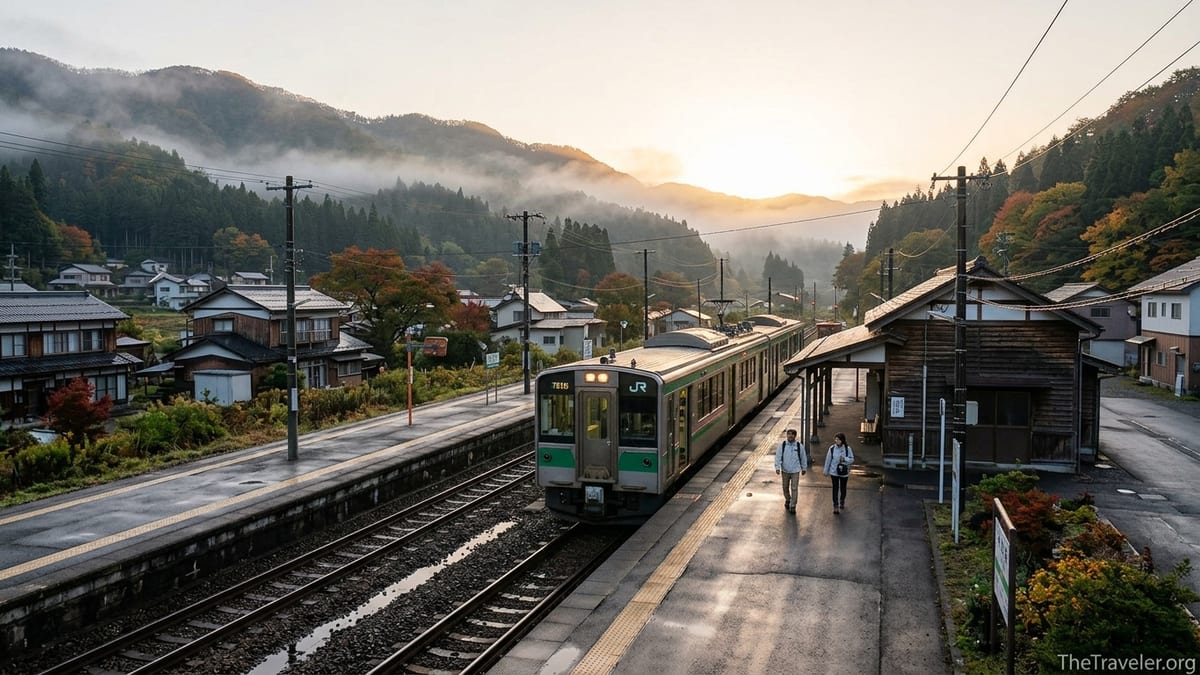
Tohoku stretches from the rice fields of Fukushima all the way up to the apple orchards of Aomori. On a map it may look compact, but in practice the region covers hundreds of kilometers and includes mountain ranges that slow down everything that is not a Shinkansen. Tokyo to Sendai can be as quick as about 90 minutes by Tohoku Shinkansen, while Tokyo to Shin Aomori takes around 3 hours on the fastest Hayabusa services. Once you step off those bullet trains onto local lines, average speeds drop sharply and departures thin out, especially in the middle of the day and in winter.
That is why realistic Tohoku planning starts with choosing a handful of hubs along the Shinkansen corridor and then adding one or two slower side trips from each base. Sendai, Yamagata, Aizu Wakamatsu, Morioka and Aomori all work well as such hubs. Each offers a decent range of hotels, restaurants and onward transport, and you can move between them using fast trains, then fan out on local lines or buses for temples, onsen and countryside scenery.
If you have five to seven days, it is sensible to focus on a single region such as Sendai, Yamagata and Aizu, or a Morioka to Aomori arc. With 10 to 14 days you can comfortably follow a south to north journey from around Fukushima or Yamagata up to Aomori, staying a few nights in each city and adding occasional one night onsen stays. The following sections walk through concrete route patterns and show how they feel day to day.
Sendai as a Flexible Base: City Comfort With Easy Side Trips
Sendai is the obvious entry point to Tohoku for many travelers. It sits around 90 minutes from Tokyo by high speed train, has its own airport with frequent domestic flights, and functions as a modern, compact city base with plenty of business hotels, mid range chains and a few higher end properties. Accommodation near Sendai Station makes transfers easy, as almost all regional trains and buses depart from here, and the airport access line takes roughly 20 minutes to reach the city.
From Sendai, you can reach classic coastal and temple sights on simple day trips without changing base. The local Senseki Line gets you to Matsushima Bay in under 40 minutes for islands, pine trees and waterfront walks. The Senzan Line runs inland toward Yamagata and stops at Yamadera, the famous temple on a mountainside, in about an hour from Sendai Station. Many visitors use Sendai as a base to visit both Matsushima and Yamadera on separate days, returning each evening to a familiar neighborhood of izakaya, department stores and covered shopping arcades.
Sendai also anchors regional bus networks. Highway buses run from the city toward towns in Fukushima and to Aizu Wakamatsu, while regional lines head into the mountains toward onsen areas. If you are new to Tohoku, starting with two or three nights in Sendai lets you settle into the region while still enjoying the convenience of a major city, before you branch out into smaller hubs such as Yamagata or Aizu.
Route Pattern 1: Sendai – Yamagata – Aizu Wakamatsu
A logical compact route for a first Tohoku trip links Sendai, Yamagata and Aizu Wakamatsu. With around a week you can use Sendai as your arrival base, shift to Yamagata for mountain temples and onsen, then finish in the samurai town of Aizu Wakamatsu before returning to Tokyo. This pattern keeps backtracking to a minimum while giving a clear rhythm of city, mountain town, and castle town.
In practical terms, you might spend two or three nights in Sendai, two in Yamagata, and two in Aizu Wakamatsu. On day one you arrive in Sendai from Tokyo and explore the city. On day two you take the Senzan Line to Yamadera for several hours of steps, cedars and cliff side halls, then continue onward by the same line into Yamagata City instead of returning to Sendai. From there, staying near Yamagata Station gives you simple access to both the city and buses toward Zao Onsen in winter or hiking areas in summer.
From Yamagata to Aizu Wakamatsu, you will feel the shift from high speed corridors to slower rural travel. There is no Shinkansen linking these two areas directly, so travelers typically take a limited express or local trains via Fukushima or use highway buses that connect Aizu Wakamatsu with Sendai or Koriyama. Travel times commonly run three to four hours door to door, so it makes sense to treat this as a transfer day rather than trying to cram in major sightseeing on both ends. In Aizu Wakamatsu, a night or two near the central station lets you explore Tsuruga Castle, samurai residences and the preserved post town of Ouchi Juku, reached via regional rail and local buses.
When Onsen Nights Justify Switching Bases
In Tohoku, a key itinerary question is whether to sleep in onsen towns or visit them as day trips. Overnight stays almost always involve switching hotels, often in areas with fewer dining options beyond the ryokan itself. For some places that extra effort is worth it. Zao Onsen near Yamagata combines sulfurous outdoor baths, heavy snow in winter and hiking on the Zao mountains in warmer months. Nyuto Onsen in Akita Prefecture, best reached from Morioka or Tazawako, offers rustic baths in forest settings. In both cases, the atmosphere of bathing after dinner in yukata and waking up to quiet mountain air is a different experience from a daytime soak.
On the Sendai, Yamagata and Aizu route, a realistic compromise is to spend most nights in city bases but allocate one or two overnights to particularly strong onsen areas. For example, you might stay two nights in central Yamagata and then move to Zao Onsen for a single night before continuing on toward Aizu. The bus from Yamagata Station to Zao Onsen is relatively short, often under an hour, but connections to other regions are slower, so it works better as an intermediate stop than as a repeated day trip.
By contrast, some onsen villages around Sendai, such as Sakunami, can work as day trips because the train ride from the city is short and there are multiple services each day. In these cases you can enjoy hot springs and riverside scenery but still return to Sendai in time for dinner. When evaluating whether to change bases, look not just at distance but at frequency: a 60 minute ride with hourly trains is much easier to integrate than a 90 minute bus ride that runs only a few times per day.
Route Pattern 2: Morioka – Kakunodate – Aomori
Travelers who are more interested in northern Tohoku often use Morioka and Aomori as their anchors, with Kakunodate and nearby onsen as atmospheric side trips. Morioka, the capital of Iwate Prefecture, occupies a strategic point on the Tohoku Shinkansen between Sendai and Shin Aomori. The fastest trains from Tokyo reach Morioka in roughly 2 hours 10 minutes, and from there it is about 40 more minutes to Shin Aomori on the high speed line. This allows you to build a neat arc from Morioka to Aomori while detouring onto the Akita Shinkansen branch for Kakunodate.
A common pattern is to arrive in Morioka from Tokyo or Sendai and stay two or three nights. The city itself has castle ruins, riverside walks and well known noodle restaurants serving wanko soba and reimen. It also serves as a jumping off point for mountain onsen like Tsunagi Onsen or Hachimantai, reached by bus. From Morioka, the Akita Shinkansen line connects to Kakunodate in about 45 minutes, which makes it realistic as either a long day trip or an overnight stop. Kakunodate’s preserved samurai district, especially in late April cherry blossom season or autumn foliage, rewards slow exploration and suits a one night stay in a small inn or local hotel.
After Morioka and Kakunodate, many itineraries continue north to Aomori for another two or three nights. Trains from Morioka to Shin Aomori on the Tohoku Shinkansen run frequently and take around 40 minutes on faster services. From Shin Aomori you transfer to a short local train into Aomori Station in about 5 minutes. Aomori City works as a compact base for seafood markets, the Nebuta Museum Wa Rasse and day trips to Hirosaki, which sits about 45 minutes away by limited express or local train. With a week in total, you can fit roughly three nights in Morioka, one in Kakunodate and three in Aomori without feeling rushed.
Slower Lines, Seasonal Constraints and When to Rent a Car
Once you leave the Shinkansen and main limited express routes, Tohoku’s public transport becomes notably slower and less frequent than what many travelers expect from Japan. Local lines through mountains or along river valleys might only see one or two trains per hour, or even fewer in the middle of the day. Scenic routes such as the Tadami Line in Fukushima and Niigata or smaller private lines heading to onsen villages can take hours to cover modest distances, and connections may not line up neatly. This matters when you are trying to string together multiple rural stops in one day.
Season also plays a role. In winter, snow can cause delays and buses to certain mountain onsen or ski areas may be reduced. Some alpine roads close entirely, and trailheads that are easy to reach in late summer may be impractical in early spring. Schedules for tourist oriented bus loops around places like Lake Towada or rural coastal areas often vary by month, with more options in peak foliage season and during festivals, then a reduced timetable later. Building a realistic route means assuming that many rural travel days will include one or two main sights rather than a packed checklist.
Because of these constraints, renting a car becomes attractive for experienced drivers, especially for exploring around Aomori, Towada Hachimantai National Park, or rural corners of Iwate and Akita. A car can cut multi transfer journeys that would take three or four hours by public transport down to 90 minutes. However, driving in winter requires proper snow tires and confidence in icy conditions, and parking in city centers can add cost. For many visitors, a balanced approach is to rely on rail and buses for the main city to city segments, and consider short car rentals of one to three days around a single base such as Morioka or Aomori when you want to reach lakes, trailheads or remote hot springs.
South to North Spine: A Longer Tohoku Journey
For travelers with 10 to 14 days devoted to Tohoku, a satisfying option is to follow a mostly straight line from south to north along the Shinkansen corridor. In practical terms that might look like starting in Tokyo, then moving to Sendai, Morioka and finally Aomori, with two to three nights in each city and occasional onsen detours. This approach minimizes long backtracking while allowing you to sample different prefectures at a humane pace.
One example sequence could be three nights in Sendai with a day trip to Matsushima, then two or three nights in Yamagata or a Zao Onsen combination, followed by three nights in Morioka with a Kakunodate side trip, and three nights in Aomori including a day in Hirosaki. The fast Shinkansen segments keep the core jumps under three hours, while local lines handle the shorter excursions. Because every major stop lies on a JR East high speed line, passes such as regional rail passes can offer good value if you plan several long distance legs within a set period. For travelers coming directly from overseas, this south to north route also dovetails neatly with onward connections to Hokkaido via the Shin Aomori to Shin Hakodate high speed link.
The key to making this longer spine feel relaxed rather than frantic is to resist adding too many sub regions. It is tempting to tack on coastal detours to places like the Sanriku Coast, or inland loops to remote valleys, but each side trip typically adds many hours of slow travel and another hotel change. Unless you have three weeks or more, it is usually better to choose one or two such diversions at most, such as a single night in an onsen near Morioka or a rural stay near Aizu, and otherwise keep your bag parked in a few well connected hubs.
Flying From Aomori or Returning by Shinkansen
At the northern end of most Tohoku routes, you will decide whether to fly out of Aomori or ride the Shinkansen back to Tokyo. Aomori Airport sits just outside Aomori City and is connected by bus in roughly 30 minutes. Domestic airlines operate multiple daily flights between Aomori and Tokyo Haneda, typically taking around 80 minutes in the air. For travelers with international flights out of Haneda on the same day, this routing can save significant time compared with riding the train all the way from Aomori to Tokyo, especially if airfares are reasonable and you have limited rail passes.
The alternative is to board the Tohoku Shinkansen at Shin Aomori and ride directly to Tokyo. On the fastest services this journey is around 3 hours. Many travelers prefer this option because it avoids airport transfers and security queues, and allows you to move from a hotel in central Aomori to a hotel in central Tokyo with just one transfer between the local Aomori line and the Shinkansen at Shin Aomori. If you hold a rail pass that covers this segment, the marginal cost of the return journey by train may also be lower than booking a separate flight.
Which choice makes sense depends heavily on your onward plans. If your trip ends in Tokyo with several more days of urban sightseeing, riding the Shinkansen south and rolling into Tokyo Station is straightforward. If you are heading straight to an international departure from Haneda or Narita with little time to spare, a morning flight from Aomori can reduce connection anxiety. Either way, avoid booking tight same day transfers. Weather in northern Tohoku can disrupt both rail and air, especially in winter, so aim to reach your departure city at least one day before a long haul flight whenever possible.
The Takeaway
Planning a realistic Tohoku itinerary is less about ticking off all six prefectures and more about choosing two or three complementary regions and letting the slower rhythms of rural Japan set your pace. Sendai, Yamagata, Aizu Wakamatsu, Morioka and Aomori each work as strong bases with their own character, from lively city centers to quiet castle towns and portside markets. Connecting them by Shinkansen keeps long distance travel efficient, while short detours to onsen villages or scenic valleys add the deep relaxation many travelers seek.
Instead of racing from Tokyo to Aomori and back in a handful of days, consider a loop like Sendai to Yamagata to Aizu, or Morioka to Kakunodate to Aomori, or a measured south to north journey that threads several of these arcs together. Build in time for one or two onsen nights when changing hotels is justified by the setting, accept that some rural trains will be leisurely, and make strategic use of flights or fast trains when heading home. Approached this way, Tohoku becomes not a checklist but a sequence of memorable stays that leave you already planning a return.
FAQ
Q1. How many days do I need for a realistic Tohoku trip that includes Sendai and Aomori?
For a route that reaches both Sendai and Aomori without rushing, around 10 to 14 days works well. That allows two or three nights each in Sendai, a central Tohoku base like Yamagata or Morioka, and Aomori, plus one or two onsen nights. With only a week, it is usually better to focus either on Sendai, Yamagata and Aizu, or on Morioka, Kakunodate and Aomori, rather than trying to cover the entire region.
Q2. Is it better to base in Sendai or Yamagata for visiting Yamadera and Zao Onsen?
Sendai is a more convenient general base with faster access from Tokyo and more hotel choices, and it works well for a Yamadera day trip. However, if you want to combine Yamadera and Zao Onsen, spending at least one or two nights in Yamagata or Zao reduces backtracking and bus time. Many travelers start in Sendai, then shift their base to Yamagata for the mountain portion of the trip.
Q3. Do I need a rental car to follow the routes in this guide?
You can complete the main city to city routes, such as Sendai to Yamagata to Aizu Wakamatsu or Morioka to Kakunodate to Aomori, entirely by train and bus. A rental car becomes most useful if you want to explore rural areas like Lake Towada, remote trailheads, or isolated hot springs with very limited bus service. If you are not comfortable driving on the left or in winter conditions, it is safer to stick to public transport and choose bases that are well connected.
Q4. When is an onsen overnight worth changing hotels instead of doing a day trip?
An onsen overnight is usually worth it when the village is at least an hour from your base and has an atmospheric setting that comes alive in the evening, such as Zao Onsen or Nyuto Onsen. In those cases, staying in a ryokan with dinner and breakfast included turns travel time into a deeper experience. If an onsen is only a short train ride from a major city and trains run frequently, it can be more practical to visit as a day trip and keep your luggage in one hotel.
Q5. How slow is public transport once I leave the Shinkansen?
On local lines and rural buses in Tohoku, it is common to see only one or two departures per hour, and sometimes even fewer outside peak periods. Travel between smaller towns can take several hours with transfers, especially across mountain ranges. When planning days that involve multiple rural segments, assume that you will realistically fit one or two main sights, and check recent timetables shortly before travel to avoid long waits between connections.
Q6. Should I fly from Aomori to Tokyo or take the Shinkansen back?
Both options are viable. The flight from Aomori to Tokyo Haneda usually takes around 80 minutes, plus airport transfers and formalities. The Tohoku Shinkansen from Shin Aomori to Tokyo takes roughly 3 hours but starts and ends in city centers with simple transfers. If you hold a rail pass, the train is often more economical. If you are connecting to an international flight the same day, a morning flight from Aomori to Haneda can feel more efficient, as long as you allow generous buffer time.
Q7. Which cities make the best first time bases in Tohoku?
For a first visit, Sendai and Morioka are excellent bases along the Shinkansen with good hotel stock, dining and onward transport. Yamagata works well if you prioritize mountain scenery and onsen, while Aizu Wakamatsu offers a more compact, historical stay focused on castles and samurai heritage. Aomori is a strong base at the northern end of the region, especially if you plan to fly out of Aomori Airport or continue to Hokkaido.
Q8. Can I combine the Sendai–Yamagata–Aizu route with the Morioka–Aomori route in one trip?
Yes, if you have around two weeks you can combine these patterns into a longer south to north journey. A possible sequence is Tokyo to Sendai, then Yamagata and Aizu Wakamatsu, followed by Morioka and Aomori, returning to Tokyo by Shinkansen or flying from Aomori. The key is to limit how many bases you choose and avoid excessive one night stays so that you have time to actually enjoy each area.
Q9. Are there rail passes that help with these Tohoku routes?
There are regional passes offered by JR East that cover the Tohoku Shinkansen and many local lines, which can be cost effective if you plan several long train segments within a limited number of days. Whether a pass is worthwhile depends on how many high speed trips you include and how closely they fall within the pass validity period. Travelers who only take one or two Shinkansen rides and otherwise stay local may be better off buying individual tickets.
Q10. Is Tohoku a good choice in winter, given snow and transport issues?
Tohoku can be rewarding in winter, with heavy snow in places like Zao Onsen, hot springs surrounded by snowdrifts, and winter festivals. However, snow can also slow or disrupt transport, especially on mountain roads and some local lines. If you visit in winter, keep your route simple, focus on well connected bases like Sendai, Morioka or Aomori, and allow extra buffer time for transfers. Booking flexible tickets and avoiding very tight connections to flights will reduce stress.