


The Ryukyu Islands are not one trip, or even one mood. They are a long subtropical archipelago where a morning can be spent drifting over coral, an afternoon tracing limestone castle walls, and an evening eating pork broth noodles that somehow taste like someone’s family story. I came to Okinawa expecting beaches and left thinking about sacred groves, quiet ruins, and how much a good guide can change a day on the water. This list is organized by experiences, not islands, and it only includes things I genuinely did, with the practical details I would have wanted before I went.
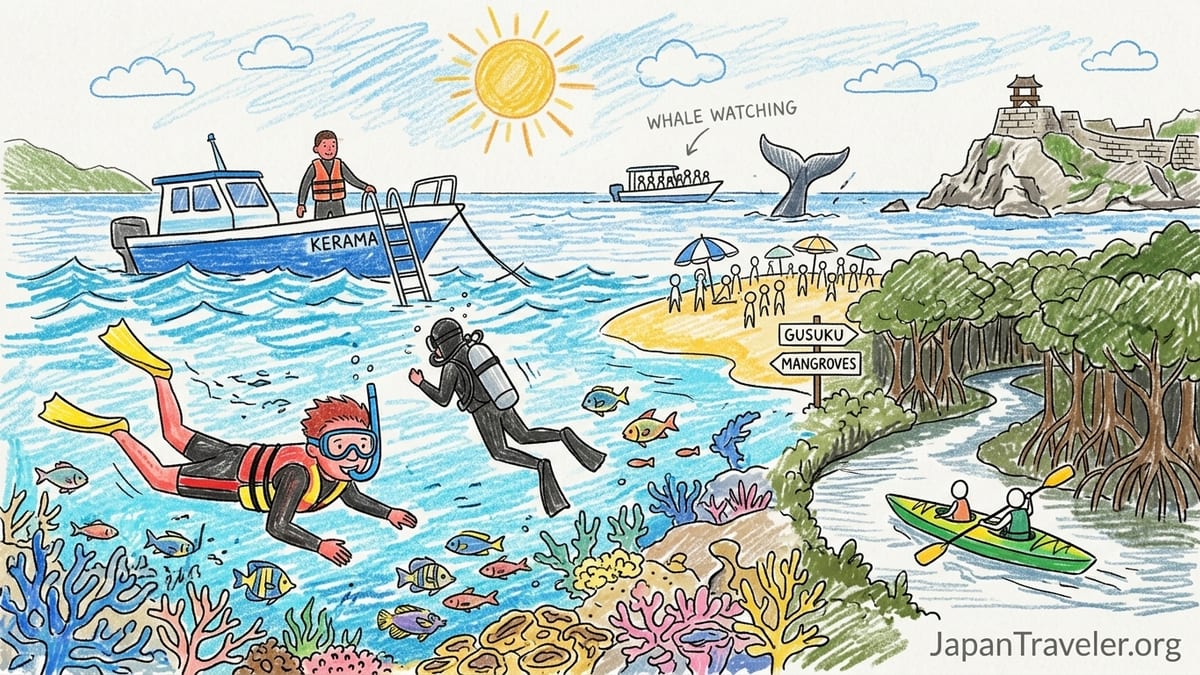
Snorkeling I’d Happily Do Again (Even After the Sunburn)
Where it happened: The Kerama Islands, on a day boat out of Naha (Okinawa Main Island). We spent most of the time in open water and near small beaches, with stops that felt chosen for visibility and sea conditions rather than for Instagram.
How it was booked: I booked the trip through my hotel’s front desk the day before because I wanted a single point of contact in English and I did not want to juggle WhatsApp messages while traveling. The operator handled masks, fins, a life jacket, and a quick safety brief. Price paid: I paid around ¥10,000 to ¥14,000 for the day, depending on the package and whether lunch was included. Duration: About 6 to 7 hours door to door, with multiple snorkel sessions broken up by boat time.
Guide quality: High on safety and pacing, medium on interpretation. The staff were excellent at watching weaker swimmers and keeping the group together, but the marine-life explanations were fairly basic. Physical effort: Low to moderate. You can float a lot, but climbing the boat ladder repeatedly in swells adds up. Weather: Bright, humid, and windy enough that the sea had some chop. Crowd level: Moderate. My boat was not packed shoulder to shoulder, but the popular stops clearly attract multiple boats at once.
Would I repeat it: Yes, with one caveat. The water was the kind of clear that makes you forget time, and the coral colors were better than I expected so close to a city departure port. The caveat is comfort: if you get seasick, this can dominate your day. Next time I would bring motion-sickness meds and choose a smaller group size, even if it costs a bit more. Mixed opinion: the ocean was unforgettable, but the “herd” feeling at certain stops kept it from being perfect.
Intro Diving: Worth Doing Once, But I’d Choose a Different Setup Next Time
Where it happened: Off Okinawa Main Island on a beginner-friendly “try diving” boat trip that paired a short training session with a guided shallow dive. The underwater scenery was beautiful, but it was the structure of the experience that left me with mixed feelings.
How it was booked: Reserved via a mainstream activity booking site because I wanted clear cancellation terms and a simple checkout. Price paid: Roughly ¥12,000 to ¥18,000 depending on inclusions like underwater photos. Duration: Half day, about 4 to 5 hours from meeting point to return.
Guide quality: Competent and calm, but time-constrained. In a group format, the instructor’s focus is on safety and basics, which is exactly what you want, but it also means you may not get much individualized coaching beyond “breathe slowly” and “equalize early.” Physical effort: Moderate. The tank is heavy, and getting geared up in heat is work. Underwater, effort is low if you stay relaxed.
Weather: Hot with sun glare on the water. Crowd level: High. Beginner courses tend to move like an assembly line: gear up, brief, enter, exit, repeat. Would I repeat it: Not in the same format. I would dive again in the Ryukyus, but next time I’d pay extra for a smaller ratio or a private guide so the experience feels less rushed. Mixed opinion: the underwater world delivered, but the surface logistics felt like a conveyor belt.
Swimming Beaches: The Beautiful Ones Can Also Be the Busiest
Where it happened: I swam on Okinawa Main Island at easy-access beaches where the water is inviting and the entry is straightforward. The sea color is as advertised, and on a calm day it can feel almost unreal. The trade-off is popularity: if it’s easy for you to reach, it is easy for everyone else, too.
How it was booked: No booking. I arrived by rental car and paid small facility fees when required (parking, showers, lockers). Price paid: Typically a few hundred yen for showers or lockers, and parking sometimes separate. Duration: I planned for 2 to 3 hours, which allowed time to swim, rinse off, and avoid the hottest part of the day.
Guide quality: Not applicable, though I paid attention to lifeguard presence and signage on currents. Physical effort: Low. Weather: Strong sun with fast-changing cloud cover. Crowd level: High at peak times, especially late morning through mid-afternoon.
Would I repeat it: Yes, but at off-peak hours. Mixed opinion: the beaches were genuinely gorgeous, but they were not tranquil. Next time I would go early, bring reef-safe sunscreen, and treat beaches as a short swim session rather than an all-day “escape.”
Mangrove Kayaking: The Quietest, Most Surprising Half Day
Where it happened: Yanbaru (Northern Okinawa Main Island), paddling through mangrove-lined waterways. It was cooler than the beach, shaded, and had that stillness where you start noticing crabs, birds, and the way the light hits brackish water.
How it was booked: I booked through a local tour operator with a simple online reservation form and a clear meeting point near the river. Price paid: Around ¥6,000 to ¥9,000 per person for a guided session with gear included. Duration: About 2 to 2.5 hours on the water, plus briefing time.
Guide quality: Strong. This was one of the few tours where the guide felt like a naturalist, not just a safety monitor. I got a practical paddling lesson, plus explanations of what we were seeing and why mangroves matter. Physical effort: Moderate, especially if there is headwind or you paddle hard. It is very doable for beginners, but you will feel it in your shoulders.
Weather: Humid but comfortable under shade, with light rain that actually made it nicer. Crowd level: Low. Groups were spaced out enough that it never felt like a parade. Would I repeat it: Absolutely. Mixed opinion: it is not the “wow” hit of coral snorkeling, but it is more meditative and felt more distinctly Ryukyu than another standard beach day.
Whale Watching in the Keramas: Great When It Works, Frustrating When It Doesn’t
Where it happened: Zamami area (Kerama Islands), during humpback season. I did this as a dedicated whale-watching tour rather than an add-on to snorkeling. It was a true “nature decides” day.
How it was booked: I booked through the local whale watching association desk near the port after arriving on the island. The process was straightforward: pick a departure, pay, and show up early. Price paid: ¥7,700 for an adult ticket. Duration: Roughly 2 to 3 hours on the water.
Guide quality: Professional and serious about rules. The crew clearly cared about keeping distance and not harassing animals. Commentary was helpful, though sometimes hard to hear over wind and engine noise. Physical effort: Low, but you need steady balance on a moving deck. Weather: Windy, with intermittent sun. Crowd level: Moderate to high, since the season is limited and departures can fill.
Would I repeat it: Yes, but only if I had extra days built in. Mixed opinion: on my tour we did see blows and a breach at distance, which was thrilling, but there were long stretches of scanning empty water. If you are prone to seasickness or if you only have one precious day, this can feel like a gamble. As a second or third day activity, it is worth it.
Ryukyu Heritage and Gusuku Castle Ruins: The Most Memorable Hours I Spent on Land
Where it happened: On Okinawa Main Island, I focused on Ryukyu Kingdom heritage and gusuku sites. Two moments stood out: walking a quieter castle ruin where the stonework and views do the talking, and visiting sacred spaces connected to Ryukyu spiritual tradition. These places felt less like “attractions” and more like anchors for understanding Okinawa beyond the beach.
How it was booked: Self-guided by rental car, using official opening hours and on-site ticketing. For Shuri Castle Park, I visited specifically to see the reconstruction and understand what is changing. It is also important to know that the interior public viewing of the Seiden is scheduled to begin on November 23, 2026, which means the experience before that date is more about observing restoration rather than touring a finished palace interior.
Price paid: Varies by site, with some ruins free and others charging an entry fee. Duration: I found 60 to 120 minutes per site was ideal. Less felt rushed; more started to blur together. Guide quality: Not applicable when self-guided, but I recommend renting an audio guide when available because the cultural context matters.
Physical effort: Low to moderate. Stone steps can be uneven, and summer heat turns short climbs into real exertion. Weather: Hot, with sudden showers that made limestone slick. Crowd level: Mixed. Shuri-related areas draw more visitors; some ruins are pleasantly quiet.
Would I repeat it: Yes, without hesitation. Mixed opinion: the famous, easy-to-reach heritage stops can feel busy and “processed,” but the quieter ruins were some of the most emotionally resonant places I visited. If I had to choose between another pricey marine tour and a second day of gusuku wandering, I would pick the castle ruins and sacred sites.
Crafts and Food That Felt Like Okinawa (Not a Souvenir Version of It)
Where it happened: Naha, in the Tsuboya area for yachimun pottery culture, and around central Naha for Okinawa soba and casual local meals. I came here expecting a quick browse and ended up slowing down, partly because crafts take time to appreciate and partly because Naha’s food scene rewards repeat meals more than one “big” dinner.
How it was booked: For crafts, I did it walk-in: I explored pottery streets, browsed small studios, and chose pieces in person so I could check weight, glaze texture, and how they felt to hold. For food, no reservations: I went early to avoid sell-outs at popular soba shops. Price paid: For pottery, small items started around a few thousand yen and rose quickly for larger, signed pieces. For soba, I paid roughly ¥390 to ¥1,100 per bowl depending on the shop and toppings, plus small add-ons like extra pork or rice.
Duration: Pottery browsing took 1 to 2 hours; a soba meal was 20 to 40 minutes if there was no line. Guide quality: Not a guided activity, but shop staff were friendly when I asked basic questions about glazes and care. Physical effort: Low, though Naha heat makes even short walks feel heavier.
Weather: Sticky, bright city summer weather. Crowd level: Food crowds were the bigger issue. Some shops were calm, while others had lines that felt out of proportion to a bowl of noodles. Would I repeat it: Yes, and I would do it more strategically. Mixed opinion: Okinawa soba is not a guaranteed life-changing meal every time, especially if you hit a touristy spot with bland broth. But when you find a shop that nails the pork and the soup balance, it becomes the kind of meal you crave again the next day. Pottery shopping also rewards patience: the best pieces I found were not in the busiest storefronts.
The Takeaway
If I had to summarize the Ryukyu Islands in one sentence, it would be this: the water is what gets you there, but the culture is what makes you want to return. I would repeat snorkeling in the Keramas because it delivers on that Okinawa-blue fantasy, but I would also repeat mangrove kayaking because it felt intimate and specific to the islands’ subtropical nature. On land, gusuku heritage sites gave me the most lasting “memory weight” for the time and money spent, especially compared with pricier tours that sometimes felt rushed.
The practical lesson I keep coming back to is to match the experience to the conditions. Choose early beach swims to dodge crowds, pick small-group water tours to avoid the assembly-line vibe, and never underestimate how much heat changes the difficulty of “easy” sightseeing. The Ryukyus are broad enough to support any style of trip, but the best days usually came when I did fewer things and did them well.
FAQ
Q1. What is the single best repeatable experience in the Ryukyu Islands?
Kerama Islands snorkeling from Naha, because it is reliably beautiful and easy to organize without specialized skills.
Q2. Is whale watching in Okinawa worth it if I only have one free day?
It can be, but it is a gamble. If your schedule is tight, prioritize a less weather-dependent activity like heritage sites or kayaking.
Q3. How much should I budget for a day of snorkeling in the Keramas?
Budget roughly ¥10,000 to ¥14,000 for a full-day boat snorkeling trip with gear, plus extra for photos or motion-sickness supplies.
Q4. Is beginner “try diving” good for first-timers?
Yes for safety and a first taste of breathing underwater, but group formats can feel rushed. Pay more for a smaller group if you can.
Q5. Are Okinawa’s beaches quiet?
Some are, but the famous easy-access beaches can be crowded at peak hours. Go early or near sunset for a calmer swim.
Q6. What is the best low-impact nature activity besides the beach?
Mangrove kayaking in northern Okinawa is low-impact and shaded, with a calmer pace than open-water tours.
Q7. Do I need a rental car to enjoy Ryukyu heritage sites?
It helps a lot for castle ruins outside Naha. In Naha itself you can visit key sites and neighborhoods without a car.
Q8. What is a realistic price for Okinawa soba in Naha?
A typical bowl can range from about ¥390 to around ¥1,100 depending on the shop and toppings.
Q9. Should I plan around Shuri Castle reconstruction timing?
Yes. The Seiden interior public viewing is scheduled to begin on November 23, 2026, so the experience differs before and after that date.
Q10. What would you skip if you dislike crowds?
Midday beach visits and large-group beginner marine tours. Choose early swims, smaller tours, and quieter gusuku ruins instead.