


Hokuriku and Shinetsu form one of Japan’s most rewarding overland routes, linking Nagano’s highland temples, Toyama’s mountain gateways, Kanazawa’s cultural quarter, Fukui’s coastal landscapes and Niigata’s Sea of Japan port. The backbone is the Hokuriku Shinkansen and connecting lines, which lets you thread these cities together without awkward detours if you plan the order carefully. This guide focuses on realistic, time-efficient itineraries built around that spine, with Niigata treated as a deliberate branch rather than an afterthought.
Understanding the Hokuriku Shinetsu Spine
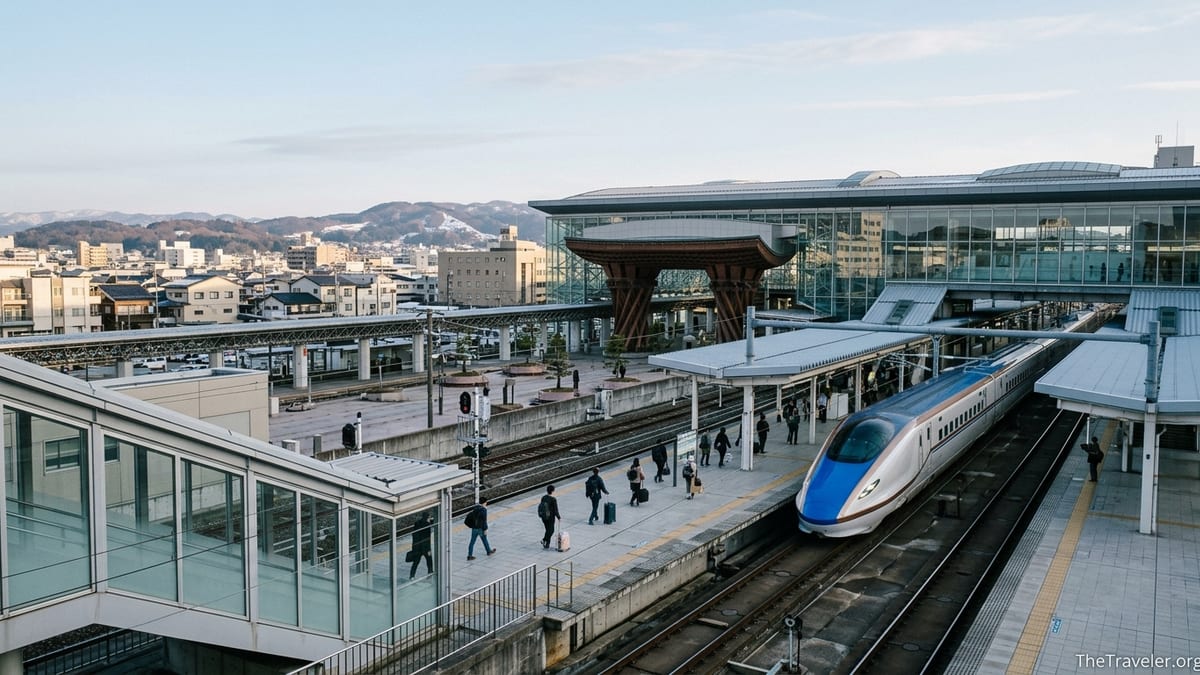
The practical transport spine runs from Tokyo to Nagano, then along the Hokuriku Shinkansen through Toyama and Kanazawa to Fukui. High speed trains from Tokyo reach Nagano in about 90 minutes and extend to Toyama and Kanazawa in roughly 2 to 2.5 hours, which makes it reasonable to leave Tokyo after breakfast and be checked into a Hokuriku hotel by early afternoon. Local and limited express trains from Kanazawa continue on toward Fukui, so you can treat this as one continuous arc rather than separate trips.
Most visitors are either arriving from Tokyo and looping back there, or traveling one way toward Kyoto or Osaka. For a one way trip, Nagano and Toyama function as mountain gateways, Kanazawa is the urban cultural anchor, and Fukui becomes a quieter coastal finale before you cross inland to the Kansai region. If you want to include Niigata, you peel off the main spine from Tokyo or Nagano on the Joetsu Shinkansen and return to rejoin the Hokuriku line later, instead of zigzagging back and forth between coasts.
On the ground, this means mapping your nights along the spine in a clean sequence. A simple pattern for first timers is Tokyo to Nagano, then Toyama, Kanazawa and Fukui, finishing in Kyoto or Osaka. At each step you can choose where to slow down with two or three nights: some travelers build that pause around Kanazawa’s museums and gardens, others around an onsen stay in the mountains between Nagano and Toyama, or a full day on the Tateyama Kurobe Alpine Route that physically links the two prefectures. The trick is to choose one or two of these slow-down points, rather than trying to do everything and spending your holiday on trains.
Core Routing From Tokyo: Two Proven Frameworks
For most visitors, the first decision is whether to travel Tokyo to Nagano first and then continue west, or to go straight to Kanazawa and work backward. In practice, starting in Nagano and moving along the spine toward Fukui works better, because it lines you up naturally for the Alpine Route and minimizes backtracking. One popular example is to leave Tokyo mid morning, arrive in Nagano around lunchtime, explore Zenkoji Temple and the old streets in the afternoon, then overnight in the city or nearby onsen areas such as Yudanaka or Shibu Onsen.
The second day can be your mountain focus. If you are visiting the Jigokudani Monkey Park, for example, you can base in Yudanaka with a ryokan that provides breakfast and dinner, visit the park in the morning when the crowds are thinner, then return to Nagano Station by late afternoon. From there, a Hokuriku Shinkansen ride of roughly an hour and a half takes you to Toyama in time for dinner. This Tokyo to Nagano to Toyama sequence gives you two nights around Nagano’s mountains, then drops you at Toyama ready for either the Alpine Route or a coastal side trip, without having to double back through Tokyo.
A second proven framework uses the Hokuriku Arch Pass, which allows flexible travel between the Tokyo and Kansai regions via Hokuriku over several days. With this, some travelers ride from Tokyo straight to Kanazawa on an early Kagayaki service, check into a hotel near Kanazawa Station, and use the city as a base for two or three nights. From Kanazawa they then work back east to Toyama or Nagano for the Alpine Route before swinging down toward Kyoto. This still follows the spine but in reverse, and it suits those who prefer to start with an urban cultural hit before climbing into the highlands.
Where to Slow Down: Kanazawa, Onsen Stays and the Alpine Route
At least one part of the Hokuriku Shinetsu arc rewards a slower pace. Kanazawa is the most obvious candidate. A single full day can cover Kenrokuen Garden, Kanazawa Castle Park, and the traditional wooden houses of the Higashi Chaya district, but two nights in the city lets you explore the 21st Century Museum of Contemporary Art, the Nagamachi samurai district and the seafood-rich Omicho Market without rushing. Many mid range hotels around Kanazawa Station offer convenient access to buses that loop through all these sights, so a two or three night stay often feels relaxed rather than repetitive.
An alternative way to slow down is to plant yourself in an onsen town. Between Nagano and Toyama you have several options that break up the journey. Around Nagano, places like Yudanaka Onsen or Shibu Onsen combine traditional ryokan stays with access to the snow monkeys in winter and hiking trails in warmer months. Closer to Toyama, hot spring areas around Kurobe Unazukionsen Station offer river gorge scenery and open air baths. Spending one or two nights in one of these onsen towns between city stays gives your itinerary a natural rhythm: urban day, mountain day, soak and sleep, then back to the track.
The Tateyama Kurobe Alpine Route is the third major reason to slow down. This high altitude crossing between Nagano’s Ogizawa or Shinano Omachi and Toyama’s Tateyama Station uses a series of buses, cable cars and ropeways to traverse the Northern Japan Alps. It typically operates from mid April to early November and is especially busy during the snow corridor period in spring. Many visitors underestimate the time required and try to treat it as a quick detour. In practice you should budget a very early start and assume a full day for the crossing, or better, one night on either side in Nagano or Toyama so you are not racing for evening trains.
Day Trips vs Overnight Bases Along the Line
Several places along the Nagano to Fukui spine work comfortably as day trips, provided you pick a sensible base. For example, from Nagano you can day trip to Matsumoto to see its black crow castle, returning by evening on the local Shinonoi Line. Travelers based in Toyama can ride local trains to the Kurobe Gorge Railway area for a scenic trolley train ride along the river when it is operating, then be back in Toyama for dinner. These examples respect the spine: you leave your luggage in a base city, take a branch line out for the day, and come back the same way without shifting accommodations.
Other destinations look like they could be day trips on a map but are better treated as overnight stays. The Alpine Route is a good example; while it is technically possible to start in Nagano or Toyama and complete the full course in one long summer day, an overnight at a hotel near Nagano Station or Toyama Station both before and after makes the experience far more manageable. Similarly, onsen towns such as Yudanaka reward at least one night in a ryokan with kaiseki-style dinner and breakfast included, which you simply cannot experience if you race back to a big city hotel every evening.
In Kanazawa and Fukui, day trips are more about nearby attractions than separate regions. Travelers staying two nights in Kanazawa often take a daytime excursion to the Noto Peninsula coastline or small historic towns in the surrounding Ishikawa countryside if they have a rental car, but most first timers will likely fill their days within the city itself. From Fukui, it is realistic to day trip to the Eiheiji Zen temple complex in the mountains or visit the dinosaur museum in Katsuyama by regional train and bus, then return to Fukui City before sunset. None of these patterns require you to move your luggage or backtrack along the main rail corridor.
Niigata as a Deliberate Branch, Not a Detour
Niigata sits on the Sea of Japan coast to the northeast of the main Nagano to Kanazawa to Fukui spine. It is directly linked to Tokyo by the Joetsu Shinkansen in around two hours, and also connects back toward the Hokuriku region by conventional lines, but folding it into the same week as the Alpine Route and Kanazawa requires careful routing. The most efficient pattern is to treat Niigata as a branch at the start or end of your journey from Tokyo, instead of darting up and down the coast mid itinerary.
One realistic approach is to travel from Tokyo to Niigata first, spend two or three nights enjoying the city’s waterfront districts, sake breweries and side trips to coastal hot spring towns, then return south and west to rejoin the spine. For example, you can ride the Joetsu Shinkansen back toward Echigo Yuzawa and transfer to Hokuriku services that bring you to Toyama or Kanazawa. This sequence avoids the common mistake of going Tokyo to Nagano, then Nagano to Niigata, then back down to Nagano again, which wastes half days in transit that could be spent in a garden or on a mountain trail.
Alternatively, you can branch to Niigata from Nagano at the very end of your spine journey. After exploring Nagano, Toyama, Kanazawa and Fukui and finishing in Kyoto or Osaka, you might use a domestic flight or backtrack by Shinkansen to Nagano, then ride north to Niigata for a quieter coastal finale. This suits longer trips where you have two full weeks and want a mix of mountains, cities and seascapes. The key is to commit to Niigata as a distinct segment: give it at least two nights and keep the train movements clean, rather than inserting a single rushed night there between other big jumps.
When a Rental Car Helps, and When It Does Not
The Hokuriku Shinetsu spine is well served by Shinkansen and limited express trains, so you do not need a rental car to move between Nagano, Toyama, Kanazawa and Fukui. However, there are specific segments where a car can deepen the experience. The Noto Peninsula north of Kanazawa, for instance, is much easier to explore with your own vehicle, letting you reach secluded fishing villages and coastal viewpoints that buses visit infrequently. Rural areas around Fukui, including lesser known temples and scenic capes, also reward drivers who are comfortable on narrow local roads.
In the mountains, a car can be useful for onsen-hopping around Nagano or accessing trailheads outside regular bus routes, especially in shoulder seasons when services are sparse. Some travelers rent a car in Nagano City, spend two or three days working through hot spring villages and rural valleys, then drop the car in Toyama before continuing by rail. This kind of one way rental pairs well with a slow travel style, because you are accepting that you will drive shorter distances and stay multiple nights in fewer places.
There are situations where a rental car adds more hassle than value. The Tateyama Kurobe Alpine Route itself is not drivable end to end; private vehicles are not allowed on the core mountain segment, so you would be leaving a car parked for the whole day while you ride cable cars and buses. City centers such as Kanazawa and Toyama are compact and well covered by buses and trams, and hotel parking can be limited or costly. If your main goal is to follow the rail spine from Tokyo to Kyoto with a few well chosen side trips, it is usually more efficient to stay on trains and use local buses and taxis where needed.
Avoiding Unnecessary Backtracking
The most common itinerary mistake in Hokuriku and Shinetsu is unnecessary backtracking along the same rail corridor. A typical example might be Tokyo to Nagano, day trip to the Alpine Route and back to Nagano, then onward to Toyama the next morning. This pattern duplicates part of the journey and squeezes the Alpine Route into a single overlong day. A cleaner solution is to cross the Alpine Route one way and use Toyama and Nagano as your lodging anchors on either side. You can start from Nagano or Shinano Omachi, traverse the route, and sleep in Toyama that night, or vice versa, turning what would have been a loop into a smooth progression.
Another frequent source of backtracking is mixing Niigata into the middle of a Hokuriku sequence without considering geography. Heading from Nagano up to Niigata for one night, then back south to rejoin the Hokuriku Shinkansen adds hours of repeated travel. Instead, either place Niigata at the front end of your trip from Tokyo or reserve it for a later return via a separate pass. Similarly, avoid shuttling between Kanazawa and Toyama multiple times for different day trips; pick one as your base for surrounding excursions so you are not moving hotels every night.
When you are continuing toward Kyoto or Osaka, the cleanest flow is to treat Fukui as your last Hokuriku stop. From Kanazawa you ride south to Fukui, spend one or two nights exploring the coast or inland temples, then continue by limited express directly through to the Kansai region. This way you are always moving forward and never revisiting the same stretch of track. If you must return to Tokyo at the end, do it in a single long Shinkansen jump rather than in stages that encourage you to repeat intermediate segments.
Sample One Way Itineraries From Tokyo to Kansai
To put these principles into concrete form, imagine you have seven to nine nights between Tokyo and Kyoto. One balanced plan starts with Tokyo to Nagano, where you spend your first night exploring Zenkoji and sampling local soba. The next morning you head to the Jigokudani Monkey Park and stay that night in Yudanaka Onsen, enjoying a hot spring bath and multi course dinner. On day three you return via Nagano to Toyama in the late afternoon, then dedicate day four to the Alpine Route, crossing from Toyama up to Murodo and back down, or completing a one way traverse toward Nagano depending on conditions.
From Toyama you move on to Kanazawa for two or three nights. During this stretch you focus on Kenrokuen Garden, Higashi Chaya, the samurai district and the city’s art museums, and you might add a relaxed half day at Omicho Market or a short side trip to nearby seaside towns if time allows. Once Kanazawa has anchored the cultural part of your route, you continue south to Fukui for a night or two, visiting Eiheiji Temple or the dinosaur museum. From there a limited express takes you directly to Kyoto, where you reconnect with the standard Golden Route through Osaka and back to Tokyo if you are not flying out of Kansai.
Travelers with more time can extend this framework by inserting Niigata at the start, spending a couple of nights on the Sea of Japan before heading through Tokyo or directly via Echigo Yuzawa to the Hokuriku region. Those with less time can compress by trimming an onsen night or shortening Kanazawa to two nights instead of three. The important thing is to preserve the directional flow: begin in Tokyo, follow the spine through Nagano, Toyama, Kanazawa and Fukui without reversing direction, then exit cleanly toward Kyoto or Osaka.
FAQ
Q1. How many days do I need for a basic Nagano to Kanazawa to Fukui route?
A stay of seven to nine days between Tokyo and Kyoto or Osaka is enough for Nagano, Toyama or the Alpine Route, Kanazawa and Fukui without rushing.
Q2. Is the Tateyama Kurobe Alpine Route realistic as a day trip from Tokyo?
It is technically possible but very tiring; it works much better if you stay in Nagano or Toyama the night before and after so you can start early and avoid rushing.
Q3. Should I buy a rail pass for this region or pay as I go?
If you plan several long Shinkansen legs between Tokyo, Hokuriku and Kansai within a week, a regional pass such as the Hokuriku Arch Pass can offer savings, while shorter trips may be cheaper with individual tickets.
Q4. Where is the best base for exploring the Alpine Route?
Nagano City, Shinano Omachi, Toyama and Tateyama all work; most travelers choose Nagano or Toyama because they have more hotel options and direct rail access from Tokyo and Kanazawa.
Q5. Can I visit Niigata and still continue on to Kyoto in the same trip?
Yes, but it is smoother to treat Niigata as a separate branch at the beginning or end of your itinerary, rather than inserting a single night there in the middle of a Hokuriku run.
Q6. Do I need a rental car to enjoy Hokuriku and Shinetsu?
You can comfortably see Nagano, Toyama, Kanazawa and Fukui by train and bus alone; a car mainly helps for rural areas like the Noto Peninsula or small coastal towns around Fukui.
Q7. Is Kanazawa better as a day trip or an overnight stay?
Kanazawa deserves at least one night and ideally two or three so you can enjoy its garden, traditional districts, markets and museums at an easy pace.
Q8. When is the best season to travel this route?
Late spring, early summer and autumn offer comfortable temperatures, clear mountain views and seasonal events, while winter brings snow but also occasional transport disruptions.
Q9. How can I avoid backtracking on this itinerary?
Plan your route in one direction, use the Alpine Route as a one way crossing between Nagano and Toyama, and choose Niigata as a distinct branch segment rather than a mid trip detour.
Q10. Is this route suitable for families with children?
Yes, as long as you limit hotel changes, allow extra time for transfers and pick a few highlight experiences such as Kanazawa’s garden, the Alpine Route or an easy onsen stay.