


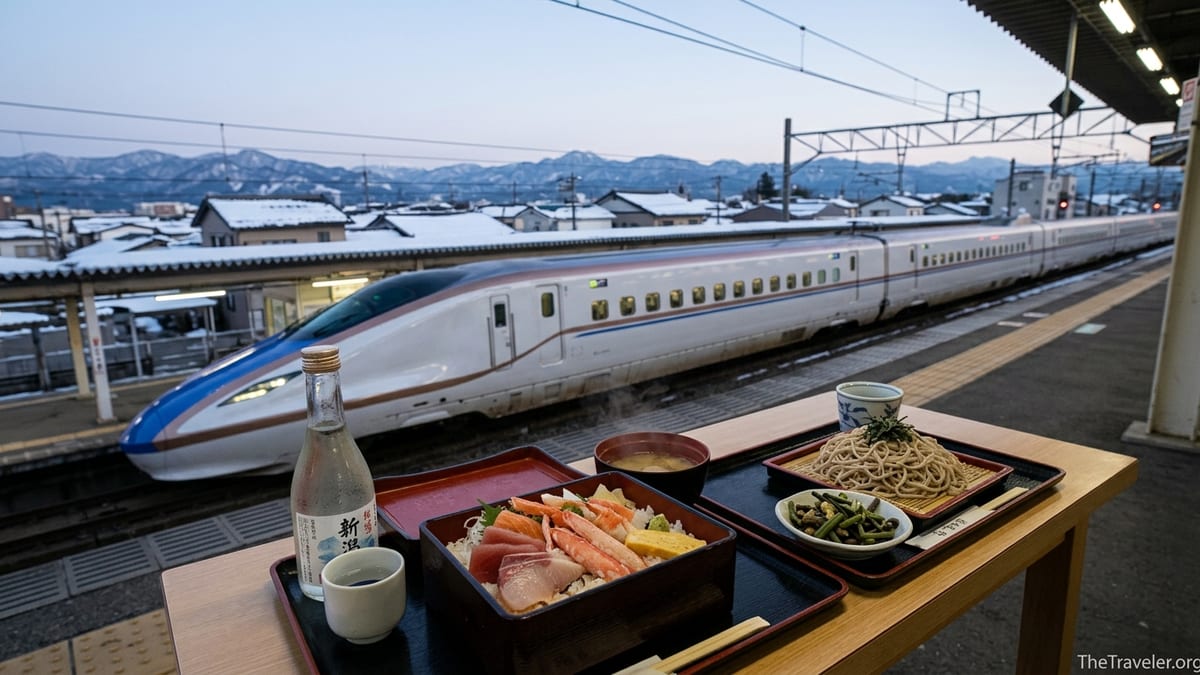
Along the Sea of Japan, heavy snow, cold currents and clear spring water shape one of Japan’s most rewarding food regions. From winter crab feasts in Ishikawa and Fukui to firefly squid in Toyama Bay, crisp Niigata sake and earthy Nagano soba, Hokuriku and the snow country are made for travelers who plan their route around what is in season. With the Hokuriku and Joetsu Shinkansen lines now tying these prefectures closely to Tokyo and Osaka, it has never been easier to build a multi-day culinary journey where the trains, not rental cars, link each seafood market, sake bar and mountain village table.
Understanding the Hokuriku & Snow Country Food Map
The Sea of Japan coast from Fukui through Ishikawa and Toyama up to Niigata sits on the receiving end of icy winter winds that dump deep snow on the region. That cold climate, combined with rich fishing grounds and clean mountain water, underpins local specialties: meaty snow crab and sweet shrimp off Ishikawa and Fukui, fatty winter yellowtail and firefly squid in Toyama Bay, and rice and sake refined in Niigata’s long winters. Inland, Nagano’s highland valleys turn that same snowmelt into ideal conditions for buckwheat and mountain vegetables, fueling the region’s reputation for Shinshu soba and rustic mountain cuisine.
For travelers, the key advantage is how closely this food geography mirrors the rail map. The Hokuriku Shinkansen runs from Tokyo to Kanazawa via Nagano and Toyama, while the Joetsu Shinkansen connects Tokyo with Niigata. Limited express trains bridge the gaps, so you can wake up to sushi in Kanazawa’s markets, lunch on Toyama Bay seafood, then finish the day with Niigata sake or Nagano soba without ever touching a steering wheel. Rather than thinking in terms of “where to eat in Kanazawa” or “best sushi in Toyama,” it helps to plan by season and product, then lay those priorities over train timetables.
One practical way to visualize it is to imagine a loop: Tokyo to Nagano for soba and mountain food, on to Kanazawa for markets and crab, across to Toyama for bay seafood and firefly squid in spring, then up to Niigata for rice, sake and coastal dishes before returning to Tokyo. Depending on your interests, you can stretch that loop into a week-long journey, or compress it into four or five very food-focused days.
Kanazawa & Fukui: Winter Crab, Markets and Classic Kaga Cuisine
Kanazawa and neighboring Fukui Prefecture are the heartland of winter crab culture on the Sea of Japan coast. Each November, snow crab fishing opens, and from roughly late November through March the city’s restaurants and markets fill with male snow crabs branded as Kanou-gani in Ishikawa and Echizen-gani in Fukui. These crabs are not cheap: a whole top-grade male crab in season can easily run the equivalent of 80 to 200 US dollars in a specialty ryokan dinner, while more modestly sized crabs or female crabs, called Kobako-gani, are far more accessible for casual diners.
Kanazawa’s Omicho Market, a short walk or bus ride from Kanazawa Station, is the easiest place for visitors to see the full spectrum. In winter, tank after tank holds live crabs tagged with yellow or purple bands identifying their port of origin, while stalls sell ready-boiled crab by the half or whole. Small seafood counters serve kaisendon rice bowls piled with shredded crab, ikura salmon roe and slices of local yellowtail; expect to pay around the equivalent of 10 to 20 US dollars for a generous bowl, depending on the toppings and the morning’s auction prices. You can eat quickly at a stand-up counter and still feel you have tasted the season.
For a more composed experience, many ryokan and mid-range hotels in and around Kanazawa and Fukui offer winter kaiseki courses centered on crab. A typical menu might start with a small plate of lightly vinegared crab leg meat, follow with hot pots where you swish raw crab into kombu broth at the table, and finish with zosui rice porridge enriched with crab shells. Prices vary widely, but a focused crab kaiseki dinner attached to lodging often starts around the equivalent of 150 US dollars per person and rises sharply with crab grade and room type.
Even outside peak crab season, Kanazawa and Fukui are rewarding food stops. Kaga cuisine emphasizes seasonal vegetables from the plains, local fish, and traditional sweets. In central Kanazawa, it is easy to find lunch sets that pair a modest selection of sashimi, grilled fish and nimono simmered vegetables with miso soup and rice for 10 to 15 dollars, making the city a comfortable starting point for travelers easing into regional food before chasing rarer delicacies.
Toyama Bay: Firefly Squid, Winter Yellowtail and Port-side Sushi
Toyama Bay is often described by Japanese food writers as a “natural fish tank” because of its steep underwater topography and nutrient-rich waters. In winter, this bay is a major source of buri, the fully grown yellowtail whose fat content peaks when the water is cold. Sliced raw as buri sashimi or lightly seared as buri tataki, it has an almost buttery richness that local sushi counters showcase from roughly December to February, though exact timing varies with yearly conditions.
Come spring, Toyama Bay’s most famous seasonal catch arrives: firefly squid, known as hotaru-ika. Between roughly March and May, these small squid rise en masse to shallow waters to spawn, a natural event that has made Toyama one of Japan’s iconic seasonal destinations. Travelers can taste hotaru-ika in many ways, from quick-blanched squid served with mustard miso at izakaya near Toyama Station to more adventurous dishes like hotaru-ika shabu-shabu or tempura in higher-end restaurants. Portions of marinated firefly squid sold in small vacuum packs at markets are an easy souvenir for those with access to a refrigerator during their trip.
Base yourself in Toyama City or the smaller port town of Namerikawa to experience this seafood at source. Morning markets and small fish shops around Toyama Station and at coastal ports sell fresh local catches, while conveyor-belt sushi chains and standing sushi bars in the city heavily feature Toyama Bay fish when in season. A good rule of thumb is to ask directly for “Toyama-wan no sakana” at the counter; even at modest prices of 1 to 2 dollars per plate at a chain restaurant, you can sample local squid, shrimp and white fish that rarely travel far from the region.
Between sightseeing in the Tateyama mountains and evenings in the city, Toyama makes a convenient food stop between Kanazawa and Niigata. The Hokuriku Shinkansen ties Toyama and Kanazawa together in under half an hour, so a traveler could easily spend a crab-focused night in Kanazawa, then roll into Toyama the next morning specifically to explore the bay’s seafood and move on by late afternoon.
Niigata: Rice Fields, Sake Breweries and Coastal Comfort Food
Niigata Prefecture sits on broad coastal plains backed by mountains, an ideal geography for rice farming. The region is widely known in Japan for its Koshihikari rice and for having one of the highest concentrations of sake breweries in the country, with roughly 90 breweries scattered across the prefecture. That combination of soft snowmelt water, high-quality rice and cold winters helps explain why Niigata sake has a reputation for clean, dry flavors that pair easily with seafood and simple dishes.
Travelers arriving by Joetsu Shinkansen usually first encounter this culture at Niigata Station or at the gateway town of Echigo-Yuzawa. Inside Echigo-Yuzawa Station, the Ponshukan complex allows visitors to sample dozens of local sakes using small tasting tokens. For about the equivalent of 5 to 10 dollars, you can receive a set of tokens and choose from a wall of chilled one-cup dispensers, each representing a different brewery. It is a low-stress way to learn what styles you enjoy before seeking out full bottles in city shops.
In Niigata City, brewery visits are more structured. Some producers in and around the city offer scheduled tours or tasting rooms, though reservations are often needed and English support varies. A practical alternative is to visit a multi-brand sake center or specialty liquor store near the station, where staff can suggest bottles to match your plans. Many shops sell 300 ml or 500 ml bottles and compact aluminum one-cup sakes, which are ideal for pairing with an impromptu picnic of onigiri rice balls at the riverside or on the train.
Food-wise, Niigata leans into comfort. Coastal markets and eateries serve heaping bowls of seafood-topped rice similar to those in Hokuriku, often highlighting local salmon, snow crab in season, and various white fish. Inland, you will find dishes like hegi soba, a regional style of soba noodles bound with funori seaweed and traditionally arranged in looping bundles on a wooden tray. Simple meals built around freshly cooked rice, miso soup and pickles are common in minshuku and onsen ryokan, where the difference from other regions is in the subtle quality of the rice itself and the sake served alongside.
Nagano: Shinshu Soba and Mountain Country Cooking
Leaving the coast and climbing inland, Nagano Prefecture offers a different expression of snow country food. Branded historically as Shinshu, Nagano is famous throughout Japan for its soba noodles, which benefit from cool mountain nights and clean water. In Nagano City, Matsumoto, and the Kiso Valley, it is easy to find small soba shops where lunch might be nothing more elaborate than a bamboo tray of cold noodles with dipping sauce, grated wasabi and green onions, yet the experience feels deeply local.
A typical soba lunch in these areas ranges from the equivalent of 6 to 12 dollars depending on toppings and side dishes. Variations include tempura soba served with seasonal mountain vegetable tempura, sansai soba topped with wild greens foraged in spring, and tororo soba crowned with grated yam. Many travelers like to stop at a soba restaurant directly connected to a wasabi farm or in a post town along the old Nakasendo route, where wooden buildings and nearby hills reinforce the sense of eating something rooted in its landscape.
Beyond soba, Nagano’s mountain cuisine draws on preserved foods and hardy ingredients. In rural areas you still find oyaki, hand-sized dumplings stuffed with vegetables like nozawana greens or pumpkin and cooked on iron plates, alongside dishes such as inago no tsukudani, small locusts simmered in sweet soy sauce, which reflect the protein needs of inland communities before modern transport. Not every traveler will want to sample insect dishes, but even reading the menu in a countryside restaurant or train station kiosk reveals how distinct Nagano’s food history is from coastal sushi culture.
Because the Hokuriku Shinkansen passes through Nagano City on its way from Tokyo to Kanazawa and Toyama, it makes sense to begin or end your Hokuriku seafood journey here. For example, you might land in Tokyo, ride to Nagano for a day of soba and onsen in nearby hot spring towns, then continue on to Kanazawa the next morning. Conversely, after days of rich seafood and sake on the coast, Nagano’s simpler mountain meals and clear air offer a natural palate cleanser on your way back east.
When to Go: Matching Seasons to Seafood and Sake
Timing matters if you want to taste each region at its best. For crab in Ishikawa and Fukui, the core season begins in early November when the fishing ban lifts and runs through winter, tapering off by March. December and January bring the largest, priciest crabs, while early in the season and toward the end you may find better value or more availability at markets. Female crabs, smaller and packed with rich roe, have a shorter window but often appear in set meals and kaisendon bowls at more modest prices.
Toyama Bay yellowtail is also most prized in the colder months, roughly December through February, when the fish store more fat for winter. Firefly squid season in Toyama typically runs from March into May, peaking in early to mid-spring. That makes late March and April a particularly attractive time to combine remaining crab dishes in Kanazawa, fresh hotaru-ika in Toyama, and the first mountain vegetables in Nagano. If you are traveling over Japan’s Golden Week holidays in late April and early May, however, expect higher prices and heavier crowds in coastal towns and on popular squid-watching tours.
Niigata sake can be enjoyed year-round, but visiting in winter adds atmosphere. Breweries are active, snow settles on the rice fields, and warm tasting rooms feel especially inviting. Late winter and early spring are also good moments to seek out seasonal sake expressions such as namazake, which is unpasteurized and often released in limited quantities. Because sake production cycles vary, it is wise to check directly with tourism offices or brewery-focused visitor centers for up-to-date information on open days and reservation requirements.
Nagano soba and mountain foods are less tightly bound to a specific month, but the mood changes with the landscape. Spring brings sansai wild vegetable dishes and flowering buckwheat fields in some areas, summer is lush and green in highland resorts, autumn adds mushrooms and chestnut sweets, and winter frames soba and hotpot meals against snow-covered roofs. Shoulder seasons like late May to June and October to November can be particularly pleasant if you want cooler temperatures, seasonal ingredients and fewer crowds than peak holiday periods.
Building a Culinary Route Along the Shinkansen
Rather than treating regional food as a checklist of famous restaurants, consider structuring your trip as a sequence of food-focused hubs linked by rail. One practical five- or six-day route might start in Tokyo, head to Nagano for a day of soba and onsen, continue to Kanazawa for crab and markets, hop to Toyama for bay seafood and firefly squid in spring, then curve up to Niigata for sake and rice before returning to Tokyo. Each leg is usually one to two hours by Shinkansen or limited express, and most stations are surrounded by enough dining options that you can arrive, drop luggage at your hotel and be eating local specialties within an hour.
At each stop, use the station area as your anchor. In Kanazawa, the area around Kanazawa Station and the Omicho Market corridor concentrate many kaisendon counters and izakaya that highlight Ishikawa fish and Kaga vegetables. In Toyama, restaurants in and around Toyama Station and the waterfront make it easy to combine a bay cruise or coastal walk with a sushi dinner. Niigata Station and the Bandai and Furumachi districts nearby hold a dense mix of sake bars and seafood-focused izakaya, so you can taste multiple breweries’ products in one night without worrying about transport. In Nagano, station-front soba restaurants and nearby shopping streets give you a straightforward way to sample Shinshu soba on tight schedules.
To keep the journey enjoyable, alternate heavier seafood and sake days with simpler meals. A day of crab kaiseki in Kanazawa followed by a sake-intensive night in Niigata can be rich; slot a Nagano soba stop or a lighter Toyama seafood lunch between them. Budget-wise, mixing markets, casual counters and one or two splurge experiences helps. You might spend under 10 dollars on a breakfast of rice balls and miso soup at a station, 15 dollars on a kaisendon at a market, and then 120 dollars or more on a single blowout crab dinner, all in the same two-day window.
Japan’s rail passes and seat reservation systems also support food-first planning. When reserving Shinkansen seats, many travelers choose midday departures so they can shop at morning markets, eat a substantial lunch, then doze on the train. Purchasing a small bottle of local sake and a boxed bento filled with regional ingredients before boarding is an easy way to extend the food experience to the journey itself. For example, you might pick up Niigata sake and onigiri made with local rice for the ride back to Tokyo, or grab toyama-wan sushi bentos in Toyama Station to eat en route to Kanazawa.
The Takeaway
Hokuriku and the snow country reward travelers who think in terms of seasons, landscapes and routes rather than isolated restaurants. Winter along the Sea of Japan coast brings crabs stamped with regional brands to Kanazawa and Fukui, dense-fleshed yellowtail into Toyama Bay, and quiet, snow-softened brewery towns in Niigata. Spring layers on firefly squid, wild mountain vegetables and fresher styles of sake, while Nagano’s soba and mountain dishes provide an earthy counterpoint year-round.
By using the Hokuriku and Joetsu Shinkansen lines as your backbone, you can design a food journey that feels both efficient and slow. Markets such as Omicho in Kanazawa and station-front kaisendon counters in Toyama become breakfast or lunch stops, not standalone sightseeing targets. Sake tasting shifts from a rushed evening activity to an integral part of your route planning, with Niigata and Echigo-Yuzawa serving as natural hubs. Nagano’s soba shops turn from a side note into bookends for the entire loop.
Whether you have four days or ten, the core idea is the same: let the train timetable and the fishing calendar guide you. Choose months when your must-try ingredients are at their best, then map a simple arc from mountains to sea and back again. The result is a trip where each destination tastes distinct, and where your memories of Japan are flavored not only by famous temples or gardens but by bowls of noodles in snowy valleys, plates of glistening crab in winter markets and small cups of rice wine sipped within sight of the fields that produced it.
FAQ
Q1. When is the best time to visit Hokuriku for crab and seafood?
The prime crab season in Ishikawa and Fukui usually runs from November through March, with December and January often offering the best quality and variety. Toyama Bay yellowtail is also at its richest in winter, while firefly squid season typically falls between March and May, making late winter to mid-spring an excellent overall window.
Q2. Can I enjoy this route without speaking Japanese?
Yes, though a few phrases help. Major stations like Kanazawa, Toyama, Nagano and Niigata have English signage and tourist information desks, and many markets and casual restaurants use picture menus or plastic food displays. Learning simple words like “kani” for crab, “sake” for rice wine and “soba” for buckwheat noodles will make ordering easier.
Q3. Is it necessary to reserve restaurants in advance?
For high-end crab kaiseki dinners, popular sushi counters and some sake-focused restaurants, reservations are strongly recommended, especially on weekends and during holidays. Market stalls, conveyor-belt sushi chains and many soba shops, by contrast, accept walk-ins and are designed for quick turnover, so you can usually just show up and wait briefly.
Q4. How expensive is it to eat regional seafood and drink sake?
Costs vary with how and where you dine. Casual kaisendon bowls in markets often run between the equivalent of 10 and 20 US dollars, while conveyor-belt sushi plates might cost 1 to 3 dollars each. Premium crab dinners or omakase sushi can easily exceed 100 dollars per person. Sake tasting at places like Ponshukan in Echigo-Yuzawa is relatively affordable, starting around a few dollars for multiple small pours.
Q5. Can I do this trip with a Japan Rail Pass or regional rail pass?
In many cases, yes. National passes and certain regional passes cover the Hokuriku Shinkansen segments between Tokyo, Nagano, Toyama and Kanazawa, as well as the Joetsu Shinkansen to Niigata. Before buying, compare the pass price with the cost of individual tickets for your exact route and number of days, since some travelers find that selectively buying Shinkansen tickets is more economical.
Q6. Are there vegetarian options along this route?
Vegetarian options exist but can be limited in seafood-focused areas, so flexibility helps. In Nagano, plain or vegetable-topped soba, oyaki dumplings with vegetable fillings and dishes built around local mountain greens are relatively easy to find. In cities like Kanazawa and Niigata, look for cafes, modern restaurants or department store food halls that list vegetable dishes clearly, and do not hesitate to ask staff to omit meat or fish broth if possible.
Q7. How should I transport sake and food souvenirs on the Shinkansen?
Most sake shops and markets will pack bottles in protective sleeves or small cardboard boxes, which fit easily into backpacks or suitcases. Smaller 300 ml bottles and one-cup sakes are especially convenient for train travel. Perishable items such as fresh seafood are best eaten the same day, but many regional specialties, including rice crackers, pickles and vacuum-packed squid or fish products, are designed to be carried and kept for several days.
Q8. Is it realistic to visit breweries without a car?
Some breweries in Niigata and other regions sit close to train stations or in city centers, making them accessible on foot or by local bus. Others are more rural and difficult to reach without driving. If you want to visit multiple breweries in a day, consider joining an organized tour, hiring a taxi for a fixed period, or focusing on tasting centers that gather products from multiple breweries in one location.
Q9. What should I wear for winter and early spring travel in this region?
Coastal Hokuriku and inland Nagano and Niigata can be very cold and snowy from December through March. Waterproof shoes or boots with good grip, a warm coat, gloves and layers are essential. In markets and stations you will often walk on wet floors and slushy streets, so shoes that can handle puddles and light snow make seafood and market exploration more comfortable.
Q10. How many days do I need for a satisfying food-focused trip?
Four or five days is enough for a compact loop that hits Nagano, Kanazawa, Toyama and Niigata with at least one meal focused on each region’s specialties. If you want to slow down, add extra onsen nights, or explore smaller towns and countryside restaurants, a week to ten days allows you to repeat favorite dishes, schedule brewery visits and follow the weather or your appetite more spontaneously.