


Hokuriku Shinetsu is one of Japan’s finest regions for travelers who love both scenic driving and efficient rail. With the Hokuriku Shinkansen now running from Tokyo through Nagano and Kanazawa to Tsuruga, it is easier than ever to reach the area by train, then switch to a rental car for coastal byways, mountain passes and quiet country roads that are difficult or impossible to enjoy by public transport alone. This guide focuses on routes where having a car adds genuine value, and shows how to link them with Shinkansen and limited express trains for a practical, rewarding itinerary.
How to Use Rail and Rental Cars Together in Hokuriku Shinetsu
The Hokuriku Shinkansen currently connects Tokyo with Nagano, Toyama and Kanazawa, and since March 16, 2024 it has continued on to Tsuruga in Fukui Prefecture. In practical terms, this means you can cover long distances from Tokyo to major hubs such as Nagano, Toyama, Kanazawa and Fukui quickly by rail, then pick up a car locally for one or two days of focused driving. This approach saves time, reduces fatigue and avoids the hassle of city driving and urban parking.
For most travelers, it makes sense to treat the Shinkansen as the backbone and cars as local “amplifiers.” A typical pattern might be to ride the Shinkansen from Tokyo to Kanazawa in around 2.5 to 3 hours in standard class, then rent a compact car near the station for 24 or 48 hours to explore the Noto coastline, Kaga Onsen or the mountains around Hakusan. After returning the car to Kanazawa, you can continue by Shinkansen or limited express train to the next region.
One-way rentals are possible but often carry a noticeable surcharge. For example, picking up a car in Kanazawa and returning it in Toyama or Fukui may incur a one-way fee that is sometimes similar to, or higher than, one day’s base rental on a small hatchback. Many visitors instead plan loop routes that begin and end in the same city, or limit one-way drops to major hubs only, where the surcharge can be more modest.
Drivers should also factor in expressway and toll road costs, typically paid most conveniently via an ETC card inserted in the rental car’s reader. Several companies offer short-term “ETC-inclusive” rental plans where the card is provided and tolls are billed afterward. This is particularly useful on mountain and coastal expressways around Ishikawa, Fukui and Toyama, which can add up over several days of driving.
Coastal Drives in Ishikawa and Fukui
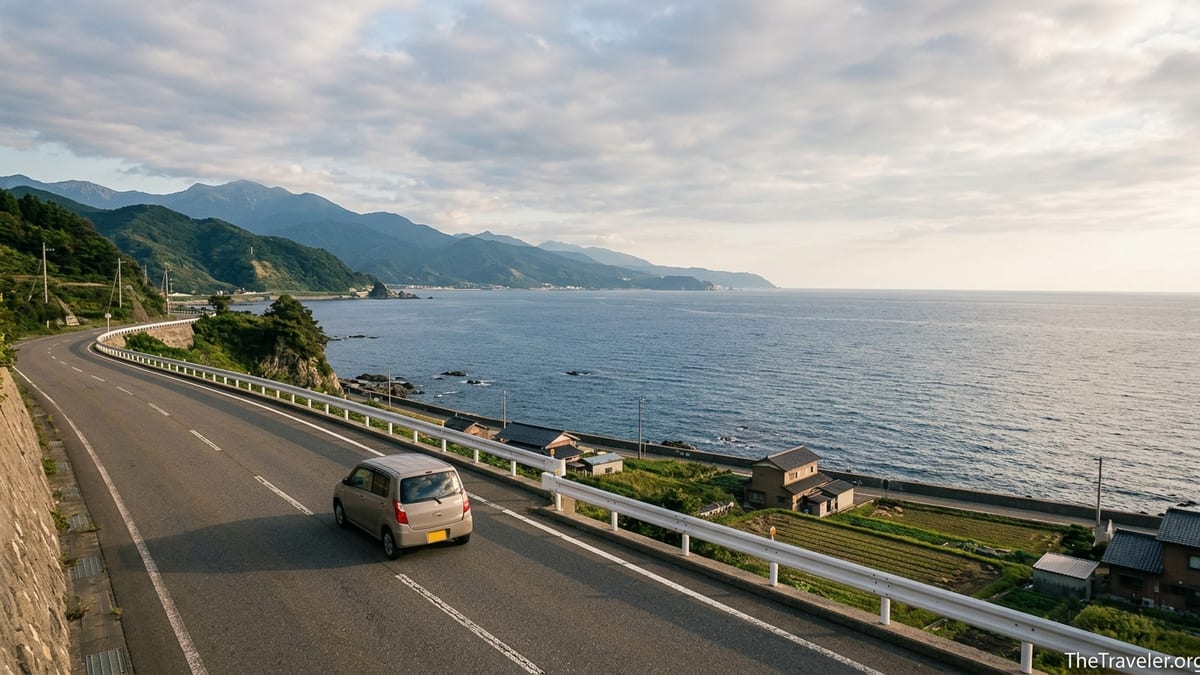
The Hokuriku coast is where having a car feels most liberating. While Kanazawa and Fukui cities are well served by trains and buses, the scenic fishing villages, sea cliffs and remote onsen towns are difficult to string together without a vehicle. A logical two or three day cluster is to base yourself in Kanazawa, drive north or south along the Sea of Japan, and loop back.
From Kanazawa, one classic coastal outing is the drive to Chirihama, the famous beach drive in Hakui. Here, a firm eight-kilometer stretch of sand has long allowed cars to drive right along the waterline when conditions permit. The beach is only reachable by combining a local train with a bus and a walk, so a rental car gives vastly more flexibility to time your visit around tides and weather. Most rental agencies in Kanazawa will caution you not to enter soft sand or saltwater and may forbid beach driving after heavy rain, so always confirm rules at pickup.
Continuing north along the Noto Peninsula, a car allows you to stop at small harbors, roadside seafood markets and viewpoints that local buses might pass infrequently or not at all. Simple minshuku guesthouses in towns such as Wajima or Suzu can turn the drive into an overnight mini road trip. Since the 2024 and 2025 earthquake seasons have impacted parts of Noto, it is wise to check local tourism office advisories and road closure information close to your travel dates, but even partial routes out of Kanazawa still make for strong coastal drives.
To the south, Fukui Prefecture offers its own sea views and dramatic geology around the Tojinbo Cliffs, a rugged basalt coastline where a car makes it easy to explore multiple viewpoints in one afternoon. From Fukui or Awara Onsen, a loop might take you along the Echizen coastline, with stops at small fish markets, roadside crab shacks in winter, and lesser-known beaches. Public buses exist but run infrequently on some sections; driving lets you hop between viewpoints, then finish the day in an onsen hotel in Awara or in central Fukui before returning your car the following morning.
Rural Toyama: Gokayama, Farm Roads and the Alpine Foothills
Toyama Prefecture is often treated as just a gateway to the Tateyama Kurobe Alpine Route, but it rewards slower exploration by car. The traditional gassho-zukuri farmhouses of Gokayama, in villages such as Ainokura and Suganuma, can be reached by bus from Takaoka or Shin-Takaoka Station. However, a car allows you to wander the surrounding valleys, stop at roadside farm stands and take lesser-known routes along the Shogawa River that buses do not cover.
A common pattern is to ride the Hokuriku Shinkansen from Tokyo to Shin-Takaoka, rent a car at or near the station, then drive to Gokayama in about an hour. From there you can continue to Shirakawa-go in Gifu, using the expressway and local roads to form a loop back into Toyama Prefecture or onward into Ishikawa. Having your own vehicle is particularly valuable if you want to stay in a farmhouse minshuku and explore side valleys at sunrise or sunset, when buses are scarce.
Elsewhere in rural Toyama, quiet roads run through rice paddies and along the shores of Toyama Bay, with backdrops of the Tateyama mountains on clear days. Compared with urban Japan, traffic is usually light once you leave the city centers. A one or two day rental out of Toyama City or Shin-Takaoka can comfortably cover Gokayama, nearby hot springs and some of the bay coastline, then bring you back to the station in time for an evening Shinkansen.
If you are planning to combine Toyama’s countryside with the Tateyama Kurobe Alpine Route, many travelers base in Toyama City, keep their rental car only for the countryside portion, then return it before heading to Tateyama Station by private railway the next morning. This avoids paying parking fees on a car that would otherwise sit unused while you cross the Alpine Route on cable cars and buses.
Mountain Roads Around Hakusan and Nagano
The mountains between Ishikawa, Gifu and Toyama are threaded with some of central Japan’s most rewarding driving roads. Perhaps the best known is the Hakusan Shirakawa-go White Road, a 25 kilometer toll road that connects the Kaga Onsen and Hakusan area in Ishikawa with the Shirakawa-go region in Gifu. The road climbs to around 1,445 meters and is typically open only from early June to early November, with restricted hours and full winter closure outside this period. Car and light vehicle tolls are collected at gatehouses on each side.
This road is difficult to experience without your own vehicle because there is no through public transportation. In a typical loop, travelers rent a car in Kanazawa or Kaga Onsen, drive the White Road with stops at waterfalls and viewpoints, then descend into Shirakawa-go for sightseeing or an overnight stay before returning via expressway to their starting point. Because the road is steep and narrow in sections, drivers must be comfortable with mountain switchbacks and occasional fog. Two-wheel drive compact cars are generally fine in summer, but during late autumn you should confirm whether studless winter tires are fitted, as icy patches can appear at high elevations even before full closure.
In Nagano Prefecture, a car opens up several scenic highland roads that are either awkward or impossible to reach entirely by public transport. From Nagano City or Matsumoto, you can drive up to plateaus such as Togakushi, Utsukushigahara or Kirigamine, where views stretch across the Northern Alps. Some of these roads operate as toll roads or have seasonal closures, often from November to April or May. Rental agencies in Nagano typically equip cars with winter tires from around December through March, but exact timing varies and spring shoulder seasons can be unpredictable, so it is wise to reconfirm when booking.
That said, not every mountainous area in Nagano is best explored by car. For example, access to the famous Kamikochi valley is restricted to buses and taxis for most visitors, with private cars parked at lower trailheads. In such cases, you might drive to a parking area like Sawando, then transfer to a shuttle bus for the final leg. This hybrid approach is common across Nagano and the Hakusan area: use the car to reach remote trailheads and hot spring villages, but respect road closures and car restrictions in fragile alpine zones.
Niigata Countryside and Coastal Clusters
Niigata is a long, coastal prefecture with strong rail connections along the main corridor, but many of its most atmospheric rural areas sit inland among rice terraces and small onsen towns. The Joetsu Shinkansen brings you from Tokyo to Niigata City in around two hours, and limited express trains continue along the coast to smaller hubs like Murakami and Itoigawa. From these rail gateways, a rental car lets you explore side valleys that would be tedious or impossible by bus.
One appealing cluster is northern Niigata around Murakami, known for salmon traditions and old merchant houses. From Murakami Station, driving inland takes you to rural landscapes of rice paddies, small shrines and quiet river valleys, while coastal roads north of town offer sea views and small fishing harbors. Another option is to base in the central region around Nagaoka or Tokamachi, which provide access to terraced rice fields and art installations associated with the Echigo-Tsumari Art Triennale. Trains can get you as far as these towns, but the artworks and viewpoints are spread over a broad rural area that is far easier to explore with your own wheels.
In southern Niigata near the border with Nagano and Toyama, a car allows you to connect onsen towns such as Yuzawa with ski areas and summer hiking bases. During winter, this region receives heavy snow and many rental cars are fitted with studless winter tires by default. Even so, first-time winter drivers in Japan should think carefully before committing to mountain roads in midwinter and may wish to focus their self-driving on late spring to autumn, when weather and visibility are more forgiving.
Because Niigata stretches along the Sea of Japan, it pairs naturally with Ishikawa and Toyama in a longer multi-hub itinerary. For instance, you might travel Tokyo to Niigata by Shinkansen, explore for a couple of days with a rental car, take a limited express or local train down the coast to Itoigawa or Toyama, then rent another car there to continue into the mountains.
Making Sense of ETC Tolls, Fuel and One-Way Fees
For most foreign visitors, the ETC electronic toll system is the most confusing part of Japanese driving. On Hokuriku expressways such as those connecting Kanazawa, Toyama, Fukui and Niigata, toll gates are frequent. With an ETC card, you simply approach the dedicated ETC lane at low speed, the gate opens automatically and charges are recorded. Without ETC, you must take paper tickets and pay at staffed booths, which is slower and can be more stressful with language barriers.
Many rental agencies in Hokuriku Shinetsu offer ETC cards as a paid option or include them in foreign visitor packages. The card may carry a small daily rental fee plus the actual tolls you incur, billed when you return the car. Over a few days of highway and toll road driving, the time and convenience savings usually justify the fee. Drivers with contactless credit cards from abroad should not assume they work directly at Japanese toll gates; the ETC system is proprietary, so cards must come via the rental company.
Fuel costs are relatively straightforward. Self-service stations are common near major cities and along expressways, but in rural areas you may still encounter full-service pumps where staff fill the tank for you. Payment is typically by cash or major credit card, and you can choose regular gasoline for most compact and midsize rentals. It is wise to fill up in larger towns before embarking on long mountain stretches such as the Hakusan Shirakawa-go White Road, as there are often no stations along the road itself.
One-way rental fees can reshape your planning. Dropping a car in a different prefecture from where you picked it up often incurs surcharges that scale with distance. For example, renting in Kanazawa and returning in Nagano or Niigata may carry a higher fee than a drop in nearby Toyama or Fukui. Before committing to a linear drive that crosses several prefectural borders, compare the extra rental cost with the price and time of simply returning the car to your starting point and covering the intercity leg by Shinkansen instead.
Winter Driving, Seasonal Closures and the Tateyama Kurobe Alpine Route
Hokuriku Shinetsu is famous for heavy snow, particularly along the Sea of Japan coast and in the mountains of Toyama and Nagano. From roughly December to March, many rental cars in these regions are fitted with studless winter tires as standard, at least in Toyama, Nagano and Niigata. Still, travelers should proactively confirm this when booking, especially for pickups in late November or early April, when policies can vary and conditions are changeable.
Seasonal road closures are crucial to understand. The Hakusan Shirakawa-go White Road, for example, typically opens only from early June to early November, with exact dates announced each year by local authorities. Outside that window, gates are closed and you cannot drive through, even on dry early-spring days. Similarly, several highland roads in Nagano and Niigata close from late autumn into late spring for safety.
The Tateyama Kurobe Alpine Route is a special case. Private cars cannot cross the route itself between Toyama Prefecture and Nagano Prefecture. Instead, visitors park at terminals such as Tateyama Station or Ogizawa and traverse the mountains using a series of cable cars, highland buses, a trolleybus and a ropeway. The famous snow walls near Murodo are accessible only on this public transport system, generally from April into June depending on annual conditions, and you must budget for the dedicated transport tickets rather than fuel or road tolls.
Because Google Maps and other general navigation apps do not always reflect seasonal closures or the exact nature of the Alpine Route, plan this portion using official timetables and maps. A common approach is to base in Toyama City, take a local train to Tateyama Station, cross to Ogizawa via the Alpine Route, then continue by bus and train to Nagano City or Matsumoto, where you can pick up another rental car if you wish to continue driving in Nagano or Niigata. Trying to “shortcut” the Alpine Route with a private car is both impossible and unnecessary given the quality of the highland transport.
Sample Route Clusters That Combine Rail and Driving
Rather than forcing a single enormous loop through all five prefectures, it is more realistic to think in clusters that you can chain together according to your time and interests. One popular pattern is a Kanazawa and Noto Peninsula cluster. You might arrive in Kanazawa by Shinkansen from Tokyo, spend a day exploring the city on foot and by local bus, then rent a car for two days to drive to Chirihama and as far up Noto as current road conditions allow. After an overnight stay in a coastal town, you return to Kanazawa, drop the car and either continue toward Fukui on the Hokuriku Shinkansen or backtrack toward Toyama.
A second cluster centers on rural Toyama and the Gokayama region. From Tokyo, you could ride the Shinkansen to Shin-Takaoka, pick up a car, and spend one or two nights between Gokayama and neighboring hot springs, including possibly a detour to Shirakawa-go. You would then loop back into Toyama Prefecture and return the car at Toyama or Shin-Takaoka Station, ready to continue by rail to Nagano or Niigata.
A third cluster involves Hakusan and central Nagano. From Kanazawa or Kaga Onsen, you rent a car, cross the Hakusan Shirakawa-go White Road when it is in season, stay in Shirakawa-go or a nearby town, then drive onward into Nagano Prefecture via expressways and local roads. After exploring highland areas such as Togakushi or the Nakasendo post towns by car, you drop the vehicle in a major city like Nagano or Matsumoto before continuing elsewhere by train.
Finally, a Niigata countryside cluster might start with a Joetsu Shinkansen ride from Tokyo to Niigata City, followed by a car rental for two to three days visiting Murakami, inland rice terraces and onsen villages. From there you could either return to Niigata and back to Tokyo by rail, or drive to a nearer station such as Nagaoka or Joetsu-Myoko, drop the car and connect to a different Shinkansen line for onward travel to Toyama or Nagano. By stringing together two or three of these clusters, many travelers build a flexible, ten to fourteen day itinerary that balances comfortable rail journeys with rewarding days behind the wheel.
The Takeaway
Hokuriku Shinetsu is one of Japan’s best regions for a hybrid rail-and-road trip. The expanded Hokuriku Shinkansen allows you to move quickly between major cities such as Tokyo, Nagano, Toyama, Kanazawa and Fukui, while rental cars open up coastal drives in Ishikawa and Fukui, rural corners of Toyama and Niigata, and mountain roads around Hakusan and the Nagano highlands that would be slow or impossible to cover by bus.
Success here comes down to a few key strategies. Use Shinkansen and limited express trains for long-distance segments, and restrict driving to focused clusters of one to three days at a time. Pay attention to seasonal issues such as winter tires and road closures, especially on the Hakusan Shirakawa-go White Road and highland routes in Nagano and Niigata. Understand that the Tateyama Kurobe Alpine Route is a public-transport-only zone where cars cannot cross, and plan to link it by train and bus instead.
With these principles in mind, Hokuriku Shinetsu rewards the independent traveler with sea views, quiet farm roads, steaming onsen towns and alpine panoramas, all stitched together through thoughtful combinations of rail and road. For drivers who appreciate both efficiency and the freedom of the open road, it is one of Japan’s most satisfying regions to explore.
FAQ
Q1. Do I need an International Driving Permit to rent a car in Hokuriku Shinetsu?
Yes, most travelers who are not resident in Japan need an International Driving Permit based on the 1949 Geneva Convention, plus their home country license. Some countries have separate agreements, so you should check official guidance before traveling.
Q2. When is the best season for a road trip on the Hakusan Shirakawa-go White Road?
The White Road typically opens in early June and closes in early November, with peak greenery in summer and famous autumn foliage from late September through October. Outside this window it is closed to all regular traffic.
Q3. Can I drive my own car across the Tateyama Kurobe Alpine Route?
No, private cars cannot cross the Alpine Route between Toyama and Nagano. You must park at terminals like Tateyama Station or Ogizawa and traverse the route using cable cars, buses and ropeways.
Q4. Are winter tires automatically included on rental cars in this region?
In snow season many agencies in Toyama, Nagano and Niigata fit studless winter tires as standard, but policies and dates vary. Always confirm tire type at the time of booking and again when you collect the vehicle.
Q5. Is it worth getting an ETC card for tolls if I am only driving for one or two days?
For even short trips that include expressways, an ETC card is usually worthwhile because it makes toll gates faster and less stressful. Some companies charge a small daily fee for the card, plus the actual tolls you incur.
Q6. How difficult is it to find parking in Kanazawa, Toyama and other cities?
City centers have plentiful coin-operated parking lots, especially around major stations and attractions. Expect to pay by the hour, with capped maximums for daytime or overnight, and allow extra time to navigate one-way streets.
Q7. Should I arrange a one-way rental or make loop routes back to the same city?
One-way rentals are convenient but often carry noticeable surcharges, especially across prefecture lines. Many travelers find it more economical to design loop routes that start and end in the same hub, then use Shinkansen for longer transfers.
Q8. Is winter driving in Hokuriku Shinetsu suitable for first-time snow drivers?
Conditions along the Sea of Japan and in the mountains can be severe, with heavy snowfall and reduced visibility. If you have limited snow-driving experience, consider visiting from late spring to autumn instead or limiting winter driving to lowland areas.
Q9. How many days should I allocate to each road trip cluster?
Most coastal or countryside clusters work well in one to three days. For example, two days is comfortable for Kanazawa and the nearby coast, while Gokayama and rural Toyama also fit into a similar time frame.
Q10. Can I rely on Google Maps for navigation on mountain roads and the Alpine Route?
Google Maps is generally reliable for regular roads but may not reflect seasonal closures or special transport sections like the Alpine Route. For mountain passes and the Alpine Route itself, always cross-check with official local information and road advisories.