


Japan’s trains are fast, punctual and a major part of the travel experience. But after several price increases, the once-obvious value of the Japan Rail Pass is now a real question. In 2026, you can no longer assume the nationwide JR Pass will automatically save you money. Whether it is worth it depends entirely on your specific routes, how fast you travel and which trains you take.
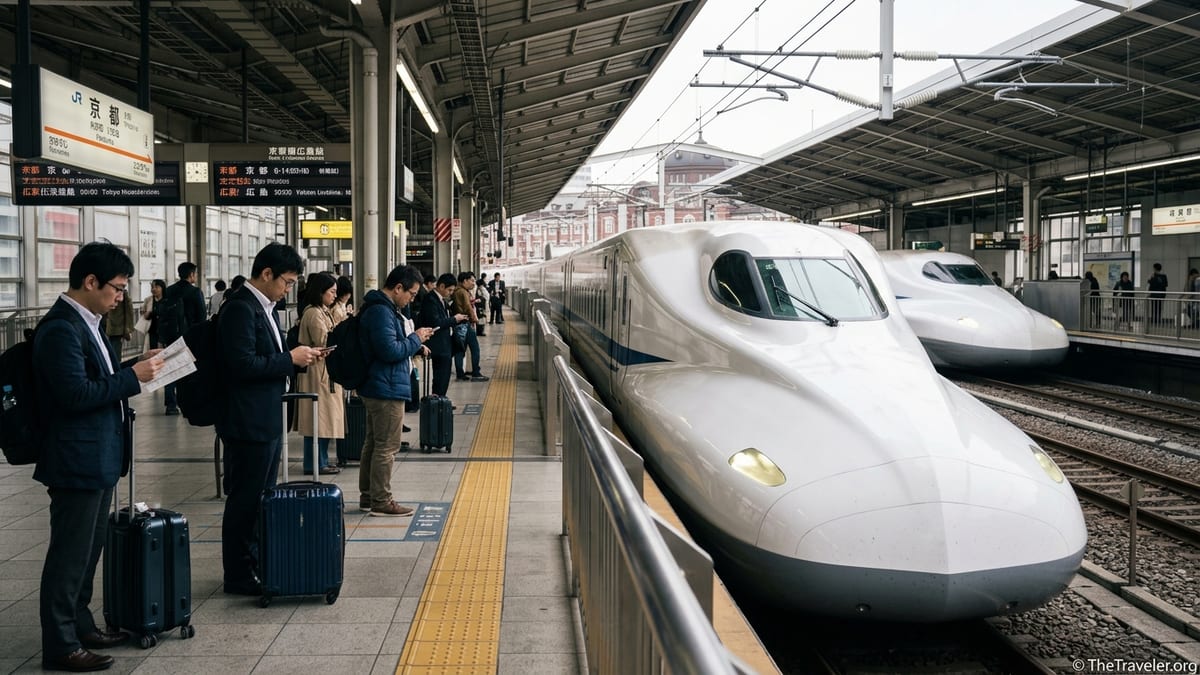
What the Japan Rail Pass Actually Covers in 2026
The nationwide Japan Rail Pass is operated by the six regional JR companies and is available only to temporary visitors. It comes in 7, 14 and 21 consecutive day versions, with separate Ordinary and Green Car options. Prices have risen sharply in recent years, which is why many itineraries that once favored the pass now break even or even come out cheaper with individual tickets.
The JR Pass covers almost all JR-operated trains across the country, including Shinkansen services such as the Tokaido and Sanyo lines between Tokyo, Kyoto, Osaka, Hiroshima and Fukuoka. However, the fastest Nozomi and Mizuho services on these lines are not included. Pass holders must instead use slightly slower Hikari, Sakura and Kodama trains, which usually add only 15 to 40 minutes to typical intercity journeys but can require a bit more planning.
The pass also includes many JR local and rapid trains in major cities such as Tokyo and Osaka, as well as some JR-operated buses and the JR Miyajima Ferry near Hiroshima. It does not cover private railways, metro systems like Tokyo Metro or Osaka Metro, or most non-JR buses. This means even with a JR Pass you will still rely on IC cards like Suica and Pasmo or individual tickets for city subways and private lines to reach areas such as Hakone, Nikko’s Tobu lines, or parts of Kansai.
The most important point for 2026 travelers is that the pass is now a high-value investment rather than a default purchase. The price can still be justified on long, Shinkansen-heavy trips, but it is less compelling for slower, regionally focused vacations where you spend more days in each city and take fewer long-distance trains.
Route 1: Classic Tokyo–Kyoto–Osaka Round Trip
The most common first-time itinerary is a week or so split between Tokyo and the Kyoto–Osaka area. A typical plan might look like four nights in Tokyo, three nights in Kyoto and a final night in Osaka before flying out. The core long-distance journey is the Tokyo to Kyoto Shinkansen run, with a short hop between Kyoto and Osaka.
A one-way reserved seat on a Tokaido Shinkansen Hikari from Tokyo to Kyoto typically costs roughly the equivalent of a mid-range hotel night, with a similar fare from Kyoto back to Tokyo. The Kyoto to Osaka leg on a JR Special Rapid or local train is inexpensive by comparison, more like a restaurant meal than a hotel bill. Altogether, a Tokyo–Kyoto–Osaka–Tokyo loop on Shinkansen with one or two local JR hops usually falls significantly below the cost of a 7-day nationwide JR Pass in 2026.
On this simple route, a 7-day JR Pass almost never pays for itself unless you add extra long-distance trips. If you spend a week in total and your only major rail segments are Tokyo–Kyoto and Kyoto–Tokyo, individual tickets are the smarter financial choice. You can buy reserved seats at ticket machines or JR counters once you arrive, or use an approved online booking service before your trip. Travel times are the same as with a pass on Hikari trains, and you retain full access to Nozomi services if you choose to pay slightly more for the very fastest trains.
The exception is when you pack in additional side trips from Kyoto or Osaka, such as a Shinkansen day trip to Hiroshima or a same-day return to Kanazawa. As soon as your Tokyo–Kyoto round trip grows into a more complex, rail-heavy itinerary, the calculation starts to shift toward a pass. But for the simple “Tokyo & Kyoto only” route, most travelers in 2026 will save money by skipping the JR Pass and buying individual tickets.
Route 2: Adding Hiroshima and Miyajima
Once you add Hiroshima and Miyajima to a Tokyo–Kyoto–Osaka itinerary, the nationwide pass becomes more competitive. A realistic 10-day plan might involve four nights in Tokyo, three nights in Kyoto, one or two nights in Hiroshima and a final night in Osaka. The long-distance segments would then include Tokyo–Kyoto, Kyoto–Hiroshima, Hiroshima–Osaka or Osaka–Tokyo, plus local JR trains and the JR Miyajima Ferry.
Tokyo to Kyoto on a Hikari Shinkansen remains the same mid-range price, while Kyoto to Hiroshima on a Sanyo Shinkansen Sakura adds another substantial intercity fare. From Hiroshima back to Osaka or directly to Tokyo, you will again pay a relatively high Shinkansen ticket, especially if you take a through service back to the capital. Once all these legs are added up, the total usually approaches or even exceeds the cost of a 7-day JR Pass, particularly if you travel all these routes inside a single week.
In this scenario, many travelers choose to structure their itinerary so that the intensive travel days fall within a 7-day pass window. For instance, you might spend your first three nights in Tokyo paying out of pocket for local trains and subways, then activate a 7-day JR Pass the morning you leave for Kyoto. Over the next week, you would take Tokyo–Kyoto, Kyoto–Hiroshima, Hiroshima–Osaka and finally Osaka–Tokyo all on the pass, along with local JR transport and the ferry to Miyajima. When totalled, these segments often beat the price of separate tickets, especially if you make one or two additional JR day trips like Himeji or Kobe.
Even so, the margin is thinner than it was before the price increases. If you plan to fly onward from Osaka or Hiroshima instead of returning to Tokyo, or if you reduce your Shinkansen segments by flying into Tokyo and out of Fukuoka, the pass may only break even or be slightly more expensive than point-to-point tickets. The decision in 2026 should be based on an exact list of journeys and dates, not a general assumption that “Tokyo plus Hiroshima means I must buy a JR Pass.”
Route 3: Intensive Long-Distance Touring Across Japan
The nationwide JR Pass still shines for travelers who pack many long Shinkansen journeys into a short window. Imagine a 14-day itinerary that includes Tokyo, Hakodate in Hokkaido, Kanazawa on the Sea of Japan coast, Kyoto, Hiroshima and Fukuoka, with several intermediate stops. Without a pass, you would be buying multiple separate Shinkansen tickets between regions that can each cost roughly the same as a budget domestic flight.
For example, consider starting in Tokyo, then heading north to Sendai and on to Hakodate, before returning south via Kanazawa, Kyoto, Hiroshima and Fukuoka, and finally back to Tokyo. Even if some of these legs are done by limited express trains instead of the very fastest services, the combined fare total can easily outweigh the cost of a 14-day JR Pass, especially if you choose reserved seats and travel at popular times. In such a high-mobility trip, the pass not only simplifies ticketing but also acts as cost control in case you decide on extra spur-of-the-moment journeys.
The same applies to ambitious 21-day routes that crisscross the country. A traveler visiting Tokyo, Nagano, Kanazawa, Kyoto, Hiroshima, Fukuoka, Kumamoto and Kagoshima, with side trips to smaller cities, would likely pay very substantial sums for individual tickets. A 21-day pass, while expensive up front, often becomes good value when measured against this number of long-distance segments. Even with the latest pricing, a route that involves a new Shinkansen line every few days can justify the investment.
However, not every long trip requires the full 21-day nationwide pass. Some travelers arrange their travels so that part of the visit is spent in one region using a cheaper regional pass, and only a central section is covered by a 7- or 14-day nationwide pass. For instance, a month-long stay split between several weeks in Kansai and Kyushu with only a short national hop in between might be cheaper with a combination of regional products and point-to-point tickets instead of a continuous 21-day nationwide pass.
Understanding Regional JR Passes and When They Win
Regional passes have become increasingly important after the nationwide JR Pass price rises. JR East, JR West, JR Central, JR Kyushu, JR Hokkaido and JR Shikoku all offer multi-day passes confined to their areas. These often provide very good value for visitors who focus on one region rather than attempting to cover the entire country in a single trip.
For example, a traveler spending a week exploring only the Kansai area and nearby cities might consider a JR West Kansai Area pass or a Kansai–Hiroshima pass. These products typically cost less than the nationwide pass but still cover JR trains between Osaka, Kyoto, Nara, Himeji, Hiroshima and sometimes additional lines. A Tokyo-based visitor whose main excursions are to Nikko, the Fuji area and the Tohoku region might benefit more from suitable JR East passes instead of a national product.
Regional passes can even outperform the nationwide pass on some specific patterns. If you fly into Tokyo, spend several days there, then head to Kanazawa and onward to Kyoto and Osaka, a JR Central or JR West product combined with local JR East tickets may work out cheaper than buying a full national pass. Similarly, a Kyushu-focused trip with multiple hops between Fukuoka, Nagasaki, Kumamoto and Kagoshima is usually better served by a Kyushu rail pass that concentrates value where you actually travel.
The key is that regional passes restrict where you can go, but often at a much more attractive price point. Before committing to a nationwide pass, compare whether a combination of one or two regional passes plus a single long Shinkansen ticket, or even a low-cost domestic flight, gives you greater flexibility and savings. This calculation especially matters in 2026, when simply assuming that the “big pass” is always better can significantly overinflate your transport budget.
Nozomi, Mizuho and Seat Reservations: Practical Fine Print
One subtle but important condition of the Japan Rail Pass is the exclusion of Nozomi and Mizuho Shinkansen services on the Tokaido and Sanyo lines. These are the very fastest trains between Tokyo, Nagoya, Kyoto, Osaka, Hiroshima and Fukuoka. With a pass, you must instead take Hikari or Sakura trains, which stop at a few more stations and therefore take slightly longer. For most tourists, this time difference is modest, but commuters and business travelers sometimes prefer to pay the premium for Nozomi.
In practical terms, a Tokyo to Kyoto journey on a Nozomi is typically about 2 hours and 15 minutes, while a Hikari might take around 2 hours and 40 minutes. For Hiroshima, the gap can be a bit larger. If you buy individual tickets, you can choose Nozomi or Mizuho without restriction, potentially shaving time off a tight schedule. If you hold a JR Pass, you avoid paying extra, but you accept these slightly slower services and need to check timetables carefully.
Seat reservations are another layer in the decision. The nationwide JR Pass generally allows free seat reservations on eligible trains, which is very useful during busy periods such as Golden Week, Obon and the New Year holidays. Being able to walk into a JR ticket office and reserve seats for all your upcoming Shinkansen trips without paying separate reservation fees can be both financially and practically convenient, especially for families or groups.
When traveling with individual tickets, you pay for each reserved seat as part of your fare and must plan ahead if you want specific trains. However, for many visitors traveling outside peak holiday periods, non-reserved cars remain a viable option. You can simply turn up at the station a bit early, line up for the non-reserved carriage and usually find seats, particularly on mid-day departures. In those cases, the included reservations on the JR Pass are nice to have but not always essential to justify the higher price compared to separate tickets.
How to Calculate Your Own Break-Even Point
Because prices change and itineraries vary, the only reliable way to decide whether the JR Pass is worth it in 2026 is to calculate your exact routes and compare. Start by writing down every significant rail journey you plan to take, including city-to-city Shinkansen legs and major limited express routes. Then, check approximate current fares for each leg and add them up. Always include both directions if you are returning to your starting city, and do not forget the smaller but still notable intercity hops like Osaka to Hiroshima or Nagano to Kanazawa.
Next, compare that total with the cost of the appropriate length of nationwide JR Pass. Consider how many days of your trip will actually involve expensive long-distance journeys. If you are staying four nights in Tokyo with little long-distance travel, then making three long hops in five days, a 7-day pass might work well if you align the activation date with those travel-intensive days. If you are staying put for long stretches, paying individually for the occasional long ride and using IC cards for local transit may be cheaper.
Do the same comparison with relevant regional passes. Look at where you are really traveling: if almost all of your long journeys lie within eastern Honshu, a JR East pass might cover them for less than the nationwide product. If your travel is confined to Kansai and western Honshu, JR West options may be more logical. Use up-to-date fare calculators or booking platforms to estimate ticket prices; even rough figures will usually make clear which option is best.
Finally, factor in non-financial values. The JR Pass can be simpler because you do not have to buy separate tickets for each leg, especially useful if you are nervous about machines or language barriers. On the other hand, paying as you go allows full freedom to take Nozomi and Mizuho services and avoids paying for days when you barely use JR trains at all. The right choice is the one that fits both your budget and your travel style.
The Takeaway
In 2026, the Japan Rail Pass is no longer an automatic bargain for every visitor. It still offers excellent value on itineraries packed with long-distance Shinkansen rides, such as multi-region tours that stretch from Hokkaido to Kyushu in a short period. On more modest routes, particularly the classic Tokyo–Kyoto–Osaka loop without extra long excursions, separate tickets very often cost less than a 7-day nationwide pass.
Regional passes have emerged as strong alternatives, delivering focused value for travelers who stay within a single broad area like Kansai, Tohoku or Kyushu. Many visitors now mix and match: perhaps using a regional pass for one part of the trip, a short nationwide pass for a central high-mobility period, and simple IC card travel for city days. This blended approach can deliver both savings and flexibility if you take the time to map out your journeys in advance.
The most important mindset shift is to stop treating the JR Pass as a default. Instead of buying it because “everyone says you should,” use real-world examples and current prices to test your own itinerary. When you add up the cost of individual tickets and compare it with the nationwide and regional passes available, the correct decision usually becomes obvious.
Traveling by train in Japan remains one of the great joys of visiting the country. Whether you ride with a JR Pass, regional ticket or individual fares, you will still experience the same clean trains, scenic routes and near-perfect punctuality. By planning carefully and choosing the right ticket strategy, you can enjoy all of that while keeping your budget under control.
FAQ
Q1. Is the Japan Rail Pass still worth it after recent price increases?
The pass can still be worth it for itineraries with many long Shinkansen journeys in a short period, but simple routes like Tokyo–Kyoto–Osaka often cost less with individual tickets.
Q2. Does the JR Pass cover Nozomi and Mizuho Shinkansen trains?
No. The nationwide JR Pass does not cover Nozomi or Mizuho services. Pass holders must use Hikari, Sakura or other eligible trains on the same routes.
Q3. For a one-week Tokyo and Kyoto trip, should I buy a 7-day JR Pass?
Usually not. If your only long-distance segments are Tokyo–Kyoto and back, individual Shinkansen tickets almost always cost less than a 7-day nationwide pass.
Q4. When does adding Hiroshima make the JR Pass a better deal?
When you include Tokyo–Kyoto, Kyoto–Hiroshima and Hiroshima–Osaka or Tokyo within a 7-day window, the combined cost often comes close to or exceeds a 7-day pass, making it more competitive.
Q5. How do regional JR passes compare to the nationwide pass?
Regional passes are limited to specific areas but usually cost less and can offer excellent value if your travel is concentrated in one region such as Kansai, Tohoku or Kyushu.
Q6. Are seat reservations included with the Japan Rail Pass?
Yes, the nationwide JR Pass generally allows free seat reservations on eligible Shinkansen and limited express trains, which is especially useful during busy seasons.
Q7. Can I still make seat reservations if I buy individual tickets instead of a pass?
Yes. You can purchase reserved seats at ticket machines or counters, paying the reservation as part of your ticket price. This is standard for travelers without a pass.
Q8. What about city transport like Tokyo Metro or Osaka Metro?
The JR Pass does not cover most metro systems or private railways. You will still need IC cards or separate tickets for many urban journeys, even if you have a pass.
Q9. How should I calculate whether the pass is cheaper for my trip?
List all your planned long-distance journeys, look up approximate current fares, total them, then compare that figure with relevant national and regional pass prices for your travel dates.
Q10. Is it better to prioritize convenience or savings when choosing a pass?
It depends on your travel style. The JR Pass can be more convenient for frequent Shinkansen users, while individual tickets and regional passes often provide better value on slower or more focused trips.