


Japan rewards thoughtful route planning. With bullet trains that outrun traffic jams and compact cities that pack in major sights, a smart itinerary can save you days of backtracking and hundreds of dollars in transport costs. This guide starts with the classic Tokyo–Kyoto–Osaka corridor, then shows how to layer in Hakone and Mount Fuji, Hiroshima and Miyajima, Kanazawa and Takayama, or farther regions without turning your trip into a zigzag across the map.
Understanding the Tokyo–Kyoto–Osaka Backbone
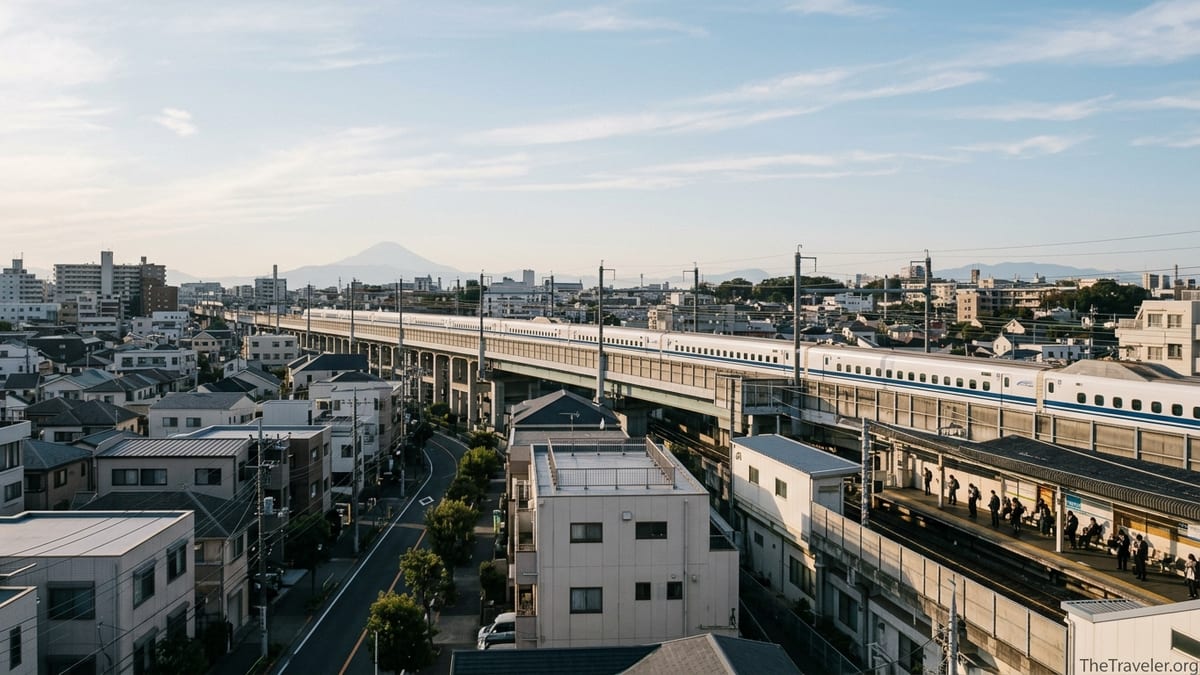
Most first trips to Japan are anchored on the triangle of Tokyo, Kyoto and Osaka. These three cities sit on the Tokaido Shinkansen line, the main bullet train artery. Fast Nozomi services link Tokyo Station to Kyoto in around 2 hours 15 minutes, and to Shin-Osaka in roughly 2 hours 30 minutes, with standard reserved seats usually in the region of 14,000 to 15,000 yen one way for adults. Travel times are similar from Shinagawa Station in southern Tokyo, which is often more convenient if you are staying near Shinagawa, Shibuya or Haneda Airport.
In practical terms, this means you can comfortably move between Tokyo and Kyoto or Osaka in a morning or late afternoon and still have sightseeing time the same day. For example, many travelers check out of a Tokyo hotel after breakfast, board a mid-morning Nozomi, drop luggage at a Kyoto hotel by lunchtime and spend the afternoon in Gion or at Kiyomizu-dera. With trains leaving every 10 to 15 minutes at peak, you plan around your day, not around a single departure.
Because Kyoto and Osaka are only about 15 minutes apart by Shinkansen and around 30 minutes by regular JR or private lines, it makes sense to treat them as a single region when planning nights. Many visitors now base in Kyoto for history and temples, then day trip to Osaka for nightlife and food. Others flip the pattern and sleep in Osaka’s Namba or Umeda districts for easy dining and late trains, while using the short hop to Kyoto for daytime sightseeing. Either approach avoids an unnecessary extra hotel change.
For a compact first itinerary of about 8 to 10 days, a very efficient structure is 4 to 5 nights in Tokyo and 3 to 4 nights in Kyoto or Osaka, with at most one hotel change between the Kansai pair. This gives enough time for Tokyo neighborhoods like Shibuya, Shinjuku and Asakusa, plus Kyoto’s main temples and a taste of Osaka’s Dotonbori and street food without constantly packing and unpacking.
Building a Linear Route: Open-Jaw vs Round-Trip Flights
One of the simplest ways to cut backtracking is to fly into one city and out of another. Airlines label this as a multi-city or open-jaw ticket. For Japan, that often means booking something like Los Angeles to Tokyo Haneda as your arrival flight, then Osaka Kansai to Los Angeles as your departure. The big Japanese carriers and many US and European airlines allow you to search this style of itinerary directly on their sites, and flight search engines usually have a multi-city option alongside one-way and return.
On the ground, open-jaw flights let you travel in a straight line instead of looping back. A 10-day trip might look like: arrive Tokyo, spend 4 nights exploring the capital, then ride the Shinkansen to Kyoto for 3 nights, finish with 2 nights in Osaka and fly home from Kansai International. You only ride the bullet train east to west once, and your last day is a quick train or limousine bus ride from Osaka or Kyoto to the airport instead of a rushed bullet train dash back to Tokyo.
Round-trip flights into and out of Tokyo can still make sense when fares are substantially cheaper or schedules are better. In that case, arrange your rail route as a gentle arc rather than a yo-yo. A 12-day itinerary might have you arrive Tokyo, move to Kyoto and Osaka in the middle, continue down to Hiroshima, then ride the direct Nozomi from Hiroshima back to Tokyo on your last full day. Hiroshima to Tokyo is a long run of around 4 hours on the fastest trains, but as a single travel day it is more efficient than making several shorter backtracking hops.
When comparing flight options, factor in the cost and time of getting to and from each airport. Haneda is closer to central Tokyo than Narita and often saves 30 to 40 minutes of train or bus travel each way. In Kansai, Kansai International serves most long-haul flights, while Osaka Itami handles many domestic routes and some regional services and sits closer to central Osaka and northern Kyoto by airport limousine bus.
How Long to Stay and How Often to Change Hotels
Japan’s trains make it tempting to hop cities every day, but most travelers underestimate the friction of hotel changes. Packing, checking out, navigating a station, riding a train, then finding the next hotel often consumes half a day even when everything runs smoothly. As a rule of thumb, consider a minimum of two nights per hotel, with three or four nights being ideal in major cities such as Tokyo and Kyoto.
In Tokyo, four nights allows you to experience at least three very different areas at a relaxed pace: maybe an afternoon in Asakusa’s old-town streets and Senso-ji; an evening in Shinjuku’s food alleys and observatory decks; and a day around Shibuya and Harajuku. With only two nights, visitors often spend more time in transit between hotel, station and sights than actually exploring a neighborhood. Choosing a hotel close to a major JR or subway hub such as Shinjuku, Tokyo Station, Ueno or Shibuya can trim 20 to 30 minutes of daily commuting.
In the Kyoto–Osaka region, three or four nights split across one or two hotels usually works well. A common pattern is three nights in Kyoto, then a final night in Osaka near Namba or Umeda for easier access to an early Kansai International departure and a last evening wandering Dotonbori. Another efficient approach is a single Kyoto base for the full Kansai stay, combined with day trips to Osaka and Nara. Rapid and local trains make Kyoto Station to Osaka Station in about 30 minutes, and Kyoto to Nara in roughly 45 minutes, so you can return to the same hotel bed each night.
Single-night stays are best reserved for places that are either genuinely on your way, or are destinations where the accommodation itself is the experience. A good example is spending one night at a ryokan with hot springs in Hakone between Tokyo and Kyoto. Because Hakone lies just off the Shinkansen route, you can leave Tokyo in the morning, enjoy Hakone’s ropeways and lake cruises, sleep in a traditional inn with kaiseki dinner, then rejoin the bullet train at Odawara Station the next day without backtracking all the way into Tokyo.
Adding Hakone and Mount Fuji Without Losing Time
Hakone and the wider Mount Fuji area are natural additions to a Tokyo–Kyoto route, but the details matter. Hakone is reached via a combination of trains and buses from Tokyo, with a common pattern being the Odakyu Romancecar from Shinjuku to Hakone-Yumoto, followed by local transport around the region. From Hakone, you can connect to the Tokaido Shinkansen at Odawara Station in around 15 to 30 minutes by local train or bus, then continue directly on to Kyoto or Osaka. This routing keeps your journey more or less linear.
If you want that iconic view of Fuji over a lake, consider Kawaguchiko on the northern side of the mountain. Here, the logistics are a bit trickier to keep linear, as there is no Shinkansen station nearby. Many travelers do Kawaguchiko as a long day trip from Tokyo, using highway buses from Shinjuku or Tokyo Station in each direction. This avoids a luggage-heavy transfer through smaller stations, and you can still connect to Kyoto later in the trip by taking the Shinkansen from Tokyo or Shinagawa.
With limited time, think about Hakone and Fuji as a trade-off rather than an automatic add-on. On a 9-day trip, for example, adding a night in Hakone might mean trimming a night from either Tokyo or Kyoto. If you are visiting in a season when Fuji is often hidden by clouds, such as the height of summer, you may get better value by using that extra day to explore Tokyo’s less visited neighborhoods or Kyoto’s quieter temples instead of gambling on mountain views.
Travelers who prioritize hot springs and ryokan stays can also find excellent options elsewhere on the route, such as in Kinosaki Onsen reachable from Kyoto or in Arima Onsen near Kobe, which pairs well with an Osaka base. This can reduce the need to detour heavily around Hakone if the rest of your itinerary is already tight.
When Hiroshima, Miyajima, Kanazawa or Takayama Make Sense
Hiroshima and nearby Miyajima Island fit naturally at the western end of the Tokyo–Kyoto–Osaka corridor. The direct Nozomi Shinkansen from Kyoto to Hiroshima takes roughly 1 hour 40 minutes, and from Shin-Osaka about 1 hour 30 minutes, making it feasible as either an overnight side trip or a one-night stop on the way to or from Fukuoka. Many travelers spend a night in Hiroshima to visit the Peace Memorial Museum, then continue to Miyajima for a half-day or full-day visit to Itsukushima Shrine and the island’s hiking trails.
If you are flying in and out of Tokyo, Hiroshima works best if you place it at the far end of your route and then ride the Shinkansen back to Tokyo in one long leg of about 4 hours on your last full day. If you are using an open-jaw flight, you can instead fly out of Fukuoka or Osaka after Hiroshima, cutting down the return train mileage. Typical advance discount fares on the Nozomi from Tokyo to Hiroshima for a reserved ordinary seat are often in the mid-16,000 yen range one way, so adding Hiroshima is a more significant budget decision than simply going as far as Osaka.
Kanazawa and Takayama, on the other hand, form a scenic inland arc that works well if you prefer traditional streetscapes and mountain landscapes over big-city Hiroshima. A common route is Tokyo to Kanazawa on the Hokuriku Shinkansen in about 2.5 to 3 hours, one or two nights in Kanazawa’s samurai and geisha districts, then a bus through the mountains via Shirakawa-go to Takayama. After a night in Takayama’s old town, you can continue on by limited express train to Nagoya and transfer to the Tokaido Shinkansen for Kyoto or Osaka.
Because this Tokyo–Kanazawa–Takayama–Kyoto line forms a tidy arc, it avoids backtracking while still adding variety. It does, however, introduce smaller trains and buses with less frequent departures than the Tokaido Shinkansen. In high seasons such as cherry blossom and autumn foliage, you should expect to book some segments in advance and allow generous transfer times. On a 12- to 14-day itinerary, many travelers happily trade one or two nights in Tokyo or Osaka to make room for Kanazawa and Takayama.
Trains, Passes and When to Consider Domestic Flights
For routes confined to the main Honshu corridor, Shinkansen trains are almost always the most efficient choice. They depart from central stations, run frequently, and are rarely delayed for more than a few minutes. To illustrate, a typical day might see you leave a Kyoto hotel at 9:00, catch a 9:30 Nozomi to Tokyo, arrive just before noon, drop your bag at a hotel near Tokyo Station and be sitting down to lunch by 13:00 without ever dealing with security queues or airport transfers.
The Japan Rail Pass used to be a default recommendation for many itineraries, but after price increases it now makes sense mainly if you are taking multiple long-distance Shinkansen rides within a fairly tight window. For example, a traveler doing Tokyo–Kyoto–Hiroshima–Tokyo within seven days, plus a couple of shorter day trips, might still find value in a 7-day pass, especially if they are happy to ride the slightly slower Hikari services rather than the fastest Nozomi. Casual itineraries that only include one or two bullet train legs usually work out cheaper by buying individual tickets, sometimes using early-purchase discounts on official booking platforms.
Domestic flights begin to rival or beat trains in time and cost once you move off the main corridor or cover very long distances. Tokyo to Sapporo in Hokkaido, for instance, is a journey of several hours even on the fastest train combinations, whereas multiple daily flights from Haneda or Narita reach New Chitose Airport near Sapporo in about 1.5 hours. Similarly, for destinations such as Okinawa, Kagoshima, or even Fukuoka at the far end of Kyushu, many travelers choose a domestic flight from Tokyo or Osaka and then use local trains once they arrive.
When deciding whether to fly or take the train, map out the door-to-door time rather than just the in-vehicle time. A flight from Tokyo to Fukuoka may be 2 hours in the air, but you also need to travel to Haneda or Narita, pass through security, and then get from Fukuoka Airport into the city center. The direct Nozomi from Shin-Osaka to Hakata Station in Fukuoka can take around 2.5 hours, but you board right in the heart of Osaka and step off in central Fukuoka. On routes like this, personal preference and ticket prices often tip the balance more than pure speed.
Sample Durations for Smarter, Backtrack-Free Trips
While every traveler’s pace is different, a few sample structures show how to keep your Japan itinerary linear. On an 8-day trip limited to the main corridor, you might fly into Tokyo, spend 4 nights there with a possible day trip to Nikko or Kamakura, then ride the Shinkansen to Kyoto for 3 nights, with one evening in Osaka. You would fly out of Kansai International, avoiding the need to sprint back to Tokyo.
With around 12 days, you can comfortably add either a Fuji-area overnight or a western extension. One efficient layout is 3 nights in Tokyo, 1 night in Hakone, 4 nights in Kyoto with a day trip to Nara, and 3 nights in Osaka with a day trip to Hiroshima and Miyajima using an early train. Another option trades Hakone for Kanazawa and Takayama: 3 nights Tokyo, 2 nights Kanazawa, 1 night Takayama, 3 nights Kyoto, 2 nights Osaka, flying out of Kansai. Each move steps you forward to the next region without backtracking.
On longer journeys of 16 to 18 days, you have scope to combine multiple side regions while still keeping a logical flow. A traveler might arrive in Tokyo, head north to Kanazawa and Takayama, drop into Kyoto and Osaka, continue to Hiroshima and Miyajima, and finally fly out of Fukuoka, using a domestic flight back to Tokyo only if their international ticket requires it. Because each segment is chosen for both interest and position on the map, every transfer takes you closer to your eventual departure point.
In each of these examples, notice how hotel changes are kept to a reasonable rhythm. Most cities see at least two nights, and transitions are arranged for mid-morning or early afternoon. Instead of cramming in every famous name, the route emphasizes depth in a few places and a clean geographical line from arrival to departure airport.
The Takeaway
Building a smart Japan itinerary is less about hitting a specific number of cities and more about drawing a clean line across the map. Start with the reliable spine of Tokyo, Kyoto and Osaka linked by frequent Shinkansen services. Then consider which side trips genuinely add something you care about, whether that is hot springs in Hakone, history in Hiroshima or mountain towns like Takayama, and insert them where they fit naturally along your direction of travel.
Use open-jaw flights where possible to avoid doubling back, and be realistic about how often you want to change hotels. In a country where local trains, subways and buses are part of the sightseeing experience, giving yourself extra nights in each base often reveals more of Japan’s charm than one more rushed stop. With thoughtful sequencing and a little flexibility, you can turn a good Japan holiday into a great one by simply traveling in a smarter line.
FAQ
Q1. Is it better to base in Kyoto or Osaka for exploring the Kansai region?
Both work well. Kyoto offers easy access to temples and traditional districts, while Osaka has more nightlife and dining. Many travelers sleep in Kyoto and do evenings or a final night in Osaka.
Q2. How many days do I need for Tokyo, Kyoto and Osaka without rushing?
A balanced first trip is around 8 to 10 days: 4 to 5 nights in Tokyo and 3 to 4 nights in the Kyoto–Osaka area, with at least two nights per hotel.
Q3. Should I buy a Japan Rail Pass for a Tokyo–Kyoto–Osaka itinerary?
If you only ride the Shinkansen once or twice, individual tickets are usually better value. A pass makes more sense when you add longer legs such as Hiroshima or multiple day trips.
Q4. When does it make sense to add Hakone or Mount Fuji to my route?
Hakone fits well as a one-night stop between Tokyo and Kyoto because you can rejoin the Shinkansen at Odawara. Fuji’s Kawaguchiko area works best as a day trip or if you have at least 10 to 12 days overall.
Q5. Is Hiroshima and Miyajima realistic on a 10-day trip?
Yes, if you accept a faster pace. Many travelers do 3 or 4 nights in Tokyo, 3 nights in Kyoto or Osaka, and 2 nights in Hiroshima with a visit to Miyajima before flying or riding the Shinkansen back.
Q6. How often should I plan to change hotels in Japan?
Plan at least two nights per stop, ideally three or four in major cities. Use single-night stays mainly when the location is either on your direct route or is itself a special stay such as a ryokan.
Q7. Are domestic flights faster than Shinkansen trains?
They can be on longer routes such as Tokyo to Sapporo or Okinawa. For Tokyo to Kyoto, Osaka or even Hiroshima, Shinkansen trains are usually faster door to door and more convenient.
Q8. Which airport is best for starting or ending a Japan itinerary?
Haneda is often the easiest for Tokyo, while Kansai International is the main long-haul gateway for the Kyoto–Osaka area. Using one to arrive and the other to depart helps you avoid backtracking.
Q9. Can I do day trips to Nara, Nikko or Kamakura from my main bases?
Yes. Nara is an easy day trip from Kyoto or Osaka, while Nikko and Kamakura work well from Tokyo. These are classic add-ons that do not require extra hotel changes.
Q10. How far in advance should I book Shinkansen tickets?
For busy periods like cherry blossom, Golden Week and autumn foliage, reserving a week or two ahead is wise. Outside peak seasons, many travelers comfortably book just a few days or even a day in advance.