


Japan’s Golden Route is the first-timer classic for a reason. Linking Tokyo, the Mount Fuji and Hakone area, Kyoto, Nara and Osaka, it concentrates many of Japan’s most famous sights into an easy, well-connected corridor. With some planning around direction of travel, rail passes, luggage and side trips, you can turn this busy backbone into a smooth, deeply rewarding first journey.
Understanding Japan’s Golden Route Today
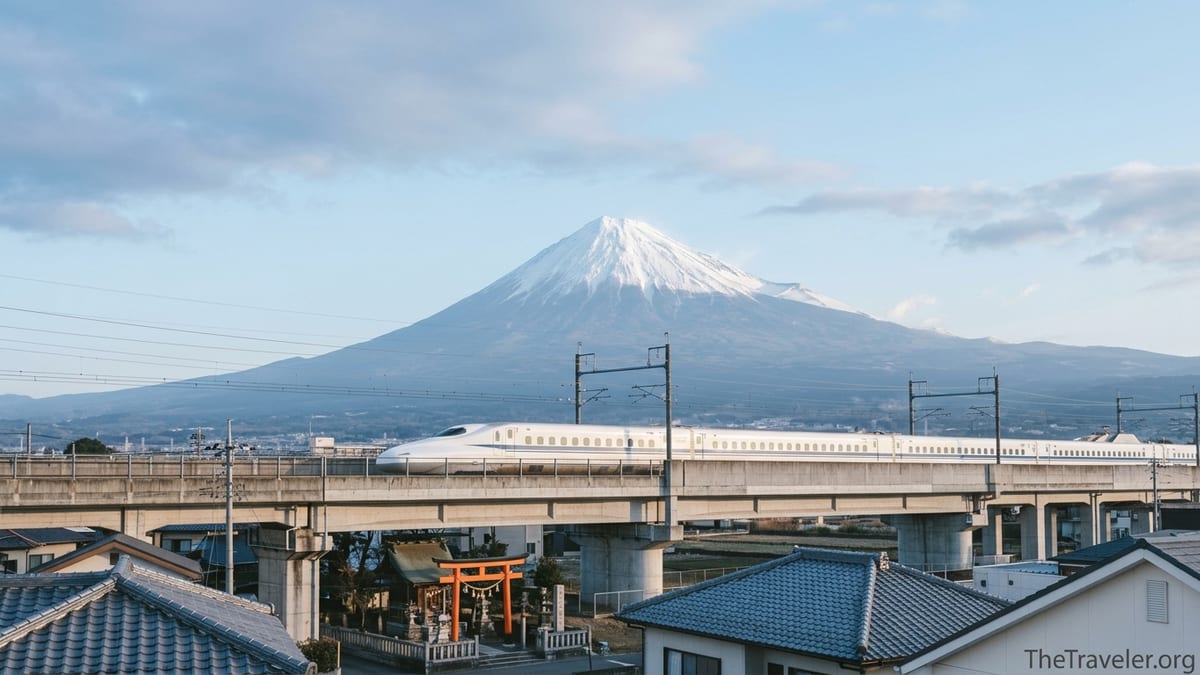
Japan National Tourism Organization describes the Golden Route as the core corridor for first-time visitors, connecting Tokyo with Mount Fuji, Kyoto, Nara and Osaka. In practice, most travelers follow a broad east–west arc: starting in Tokyo, dipping into the Fuji or Hakone area, then continuing by Shinkansen to Kyoto and onwards to Osaka. Central Japan Railway even promotes a Shinkansen-based Golden Route on the Tokaido line that mirrors how most international visitors now move through the country.
For a typical 10 to 14 day trip, this route balances big-city buzz with historic neighborhoods, onsen stays and quick access to quieter countryside. You might spend four or five nights in Tokyo, one or two around Hakone or Kawaguchiko for Fuji views and hot springs, three or four in Kyoto, one night or a long day in Nara and two or three in Osaka. From this spine, you can bolt on extensions to Hiroshima and Miyajima, the Japanese Alps or the Kii Peninsula without changing your core structure.
Because this corridor is so developed, it is forgiving for first-time visitors. Major stations have English signage, frequent departures and clear ticket machines, and you will rarely be more than a few minutes’ walk from convenience stores, ATMs and luggage lockers. That makes it easier to focus on the experience rather than the logistics, especially if you choose your direction of travel and overnight bases carefully.
Which Direction to Travel and How to Use Airports
For most travelers the most efficient direction is east to west: arrive in Tokyo, then work your way to Kyoto, Nara and Osaka before flying home from Kansai International Airport. This “open jaw” pattern, into Tokyo and out of Osaka, avoids the need to double back by bullet train at the end of your trip and saves around 2.5 to 3 hours of travel time between Shin-Osaka and Tokyo, plus the cost of that one-way Shinkansen ticket.
Flying into Tokyo gives you a choice between Narita and Haneda airports. Haneda is closer to central Tokyo and often easier after a long flight, with straightforward monorail and train connections to hubs such as Hamamatsucho, Shinagawa and Shibuya. Narita offers more long-haul routes, with airport express trains into Tokyo Station or Ueno. On the western end, Kansai International Airport sits on an artificial island south of Osaka and is linked by direct limited express trains to both Osaka and Kyoto, so you can comfortably spend your final nights in either city before departure.
There are reasons to reverse the route and start in Kansai. If you find significantly cheaper flights to Kansai or want to begin with temples and traditional neighborhoods before Tokyo’s intensity, you might land in Osaka or Kyoto, travel eastward and depart from Tokyo. The rail connections work equally well in both directions, but many visitors find it easier to adjust to Japan by easing in with Tokyo’s internationalized neighborhoods and then letting the pace gradually slow as they move west.
If your flights are round-trip in and out of Tokyo, the route still holds. You can take a Shinkansen from Tokyo to Kyoto, continue to Osaka, then either return directly from Shin-Osaka to Tokyo in about 2.5 to 3 hours by Hikari or Nozomi service, or add a stop at Hiroshima and loop back. With a round-trip Tokyo flight you will need to factor in the extra rail time and cost on your final days, which can make a nationwide rail pass more attractive for longer itineraries.
Where to Overnight and What to Treat as Day Trips
On the Golden Route, you rarely need to overnight in every destination. Instead, use a few hubs and tap into the tight rail network for day trips. Tokyo is an obvious base for at least four nights, covering central neighborhoods like Shinjuku, Shibuya, Ginza and Asakusa, with side trips to places such as Nikko, Kamakura or Yokohama. Staying near a major station such as Shinjuku, Tokyo or Ueno reduces transfer time when you move on.
For the Mount Fuji and hot spring segment, many travelers choose Hakone or Lake Kawaguchiko. Hakone is easiest when you hold a Hakone Freepass from Odakyu Railway, which covers transport on the loop of trains, cable cars, ropeways, buses and the tourist boats on Lake Ashi. Kawaguchiko, on the Fuji Five Lakes side, offers some of the best postcard Fuji views from lakeside ryokan and hotels. Either area works well as a one-night stay sandwiched between Tokyo and Kyoto, allowing you to enjoy an onsen evening without rushing back to the city.
Kyoto deserves at least three nights if it is your first visit. The city’s temples, geisha districts and gardens are spread across several areas, and you will want unhurried days in places like Fushimi Inari Shrine, Arashiyama or the Philosopher’s Path. Many visitors stay near Kyoto Station for easy Shinkansen access, or around Gion and Kawaramachi for a more atmospheric evening environment. From Kyoto, you can comfortably do a day trip to Nara, which is about 45 minutes by local train, rather than changing hotels for a single night.
Osaka can be either a base or a finale. With its nightlife and food-centric neighborhoods such as Dotonbori and Shinsekai, two nights is usually enough on a first trip, particularly if you have already spent time in Tokyo. If you are flying out of Kansai Airport, staying near Osaka Station or Namba gives you direct airport rail links. Universal Studios Japan, Osaka Aquarium and the city’s markets make it a strong choice for travelers with children, who may want to allocate an extra day here instead of squeezing in another historical city.
Getting Around: Tickets, Passes and When You Actually Need a Rail Pass
The Golden Route sits along the busy Tokaido Shinkansen corridor between Tokyo and Shin-Osaka, where trains are frequent and ticketing is straightforward. A one-way ticket from Tokyo to Kyoto or Shin-Osaka on a standard Hikari or Nozomi service costs somewhere in the range many travelers compare to a short-haul flight in Europe, with the ride taking around 2 hours 15 minutes between Tokyo and Kyoto and roughly 2.5 to 3 hours to Shin-Osaka. Seats can be reserved at ticket counters or vending machines that offer English, and non-reserved cars allow you to simply line up on the platform.
Since 2023 and 2024 price revisions, the nationwide Japan Rail Pass has become an investment targeted more at long-distance, multi-region travel than at a simple Tokyo–Kyoto–Osaka loop. A 7 day standard pass now costs around the price of multiple Tokyo–Osaka runs, so for a classic 10 to 14 day Golden Route itinerary where you ride the Shinkansen only once in each direction and use regional private lines like Odakyu, it often does not pay off. Many visitors instead buy individual Shinkansen tickets and use local IC cards such as Suica, PASMO or ICOCA for subways and city trains.
Regional passes, however, can be very good value. In the Tokyo to Hakone section, the Hakone Freepass sold by Odakyu Railway includes a round-trip from Shinjuku to Odawara or Hakone-Yumoto plus unlimited use of local transport in the Hakone area for 2 or 3 consecutive days, making it attractive if you plan to ride the ropeways, buses and sightseeing boats. In Kansai, passes that cover JR West or private railways like Hankyu or Kintetsu can reduce costs on itineraries with repeated hops between Osaka, Kyoto, Nara and Kobe, especially once you factor in airport transfers.
If you extend as far as Hiroshima and Miyajima, the rail math changes. Multiple Shinkansen segments between Tokyo, Kyoto, Osaka and Hiroshima within a 7 day window can begin to justify a nationwide rail pass, especially when combined with JR-run ferries and local lines. As prices and conditions continue to shift, it is wise to sketch your route city by city, estimate what each segment would cost as a separate ticket, and compare that total to the current price of any pass you are considering rather than assuming a rail pass is the default choice.
Luggage Logistics: How to Travel Light on a Busy Route
The Golden Route is easy to navigate with luggage, but your trip will be more comfortable if you avoid hauling large suitcases onto every commuter train. Overhead racks on Shinkansen trains can handle medium-sized suitcases, and there is space behind the last row of seats, but especially large items may require advance seat reservations in designated “extra large luggage” areas on some services. To keep things simple, many travelers bring one medium suitcase and a small backpack or shoulder bag, leaving room to maneuver on crowded platforms.
One of Japan’s most useful services for this route is same-day or overnight luggage forwarding, often known by the Yamato Transport “Takkyubin” brand or under generic counter names like “baggage delivery service” at hotels. For a fee that is often comparable to a few subway rides and a coffee, you can send a suitcase from your Tokyo hotel to your Kyoto accommodation and travel in between with just a daypack. This works especially well if you are spending a night in Hakone or Kawaguchiko, where many ryokan have steep approaches or limited storage space.
Station coin lockers are another practical tool. Major hubs such as Shinjuku, Tokyo, Kyoto and Osaka have banks of lockers in several sizes that accept coins or IC cards. If you check out of your hotel in the morning and your Shinkansen leaves in the afternoon, you can stow your suitcase in a locker, explore for a few hours and then pick it up before boarding. During peak seasons like cherry blossom weeks or the early May holiday period, large lockers can fill up early in the day, so having a fallback such as a station luggage room or hotel storage is helpful.
When planning hotel locations, consider the walking distance from the nearest major station, particularly if you arrive in the evening or during rain. In Kyoto, for instance, staying within a short walk of the station’s central exit makes it much easier to navigate with bags than staying deep in a hillside neighborhood on your first night. In Osaka, areas around Osaka Station or Namba have direct links to airport and intercity trains, which shortens the final stretch when you are tired and carrying souvenirs.
Smart Extensions Without Just Adding More Big Cities
Extending the Golden Route does not have to mean stacking on more major metropolitan areas. Instead, think about weaving in quieter landscapes or culturally distinct pockets that contrast with Tokyo and Osaka. One popular and efficient extension is Hiroshima and nearby Miyajima. From Osaka or Kyoto you can take a Shinkansen west to Hiroshima, visit the Peace Memorial Park and museum, then continue to Miyajimaguchi for the short ferry ride to Miyajima Island, where you may see the famous shrine gate framed by forested hills and stay in a traditional inn.
Another extension that fits neatly off the core corridor is the Japanese Alps region, particularly towns such as Takayama and the thatched-roof village area around Shirakawa-go. From Nagoya, which lies between Tokyo and Kyoto on the Tokaido line, you can ride a limited express train into the mountains and spend one or two nights in a smaller town, soaking in onsen and exploring preserved old streets. This gives you a sense of rural Japan and slower rhythms that you will not find along the main bullet train axis.
For travelers interested in spirituality and hiking, the Kii Peninsula south of Osaka and Kyoto offers pilgrimage routes and temple lodgings. You can take trains into the Wakayama or Koyasan areas, stay in shukubo temple lodgings that serve vegetarian meals, and walk sections of old trails. Because these areas are more spread out and depend heavily on buses and local trains, you might allocate two or three nights rather than trying to rush through as a day trip from Osaka.
Closer to the main corridor, you can create gentle extensions simply by choosing different day trips. From Tokyo, instead of only focusing on central neighborhoods, you might add Nikko for forested shrine complexes or Kamakura and Enoshima for coastal temples and island views. From Kyoto or Osaka, side trips to places like Uji for tea culture or Kobe for harbor scenery and steak offer variety without requiring extra hotel changes. The key is to swap depth for breadth: add one or two contrasting areas that interest you most rather than trying to visit every well-known name.
Sample Itinerary: A Practical 12 Day Golden Route
A concrete way to visualize the Golden Route is to map a sample 12 day itinerary. Imagine flying into Tokyo and spending your first four nights there. You explore Shibuya’s scramble crossing and Harajuku’s side streets one day, Asakusa and Tokyo Skytree another, and perhaps take a day trip to Kamakura and Enoshima for coastal temples and island views. You base yourself near Shinjuku Station, making it easy to hop on JR lines, the subway and the Odakyu line for your onward journey.
On day five, you travel to Hakone using a Hakone Freepass that covers the journey from Shinjuku to the Hakone area and local transport once you arrive. You check into a ryokan with hot spring baths, ride the ropeway over volcanic landscapes, cruise across Lake Ashi and relax in the evening with a kaiseki-style dinner. The next morning, after a final soak, you continue to Odawara and board a Shinkansen to Kyoto, arriving by mid-afternoon with time for a stroll in the Gion district.
Days seven to nine are spent in Kyoto, with one of those days dedicated to a side trip to Nara to see Todai-ji temple and its giant Buddha, stroll through Nara Park among the deer and sample simple regional dishes such as kakinoha-zushi, sushi wrapped in persimmon leaves. You return to Kyoto in the evening rather than moving hotels. On day ten, you ride a local or Shinkansen train to Osaka, drop your bags at a hotel near Namba, and dive into Dotonbori’s neon-lit canals and street food, trying takoyaki and okonomiyaki.
For the final two days, you either stay in Osaka, perhaps spending one day at Universal Studios Japan or exploring Osaka Castle and the Umeda area, or you add an overnight hop to Hiroshima and Miyajima if your schedule and budget allow. On your last day you ride a direct express train from Osaka or Kyoto to Kansai International Airport and fly home, having completed the Golden Route in a logical sequence without excessive backtracking or wasted transfers.
The Takeaway
Japan’s Golden Route has become a classic for good reasons: it is compact, intensely varied and supported by some of the world’s most reliable transport. By traveling east to west from Tokyo to Osaka, using open-jaw flights when possible and treating places like Nara and some mountain towns as day trips or short extensions, you can keep logistics manageable while experiencing a surprisingly broad slice of the country.
Thoughtful choices about rail tickets, luggage forwarding and where you base yourself at night will shape how relaxed or tiring the journey feels. Rather than defaulting to a nationwide rail pass or trying to squeeze in every famous name, build an itinerary around a few strong hubs and one or two well-chosen side trips that fit your interests, whether that means hot springs, pilgrimage trails, food or modern architecture. The Golden Route then becomes a flexible backbone that supports your own version of Japan rather than a checklist to race through.
FAQ
Q1. How many days do I need for the Golden Route?
Most first-time visitors find that 10 to 14 days works well, giving time for four or five nights in Tokyo, three or four in Kyoto, one or two in the Fuji or Hakone area and two or three in Osaka, plus a day trip to Nara.
Q2. Is it better to start in Tokyo or Osaka?
Many travelers start in Tokyo and finish in Osaka, then fly home from Kansai Airport, which avoids backtracking and lets the trip gradually slow in pace, but reversing the direction also works if flights or personal preferences favor Kansai first.
Q3. Do I really need a Japan Rail Pass for this itinerary?
For a simple Tokyo–Hakone–Kyoto–Osaka–Nara route, individual Shinkansen tickets and local IC cards often cost less than a nationwide rail pass, which now tends to benefit travelers covering longer distances or several regions within a short period.
Q4. Should I stay overnight in Nara or just visit as a day trip?
Most visitors treat Nara as a day trip from Kyoto or Osaka because it is under an hour away by local train, allowing them to see key sights and return to their main hotel without changing bases for a single night.
Q5. Where is the best place to stay for views of Mount Fuji?
Lake Kawaguchiko offers some of the most iconic Fuji views from lakeside hotels and ryokan, while Hakone provides a mix of partial mountain views, hot springs and easy onward connections to Kyoto via Odawara Station.
Q6. How should I handle my luggage between cities?
Consider traveling with one medium suitcase and using luggage forwarding services between major stops such as Tokyo and Kyoto, or storing bags in station lockers on travel days so you can explore hands-free before boarding your next train.
Q7. Is Hakone Freepass worth it?
If you plan to ride several forms of transport in Hakone, such as the mountain railway, cable cars, ropeway, buses and sightseeing boats, a Hakone Freepass is usually good value and simplifies ticketing for one or two days in the area.
Q8. Can I visit Hiroshima and Miyajima from Osaka as a day trip?
It is possible but long, with multiple hours on the Shinkansen and ferry, so many travelers prefer at least one overnight in Hiroshima or on Miyajima Island to explore the Peace Memorial Park and shrine area at a more relaxed pace.
Q9. Do I need to reserve seats on the Shinkansen?
Seat reservations are not mandatory on all services but are recommended during peak seasons or when traveling with luggage or in groups, as they guarantee a specific seat and can be made easily at ticket counters or automated machines.
Q10. What is the best season to travel the Golden Route?
Spring and autumn are popular for cherry blossoms and autumn colors, but they are also busy, while winter offers clearer Mount Fuji views and summer brings festivals and lush scenery, so the best time depends on your tolerance for crowds and weather.