


In 2026, visitors to Japan are no longer asking whether they need mobile data. With Google Maps for labyrinthine train stations, live departure boards, restaurant reservations and instant translation, a reliable connection has become as essential as a Suica card. The real question is which option makes the most sense: a travel eSIM, a physical SIM card, a pocket WiFi router, or simply turning on international roaming with your home carrier. This guide breaks down the trade-offs using current examples from the Japan market so you can choose the right setup before you land at Narita, Haneda or Kansai.
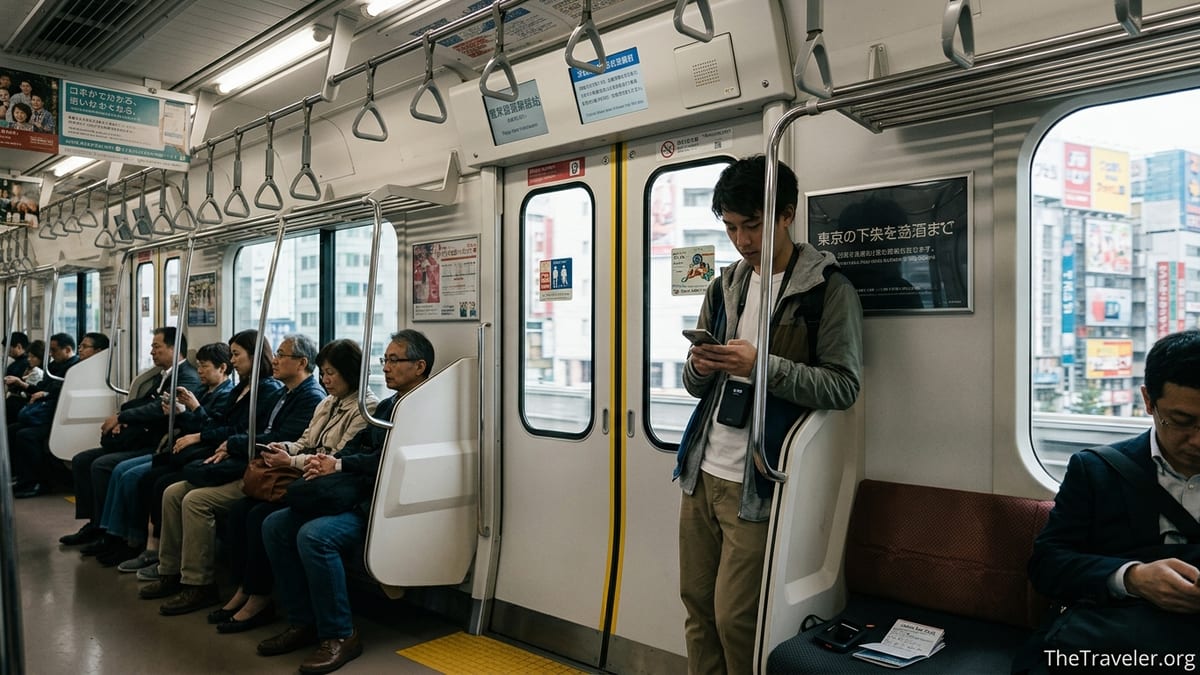
The 2026 Japan Connectivity Landscape in Practice
In 2026, most English-language guidance on Japan travel now frames eSIM versus pocket WiFi as the main decision for visitors, and that reflects real behavior on the ground. Travelers increasingly install Japan data eSIMs from providers such as Airalo, Ubigi, Nomad or Holafly before flying, while legacy pocket WiFi rental companies continue to cater to families and tour groups that want to share one device. At major airports like Narita and Haneda, you still see counters piled with rental routers, but you also see solo travelers walking past them, already online and following Google Maps to the train platforms.
Typical tourist usage patterns have also become clearer. Recent Japan-focused connectivity guides estimate that many visitors now use about 1 to 1.5 GB of mobile data per day when relying heavily on Google Maps, translation apps and social media. That level of usage aligns with what you see in two-week Japan eSIM package recommendations: plans in the 20 to 40 GB range are positioned for “heavy users,” while 5 to 10 GB is marketed for light or hotel-Wi-Fi-first travelers. This shift toward predictable data needs is what makes prepaid eSIMs particularly attractive.
At the same time, traditional physical SIM cards and international roaming have not disappeared. Japanese carriers like SoftBank and KDDI still sell prepaid tourist SIMs at electronics chains and airport kiosks, while foreign carriers in North America and Europe continue to push daily roaming passes that let you keep your own number. The result is a four-way choice for most visitors: eSIM, physical SIM, pocket WiFi and roaming, each with distinct pros and cons in real-world Japan.
Understanding this evolving landscape is crucial because your connectivity choice affects how you move through cities like Tokyo, Osaka and Kyoto. If you are constantly checking HyperDia alternatives, live train apps, or searching for the nearest FamilyMart that sells an umbrella, the wrong choice can mean battery anxiety, unexpected slowdowns, or a scramble to top up data halfway through your trip.
eSIMs for Japan: How They Work and Real-World Costs
For many first-time and repeat visitors, a travel eSIM has become the default recommendation. An eSIM is a digital SIM profile you install on your phone, usually through an app. Popular providers serving Japan in 2026 include Airalo, Ubigi, Nomad, Holafly and several Japan-specific brands highlighted in recent comparison guides. Most of these services ride on the networks of major Japanese operators like NTT Docomo, KDDI au or SoftBank, so coverage in cities and on main rail lines is broadly similar to what locals enjoy.
Pricing is competitive and easy to understand. Recent Japan-focused eSIM roundups show typical offers like 1 GB for 3 to 7 days at around 4 US dollars, mid-range options such as 10 to 20 GB for 10 to 25 dollars valid for 15 days, and “unlimited” packages in the 30 to 70 dollar range for 15 to 30 days. Unlimited plans often come with a fair usage policy, for example significantly slowing speeds after roughly 90 GB in a month or after very heavy daily use, which is still more than enough for navigation, translation and messaging. For a common itinerary such as 10 days in Tokyo and Kansai, a 20 GB eSIM in the 15 to 25 dollar range comfortably covers a traveler who is checking trains and maps all day and uploading photos in the evening.
Installation is usually straightforward. With Airalo or Nomad, for example, you download the app at home, purchase a Japan plan with a credit card, and either scan a QR code or let the app configure the eSIM. You can typically install the profile before departure and then wait to switch it on until the plane lands. Most apps present a step-by-step wizard: enable the eSIM in your phone settings, set it as “data only,” and turn off data roaming on your physical home SIM to avoid surprise roaming charges. Many travelers report being connected to 5G in the airport terminal before they even reach immigration.
For heavy Google Maps and translation usage, eSIMs work particularly well because the connection is tied directly to your phone. You do not depend on a separate gadget with its own battery. That means you can navigate sprawling stations like Shinjuku or Umeda, translate a menu in a basement izakaya, or check a last-minute bus time in rural Hakone without worrying that a pocket router in your bag has died or been left in the hotel room.
Physical SIM Cards in Japan: When They Still Make Sense
Physical SIM cards remain an option, especially if your phone does not support eSIM or if you prefer something you can buy after arrival. Japanese carriers, including SoftBank with its “Prepaid SIM for Travel” service, sell short-term data SIMs aimed at visitors. Electronics retailers such as Bic Camera and major airport kiosks frequently stock these products, often in nano-SIM format, with signage in English, Chinese and Korean. Typical packages offer a fixed data allowance, for example 5 to 20 GB, over a set period such as 10, 15 or 31 days.
In practice, getting a physical SIM can be more time-consuming than using an eSIM. Many tourist SIMs require scanning your passport, filling out a brief registration form on a tablet, and waiting a few minutes for activation. If you land at a busy time in Narita Terminal 2, lines at popular counters can form, so it is not unusual to lose 20 to 30 minutes here, especially around midday bank of arrivals. For some travelers, that delay is acceptable; for others, especially families anxious to reach their accommodation, any avoidable queue is a negative.
The main advantage of a physical SIM over an eSIM is compatibility with older or budget devices that lack eSIM support. A traveler using a mid-range Android phone from several years ago, or a basic unlocked handset purchased specifically for trips, may find that tourist nano-SIMs are the only viable option. Physical SIMs can also be useful if you want a Japanese phone number for voice calls or SMS-based verifications, something many data-only eSIMs do not provide. Some travel SIMs, including recent “Japan Travel SIM Unlimited” style products, remain data-only, but others bundle a local voice number or limited calling credit.
On the downside, swapping SIMs means temporarily losing easy access to your home number unless you keep a second phone. That can be inconvenient if your bank or messaging apps rely on SMS to your original number. For most visitors whose devices support eSIM, the general trend by 2026 is toward choosing a data-only eSIM for Japan while keeping the home physical SIM in place but disabled for roaming.
Pocket WiFi in Japan: Strengths and Drawbacks for Tourists
Pocket WiFi, sometimes called mobile WiFi routers, remains highly visible in Japan in 2026. Companies such as Japan Wireless, Ninja WiFi and services aggregated by sites like CDJapan Rental rent small battery-powered routers that connect to a Japanese mobile network and broadcast a private WiFi network for your devices. Comparison tables published in March 2026 show two-week rentals with airport pickup commonly priced around 5,000 to 8,000 yen for “unlimited” data tiers, which translates to roughly 35 to 55 US dollars depending on exchange rates, plus optional insurance and delivery fees.
For groups, this can still be cost-effective. A family of four visiting Japan for 10 days might pay around 6,000 yen total for a shared router with generous or unlimited data. On a per-person basis, that can be cheaper than four separate eSIMs at 15 to 25 dollars each, especially if some of the party are children who need connectivity for messaging but do not need individual SIMs. In practice, many multigenerational tour groups or school trips still use pocket WiFi so that a chaperone can centrally manage the connection and keep younger travelers’ phones off local networks.
However, pocket WiFi introduces real-world friction that is easy to underestimate when planning from home. The device must be picked up and dropped off, whether at an airport counter, a hotel front desk or by mail. Travelers report that airport counters sometimes close earlier than expected in the evening, which can cause issues for late-arriving flights, while mail-back options require locating a post box or using the hotel reception correctly on departure day. Providers usually include a prepaid envelope, but forgetting to mail the device can trigger late fees.
Battery dependence is another key drawback. A typical pocket WiFi unit might last anywhere from 8 to 12 hours with light use, but heavy hotspotting for multiple phones, tablets and laptops tends to drain it more quickly. Many visitors therefore carry a separate power bank just to keep the router alive during long days of sightseeing. If the router dies while you are transferring at Shibuya Station or trying to find a ryokan in the evening, every connected device goes offline simultaneously. For travelers who use maps and train info constantly, that risk alone pushes them toward eSIMs, where the phone’s own battery is the only constraint.
International Roaming: Convenient but Often Expensive
International roaming with your home carrier appeals to travelers who want pure simplicity: no additional apps, no extra hardware, no learning curve. In 2026, many carriers in North America and Europe offer daily roaming passes that include Japan. Recent Japan-focused price comparisons describe common figures such as 10 to 15 US dollars per day for a limited amount of high-speed data that draws from your domestic plan, sometimes with a daily cap of around 500 MB to 2 GB before throttling.
On a short business trip of two or three days to Tokyo, paying 30 to 45 dollars to keep your existing number and avoid any setup might be perfectly acceptable. Data usage is often lower on tightly scheduled business visits, and the simplicity of being reachable on your usual number can matter. However, on a classic two-week tourist itinerary, that same daily rate can easily climb above 150 to 200 dollars, substantially more than an equivalent eSIM or even many pocket WiFi rentals.
Roaming also brings uncertainty. Some carriers advertise “unlimited” roaming but apply aggressive speed caps after moderate usage, which can make loading map tiles or translation app content frustratingly slow. Others exclude tethering, so you cannot share your connection with a partner’s device without violating terms. Because policies and pricing change frequently, and vary by country and individual plan, anyone considering roaming as their primary option for Japan should check the current Japan roaming rate, data cap, and tethering policy directly with their carrier well before departure.
In practical terms, roaming makes the most sense for travelers who prioritize zero setup above all else and who are willing to pay for that convenience, or those whose domestic carriers offer unusually generous Japan roaming add-ons at a flat monthly rate. For the majority of budget-conscious tourists using data-intensive apps throughout the day, a dedicated Japan eSIM or pocket WiFi rental is almost always more economical.
Key Comparisons: Setup, Coverage, Tethering and Battery
When choosing between eSIMs, physical SIMs, pocket WiFi and roaming, it helps to focus on how each option behaves during a typical day in Japan. Consider a solo traveler staying in Shinjuku, spending the day visiting Meiji Jingu, Harajuku, Shibuya and then heading to Odaiba. With an eSIM, their phone automatically connects to a local 4G or 5G network as they emerge from each station, with no extra steps. With pocket WiFi, they must remember to power on the router every morning, ensure it is charged, keep it in a bag or pocket, and sometimes reconnect devices when moving between crowded underground spaces.
Coverage quality is another important factor. In 2026, most reputable eSIM providers for Japan use one of the big three networks, which all offer strong coverage in major cities and along shinkansen routes. Where differences appear is in rural or mountainous regions. A visitor hiking around Nikko or exploring rural Kyushu might see slightly different performance depending on whether their eSIM uses Docomo, au or SoftBank. Pocket WiFi units also ride on these same networks, so their coverage depends entirely on the underlying carrier. Tourist SIMs from Japanese operators typically mirror local coverage, which is an advantage if you plan extensive rural travel.
Tethering and sharing are straightforward with eSIMs and physical SIMs on most modern phones. Many Japan eSIMs explicitly allow personal hotspot use, so you can share data with a travel partner’s phone or a laptop, effectively turning your phone into your own pocket WiFi. Some “unlimited” eSIM brands block tethering or warn against heavy hotspot use, so it is important to read plan details. Pocket WiFi routers are, by design, meant for sharing and often support 5 to 10 simultaneous devices, making them attractive for groups carrying multiple phones, tablets and laptops.
Battery requirements round out the decision. A phone using an eSIM consumes similar battery power to normal mobile data usage at home. You may still want a small power bank for long days, but you are not juggling two devices. With pocket WiFi, you have to manage the router’s battery in addition to your phone, and in many cases carry a larger power bank that can recharge both. Roaming and physical SIM usage behave similarly to eSIM in terms of power consumption, with the caveat that phones sometimes work a bit harder when roaming between networks, which can slightly impact battery life.
Economics for Solo Travelers vs Families and Groups
From a cost perspective, solo travelers in 2026 almost always come out ahead with an eSIM or, for non-eSIM phones, a tourist physical SIM. Consider a 10-day trip centered on Tokyo and Osaka. A solo traveler might choose a 15 GB Japan eSIM priced in the range of 15 to 25 US dollars. That covers constant map usage, translation apps, social media sharing and occasional video calls, without worrying about per-day charges. A comparable pocket WiFi rental with “unlimited” data for 10 days can easily cost 35 to 60 dollars once rental, insurance and any delivery fees are included, while daily roaming at 10 dollars would reach around 100 dollars.
For couples, the math is closer but still often favors separate eSIMs, especially when factoring in convenience. Two 15 GB eSIMs might total 30 to 50 dollars. A shared pocket WiFi router for the same period could cost 40 to 60 dollars. On paper, pocket WiFi might save a small amount, but that saving has to be weighed against carrying and charging an extra device and ensuring that both people stay within range of the router. Many couples report that if one partner ducks into a convenience store while the other waits on the street or wanders to take photos, the person who strays too far from the router briefly loses connectivity.
For larger families and groups, pocket WiFi becomes more compelling. A family of five staying in Japan for two weeks could easily need five eSIMs at 20 dollars each, totaling around 100 dollars. A single robust pocket WiFi rental at, say, 7,000 to 8,000 yen for the same period looks attractive by comparison. Even if you add a small backup eSIM for one adult in case the router battery dies or someone gets separated, the group can still come out ahead financially. This pattern is reflected in some Japanese telecom company reports, which describe pocket WiFi users skewing toward families and corporate travelers, while eSIM users skew younger and more individual.
An increasingly popular hybrid approach is for groups to combine one pocket WiFi router with one or two eSIMs. For example, a family might give the pocket WiFi to the parent who tends to carry the daypack, ensuring shared connectivity for most of the day, while another adult installs a modest 3 to 5 GB eSIM as a safety net. That way, if the group splits up at a theme park or the router battery runs low, at least one person remains fully independent for mapping and coordination.
Best Options for Heavy Google Maps, Translation and Train Use
Frequent use of Google Maps, translation apps and train information systems is the defining pattern of modern independent travel in Japan. From onboarding to Osaka’s subway to locating the correct shinkansen car at Tokyo Station, reliable data directly on your phone is critical. For this specific use case, a Japan-focused eSIM, or a local tourist physical SIM when eSIM is not supported, is usually the best choice in 2026.
Maps and real-time transit apps benefit from low-latency, continuous connectivity that does not depend on a second device staying charged and in range. When you are following step-by-step walking directions underground at Shinjuku, or waiting for a rural local train in the rain, fumbling with a pocket WiFi’s battery indicator or restarting a router that has crashed is the last thing you want. With a well-configured eSIM, you simply glance at your phone and see data flowing as it does at home.
Translation apps such as Google Translate and various camera-based menu translators also favor eSIMs. Tourists now routinely point their phones at handwritten izakaya menus or complex train announcements and rely on instant translation. Because many of these interactions happen quickly and unpredictably, having your phone itself connected, without the intermediate hop of a router, removes a layer of potential failure. When coverage is good, even relatively small eSIM plans of 10 to 15 GB can power this kind of app-heavy usage for 10 days or more, especially if you connect to hotel WiFi at night for heavier downloads and backups.
The only major exception is when you are traveling as a large group that moves together most of the time, for example a family with three teenagers or a group of friends always within a few meters of each other. In those cases, a high-capacity pocket WiFi router can still serve as the central hub for everyone’s maps and translation needs. Even then, many experienced travelers now recommend that at least one person also carry a small eSIM or tourist SIM as a backup, specifically to avoid losing navigation if the group misplaces the router or runs out of battery en route.
Checking if Your Phone Is Unlocked and eSIM-Compatible
Before you commit to any eSIM or SIM-based plan for Japan, you need to confirm two things: that your phone is unlocked for use with other carriers, and that it supports eSIM if you intend to go that route. An unlocked phone is one that can use SIMs from different networks. Many phones sold directly by manufacturers such as Apple and Google are unlocked by default, while devices purchased through carriers may be locked until you complete a contract period or request an unlock.
To check lock status in a practical way, insert a SIM card from another carrier if you have one available. For example, if you normally use a US carrier but have an older SIM from a different provider, power off the phone, insert the other SIM and see if it connects to the network. If it does, the phone is likely unlocked. On iPhones running recent versions of iOS, there is also a “Carrier Lock” field in the About section of Settings; if it reads “No SIM restrictions,” the device is generally unlocked. For Android phones, the process varies more by manufacturer, so the most reliable approach is to contact your carrier through their app or customer support and ask whether your device is locked and, if so, how to unlock it before international travel.
eSIM compatibility is the next step. Most recent flagship phones, including iPhone models from the last several years and many higher-end Android devices from brands such as Samsung, Google and others, support eSIM. Some budget or older models, particularly in the Android ecosystem, still do not. On iPhones, you can open Settings and look for “Add eSIM” or “Add Cellular Plan” options; their presence usually indicates eSIM support. On Android, you often find an “eSIMs” or “Add eSIM” option in the SIM or Network settings, but naming varies. If these menus are absent and your manufacturer’s specifications do not list eSIM, you should plan on using a physical tourist SIM or pocket WiFi instead.
Doing this compatibility check a few weeks before departure is important because it affects all your other decisions. If your phone is locked and cannot be unlocked in time, then local SIMs and most data eSIMs are off the table, and you will likely need to rely on roaming or pocket WiFi. If your phone supports eSIM but is locked, you may still be able to use certain eSIMs that operate as roaming partners of your home carrier, but choices are more limited. Clarifying your status early lets you shop around for the most economical option, rather than discovering at Narita that the eSIM you bought in advance will not activate.
The Takeaway
In 2026, the dominant connectivity decision for Japan visitors is indeed eSIM versus pocket WiFi, but it sits within a broader context that includes physical SIMs and international roaming. For most independent tourists who rely heavily on Google Maps, translation apps and live train information, a Japan-focused travel eSIM from a reputable provider remains the best all-round choice. It offers low-friction setup before departure, direct connectivity on your phone without extra hardware, and pricing that undercuts typical roaming and often beats pocket WiFi for solo travelers and couples.
Physical tourist SIMs still serve a clear role for visitors with non-eSIM phones or for those who prefer to buy connectivity on arrival, while pocket WiFi remains a solid option for larger families and groups that want to share one connection. Roaming, meanwhile, is best treated as a premium convenience tool for short trips or travelers whose domestic plans include unusually generous Japan add-ons. Whatever your situation, checking early that your phone is unlocked and, ideally, eSIM-compatible gives you the flexibility to choose the most economical and convenient option.
Ultimately, the “best” internet option in Japan is the one that aligns with your travel style, group size and tolerance for managing hardware. For a solo traveler weaving through Tokyo’s alleys with a smartphone as their primary guide, an eSIM is likely the most seamless solution. For a family juggling multiple teen devices and laptops, a pocket WiFi router backed up by at least one eSIM can be the sweet spot. Make your choice deliberately, set it up before you board the plane if possible, and you will land in Japan ready to navigate, translate and explore without worrying about where the next WiFi signal will come from.
FAQ
Q1. Is an eSIM or pocket WiFi better for a first trip to Japan?
For most first-time visitors, an eSIM is better because it avoids extra hardware, works the moment you land, and costs less than pocket WiFi for solo travelers and most couples.
Q2. How much data do I need in Japan if I use maps and translation a lot?
Many independent travelers who rely heavily on Google Maps, translation apps and train information use roughly 1 to 1.5 GB per day, so a 15 to 20 GB plan is usually comfortable for a 10-day trip.
Q3. Can I share my eSIM data with my partner like a pocket WiFi?
Yes, in most cases you can enable the personal hotspot or tethering feature on your phone and let your partner connect, although some “unlimited” eSIM plans restrict heavy hotspot use.
Q4. When does a pocket WiFi make more sense than eSIM in Japan?
A pocket WiFi is often better for families or groups of three or more people who move together and want to share one connection across many phones, tablets and laptops at a lower total cost.
Q5. How do I return a rental pocket WiFi in Japan?
Most providers let you drop the device at the airport counter you collected it from or mail it back in a prepaid envelope placed in a post box or handed to your hotel front desk on departure day.
Q6. How can I tell if my phone is unlocked for use with a Japan SIM or eSIM?
The simplest check is to insert a SIM from a different carrier and see if it connects; you can also look for “No SIM restrictions” on iPhone or ask your carrier directly before you travel.
Q7. What if my phone does not support eSIM?
If your phone lacks eSIM support, you can still stay connected by buying a physical tourist SIM in Japan, renting a pocket WiFi router, or using international roaming from your home carrier.
Q8. Does using international roaming in Japan cost more than an eSIM?
Often yes. Many carriers charge around 10 to 15 US dollars per day for roaming in Japan, which can exceed 150 dollars on a two-week trip, compared with roughly 20 to 40 dollars for a suitable eSIM.
Q9. Will I have coverage outside big cities if I use a Japan eSIM?
Most reputable Japan eSIMs ride on major networks like NTT Docomo, KDDI or SoftBank, which generally provide strong coverage in cities and along main rail lines, with variable performance in very remote areas.
Q10. Can I use one strategy for the whole group, like only pocket WiFi or only eSIMs?
You can, but many experienced travelers now combine one shared pocket WiFi for the group with at least one eSIM as backup so that navigation and messaging still work if the router is lost or runs out of battery.