


With JR East’s 2026 overhaul of its rail passes, the familiar Tohoku Area and Nagano/Niigata Area passes have disappeared, replaced by a single JR EAST PASS valid across a much wider swath of eastern Japan. For travelers planning time in Tokyo plus the Tohoku region, this new structure raises an important question: is the pass still worth it compared with simply buying individual Shinkansen tickets?
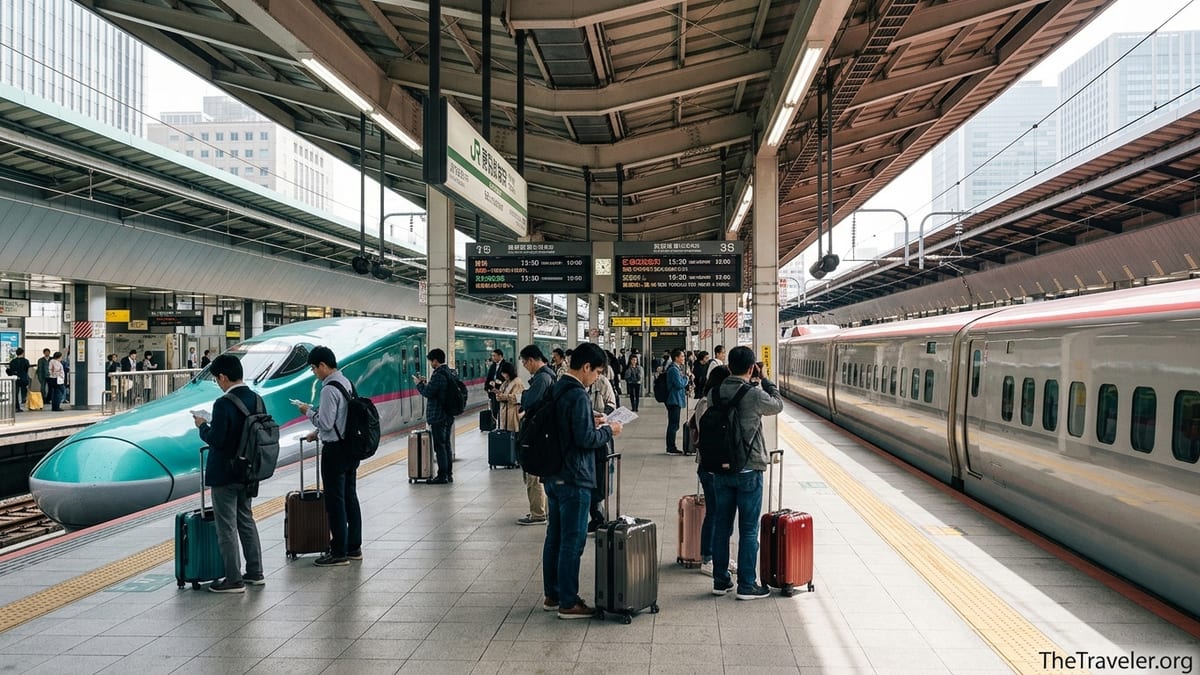
What Changed in March 2026: The New JR EAST PASS Explained
From March 14, 2026, JR East retired the separate JR EAST PASS (Tohoku area) and JR EAST PASS (Nagano, Niigata area) and replaced them with a single unified JR EAST PASS. The new pass comes in two durations: 5 consecutive days for 35,000 yen and 10 consecutive days for 50,000 yen for adults, with children aged 6 to 11 paying half price. This unified product now sits alongside other regional passes such as the JR East–South Hokkaido Rail Pass but is the main option if you are focusing on Tokyo plus Tohoku and nearby regions.
Unlike the older flexible 5-day passes that allowed you to choose any 5 days within a longer validity window, the 2026 JR EAST PASS is valid for 5 or 10 consecutive calendar days starting from the first day of use. That change makes planning particularly important. If you intend to mix city sightseeing in Tokyo with long-distance runs to Sendai, Morioka or Aomori, you now have to cluster your rail-heavy days together instead of spreading them out over two or three weeks.
Eligibility has remained broadly similar. The JR EAST PASS is marketed to foreign visitors who hold a non-Japanese passport, and you can purchase it online through JR East’s reservation platform, at JR EAST Travel Service Centers in Japan and through selected overseas travel agencies. Many travelers now choose to buy and reserve seats online before arrival, then simply show a QR code or passport at a ticket machine or counter to collect the pass and seat tickets.
In practical terms, the main impact of the March 2026 changes is twofold. First, the price point has risen compared to the older Tohoku-specific pass, which makes break-even calculations more important. Second, coverage has expanded to essentially all JR East lines across eastern Honshu, including Shinkansen and key private or third-sector railways, which can tilt the value back in your favor if you plan to move around extensively.
Coverage: Where the JR EAST PASS Takes You in Tohoku and Beyond
The new JR EAST PASS gives unlimited rides on ordinary-class reserved and non-reserved seats on all JR East Shinkansen and limited express trains within the coverage area. For Tohoku-focused travelers, that means full access on the Tohoku Shinkansen between Tokyo and Shin-Aomori, as well as the Akita Shinkansen to Akita and the Yamagata Shinkansen to Shinjo. It also includes the Joetsu and Hokuriku Shinkansen segments that are operated by JR East, allowing easy side trips to Niigata or Nagano from Tokyo on the same pass.
Beyond the Shinkansen, the pass covers JR East conventional lines across the Tohoku region, including key routes like the Ou Main Line, the Banetsu West Line, the Senseki and Senseki Tohoku Lines, and numerous local lines used to reach onsen towns, coastal areas and smaller cities. If you plan day trips from Sendai to Matsushima, from Morioka into the mountains, or from Aomori along the coast, those local segments are included with no extra cost apart from possible reserved-seat charges on certain Joyful Trains if you choose to book them.
A major advantage of the 2026 JR EAST PASS is its inclusion of certain third-sector and private railways that took over parts of former JR lines. The pass is valid on Aoimori Railway between Aomori and Hachinohe, Iwate Galaxy Railway (IGR) between Morioka and Metoki, Sendai Airport Transit from Sendai Station to the airport, Sanriku Railway along sections of the Sanriku Coast, Hokuetsu Express, and Echigo Tokimeki Railway between Naoetsu and Arai. For many Tohoku itineraries, these lines are unavoidable links between Shinkansen stations and smaller destinations, and having them covered simplifies the budget.
Within the Greater Tokyo area, the pass includes all JR East lines plus the Tokyo Monorail from Haneda Airport into the city. It also includes through limited express services jointly operated with Tobu Railway such as “Nikko,” “Spacia Nikko,” “Kinugawa” and “Spacia Kinugawa,” although the pass is only valid on the JR portion and designated Tobu sectors for these named services. Importantly, the JR EAST PASS does not cover the Tokaido Shinkansen between Tokyo and Kyoto or Osaka, which remains operated by JR Central and requires separate tickets or the national Japan Rail Pass.
Seat Reservations, Train Types and Practical Use
The JR EAST PASS lets you ride in ordinary-class cars and includes free seat reservations on eligible Shinkansen and limited express trains within the service area. In practice, this means you can book reserved seats for trains like the Hayabusa between Tokyo and Shin-Aomori, Yamabiko and Nasuno services to Sendai and Morioka, Komachi to Akita, and Tsubasa to Yamagata and Shinjo without paying an additional reservation fee, as long as you remain within the pass rules and reservation limits set by JR East.
Most visitors will want to reserve seats on longer-distance Shinkansen segments, especially during busy periods such as Golden Week, Obon and New Year, or on popular trains like the morning Hayabusa runs to Shin-Aomori and the evening returns to Tokyo. With the pass, you can typically make these reservations at ticket machines that support the JR EAST PASS, at Midori no Madoguchi ticket counters, or online via JR-East Train Reservation before travel. Non-reserved cars are also available on many services but can be crowded during peak times.
The pass covers local, rapid and express trains as well, allowing you to simply tap through the gates with the paper pass or QR equipped ticket and hop on and off as needed. However, it does not cover Green Car (first class) seats or Gran Class. If you wish to upgrade to these higher classes, you must pay the additional limited express or Green Car fee separately, even if the basic fare portion is covered by the pass.
From a practical point of view, travelers often combine long Shinkansen hops with local exploration days. For example, you might use a morning Hayabusa from Tokyo to Morioka, spend an afternoon on local trains into the mountains, then continue the next day to Shin-Aomori and use the Ou Main Line to visit onsen areas. The fact that both the high-speed segments and the quieter branch lines are covered makes the pass attractive for those who enjoy riding trains as part of their trip rather than only using them to move between two big cities.
Key Example Route: Tokyo – Sendai – Morioka – Aomori
One of the most common Tohoku itineraries runs north from Tokyo via Sendai and Morioka to Aomori. To evaluate the JR EAST PASS, consider approximate one-way reserved-seat Shinkansen fares in 2026: Tokyo to Sendai on the Yamabiko typically runs around 11,000 to 12,000 yen for an ordinary reserved seat, depending on train and season. Sendai to Morioka is roughly 7,000 yen, while Morioka to Shin-Aomori on the Hayabusa is in the same range, often around 7,000 to 8,000 yen.
If you simply buy point-to-point tickets, a Tokyo to Shin-Aomori journey with a stopover in Sendai and another in Morioka can easily total around 25,000 to 30,000 yen in base fare and limited express charges combined, depending on your exact train choices and reservation patterns. If you then add a return trip back to Tokyo from Shin-Aomori, that alone is another 18,000 to 22,000 yen in many 2026 fare examples for a reserved Hayabusa. A full Tokyo – Sendai – Morioka – Shin-Aomori – Tokyo loop can therefore approach or exceed 45,000 yen per person when bought as individual tickets.
Now compare that with the JR EAST PASS 5-day price of 35,000 yen. If you structure your itinerary so that all of these long-distance segments fall within a 5-day window, the pass will already save you money on the core northbound and southbound Shinkansen trips. You also gain the ability to make side trips on JR lines and covered third-sector railways without worrying about incremental cost, such as a half-day from Sendai to Matsushima, an evening excursion from Morioka to a nearby onsen, or a coastal run from Aomori on the Aoimori Railway.
For travelers who add further legs before or after this core route, such as using the Hokuriku or Joetsu Shinkansen to and from Niigata or Nagano, or arriving from Haneda via the Tokyo Monorail, the cumulative value grows. Once your expected Shinkansen and limited express usage exceeds roughly 40,000 yen at published reserved-seat prices, the 5-day pass becomes a strong value proposition, especially when you factor in convenient reservations and the mental ease of unlimited local rides.
Adding Akita or Yamagata: When the 10-Day Pass Shines
Many visitors want to combine the core Tokyo–Sendai–Morioka–Aomori route with side trips to Akita or Yamagata. The Akita Shinkansen branches from the Tohoku Shinkansen at Morioka and continues as a “mini Shinkansen” to Akita, while the Yamagata Shinkansen branches off at Fukushima and heads to Yamagata and Shinjo. Both are fully covered by the JR EAST PASS in ordinary class.
Approximate 2026 reserved-seat fares from Tokyo give a sense of scale. A Tokyo to Akita reserved seat on a Komachi service can cost in the region of 18,000 yen one way. Tokyo to Yamagata on the Tsubasa mini Shinkansen often runs around 12,000 to 14,000 yen. Even intermediate hops can be costly: Morioka to Akita via the Akita Shinkansen can be well over 10,000 yen if you ride in reserved seats, while Sendai to Yamagata via the Senzan Line or Tsubasa involves either a limited express supplement or a longer local run.
Consider a traveler who spends two weeks in Japan and wants to explore eastern Honshu in depth. They might fly into Haneda, spend two days in Tokyo, then begin a 10-day rail-heavy period that includes Tokyo to Sendai, Sendai to Morioka, a side trip Morioka to Akita and back, Morioka to Aomori, Aomori to Yamagata via transfers, and finally Yamagata to Tokyo. Buying individual tickets for that mix of Shinkansen and conventional lines could easily cost more than 70,000 yen in total, particularly if most legs are reserved.
In such a case, the 10-day JR EAST PASS at 50,000 yen becomes compelling. It covers not just the long Shinkansen runs but also intermediate moves that are expensive when purchased separately, such as Akita Shinkansen segments or the Yamagata Shinkansen back to Tokyo. With 10 consecutive days, travelers can stretch out their itinerary, staying two nights in places like Sendai, Morioka, Aomori and Yamagata without rushing, while still keeping all major train days inside the validity window.
By contrast, if you only want to tag on a short side trip, such as a quick overnight from Sendai to Yamagata and back, you might not need the 10-day pass. A round trip on the Senzan Line using local trains can be relatively affordable, and in some cases a regional discount ticket or simple local fare could cost less than upgrading from the 5-day to the 10-day pass. The longer product is at its best when you add several long-distance Shinkansen sectors or multiple far-flung side trips to places like Akita, Shinjo, Niigata or Nagano.
When a Shorter Tohoku Trip Does Not Justify the Pass
Despite its broad coverage, the JR EAST PASS is not automatically a good deal for every Tohoku itinerary. If your travel plan is limited to a single return journey from Tokyo to one city plus some short local trips, you may find that buying individual tickets is cheaper. For example, a typical Tokyo to Sendai round trip on the Yamabiko or Hayabusa with reserved seats might total somewhere between 22,000 and 26,000 yen in 2026, depending on train, time and seat type. Even if you add a local excursion or two once in Sendai, your total rail spend might still fall comfortably below the 35,000 yen 5-day pass price.
The same logic applies if you are only visiting Morioka or Aomori from Tokyo and staying put. A Tokyo to Morioka return on the Hayabusa can approach the mid 30,000 yen range in many fare examples, which starts to get close to the 5-day pass cost but may still be lower, especially if you choose slightly cheaper trains or travel off-peak. Tokyo to Shin-Aomori return is more expensive and can surpass 40,000 yen, which favors the pass more strongly, but if you only plan that one round trip and have no interest in additional side journeys, you might still decide that a pass is unnecessary.
Another scenario where the pass may not pay off is when you fly between distant cities and only use the train for airport transfers and short hops. Suppose you fly from Tokyo to Aomori on a domestic airline sale fare and then only use trains for Aomori city, a day trip to Hirosaki and your return to the airport. In that case your rail spending might stay under 10,000 yen, far below any justification for a JR EAST PASS. Domestic flights can sometimes be a better value for point-to-point long distances, while trains excel when you want to explore multiple stops along the way.
Finally, remember that the JR EAST PASS requires consecutive days of use. If your style of travel is to spend several days in Tokyo, then one long train trip, then linger a week in one onsen town before returning to Tokyo by another mode, the pass’s structure may not fit. In these cases, check regular fares and consider whether a narrower regional pass, private railway ticket or simple point-to-point purchase works out cheaper and more flexible than committing to 5 or 10 straight days of rail validity.
How to Calculate Your Own Break-Even Point
The simplest way to decide if the JR EAST PASS is worth it is to list every long-distance and limited express journey you plan to take during your trip and look up the approximate regular price for an ordinary reserved seat. Focus on expensive segments like Tokyo to Sendai, Sendai to Morioka, Morioka to Shin-Aomori, Tokyo to Akita, Tokyo to Yamagata, and any Joetsu or Hokuriku Shinkansen legs to Niigata or Nagano. Add these estimated fares together, being conservative by rounding down slightly to avoid overestimating savings.
Once you have a total, compare it with the pass price that would cover those days. If your 5-day cluster of train travel adds up to under 30,000 yen, the 35,000 yen pass is probably not worth it, and you should buy tickets individually. If it is around 35,000 to 40,000 yen, the pass may be slightly more or less expensive, but you might choose it for convenience and the freedom to add unplanned side trips without extra cost. If your total clearly exceeds 40,000 yen for those days, the 5-day JR EAST PASS is likely to save you money.
Apply the same logic to a 10-day rail period. If you foresee a long sequence of Shinkansen and limited express rides totaling 55,000 yen or more at regular fares, the 50,000 yen 10-day pass becomes financially attractive. This can happen quickly if you combine multiple north-south traverses of Tohoku with branches to Akita, Yamagata, Niigata and Nagano. On the other hand, if your 10-day plan includes only one or two Shinkansen rides and many days of staying in one place, you may struggle to reach the break-even threshold.
For local trains, you do not need exact figures. Roughly estimate that shorter urban hops on JR lines in Tokyo, Sendai or other cities might cost a few hundred yen per ride, adding up to a few thousand yen over several days. While these contribute to the value of the pass, they rarely make or break the calculation by themselves. Use them as a nice bonus on top of the main Shinkansen journeys rather than the core justification for buying the pass.
As you calculate, keep in mind that JR East occasionally offers discounted advance-purchase fares or dynamic pricing on certain trains through its online platforms. These can narrow the gap between regular tickets and the pass, especially if you are willing to lock in specific departure times. The trade-off is flexibility. The JR EAST PASS gives you the freedom to change plans more easily, hop on different trains, and insert new day trips on the fly, which many travelers find worth a small difference in raw yen terms.
The Takeaway
The 2026 JR EAST PASS is a powerful tool for exploring Tohoku and the wider eastern Honshu region, but it is no longer a simple automatic bargain. With prices set at 35,000 yen for 5 days and 50,000 yen for 10 days, you need a solid plan that includes multiple medium to long Shinkansen journeys to come out ahead financially. Routes like Tokyo to Sendai to Morioka to Aomori and back to Tokyo, especially when combined with side trips to Akita or Yamagata, are prime examples where the pass can deliver clear savings and unmatched convenience.
Conversely, travelers whose plans revolve around a single round trip from Tokyo to one city, or who intend to rely on domestic flights for long distances and use trains only for local mobility, will often find that individual tickets are cheaper and more flexible. The requirement for consecutive days of validity further pushes the pass toward those who want to keep moving, rather than those who prefer to linger in one town for a week at a time.
The most reliable way to decide is to sketch your route day by day, note every major train segment, and compare the approximate cost of buying tickets separately with the price of the appropriate pass. Factor in your appetite for spontaneous side trips and your preference for making or changing reservations. If your numbers show that you will easily pass the break-even point and you value flexibility, the JR EAST PASS can still be one of the most enjoyable and stress-reducing ways to experience Tohoku’s cities, coasts and hot spring towns.
In short, the new JR EAST PASS is worth it for travelers who treat the rails as a central feature of their journey through Tohoku, linking multiple cities and regions over 5 or 10 days. For those planning shorter or more focused stays, however, careful fare comparison will often reveal that targeted tickets or smaller regional options provide better value without sacrificing the experiences that matter most.
FAQ
Q1. What is the price of the new JR EAST PASS in 2026?
The unified JR EAST PASS costs 35,000 yen for 5 consecutive days and 50,000 yen for 10 consecutive days for adults, with children paying half price.
Q2. Does the JR EAST PASS cover all Shinkansen lines from Tokyo?
No. It covers JR East operated Shinkansen such as the Tohoku, Akita, Yamagata, Joetsu and parts of the Hokuriku lines, but not the Tokaido Shinkansen toward Kyoto and Osaka.
Q3. Are seat reservations included with the JR EAST PASS?
Yes. The pass includes free ordinary car reserved seats on eligible Shinkansen and limited express trains within the coverage area, subject to JR East’s reservation rules.
Q4. Is the JR EAST PASS good value for a simple Tokyo to Sendai round trip?
Usually no. A Tokyo to Sendai return with reserved seats often costs well under 35,000 yen, so buying individual tickets is typically cheaper for that limited itinerary.
Q5. When does the 10-day JR EAST PASS make sense?
The 10-day pass is best when you plan several long-distance Shinkansen trips, such as Tokyo to Sendai, Morioka, Aomori, Akita and Yamagata, spread across a continuous 10-day period.
Q6. Does the pass cover airport access in the Tokyo and Tohoku regions?
Yes. It covers the Tokyo Monorail between Haneda Airport and central Tokyo and the Sendai Airport Transit line between Sendai Station and Sendai Airport.
Q7. Can I use the JR EAST PASS on private or third-sector railways?
In certain cases. The pass covers lines such as Aoimori Railway, Iwate Galaxy Railway, Sendai Airport Transit, Sanriku Railway, Hokuetsu Express and Echigo Tokimeki Railway between Naoetsu and Arai.
Q8. Do I need to buy the JR EAST PASS before arriving in Japan?
No. You can buy it online through JR East’s reservation system or at major JR East stations and travel service centers in Japan, though advance purchase is convenient for seat reservations.
Q9. Are non-consecutive days allowed with the 2026 JR EAST PASS?
No. Both the 5-day and 10-day versions are valid for consecutive calendar days starting from the first day of use, so you must cluster your train travel within that window.
Q10. How can I quickly tell if the pass will pay off for my trip?
Add up approximate regular fares for all your planned Shinkansen and limited express rides, then compare that total to 35,000 or 50,000 yen; if your sum clearly exceeds the pass price, it is likely worth buying.