

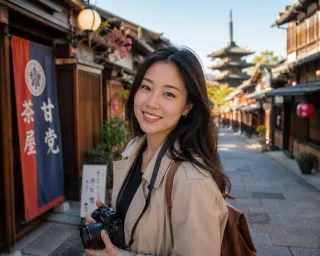
By the time petals have fallen from the trees in Tokyo and Kyoto, the sakura season in northeastern Japan is only just getting started. Tohoku’s cooler climate delays the cherry blossom front by several weeks, creating a natural invitation for travelers to keep heading north in search of fresh blooms. From Miyagi’s riverside avenues to castle moats in Aomori, this region rewards those who time their trip to follow the blossoms all the way up the map.
Understanding the Northbound Sakura Front in Tohoku
Japan’s cherry blossoms do not open all at once. They advance gradually from south to north in what locals call the “sakura front.” Tokyo and Kyoto typically reach full bloom sometime in late March or early April. Tohoku, several hundred kilometers to the north, usually lags by roughly two to four weeks, depending on the year and local microclimates. This delay is exactly what makes the region so attractive to travelers arriving after the main cities have finished.
Within Tohoku itself, the cherry blossoms also move from south to north and from lowlands to higher elevations. In practical terms, that means places like Hitome Senbonzakura in southern Miyagi tend to bloom first, followed by riverside parks in Iwate, then the samurai streets of Akita, and finally the castle grounds of Aomori at the northern tip of Honshu. If you watch forecasts each spring, you can often plot a route that keeps you within a few days of peak bloom for one to two weeks of continuous flower viewing.
It is important to understand the difference between “first bloom” and “full bloom.” First bloom is when a small percentage of blossoms have opened on the standard observation trees that local meteorological agencies and tourism boards monitor. Full bloom is typically defined as around 80 percent of blossoms open. In most of Tohoku, the gap between first bloom and full bloom for standard varieties such as Somei Yoshino is often about five to seven days, with full bloom itself lasting just a few days before petals begin to fall.
Weather variability means that no two seasons are exactly alike. Warmer springs can push first bloom earlier by up to a week or more, while a cold snap can delay opening. Some years see dramatic overlaps where you might catch late blossoms in Tokyo and early ones in Tohoku on the same trip; in other years, the gap is clearer. Instead of relying on fixed dates, use historical patterns as a guide, then check up-to-date forecasts from regional tourism offices or local meteorological services once winter turns to spring.
Designing a Northbound Itinerary After Tokyo and Kyoto
Many visitors start their Japan journey in Tokyo or Kyoto, hoping to see iconic spots such as Ueno Park, Chidorigafuchi, or the Philosopher’s Path under clouds of pale pink. By the time those petals carpet the ground, you can extend the season by riding the bullet train north into Tohoku. Practical examples: a traveler visiting Tokyo in early April could plan to head to Sendai or Fukushima a few days after petals begin to fall, then continue north over the following week as blossoms open in each new prefecture.
A common pattern is to fly into Tokyo, spend several days there and in Kyoto, then board the Tohoku Shinkansen from Tokyo Station. In around 90 minutes you can be in Sendai, the closest major city to Hitome Senbonzakura. From there, another short train ride takes you to Ogawara for riverside viewing. After one or two days in Miyagi, it is easy to continue north to Ichinoseki or Morioka for access to Kitakami Tenshochi, before pushing on to Kakunodate in Akita and finally Hirosaki in Aomori.
When planning, think of your trip in phases rather than fixed dates. For example, you might pencil in Miyagi for “early Tohoku bloom,” Iwate and Akita for “mid-season,” and Aomori for the “late Tohoku peak.” If you are booking flexible train passes such as the JR East rail passes, you can keep your exact dates in each place loose, then adjust hotel nights by a day or two as forecasts become clearer. This flexible, northbound style of travel works especially well for repeat visitors who are comfortable with slower, more rural journeys.
Keep in mind that cherry blossom travel is not only about daytime picnics. Many Tohoku spots offer evening illuminations, riverside food stalls, and small local festivals that feel more intimate than the huge crowds of Tokyo. Planning one or two nights in each region, instead of just a day trip from a big city, allows you to enjoy lantern-lit blossoms, quiet early-morning walks, and conversations with innkeepers and restaurant owners who live with these seasons every year.
Hitome Senbonzakura in Miyagi: The Southern Gateway
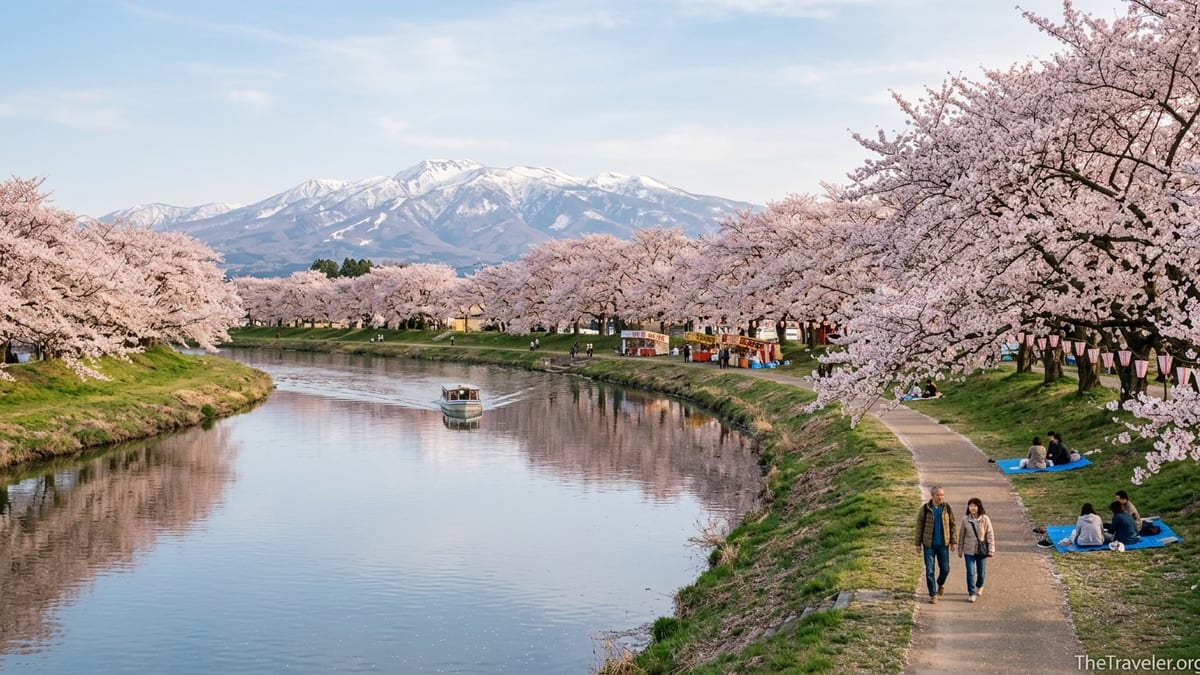
Hitome Senbonzakura, in Miyagi Prefecture’s Ogawara and Shibata area, is often the first major stop on a northbound sakura pilgrimage. The name translates roughly as “view of a thousand cherry trees at a glance,” and walking along the Shiroishi River you will see long rows of Somei Yoshino trees mirrored in the water with the snow-capped Zao Mountains in the distance. In practice the number of trees is far more than a thousand, creating a long corridor of blossoms that can easily fill half a day of strolling.
From Tokyo, you can reach Ogawara Station on regular rail in roughly three and a half to four hours with a transfer in Sendai, or in around two and a half to three hours by combining the Tohoku Shinkansen to Shiroishi-Zao or Sendai with a local train. Once in Ogawara, the riverbank promenade is a short walk from the station, making this one of the more accessible major Tohoku viewing spots for travelers carrying luggage or traveling with children. During the cherry blossom period, the Ogawara Cherry Blossom Festival usually brings food stalls, simple seating areas, and night illuminations along parts of the river.
In terms of timing, Hitome Senbonzakura usually reaches full bloom some time in April, often not long after Tokyo’s blossoms are fading, but the exact period fluctuates year by year. Local tourism boards and town offices publish annual forecasts and updated status reports each spring. Given the popularity and ease of access, hotels in nearby Sendai and even small guesthouses in Ogawara can book out quickly during peak blossom weekends. Travelers who prefer to stay within walking distance should reserve early or consider weekday visits when crowds are noticeably thinner.
For those on a budget, staying in business hotels around Sendai Station can be a practical choice, with nightly rates that are sometimes lower midweek and easy access to regional trains. If you value atmosphere over convenience, a small riverside ryokan or local guesthouse in Shibata District will bring you closer to the festival mood. Either way, consider arriving in the late afternoon to enjoy sunset over the river and staying on for night illuminations, which can transform the white blossoms into glowing pink arches reflected on the water.
Kitakami Tenshochi in Iwate: Rivers, Carp Streamers and Horseback Rides
Continuing north, Kitakami Tenshochi in Iwate Prefecture is widely considered one of Tohoku’s top three cherry blossom spots, often mentioned alongside Hirosaki and Kakunodate. Tenshochi Park lines the Kitakami River with thousands of cherry trees forming long tunnels of blossoms. During the Kitakami Tenshochi Cherry Blossom Festival, colorful carp streamers are strung across the river, fluttering in the wind while sightseeing boats navigate below, giving visitors an elevated festival feel unique to this site.
The typical bloom period here generally falls later than in Miyagi. Historically, the trees are often at their best in the latter part of April, though this can shift earlier in warmer years. The festival period usually covers a broader window than the strict full bloom days, so even if you arrive slightly early or late you can still enjoy food stalls, boat rides, and horse-drawn carriages that carry passengers under the flowering branches. Local tourism authorities and the city of Kitakami release annual calendars and daily bloom updates so that visitors can fine-tune their timing.
From Tokyo, Kitakami is around two and a half hours by Tohoku Shinkansen, making it feasible even as a very long day trip, though staying one night allows time to explore at a more relaxed pace. Accommodation in Kitakami ranges from functional business hotels near the station to small inns in the wider area. During the peak festival days, expect higher rates and greater demand, particularly on weekends and around national holidays such as the Golden Week cluster in late April and early May, so booking several months in advance is recommended.
Realistically, visitors might structure their days in Kitakami around the river. You could start with a morning walk while crowds are light, break for an early lunch at a local ramen shop or family restaurant, then return in the afternoon for a boat cruise under the carp streamers. In the evening, illuminated trees and festival lanterns give the riverbank a different character, with street food favorites like grilled skewers and sweet rice cakes available at temporary stalls. If you are traveling with children, the horse-drawn carriages and riverside play areas help break up the day between walks and photo stops.
Kakunodate in Akita: Samurai Streets and Weeping Cherry Tunnels
Further north and slightly inland, Kakunodate in Akita Prefecture combines cherry blossoms with one of Japan’s best-preserved samurai districts. Here, black wooden fences and traditional manor houses line wide streets shaded by graceful weeping cherry trees. When the blossoms are at their peak, these branches create cascades of pink that frame the historical buildings, giving visitors a sense of stepping into an Edo-period painting brought to life.
Kakunodate’s cherry season has two distinct zones. The Hinokinai River’s banks are lined with standard Somei Yoshino trees that tend to bloom slightly earlier, creating a long riverside tunnel of pale flowers suitable for leisurely walks and picnics. A short stroll away, the samurai district’s weeping cherry trees often reach their best a little later. This difference can stretch the viewing season locally, allowing travelers who arrive toward the end of the main Somei Yoshino period to still enjoy dramatic weeping cherry displays in the samurai quarter.
In most years, Kakunodate’s peak tends to fall in late April to early May. That often places it during or close to Japan’s Golden Week holiday period, which significantly affects hotel prices and availability. Small ryokan, family-run guesthouses, and even simple business hotels in Kakunodate and nearby cities such as Omagari can fill up well in advance. To avoid frustration, travelers who cannot secure central lodging might base themselves in Akita City or Morioka and visit Kakunodate on a day trip via the Akita Shinkansen, which stops at JR Kakunodate Station.
On the ground, expect a compact town that is easy to explore on foot. Many samurai residences are open to the public for a small entry fee, and some have gardens that become particularly atmospheric under the blossoms. Food options include local soba shops, cafes in renovated old buildings, and stands selling Akita specialties during the festival period. Because streets here can grow crowded at midday, early morning or late afternoon visits may feel calmer, with softer light that flatters both the architecture and the flowers in photographs.
Hirosaki Park in Aomori: Castle Moats and Layered Bloom Stages
At the northern end of Honshu, Hirosaki Park in Aomori Prefecture is widely regarded as one of Japan’s finest cherry blossom destinations. The park surrounds Hirosaki Castle and is planted with thousands of trees across dozens of varieties. Visitors can stroll along moats lined with blossoms, pass under arching tunnels of branches, and later in the season walk over moats filled with so many fallen petals that the water appears solid pink, a phenomenon known as “flower rafts.”
Hirosaki’s climate means that its main Somei Yoshino trees generally open later than those in Akita and Iwate. Historical averages suggest that first bloom is typically around the later part of April, with full bloom often falling a few days to a week after that in an average year. Warmer springs in recent seasons have sometimes pulled these dates slightly earlier, so local tourism offices now issue detailed annual forecasts and daily status reports as the season approaches. Travelers planning a northbound route often aim to arrive in Hirosaki toward the end of their Tohoku trip to catch the late peak.
One advantage of Hirosaki Park is that multiple varieties with different blooming habits can stretch the overall season. Early-blooming Somei Yoshino might be at full bloom while later-blooming double-flowered varieties are still in bud. After the main peak, visitors can still enjoy scenes where petals fall heavily into the moats, creating thick carpets on the water, and where late-blooming trees keep parts of the park looking fresh even as other branches have turned green. This layered progression means that even if you miss the exact full bloom by a few days, the park remains visually rewarding.
During the Hirosaki Cherry Blossom Festival, the park hosts food stalls, rental rowboats on the moats, and evening illuminations that highlight both the castle keep and the surrounding trees. Accommodation options include business hotels near Hirosaki Station, traditional inns, and small guesthouses. Because this is a flagship event for Aomori Prefecture that draws large numbers of domestic visitors, rooms can be scarce during the highest-demand weekends. Some travelers choose to stay in Aomori City or even as far as Akita or Morioka, then visit Hirosaki as a day trip by train or rental car if central lodging has sold out.
Bloom Timing, Festivals, and Hotel Strategy Across the Region
Planning a successful northbound sakura trip in Tohoku means thinking in relative timing windows rather than fixed dates. As a general pattern, blossoms in Tokyo and Kyoto are often at or near full bloom in late March or very early April. Miyagi’s major spots, such as Hitome Senbonzakura, tend to follow, with Iwate, Akita, and finally Aomori blooming later. The entire Tohoku window can stretch from early to mid April in the south to early May in the north, but the exact sequence shifts each year.
Festival periods at major sites are typically scheduled to span several weeks to account for this uncertainty. The Ogawara Cherry Blossom Festival at Hitome Senbonzakura, the Kitakami Tenshochi Sakura Festival, Kakunodate’s cherry event, and the Hirosaki Cherry Blossom Festival all tend to run long enough that visitors arriving a little before or after full bloom can still enjoy illuminations, food stands, and special transport services like boat rides or horse-drawn carts. Local tourism boards and municipal offices publish updated start and end dates each season, along with photographs that show the current state of the trees.
Hotel demand peaks when blossom timing overlaps with weekends and national holidays. In years when full bloom at Kakunodate or Hirosaki coincides with Golden Week, business hotels that might usually cost the equivalent of a modest mid-range rate can climb significantly in price, and family-run ryokan often sell out entirely. Travelers who need to control costs might consider staying in nearby mid-size cities that are 30 to 60 minutes away by train, where nightly rates at chain hotels and guesthouses can be more manageable, and then commuting to the blossom sites for day and evening visits.
A useful strategy is to reserve fully refundable or easily changeable hotel bookings several months ahead in the core areas you want to visit, spaced a few days apart as a rough framework. Once reliable forecasts appear in late winter or very early spring, you can adjust the exact order of your route within the cancellation windows. Some visitors even hold overlapping reservations in two neighboring towns and release one set once they see how the season is unfolding. Flexible rail passes and pre-paid IC cards make it easy to adapt your train travel without complicated re-ticketing.
On-the-Ground Tips for Chasing Sakura in Tohoku
Chasing sakura in Tohoku is as much about mood as it is about checking famous locations off a list. Weather can change quickly in this region, so packing layers, a compact umbrella, and sturdy walking shoes is essential. Temperatures in April and early May can swing from pleasantly mild in the sun to near winter chill once the wind picks up, especially in the evenings along rivers and moats. A lightweight down jacket and gloves may still be useful, even when the blossoms are out.
Food and drink are an important part of the experience. In festival areas you will find classic Japanese street foods such as yakitori, yakisoba noodles, and sweet dango skewers, as well as regional specialties. Many visitors pick up bento from station shops in Sendai, Morioka, or Akita and then picnic under the trees. Be aware that some parks have designated picnic zones or restrictions on tarps and alcohol, which are posted at entrances. Cleaning up after yourself is expected, and trash bins can be limited, so carrying a small bag for your own rubbish is practical.
Transportation within Tohoku relies on a mix of shinkansen lines, local trains, and buses. For example, you might use the Tohoku Shinkansen between Tokyo, Sendai, Kitakami, and Morioka, then transfer to local lines to reach Ogawara, Kakunodate, or Hirosaki. Rental cars offer more freedom, especially if you plan to visit smaller countryside viewpoints between the major sites, but driving in unfamiliar areas during busy festival periods requires patience and planning for parking. Where possible, traveling outside weekend peak hours can mean quieter trains and less crowded platforms.
To capture the best photos, plan to visit each major site at least twice if your schedule allows: once around sunrise or early morning when light is soft and crowds are thin, and once in the evening to experience lanterns and illuminations. A simple smartphone is enough for most people, but photographers may prefer a wide-angle lens for river scenes and castle moats, and a normal or short telephoto lens around 50 to 85 millimeters for portraits and detail shots of individual branches. Regardless of equipment, remember that blossoms are a shared resource; avoid stepping on roots or crossing fences to get a closer angle.
The Takeaway
Tohoku turns cherry blossom season into a moving journey rather than a single crowded weekend. By understanding how the sakura front progresses from south to north, and by using flexible dates anchored around places like Hitome Senbonzakura, Kitakami Tenshochi, Kakunodate, and Hirosaki Park, you can follow the flowers for days at a time. The reward is not just beautiful scenery but also an intimate look at springtime traditions in smaller cities and towns that many visitors never reach.
Successful planning hinges on watching forecasts rather than trusting fixed calendars. Instead of searching for one perfect date, build a loose route, secure refundable hotel options across several prefectures, and use up-to-the-minute information from local tourism offices each spring to fine-tune when you move north. Even if you arrive slightly before or after full bloom in any given place, festival atmospheres, evening illuminations, and late-blooming varieties ensure there is still much to enjoy.
Most of all, a northbound sakura trip through Tohoku encourages a slower style of travel. Long walks along rivers, quiet mornings in samurai districts, and boat rides beneath castle walls invite you to linger instead of rushing from photo spot to photo spot. By the time you reach the moats of Hirosaki or the pink rivers of fallen petals, you may find that the real highlight of the trip was the simple act of following spring as it climbed the map.
FAQ
Q1. When should I start checking cherry blossom forecasts for a Tohoku trip?
Begin monitoring forecasts in late winter and early spring. Regional tourism boards and weather services usually release their first predictions several weeks before the expected bloom, then issue regular updates as conditions change.
Q2. Can I visit Tohoku for cherry blossoms if I am tied to fixed dates?
Yes, but choose your base carefully. If your dates are fixed, aim for a period when several areas are likely to overlap in bloom, then stay in a transport hub such as Sendai or Morioka and day-trip to whichever spot is currently at its best.
Q3. How many days do I need to follow the blossoms from Miyagi to Aomori?
A week is a comfortable minimum to move gradually from Miyagi through Iwate and Akita to Aomori. With ten days or more, you can build in rest days, repeat visits, and side trips to hot springs or coastal towns.
Q4. Is it possible to do Hitome Senbonzakura or Kitakami Tenshochi as a day trip from Tokyo?
It is possible, especially with early morning shinkansen departures, but you will have a long travel day. Many travelers prefer to stay at least one night in or near Sendai or Kitakami to enjoy evening illuminations without rushing back.
Q5. How far in advance should I book hotels for Tohoku cherry blossom season?
For popular weekends and national holidays, booking three to six months ahead is wise, especially in small towns like Kakunodate or Hirosaki. In larger cities, you may find options closer to the date, but refundable reservations give you more flexibility.
Q6. Are cherry blossom festivals in Tohoku suitable for children?
Yes. Most festival sites are family friendly, with open lawns, gentle riverside paths, and attractions such as boat rides or horse-drawn carriages. Be prepared for crowds and bring snacks, warm layers, and a plan for rest breaks.
Q7. Do I need a car to follow the northbound sakura route?
No. The main cherry blossom spots mentioned are accessible by shinkansen and local trains, sometimes with short walks or bus rides. A rental car can be helpful for more remote viewpoints, but parking near major festival grounds can be limited.
Q8. What should I pack for early spring travel in Tohoku?
Pack layers, including a warm jacket, hat, and gloves, as mornings and evenings can be cold. Comfortable walking shoes, a compact umbrella, and a small blanket or mat for picnics under the trees are also useful.
Q9. Can I see cherry blossoms in Tohoku if I miss full bloom in Tokyo by several weeks?
Often yes. Because Tohoku blooms later, travelers arriving after Tokyo’s season can still catch blossoms further north, especially in places like Kakunodate and Hirosaki, depending on that year’s weather.
Q10. How can I avoid the biggest crowds while still enjoying the festivals?
Visit major sites early in the morning or on weekdays, stay in nearby towns so you can walk in before tour buses arrive, and consider traveling slightly outside peak weekends while still within the broader festival period.