


Planning a car free trip across Japan’s vast Tohoku region can feel intimidating. Distances are long, winter weather is serious and English information for rural buses can be thin. Yet with smart use of Shinkansen hubs, local trains and a handful of key bus routes, you can reach headline sights like Ginzan Onsen, Matsushima, Yamadera, Kakunodate, Hiraizumi and Oirase Gorge entirely on public transport, even in winter. This guide explains how to build a realistic 2026 Tohoku itinerary around a few well connected bases instead of changing hotels every night.
How Tohoku Works Without a Car in 2026
Tohoku stretches from Fukushima in the south to Aomori at the northern tip of Honshu, and most intercity journeys are built around the Tohoku Shinkansen. Fast Hayabusa services link Tokyo and Shin Aomori in about three hours, stopping at major hubs like Fukushima, Sendai and Morioka along the way. From these stations you transfer to local JR lines, private railways or buses that fan out to onsen towns, temple mountains and coastal scenery.
For most overseas visitors in 2026, the key rail product is JR East’s passes that cover the Tohoku area on a flexible basis. These passes typically allow unlimited rides on JR East trains within the region for several days of your choice, including reserved seats on most Shinkansen services. Exact names and conditions are being updated for travel from March 2026 onward, so it is worth checking JR East’s official English site shortly before your trip, but in practical terms the concept remains the same: a pass can make long hops between hubs far cheaper than buying individual Shinkansen tickets.
Within Tohoku, the limiting factor is almost never the long distance trains, which run frequently, but the last mile buses. Routes to Oirase Gorge, Ginzan Onsen or remote lakes often operate only a handful of times per day, sometimes with fewer services outside peak foliage or snow seasons. This means a car free itinerary rises or falls on your timetable research: you build your day around the infrequent bus, then fit the Shinkansen and local trains around it rather than the other way round.
A practical way to think about Tohoku without driving is to split planning into two layers. First, decide on two or three Shinkansen hubs as bases. Second, from each base list the realistic day trips or one night excursions reachable on public transport, paying attention to the last bus back. The rest of this guide is organized in that structure, with concrete routing examples that account for 2026 schedules where possible.
Choosing Base Cities: Sendai, Morioka, Shin Aomori and Fukushima
Sendai is the natural base for first time visitors going car free. It is the largest city in Tohoku with a dense city center, plenty of business hotels around the station and frequent Shinkansen connections to Tokyo, Fukushima and Morioka. From Sendai Station you have direct JR lines to Matsushima on the Tohoku Main Line or Senseki Line, to Yamadera via the Senzan Line, and access to highway buses that reach places such as Hiraizumi or Zao in certain seasons. Using Sendai for four or five nights lets you explore Miyagi, southern Iwate and parts of Yamagata without constantly repacking.
Morioka is an excellent second base if you want to push further north without immediately jumping to Aomori. It sits on both the Tohoku Shinkansen and the Akita Shinkansen, and connects to the Tazawako Line for Kakunodate and Lake Tazawa. The city itself is compact enough to walk from station area hotels to traditional wanko soba restaurants in about 15 minutes. Spend two or three nights here and you can day trip to Kakunodate, Hachimantai plateaus in summer and even down to Hiraizumi, which is about 40 to 50 minutes away on the Tohoku Main Line from Morioka.
Shin Aomori, just outside Aomori City, is the northern gateway, especially for Oirase Gorge and Lake Towada. Most visitors actually stay near Aomori Station on the Ou Main Line, one stop from Shin Aomori, where there is a more walkable waterfront district and easy access to JR buses east toward Oirase. In 2026, JR Bus Tohoku continues to operate seasonal through buses from Aomori or Hachinohe to Oirase Gorge and Lake Towada, but only from roughly mid April to early November, with fewer services in shoulder seasons. Staying in Aomori for two or three nights allows a flexible weather dependent day trip to Oirase without rushing to catch the very first or last bus.
Fukushima is a smaller hub but strategically useful if you want to explore onsen areas like Iizaka Onsen or the Urabandai and Inawashiro region by public transport. The Shinkansen from Tokyo stops here frequently, and local lines fan out to Yamagata and Koriyama. From Fukushima Station a short private railway ride brings you to Iizaka Onsen, a traditional bath town that works well as an overnight stop. However, compared with Sendai or Morioka, Fukushima has fewer direct connections to big name sights, so many travelers simply treat it as a transit point rather than a long term base.
Sendai as a Hub: Matsushima, Yamadera and Hiraizumi
From Sendai to Matsushima, two practical local rail options exist. One is the JR Senseki Line to Matsushima Kaigan Station, a small station within walking distance of the pier for island cruises and the famous Zuiganji temple complex. Trains typically run two or three times per hour during the day, and the ride takes around 40 minutes. The other is the Tohoku Main Line to Matsushima Station, which is farther from the waterfront and less convenient on foot. For a simple day trip, most car free travelers stick with the Senseki Line, leaving Sendai after breakfast and returning on an afternoon train timed after a late lunch by the bay.
Yamadera, in neighboring Yamagata Prefecture, is also well aligned with train schedules. From Sendai Station, local trains on the JR Senzan Line run roughly once or twice an hour to Yamadera Station, taking about 60 to 70 minutes. The temple complex is directly above the station, and you can climb the roughly 1,000 steps to the Okunoin hall and descend in two to three hours at a moderate pace. A realistic itinerary for car free travelers is a late morning train, lunch at the base of the steps, an unhurried climb and a mid to late afternoon return to Sendai. In winter, snow on the paths can slow you down, but the line generally runs reliably unless there is a major storm.
Reaching Hiraizumi from Sendai is possible in several ways, and which you choose affects how rushed your day feels. The fastest option is a Tohoku Shinkansen from Sendai to Ichinoseki, taking around 30 minutes, then a local Tohoku Main Line train to Hiraizumi, only two stops away. The slower but cheaper option is to take a direct local or rapid train from Sendai to Hiraizumi or to Ichinoseki and change. In either case, buses and taxis connect Hiraizumi Station to Chusonji and Motsuji temples. During foliage and Golden Week there may be loop buses, but outside those periods services can be less frequent, so some travelers choose a short taxi ride from the station. Without a car, Hiraizumi still works perfectly as a day trip from Sendai or Morioka if you start early and plan for a full day.
From Sendai, some attractions do become significantly easier with a car. Zao Onsen and the Okama crater, for example, are theoretically reachable by a combination of JR trains and buses or ropeways, but winter weather and limited bus frequencies can complicate matters. For short stays in 2026, it often makes more sense to prioritize Matsushima, Yamadera and either Hiraizumi or Akiu Onsen, all of which are realistic by rail and occasional bus, rather than trying to squeeze in more challenging places that demand precise timing and fair weather.
Morioka Corridor: Kakunodate, Tazawako and Northern Onsen Towns
Morioka’s main draw for many foreign travelers is its position on the Akita Shinkansen corridor. From Morioka, Komachi services and some local trains run along the Tazawako Line toward Kakunodate and Akita. The ride to Kakunodate takes around 45 to 50 minutes by Shinkansen or about 70 to 90 minutes by local train, depending on the service. Kakunodate Station sits within walking distance of the samurai district and the Bukeyashiki houses, so once you arrive you can simply walk into town. During peak cherry blossom season in late April, trains and town streets can be crowded, but the basic logistics remain straightforward for car free visitors.
Lake Tazawa and the Nyuto Onsen area are more delicate for bus users. From Tazawako Station, local buses loop around the lake and head up into the Nyuto Onsen valley, but services are limited, especially outside peak foliage or snow seasons. In winter, some segments can operate fewer times per day, and certain side roads close entirely. Many ryokan in Nyuto Onsen therefore offer their own shuttle services from Tazawako Station for overnight guests, but you usually need to book these in advance when reserving your room. If you only plan a day trip, you must study the outbound and return bus timetables carefully to avoid being stranded or forced to pay for an expensive taxi back down the mountain.
North of Morioka, local lines and buses reach quieter onsen towns and highland areas such as Hachimantai and Appi Kogen. In ski season, there are dedicated resort buses from Morioka Station to Appi Kogen, operating on set schedules that align with morning arrivals from Tokyo. Without a car, this works well if you commit to staying at or near the resort, but trying to drop in as a half day excursion is rarely efficient. In summer, the Hachimantai area has scenic hiking routes accessible by bus from Morioka or nearby stations, but departures may be only a handful per day, and heavy fog or rain can discourage making the effort without a flexible backup plan.
For a car free Tohoku itinerary, Morioka works best when you pair one predictable destination like Kakunodate, which is rail friendly, with one higher effort area where you lean on ryokan shuttles or carefully timed buses. A practical three night stay might include one day around Morioka itself and Iwate Park, one full day for Kakunodate and a final day transferring to Nyuto Onsen or Appi Kogen by bus and overnighting there before continuing on.
Shin Aomori and Aomori City: Oirase Gorge and Beyond
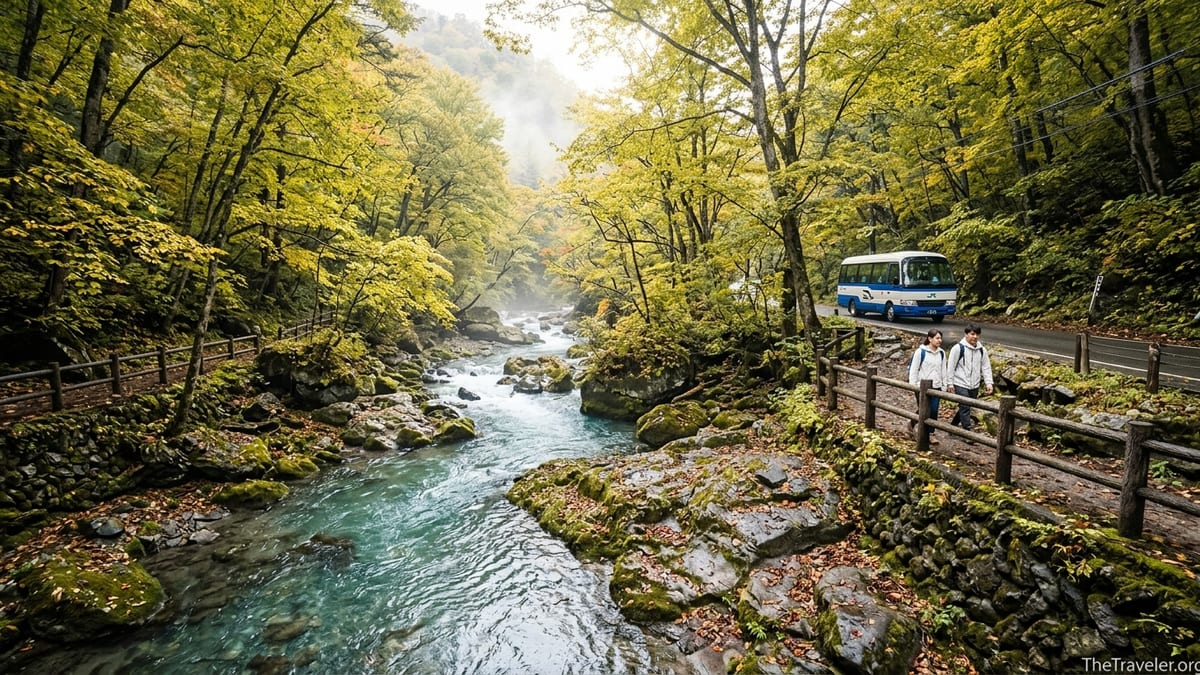
Oirase Gorge and Lake Towada are among Tohoku’s most beautiful landscapes, but they illustrate how bus timing shapes a car free trip. From mid spring through autumn, JR Bus Tohoku operates routes from Aomori Station and from Hachinohe Station that follow the Oirase Gorge road and continue to Lake Towada. These buses typically run several times a day in each direction at the height of the season, but services taper in early spring and late autumn, and heavy snow closes the road in winter. In November, for example, buses may stop running shortly after mid month, with exact dates announced closer to the season, so a 2026 trip in shoulder season requires checking current timetables rather than relying on older reports.
A realistic car free day trip to Oirase from Aomori City might look like this: catch a morning JR bus around 8 or 9, ride about two hours to a mid gorge stop such as Ishigedo, then walk downstream or upstream for three to four hours along the riverside path, rejoining the road at another bus stop to catch an afternoon bus onward to Lake Towada or back to Aomori. Because buses do not run continually, you plan your walk around their timetable, leaving a buffer of at least one departure in case the trail is slower than expected. If you are staying at a lakeside hotel such as those near Yasumiya, you may also be able to use hotel shuttles that connect to Aomori or Hachinohe on certain days.
Within Aomori City, most sights are within walking or short bus distance of Aomori Station. Many travelers stay near the station and simply take a local Ou Main Line train to and from Shin Aomori for Shinkansen connections, which run frequently and take only a few minutes. For car free travel, there is little reason to stay near Shin Aomori itself, as accommodation and dining options cluster closer to Aomori Station on the bay.
Shin Aomori also connects you south to Hirosaki and beyond by local or limited express trains. Hirosaki Castle Park, famous for its cherry blossoms, is reachable in about 40 minutes from Aomori, and local buses run from Hirosaki Station to the castle area. Outside the core blossom season in late April and early May, these buses can be less frequent, but taxis from the station remain a viable option for small groups who want to avoid a long walk. Once again, a car saves modest time here but is not essential if you plan around the bus schedule or budget for the short taxi ride.
Ginzan Onsen and Other Places Where Buses Dictate the Day
Ginzan Onsen is one of Tohoku’s most sought after destinations for its Taisho era wooden ryokan lining a narrow river valley, especially atmospheric when snow falls in mid winter. Without a car, most visitors approach from Oishida Station on the JR Yamagata Line, which is accessible by Shinkansen from Tokyo or by local trains from Sendai and Yamagata. From Oishida, public buses run up the valley to Ginzan Onsen. Recent schedules indicate around five buses per day in each direction, with slightly adjusted times in winter. This means you effectively have five chances to get in and five chances to get out on a given day, and missing the last bus in the evening could leave you negotiating a costly taxi ride.
For overnight guests, a practical strategy is to time your arrival to one of the mid afternoon buses, giving you daylight to settle into your ryokan and explore the town before dinner. On departure day, you can take the mid morning bus back to Oishida, connect to a late morning or early afternoon Shinkansen and continue to Sendai or Tokyo. Winter access information from local authorities emphasizes that roads can be snowy and parking is tightly controlled, so in peak winter some visitors actually find the bus and ryokan shuttle system less stressful than attempting to drive and park in heavy snow.
Other Tohoku destinations where bus frequency demands extra attention include remote lake areas such as Lake Tazawa, certain onsen valleys off the main rail lines, and some coastal communities still served by a mixture of JR trains and local buses. For example, the JR buses along Oirase Gorge, while adequate for patient hikers, are not frequent enough to allow fully spontaneous hopping on and off at every waterfall. In these areas, a car can save substantial travel time, but if you are committed to going car free, the realistic approach is to focus on one or two key points rather than trying to see everything in a single day.
Some visitors choose to combine public transport with short taxi hops where that meaningfully reduces stress. In Ginzan Onsen’s case, taxis from Oishida Station are more expensive than the bus but can be shared among a group of three or four, and they avoid the need to match luggage and arrival times with the limited bus schedule. Similarly, at Oirase or Lake Towada, if you miss a bus but there is a long wait until the next one, guesthouse staff can sometimes help arrange a taxi to the nearest rail station. Building a modest contingency budget for these situations makes a car free Tohoku trip feel far more relaxed.
In short, while there are corners of Tohoku where a rental car dramatically expands your options, many of the region’s marquee sites remain reachable by a combination of Shinkansen, local trains and buses. The key is to accept that you will do fewer things in a day than someone driving, and to design your route around the most restricted links, which are usually the rural buses.
Practical Tips: Luggage, Lockers, Winter and Base Strategies
Traveling Tohoku by public transport in 2026 is easier if you keep luggage under control. Shinkansen and limited express trains have overhead racks and some space behind the last row of seats, but large suitcases can be awkward, especially on busy departures between Tokyo and Sendai. Many Tohoku stations, including Sendai, Morioka, Aomori and Yamagata, have coin operated lockers in several sizes near the ticket gates. For example, a large locker suitable for a big suitcase might cost around 700 to 900 yen for a calendar day, while smaller lockers for daypacks are cheaper. A common tactic is to leave your main bag in a big city locker while you make an overnight side trip to a ryokan with only a small backpack.
In winter, from roughly late November to March, schedules can change and certain mountain routes suspend operations entirely. Buses to snow corridors, high passes and some lakeside roads may not run, while routes to onsen towns like Ginzan Onsen or Nyuto Onsen might operate on reduced winter timetables. Trains themselves are generally robust in snow, but delays can occur during severe storms. When planning a winter 2026 itinerary, it is wise to leave buffer days around the most weather sensitive sections, such as Oirase Gorge or highland plateaus, and to have lower altitude backups like city museums or castle parks.
Building your trip around two or three bases rather than nightly hotel changes pays off even more without a car. A classic pattern might be three to five nights in Sendai, two or three in Morioka and two or three in Aomori, with one night inserted in an onsen town such as Ginzan Onsen or Nyuto Onsen. From each base you can take relaxed day trips, returning to the same hotel and leaving most of your luggage behind. This reduces the number of times you must carry bags through crowded stations or navigate from rural bus stops to unfamiliar accommodations.
Finally, if you expect to ride trains and buses intensively over several days, consider whether a rail pass that covers Tohoku still makes sense in 2026. Recent announcements indicate that some older passes are being consolidated or replaced with new products that cover a broader area but at a higher price point. Rather than assuming a pass is automatically cheaper, sketch out your likely Shinkansen segments between Tokyo, Sendai, Morioka, Aomori and back, convert approximate fares to yen, and compare them with current pass prices. For many Tohoku focused itineraries that involve multiple long hops within a one or two week window, a pass will still offer solid value.
The Takeaway
Seeing Tohoku without renting a car in 2026 is entirely feasible, provided you respect the realities of distance and timetable. Shinkansen services along the main north south spine are fast and frequent, local JR lines reach many signature landscapes and temples, and targeted bus routes link the rails to valleys like Ginzan Onsen and river gorges like Oirase. The constraint is rarely whether public transport exists at all, but how often it runs and how well it lines up with the rest of your day.
A successful car free itinerary begins with smart base choices. Use Sendai as your southern anchor for Matsushima, Yamadera and Hiraizumi, then add Morioka for Kakunodate and northern Iwate, and finish in Aomori for Oirase and Hirosaki. Insert one or two carefully timed nights in more remote onsen towns by leaning on ryokan shuttles and infrequent buses, and resist the temptation to cram too many far flung sights into a single day. With this structure, you can enjoy long baths, slow temple climbs and gorge walks rather than spending your holiday watching the clock at rural bus stops.
If you keep luggage light, budget a little extra for taxis when needed and stay flexible about weather, Tohoku’s trains and buses reveal a region that is both accessible and deeply atmospheric. The payoff for accepting a slower pace is a more intimate experience of hot spring towns under falling snow, quiet samurai streets at dusk and misty gorge paths long after the day’s tour buses have gone.
FAQ
Q1. Can I explore Tohoku in 7 to 10 days using only trains and buses?
Yes, a 7 to 10 day trip is enough for a car free loop such as Tokyo to Sendai, Morioka, Aomori and back, with day trips to Matsushima, Yamadera, Kakunodate or Oirase if you limit yourself to two or three bases.
Q2. Is it worth buying a JR rail pass just for Tohoku in 2026?
Often yes, but it depends on your exact route. If you plan multiple long Shinkansen segments between Tokyo, Sendai, Morioka and Aomori within a short period, a regional or multi area JR East pass usually pays off, but you should compare the current pass price with the sum of individual tickets.
Q3. How far in advance should I book accommodation in Ginzan Onsen without a car?
For peak winter or foliage weekends, booking several months ahead is wise, as many ryokan are small and sell out quickly. Once you have a confirmed reservation, you can arrange your train and bus timings around the check in and check out times.
Q4. Are rural buses in Tohoku easy to use if I do not speak Japanese?
Major routes to places like Oirase Gorge, Lake Towada and Ginzan Onsen usually have at least basic English timetable information online or at stations, and drivers are used to tourists. However, smaller local routes may only post Japanese timetables, so taking photos of signs and asking station staff to mark your departure can be very helpful.
Q5. What is the best season to visit Oirase Gorge using public transport?
Late spring through autumn is ideal, roughly from late April to early November, when JR buses run more frequently and the gorge trails are free of snow. In winter the road closes and regular buses do not operate, so car free access is essentially limited to hotel shuttles if you stay nearby.
Q6. Will snow disrupt Shinkansen travel in Tohoku?
Shinkansen lines are designed to operate in snow and usually run with only minor delays, even in midwinter. Local trains and buses in mountain areas are more vulnerable to heavy snow or road closures, so plan weather sensitive visits with some flexibility and keep an eye on local advisories.
Q7. Can I use station lockers for multi day storage while I visit an onsen town?
Yes, many large stations offer lockers that hold luggage for up to three calendar days for a per day fee. For longer storage or oversized bags, some stations and private services also operate left luggage counters where staff will store your suitcase for several days.
Q8. Is it realistic to visit both Kakunodate and Lake Tazawa in a single day without a car?
It is technically possible but will feel rushed because buses around Lake Tazawa do not run very frequently. Most travelers enjoy the area more if they dedicate one full day to Kakunodate’s samurai district and another day to Lake Tazawa and Nyuto Onsen, possibly with an overnight stay in an onsen ryokan.
Q9. How should I handle last minute changes if a bus is canceled or full?
If a rural bus is canceled or unexpectedly crowded, your main options are to wait for the next departure, adjust your plan to spend more time nearby or share a taxi to the nearest rail station. Keeping some extra budget and time in reserve makes it easier to adapt without stress.
Q10. Is driving ever strongly recommended instead of going car free in Tohoku?
Driving is more convenient for very remote valleys, short detours between scattered coastal towns or off season visits to areas with only a few buses per day. However, if your focus is on established destinations like Sendai, Matsushima, Yamadera, Kakunodate, Hiraizumi, Ginzan Onsen and Oirase Gorge, public transport remains a practical and often more relaxing option.