


The Kansai region is where many trips to Japan really click into place. Osaka, Kyoto, Nara, Kobe, Himeji and Koyasan sit within a tight rail network, and current 2026 itineraries from tour operators, bloggers and even Japan’s national tourism board cluster around 4 to 7 days focused on Osaka, Kyoto and Nara, with Kobe, Himeji or Koyasan added when time allows. This guide leans into that reality, giving you a five day core route and a seven day expanded version, plus clear advice on where to base yourself and when an overnight outside Osaka or Kyoto genuinely makes sense.
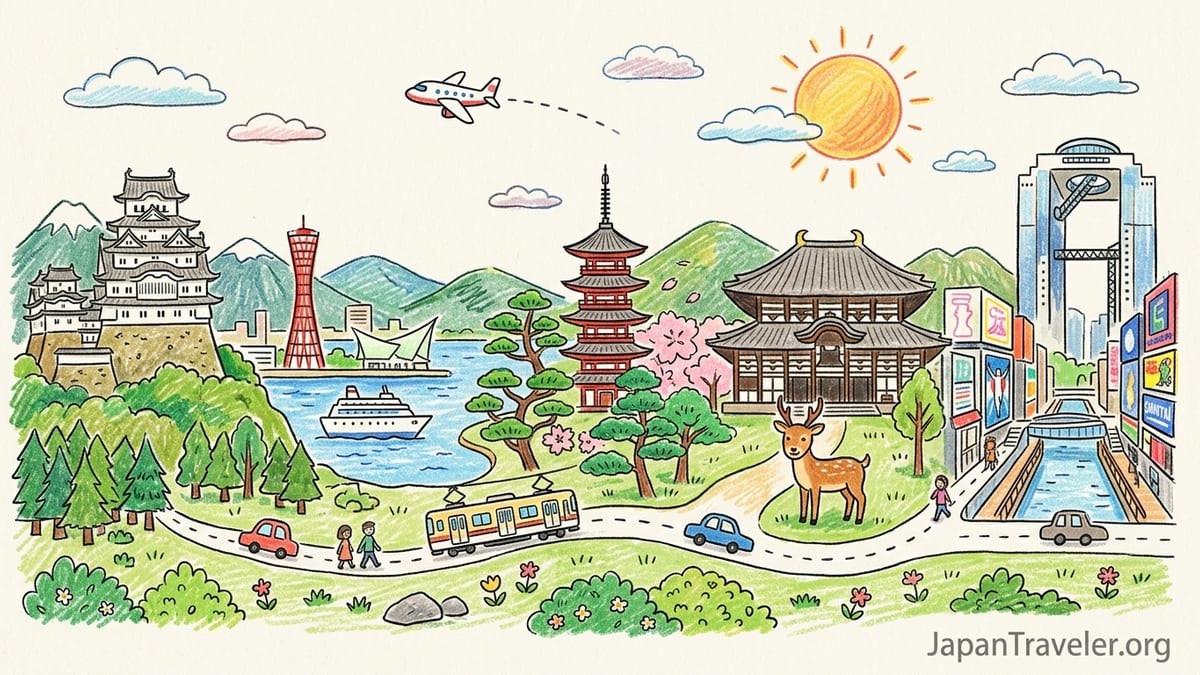
How Long to Spend in Kansai in 2026
Scan recent 2026 itineraries from specialist blogs and tour companies and a strong pattern emerges: most travelers give Kansai around five to seven days, concentrating on Osaka, Kyoto and Nara, with Kobe or Himeji often appearing as optional day trips. A Japan National Tourism Organization model course even frames Kansai as a compact loop starting and ending at Kansai International Airport, with Osaka and Kyoto as the main hubs and Nara and Wakayama as extensions. That means you do not need two or three weeks to see the region’s highlights if your time is limited.
In practice, five full days is enough for a first taste of Kansai if you accept that you will only skim Kyoto’s temples and fit Nara into a single day. Travelers on tight schedules often do two nights in Osaka, two in Kyoto, and use one of those bases to dip into Nara by train. When visitors have a week, many of the newest 7 day Kansai itineraries layer in either Kobe, Himeji or both, and some replace Himeji with a slower, more contemplative night at Koyasan in Wakayama Prefecture.
Those patterns drive this guide. Below you will find a five day “core” Kansai plan built around Osaka, Kyoto and Nara that mirrors what frequent travelers actually do now, followed by a seven day expanded version that weaves in Kobe and Himeji without turning your trip into a blur of hotel changes. Instead of chasing an arbitrary 14 or 21 day route, the focus is on realistic days that match current transport, opening hours and crowd conditions.
All timings below assume you arrive and depart through Kansai International Airport, but the skeleton works equally well if you are connecting by shinkansen from Tokyo or Hiroshima. You can simply swap Day 1 and Day 5 to align with your actual arrival and departure points.
Where to Base Yourself: Osaka, Kyoto, Nara or Beyond?
Before you sketch specific days, decide where to sleep. Current trip reports and model itineraries overwhelmingly choose either a single base in Osaka or a split stay between Osaka and Kyoto. Osaka makes airport transfers easy and offers late night dining; Kyoto puts you closer to World Heritage temples and traditional neighborhoods but can feel quieter after dark. Nara rarely appears as an overnight base except in niche slow travel plans and is usually handled as a day trip from either Osaka or Kyoto.
For most first timers with five to seven days, the most practical strategy in 2026 is to split between Osaka and Kyoto. A common pattern is two or three nights in Osaka’s Namba or Umeda districts and the remaining nights in central Kyoto around Kyoto Station, Kawaramachi or Gion. This reduces backtracking, lets you experience two very different city atmospheres, and simplifies rail travel. For example, an afternoon train from Osaka Station to Kyoto Station on JR Special Rapid Service typically takes about 30 minutes and costs the equivalent of a few US dollars, so shifting bases midway is not a major logistical hurdle.
Staying only in Osaka and day tripping every time to Kyoto, Nara, Kobe and Himeji is feasible, and many packaged 4 to 5 day tours still do exactly that. You can reach Kyoto from Osaka in around 30 minutes, Nara in roughly 40 minutes on the Kintetsu Line from Namba, and Himeji in about an hour on the JR Special Rapid from Osaka Station. However, endlessly commuting back and forth can make days feel repetitive and will cut into early morning or evening chances in Kyoto, when spots like Fushimi Inari Taisha or the lanes around Kiyomizu dera are most atmospheric.
Nara works best as a day trip rather than an overnight in most itineraries. Recent community advice and model itineraries consistently note that the main sites around Nara Park, including Todaiji’s giant Buddha, Kasuga Taisha’s lantern lined approaches and Kofukuji, can be comfortably visited in a single unhurried day from either Osaka or Kyoto. Unless you are particularly drawn to Nara’s quieter neighborhoods, a dedicated hotel there usually adds more packing and unpacking than value.
When Kobe, Himeji and Koyasan Deserve an Overnight
By default, Kobe, Himeji and Koyasan are all manageable as day trips. From Osaka, Kobe’s Sannomiya Station is around 25 to 30 minutes away by JR or Hankyu lines. Himeji Station, with its famous castle visible from the station exit, sits roughly an hour from Osaka on JR Special Rapid services. Koyasan, reached by Nankai Railway from Osaka’s Namba Station plus a cable car and local bus, typically takes about two to two and a half hours door to door each way.
Overnights are more selective. Koyasan is the clearest case where staying the night transforms the experience. Many temple lodgings there include a multi course shojin ryori vegetarian dinner, tatami rooms and the chance to join early morning prayers. Doing Koyasan as a rushed day trip from Osaka, especially within a five day Kansai window, leaves little time for the Okunoin cemetery paths or the main Danjo Garan complex without feeling like you are racing a return train.
Himeji, by contrast, is usually best kept as a day trip. Modern 5 and 7 day Kansai itineraries almost always pair Himeji Castle and the surrounding Kokoen garden with a same day return to Osaka, Kyoto or Kobe. This keeps hotel changes down and works with opening hours, since the castle typically closes in the late afternoon and the central area becomes relatively quiet in the evening. An overnight in Himeji makes most sense if you are continuing west to places like Okayama or Hiroshima the next morning.
Kobe sits in a middle ground. With its compact center, harborfront and neighborhoods such as Kitano, many travelers simply come for an afternoon and dinner, sampling Kobe beef at a local steakhouse before heading back to Osaka. An overnight in Kobe is appealing if you want a slower pace or are combining it with nearby Arima Onsen, accessed by bus or cable car, but it is not essential for a first pass through Kansai on a five or seven day schedule.
Core Five Day Kansai Itinerary: Osaka, Kyoto & Nara
This five day core route reflects the dominant pattern in recent Kansai itineraries: Osaka and Kyoto as your bases, with Nara as a dedicated day trip. It assumes arrival and departure via Kansai International Airport and splits nights between Osaka and Kyoto for variety and efficiency.
Day 1: Arrive at Kansai Airport and head straight into Osaka. Many travelers choose to stay near Namba for its direct Nankai Railway access from the airport and lively Dotonbori nightlife, or Umeda for easier JR connections. After checking in, you might walk the neon lined canal, grab takoyaki from a street stall and ride up to the Umeda Sky Building observation deck if you still have energy. Keeping activities flexible helps account for jet lag.
Day 2: Explore Osaka’s highlights. Start at Osaka Castle Park in the morning before tour groups build up, then move to the Tenjinbashi suji arcade or Kuromon Market for lunch. In the afternoon, ride the Osaka Metro to Shinsekai for views from Tsutenkaku Tower and casual kushikatsu skewers. Travelers who enjoy theme parks often dedicate this entire day to Universal Studios Japan instead, booking timed entry tickets in advance and staying until the evening shows.
Day 3: Transfer to Kyoto and spend the afternoon in the historic Higashiyama district. A typical pattern is a late morning JR train from Osaka to Kyoto, a quick drop off of luggage at your Kyoto hotel, then a stroll through Ninenzaka and Sannenzaka streets toward Kiyomizu dera. As the light softens, wander through Gion, keeping expectations realistic about geiko and maiko sightings, and finish with dinner around Pontocho Alley. Staying near Kyoto Station or along the Hankyu or Keihan lines keeps rail access simple for the rest of your stay.
Day 4: Dedicate a full day to Nara. From Kyoto Station, the JR Nara Line or a Kintetsu train will have you in Nara in under an hour. On the ground, most travelers walk from the station through Nara Park toward Todaiji’s Daibutsuden Hall, then loop to Kasuga Taisha and back past the deer filled lawns. An example schedule might be a 9:00 departure from Kyoto, midday visit to Todaiji and Kasuga Taisha, a late afternoon stop at Kofukuji, and a dusk return to Kyoto by around 18:00. This gives time for an evening ramen or izakaya dinner back in the city without feeling rushed.
Day 5: Use your final Kyoto day for a mix of marquee sights and small corners that interest you. Many 2026 guides suggest hitting Fushimi Inari Taisha early in the morning before the paths fill up, then spending the late morning in Arashiyama’s bamboo grove and riverside. Alternatively, you could focus on the Golden Pavilion area and quieter temples in the northwest. In the evening, either head directly to Kansai Airport by limited express from Kyoto or return to Osaka for a final night if your flight departs the next morning.
Expanded Seven Day Kansai Itinerary: Adding Kobe & Himeji
If you have a full week in Kansai, you can add Kobe and Himeji without overloading each day. Recent seven day itineraries usually keep the same Osaka Kyoto Nara backbone and plug Kobe and Himeji into single days, with the flexibility to drop one if energy flags or weather turns.
Day 1 and Day 2 remain focused on Osaka, as in the five day core, giving you time to adjust and sample the city’s food and urban energy. On Day 3, instead of moving directly to Kyoto, consider a detour to Kobe. Check out of your Osaka hotel after breakfast, leave large luggage in station coin lockers or send it by luggage forwarding service to your Kyoto hotel, and ride a JR or Hankyu train to Kobe’s Sannomiya Station. Spend the day between the harborfront, the former foreign settlement streets and Kitano’s hillside western style houses before a steak dinner featuring local Kobe beef, then take an evening train on to Kyoto.
Day 4 then becomes your central Kyoto sightseeing day in Higashiyama and Gion, while Day 5 is dedicated to Nara as a day trip from Kyoto, following the same pattern described in the core itinerary. The key difference with a seven day schedule is that you do not need to cram Kyoto’s major sights into a single long day, so you can move more slowly, spend longer in a favorite temple garden, or seek out less crowded neighborhoods such as Kurama or Uji if mainstream spots feel overwhelming.
Day 6 is the point where Himeji fits most naturally. From Kyoto or Osaka, take a JR Special Rapid or shinkansen west to Himeji in the morning and walk straight up the wide avenue to Himeji Castle, often regarded as Japan’s most impressive surviving feudal castle. Plan several hours to explore the keep and the defensive corridors, then exit into the landscaped Kokoen garden next door. Many seven day itineraries then return to Osaka for the evening, but you could also overnight in Kobe on the way back if you want a change of pace.
Day 7 can be left open for whatever you missed or want to revisit. Some travelers use it as a shopping and café day around Kyoto’s Kawaramachi area, while others head back into Osaka for last minute souvenirs in Shinsaibashi or a final bowl of okonomiyaki. If your schedule allows, you could also slot in a short excursion to Uji for matcha culture or to an onsen town like Arima as a relaxing finale before catching your flight out of Kansai Airport.
Practical Transport and Pass Advice
Kansai’s rail network is dense, and this is part of why most modern itineraries confidently recommend day trips over frequent hotel changes. JR lines such as the Kyoto Line and Kobe Line connect Osaka, Kyoto, Kobe and Himeji with frequent, relatively inexpensive trains, while private lines like Kintetsu and Nankai cover Nara and Koyasan. For example, a standard JR commuter style ticket from Osaka to Kyoto typically costs less than a typical Tokyo subway day pass and trains run several times per hour during the day.
Given the short distances involved, nationwide rail passes often do not pay for themselves if you are staying only within Kansai for five to seven days. Instead, travelers increasingly rely on regional products like the JR Kansai Area Pass or on city specific passes such as the Osaka Amazing Pass for intensive sightseeing days. A common pattern is to do most intercity travel using regular IC card fares and then activate a one day pass on the day you plan to ride multiple subway lines and include paid attractions like Umeda Sky Building or the Osaka Museum of Housing and Living.
From Kansai International Airport, you have several options into Osaka. Express trains target visitors, while airport limousine buses serve major hotel districts and can be more convenient if you have large luggage. Some budget conscious travelers opt for local trains that cost less but require more transfers. To reach Kyoto directly from the airport without changing in Osaka, limited express services provide a straightforward link, which suits those who prefer to base first in Kyoto and visit Osaka later in the trip.
For day trips, aim to leave by around 9:00 in the morning and plan your return for early evening. This aligns with most attraction opening times and avoids the heaviest commuter crushes on weekday trains. When traveling to Koyasan, check the last cable car times in advance and build in a margin of error so you are not racing the clock back to Namba Station at the end of a long day.
Choosing Between Day Trips and Additional Hotel Moves
Behind every Kansai itinerary is a trade off between minimizing hotel moves and reducing time spent commuting. Recent traveler feedback strongly suggests that for 5 to 7 day trips, you should limit yourself to one major hotel move between Osaka and Kyoto, then handle everything else as day trips. This keeps packing simple and reduces the risk of arriving late at a new hotel after long days out.
For example, if you base two nights in Osaka and three or four in Kyoto, you can cover Osaka’s core, Kyoto’s highlights, and Nara as a day trip without ever having to rush across town with suitcases at rush hour. Kobe and Himeji then become optional single day add ons, making it easy to adjust for weather or fatigue. If rain washes out your planned Himeji day, you simply stay in Kyoto or Osaka and pivot to indoor sights and covered shopping streets instead.
By contrast, building itineraries with separate hotel nights in Osaka, Kyoto, Nara, Kobe and Himeji within a single week, while technically possible, often leaves travelers feeling that half the trip was spent checking in and out. You might gain an early morning in a quieter city, but you lose flexibility and mental bandwidth to respond to unexpected discoveries. Unless you have a specific reason, such as a temple stay in Koyasan or a hot spring inn in Arima, it is usually better to make your hotel your stable base and treat the rail network as your roaming tool.
One useful rule is to reserve overnights outside Osaka or Kyoto only when the nighttime or early morning atmosphere is central to the experience. Koyasan’s pre dawn ceremonies meet that test. Himeji’s castle, which closes in the afternoon, generally does not. When in doubt, look at the opening and closing times of the places you care about most and decide whether being on site outside typical day trip hours will genuinely change your experience.
The Takeaway
Kansai rewards both short and long visits, but current 2026 patterns are clear: most travelers allot five to seven days to Osaka, Kyoto and Nara, with Kobe and Himeji appearing as flexible extras and Koyasan reserved for those who can afford an overnight. The region’s tight rail links allow you to see a lot without constantly changing hotels, so the smartest strategy is usually to split your stay between Osaka and Kyoto, use Nara as a day trip, and be selective about any additional overnights.
If you only have five days, focus on Osaka for food and nightlife, Kyoto for history and atmosphere, and Nara for one day among temples and deer. With seven days, add Kobe for its port city vibe and Himeji for its picture perfect castle, keeping both as day trips unless your onward route makes an overnight logical. Throughout, keep an eye on opening hours, last trains and your own energy, and remember that skipping one destination so you can savor another is often the better travel story in the long run.
However you shape your Kansai route, grounding your plans in these realistic, field tested patterns will help you spend more time wandering lantern lit streets and castle keeps and less time wrestling with timetables. The region is dense with experiences, but when you build around what most travelers actually do now, it becomes surprisingly manageable, even within a single memorable week.
FAQ
Q1. Is it better to stay only in Osaka or split time between Osaka and Kyoto?
For most first time visitors with five to seven days in Kansai, splitting your stay between Osaka and Kyoto works best. Osaka gives you easy airport access, nightlife and modern neighborhoods, while Kyoto puts you close to major temples and shrines so you can visit early or late in the day without long commutes.
Q2. Can I visit Nara as a day trip or do I need to stay overnight?
Nara is very manageable as a day trip from either Osaka or Kyoto. Fast trains take around 40 to 60 minutes, and the main sights around Nara Park, including Todaiji, Kasuga Taisha and Kofukuji, can be visited in a single unhurried day.
Q3. How many days do I really need for Osaka, Kyoto and Nara?
Five full days is enough for a compact first visit that covers core highlights in Osaka and Kyoto plus a dedicated day in Nara. A seven day schedule is more comfortable and lets you add Kobe or Himeji without feeling rushed.
Q4. When does Koyasan deserve an overnight stay?
Koyasan deserves an overnight when you want the full temple lodging experience, including vegetarian shojin ryori meals and early morning prayers. This atmosphere is difficult to capture on a day trip, especially when travel from Osaka can take over two hours each way.
Q5. Should I visit Himeji as a day trip or spend the night there?
Himeji works best as a day trip from Osaka, Kyoto or Kobe. You can see Himeji Castle and Kokoen garden in a few hours and return to your base in the late afternoon. Overnight stays are more useful if you are continuing west the next morning.
Q6. Do I need a Japan Rail Pass for this Kansai itinerary?
For itineraries that stay within Kansai for five to seven days, a nationwide rail pass rarely pays off. Regular tickets, IC card fares and occasional regional passes like the JR Kansai Area Pass are usually more cost effective.
Q7. Is Kobe worth adding to a five or seven day Kansai trip?
Kobe is a worthwhile addition if you have at least six or seven days. It offers a different feel from Osaka and Kyoto, with a compact harborfront, hillside neighborhoods and the chance to try local Kobe beef, and it fits comfortably as a single day trip.
Q8. How crowded are Kyoto and Nara in 2026?
Kyoto and Nara remain very popular, especially during cherry blossom and autumn foliage seasons. Early morning visits to marquee sites like Fushimi Inari Taisha or Todaiji and midweek travel where possible can make a noticeable difference in crowd levels.
Q9. Is it realistic to include both Kobe and Himeji on the same day?
It is possible to see both Kobe and Himeji in one long day, but it can feel rushed. Most travelers now prefer to give Himeji its own focused day and visit Kobe separately or in the evening on the way back.
Q10. What is the best way to start a Kansai itinerary if I am coming from Tokyo by shinkansen?
If you are arriving from Tokyo by shinkansen, it often makes sense to start in Kyoto, then move on to Osaka later in the trip. This lets you step off the train directly into Kyoto, explore Kansai in a logical westward loop, and finish in Osaka with easy access to Kansai Airport for your departure.