


Northern Japan feels very different from the neon energy of Tokyo or the temple districts of Kyoto. Stretching from the rugged coasts of Tohoku to the wild open landscapes of Hokkaido, this part of the country offers big skies, deep snow, steaming hot springs and some of Japan’s most soulful festivals and regional food. Linked by the Tohoku and Hokkaido Shinkansen, it is easier than ever for first time visitors to explore both regions in a single trip.
Understanding Northern Japan: Tohoku and Hokkaido
For trip planning, it helps to think of Northern Japan in two layers. South of the Tsugaru Strait lies Tohoku, the broad northeastern shoulder of Honshu, made up of six prefectures: Aomori, Iwate, Miyagi, Akita, Yamagata and Fukushima. This is a region of quiet castle towns like Hirosaki, samurai streets in Kakunodate, coastal inlets around Matsushima, and mountain onsen hidden in snowbound valleys. It is often less crowded than central Japan, which means more space on trains, more availability in ryokan and a slower, less hurried feel.
Across the undersea Seikan Tunnel is Hokkaido, Japan’s northernmost main island. Hokkaido is larger, wilder and more spacious again, with big agricultural plains, volcanic national parks and ski resorts that pile up powder snow through much of winter. Cities such as Hakodate and Sapporo give you easy access to food, culture and transport, while rural areas open out quickly into dairy farms, forests and wide rivers. Even in peak seasons, it rarely feels as dense as Tokyo or Osaka.
For a first time visitor, combining a few key bases in Tohoku with a simple northward hop into southern Hokkaido makes an excellent introduction. A classic pattern is to travel from Tokyo to Sendai, then onward to Morioka, Kakunodate or Aomori in Tohoku, before crossing the strait by Shinkansen to Hakodate and finally Sapporo. With careful timing, this can be done comfortably in 7 to 10 days without feeling rushed.
Riding the Shinkansen Between Tohoku and Hokkaido
The backbone of travel in Northern Japan is the high speed rail network. From Tokyo Station, the Tohoku Shinkansen runs north through major hubs including Sendai, Morioka and Shin Aomori. Typical unreserved fares from Tokyo to Sendai start in the range of 11,000 to 14,000 yen one way depending on train type and class, and the fastest Hayabusa services cover the distance in around 90 minutes. Continuing to Morioka takes about 2 hours 10 minutes from Tokyo, while Tokyo to Shin Aomori usually takes around 3 hours on direct trains.
Beyond Shin Aomori, the line becomes the Hokkaido Shinkansen, crossing under the sea through the Seikan Tunnel to Shin Hakodate Hokuto. From Shin Aomori to Shin Hakodate Hokuto the journey is roughly 1 hour, while Tokyo to Shin Hakodate Hokuto comes in around 4 to 4.5 hours on the fastest connections. From Shin Hakodate Hokuto, a limited express train connects to Hakodate city in about 20 minutes, and onward limited express and conventional lines continue to Sapporo in approximately 3.5 to 4 hours.
For visitors planning several Shinkansen legs within 5 to 10 days, regional rail passes can represent good value. JR East offers passes covering Tohoku, and JR East & South Hokkaido passes extend validity across the undersea section to Hakodate and surrounds. These can make sense if you are, for example, traveling Tokyo to Sendai and back plus a side trip to Aomori, or Tokyo to Sendai, then north to Aomori, across to Hakodate and back down again. Seat reservations are optional on many services but strongly recommended in busy travel periods such as early May (Golden Week), mid August (Obon) and New Year.
Season by Season: How Northern Japan Changes Through the Year
Because Northern Japan stretches across different climate zones, the calendar feels noticeably different from central and southern Japan. Spring arrives later, cherry blossoms peak later, summers are generally cooler and less humid, and winters are longer and snowier. Your experience in Sendai, Aomori or Sapporo in April will be very different from visiting Kyoto or Hiroshima in the same month.
In spring, Tohoku is famous for cherry blossom scenes that combine castles, rivers and mountains. Hirosaki Castle Park in Aomori typically reaches full bloom in late April rather than early April, and its moats often fill with fallen petals that create a pink carpet on the water. Kakunodate in Akita is another standout, with weeping cherry trees arching over preserved samurai residences and lining the Hinokinai River. By May, new greenery spreads up into the mountains around Lake Towada and the Oirase Gorge, where wooden walking paths follow a clear, fast flowing river between mossy boulders and waterfalls.
Summer is festival season across Tohoku and a comfortable time to explore Hokkaido’s wide open landscapes. In early August, the Aomori Nebuta Matsuri fills Aomori City’s streets with illuminated paper floats and taiko drums, while Sendai’s Tanabata Festival decorates the shopping arcades with towering streamers a few days later. On the Hokkaido side, this is a prime time for driving or touring by train between lavender fields in central Hokkaido, volcanic caldera lakes and cool coastal towns, usually at temperatures more bearable than the heavy humidity further south.
Autumn brings some of Japan’s most striking foliage. The steep, forested walls of Oirase Gorge in Aomori turn gold and red from around mid to late October. Matsushima Bay near Sendai pairs maple lined temple grounds with views of pine covered islets, while the countryside around Morioka glows with rice fields turning yellow. In Hokkaido, the foliage season often starts earlier, with some highland areas coloring from late September. Photography minded travelers often time their visits to move gradually south as the colors descend the archipelago.
Winter is when Northern Japan feels most distinct from the rest of the country. Snow usually begins to settle in earnest from December and can linger into March, especially inland and at higher elevations. Ski resorts near Morioka, around Mount Iwate and in many parts of Hokkaido see reliable snowfall, and onsen towns become particularly atmospheric. The famous “snow monsters” of Mount Zao, on the border of Miyagi and Yamagata, form when rime ice coats entire trees, creating surreal shapes on the slopes above Zao Onsen. In Aomori, the Hirosaki Castle Snow Lantern Festival lights up igloo like snow huts and lanterns in February, while Sapporo’s Snow Festival fills central Odori Park with enormous snow and ice sculptures.
Key Tohoku Gateways: Sendai, Matsushima, Hiraizumi and Morioka
Sendai is the natural starting point for many Tohoku itineraries. As the region’s largest city, with a population of over a million, it offers a wide range of hotels around Sendai Station, direct Shinkansen access from Tokyo and straightforward connections to coastal and inland sights. Visitors often use it as a comfortable base for one or two nights to try local specialties such as grilled gyutan beef tongue, zunda sweet soybean desserts and fresh seafood from nearby ports. In August, the city hosts the Sendai Tanabata Festival, when colorful paper decorations fill the central shopping arcades.
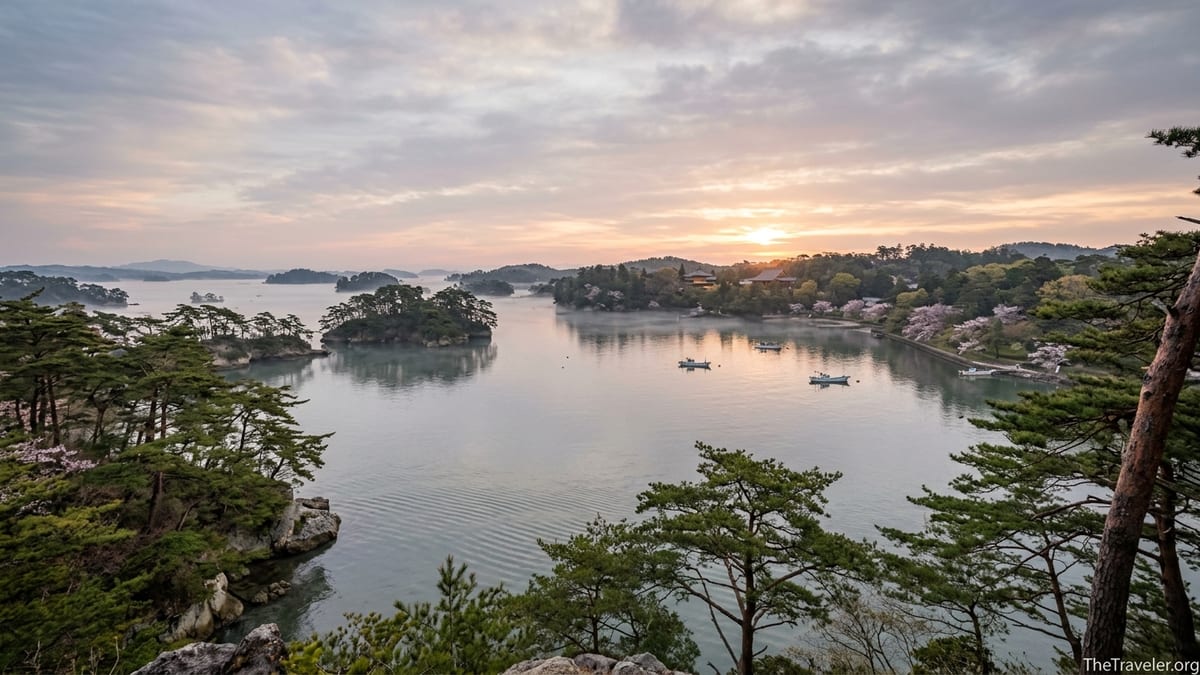
Just 30 to 40 minutes from Sendai by local train lies Matsushima Bay, long celebrated as one of Japan’s classic scenic views. Here, hundreds of small islands are dotted with pine trees, and short boat cruises weave between them, offering different perspectives depending on the light and tide. On land, simple walking paths connect temple complexes such as Zuiganji and Godaido, and modest admission fees give access to viewpoints and gardens. Many travelers visit Matsushima as a half or full day trip from Sendai, returning to the city by evening.
Further north along the Tohoku Shinkansen line, Morioka in Iwate Prefecture is a compact, livable city with a strong food identity. The local “three great noodles” are a minor attraction in their own right: cold wanko soba served in dozens of small bowls, spicy jajamen and cold noodles in a Korean influenced style. The city’s riverbanks and nearby Mount Iwate provide an attractive backdrop without overwhelming first time visitors with too many must see sights. Morioka can work as an overnight stop between Sendai and points further north such as Lake Towada, Kakunodate or Aomori.
To the west of Morioka on a branch line, Hiraizumi is quieter but historically significant. Once a powerful regional center in the 12th century, it preserves important Pure Land Buddhist sites such as Chusonji and Motsuji, both surrounded by forest and landscaped gardens. A visit typically involves walking or using short local bus hops between temple complexes, allowing a break from cities and Shinkansen stations while still being reachable in about 2 to 3 hours from Sendai by rail and bus.
Northern Tohoku Highlights: Kakunodate, Aomori, Hirosaki and Lake Towada
Northern Tohoku offers a cluster of destinations that you can link together using Shinkansen and local trains. Kakunodate, in Akita Prefecture, sits on an Akita Shinkansen branch line that connects back to the main Tohoku route. The town’s preserved samurai district features wooden residences with high walls, many open as small museums where you can walk through tatami floored rooms and gardens. In late April and early May, the cherry trees that line the streets and nearby river create a tunnel of blossoms that draws domestic visitors yet still feels gentler in scale than the crowds in Kyoto or Tokyo.
At the northern tip of Honshu, Aomori City serves as a transport hub, port and festival center. The Shinkansen terminates at Shin Aomori on the edge of the city, with frequent local trains connecting the two stations in under 10 minutes. Aomori’s waterfront area includes exhibition spaces that showcase the Nebuta Festival floats outside of the early August event period. Even on an ordinary winter weekday, you might find local visitors viewing the floats, sampling apple based sweets from nearby orchards or stepping into a seafood market restaurant for a bowl of kaisendon topped with scallops, tuna and salmon roe.
Nearby Hirosaki, reachable in around 40 to 50 minutes by local train from Aomori, adds a smaller castle town atmosphere. The original castle keep is modest in size but set within an extensive park that becomes one of the country’s better known cherry blossom spots in late April. In winter, the grounds host the Hirosaki Castle Snow Lantern Festival, when hundreds of small snow lanterns and igloo like shelters are illuminated after dark, creating a soft glow against the castle walls and trees. The town itself has a number of old merchant houses and café lined streets that reward slow wandering rather than checklist sightseeing.
Lake Towada and the Oirase Gorge sit on the border between Aomori and Akita prefectures and showcase the quieter, nature driven side of Tohoku. The lake is a deep blue volcanic caldera with small lakeside settlements offering simple inns, souvenir shops and boat cruises that operate in the main visitor season. The Oirase Stream flows out of the lake through a narrow, heavily forested valley, and a well maintained walking path follows the water for around 14 kilometers with frequent access points along the road. Many travelers stay at an onsen hotel near the lake or mid valley, then walk a shorter section of the trail, catching a local bus back to their accommodation.
Crossing to Hokkaido: Hakodate, Sapporo and the Wider Landscape
The Hokkaido side of your journey often begins in Hakodate, the first major city north of the undersea tunnel and reachable by a short limited express ride from Shin Hakodate Hokuto. Hakodate combines a working port, distinct historical districts and a spectacular city panorama from Mount Hakodate. In the Motomachi area, steep slopes lined with Western style churches, consulates and Japanese homes lead down to a bay front of converted red brick warehouses, now housing boutiques, cafés and a beer hall. In the evening, many visitors take the ropeway or bus to the viewpoint atop Mount Hakodate to see the city lights outlining the tombolo shaped coastline below.
From Hakodate, trains and intercity buses spread out across southern Hokkaido. The limited express service to Sapporo typically takes around 3.5 to 4 hours, running along the coast and through farming country. Sapporo itself is a modern, grid planned city with wide streets and an easy to understand subway system. For first time visitors, staying near Sapporo Station or Odori Park allows simple access to the city’s main food and nightlife areas, including Susukino, and to day trips out to nearby ski areas or onsen. In February, the Sapporo Snow Festival turns the central park into an open air gallery of large snow sculptures.
Beyond these anchor cities, the wider Hokkaido landscape is the main draw. To the east, national parks like Akan Mashu and Shiretoko center on crater lakes, wetlands and coastal cliffs that feel remote even by Japanese standards. In central Hokkaido, areas around Furano and Biei combine flower fields in summer with skiing in winter, and the rolling farmland is dotted with small pension style lodgings and farm cafés. To the south and west of Sapporo, ski resorts such as Niseko, Rusutsu and Kiroro attract international skiers for their deep, dry powder snow. While this article focuses on the overall picture, many of these areas can be explored in detail as separate trips or regional hubs with several nights in one place.
Hokkaido’s transport network is a mix of rail and bus, with distances greater and train frequencies lower than in Honshu. As a result, it is common for visitors to plan fewer bases and more time in each, using a combination of limited express trains and highway buses for longer jumps, then local buses and walking once they have arrived. In winter, it is wise to build in buffer time for delays due to heavy snow and to prioritize staying within walking distance of a station, tram line or bus hub wherever possible.
Why Northern Japan Excels in Snow, Onsen, Skiing, Nature, Festivals and Food
Snow and onsen are perhaps Northern Japan’s defining pair. In many parts of Tohoku and Hokkaido, winter means daily life continues under several meters of snow, and natural hot spring baths have long served as both practical relief and quiet indulgence. In Tohoku, traditional onsen towns like Nyuto Onsen in Akita or Zao Onsen in Yamagata offer open air rotenburo baths where you can soak while snow piles up on nearby rocks and trees. In Hokkaido, onsen areas such as Noboribetsu, Jozankei near Sapporo or the lakeside baths around Lake Toya make it easy to combine daytime skiing or sightseeing with an evening soak.
For skiing and snowboarding, Northern Japan offers a broad range of options, from family friendly local hills to internationally known resorts. In Iwate, ski areas near Morioka or on the slopes of Mount Iwate provide a more local feel, with mid sized resorts where lift passes often undercut the prices at larger Hokkaido destinations. In Hokkaido, Niseko has built a global reputation for its champagne like powder and international food scene, while resorts such as Furano and Rusutsu provide a balance of high quality snow, varied terrain and slightly quieter slopes. Smaller hills near Sapporo, including Teine and Kokusai, are close enough for day trips by bus.
Nature experiences in Northern Japan tend toward the understated rather than the dramatic peaks of the Japan Alps. Oirase Gorge rewards slow walking, bird calls and the texture of moss rather than a single, huge viewpoint. Matsushima Bay is about patterns of pine covered islands and small fishing boats moving with the tide. Hokkaido’s patchwork of fields, rivers and low mountains feels expansive, especially at sunrise and sunset, when the low angle light stretches shadows across snow or freshly cut hay. For many travelers who have already visited Kyoto or Nara, this quieter, more spacious nature can feel like a welcome contrast.
Festivals and regional food give the human layer to these landscapes. In early August, the three great Tohoku summer festivals give the region an entirely different energy: illuminated Nebuta floats in Aomori, paper lantern poles balanced by performers in Akita, and elaborate Tanabata streamers in Sendai’s arcades. Winter brings events like the Sapporo Snow Festival and the Hirosaki Castle Snow Lantern Festival. Foodwise, Tohoku is known for hearty dishes suited to cold weather and a strong sake culture, with local breweries in cities such as Morioka and Aizuwakamatsu. Hokkaido, with its dairy farms and cold seas, adds rich soft serve ice cream, cheese and butter, along with seafood such as crab, uni sea urchin and ikura salmon roe served over rice in morning markets in Hakodate, Sapporo or Kushiro.
Planning Your First Northern Japan Itinerary
For a first visit, it is wise to keep the number of bases modest and allow time for weather and travel adjustments, especially in winter. A typical 10 day itinerary might look like this: two nights in Sendai with a half day trip to Matsushima, two nights in Morioka or Kakunodate, two nights around Aomori or Hirosaki with a side trip to Lake Towada if in season, then one or two nights in Hakodate followed by two or three nights in Sapporo. This gives a coherent northbound flow by rail and a mix of city, small town and nature stops without trying to cover all of Hokkaido in one go.
Accommodation prices vary widely, but as a rough guide, business hotels near Shinkansen stations in Tohoku often start from around 7,000 to 10,000 yen per night for a double room, while mid range onsen ryokan with dinner and breakfast can begin around 18,000 to 25,000 yen per person, especially in popular snow resorts. In Hokkaido’s major cities, business hotels and mid range chains cluster around stations such as Sapporo and Hakodate, with similar pricing to Tohoku, while ski resort areas can rise significantly in peak periods. Booking earlier is advisable if you plan to travel during major festivals, New Year, or the core ski season of January and February.
When choosing travel passes, consider how many long distance Shinkansen rides you will realistically take. If your plan is to travel Tokyo–Sendai round trip plus local trains only, individual tickets may be competitive. If you will travel Tokyo–Sendai–Morioka–Aomori–Hakodate–Sapporo with several limited express segments, then a regional rail pass that covers both Tohoku and southern Hokkaido can reduce overall costs and simplify seat reservations. It can also be worth checking whether using a pass for a fixed 5 or 6 day period fits naturally into your itinerary or whether spacing out long rail segments would be more comfortable.
Finally, build some flexibility into your schedule to follow the weather and your own energy levels. A day that begins with light snow in Sendai might clear by the time you arrive in Matsushima, making a boat cruise more pleasant. In Hokkaido, a heavy snowstorm might be the perfect excuse to linger in an onsen town instead of pushing on to a distant sightseeing spot. Northern Japan rewards travelers who are willing to adjust on the go and allow a little extra time for detours, unexpected meals and quiet walks.
The Takeaway
Tohoku and Hokkaido offer a different expression of Japan: less crowded, more spacious and shaped by long winters, rich seasonal shifts and deep local traditions. Linked by the Tohoku and Hokkaido Shinkansen, these regions now fit naturally into a first time Japan itinerary, especially for travelers who value snow, onsen, skiing, nature, festivals and regional food as much as classic temples or big city shopping.
By focusing on a handful of well connected bases such as Sendai, Morioka, Aomori, Hakodate and Sapporo, and by choosing your season deliberately, you can experience a wide cross section of Northern Japan without covering exhausting distances. The reward is a trip where steaming outdoor baths, quiet forests, fresh seafood bowls and lantern lit festivals feel like natural parts of a single narrative rather than isolated highlights.
Whether you visit for cherry blossoms and early greenery, high summer festivals and cool evenings, autumn foliage or deep winter snow, Northern Japan invites you to slow down and stay a little longer. Many travelers find that this first journey north only deepens their curiosity, setting the stage for return trips that explore Tohoku and Hokkaido in even greater detail.
FAQ
Q1. How many days do I need for a first trip combining Tohoku and Hokkaido?
For a first visit that feels balanced rather than rushed, aim for around 9 to 12 days. This allows two or three nights each in Sendai or Morioka, Aomori or Hirosaki, and then Hakodate and Sapporo. With less than a week, it is usually better to focus on either Tohoku or southern Hokkaido alone.
Q2. When is the best season to visit Northern Japan?
It depends on your priorities. Late April to early May is ideal for cherry blossoms in places like Hirosaki and Kakunodate. Early August is best for major Tohoku festivals, while October brings strong autumn colors around Lake Towada and Oirase. For skiing, snow festivals and deep snow onsen experiences, January and February are usually the core months.
Q3. Do I need a rail pass for Tohoku and Hokkaido?
You do not have to buy a rail pass, but it can be cost effective if you plan several long Shinkansen and limited express journeys within a short period. Regional passes that cover Tohoku alone or Tohoku plus southern Hokkaido can pay off for itineraries that include Tokyo–Sendai–Morioka–Aomori–Hakodate and back. If your trip involves only one or two long rides, buying individual tickets may be simpler.
Q4. Is winter travel in Northern Japan difficult for first time visitors?
Winter travel is very possible, but you should be prepared for snow, ice and occasional delays. Trains generally run reliably, but local buses and roads can be affected by heavy snowfall. Staying close to stations, allowing extra connection time and packing proper winter gear, including waterproof boots and layers, makes the experience much more comfortable.
Q5. Which city is a better base, Hakodate or Sapporo?
Hakodate is smaller, more atmospheric and easily walkable, with a strong sense of history and a famous night view from Mount Hakodate. Sapporo is larger and better for shopping, dining variety and access to multiple ski areas and day trips. Many travelers enjoy spending one or two nights in Hakodate for the mood and then three or more nights in Sapporo for convenience and variety.
Q6. Can I visit Lake Towada and Oirase Gorge all year round?
Access is most straightforward from late spring to autumn, when buses run regularly and walking paths are clear. In winter, heavy snow can limit access to some sections of the gorge and reduce public transport frequency, although onsen hotels in the area may still operate. If Lake Towada is a priority, it is sensible to plan for late April through November.
Q7. Are onsen in Tohoku and Hokkaido suitable for first time bathers?
Yes. Many onsen towns and hotels provide clear signage, rental towels and sometimes simple English instructions. The key etiquette points are washing thoroughly before entering the shared baths, keeping towels out of the water and staying quiet. If you are nervous, consider booking a ryokan with private or reservable family baths for your first night to ease into the experience.
Q8. How expensive are ski resorts in Northern Japan?
Costs vary. Large international resorts in Hokkaido such as Niseko often have higher lift pass and accommodation prices, closer to major Western ski destinations. Smaller regional resorts in Tohoku and less famous Hokkaido areas generally offer more modest pricing for day passes and local pensions or business hotels. If you are flexible about destination and happy to ski on mid sized terrain, you can often keep daily costs moderate.
Q9. Is driving recommended, or should I rely on public transport?
Public transport is sufficient for a first trip that focuses on major hubs and well known sites accessible by rail and bus. Driving can unlock more remote onsen and national parks, especially in Hokkaido, but winter roads require experience with snow and ice. If you are unfamiliar with such conditions, it is usually better to rely on trains and buses in winter and consider renting a car only in milder seasons.
Q10. Are Northern Japan’s festivals too crowded for a relaxed visit?
Major festivals such as Aomori Nebuta, Akita Kanto and Sendai Tanabata do attract large crowds, especially in the evenings at peak parades. However, with advance hotel bookings and a willingness to arrive early at viewing areas, they remain manageable. Outside of festival dates, most cities and towns in Tohoku and Hokkaido feel noticeably less crowded than major tourist centers in central Japan.