


Every August, northern Japan’s Tohoku region lights up with three of the country’s most atmospheric summer festivals: Aomori Nebuta, Akita Kanto and Sendai Tanabata. For one packed week, hotel rooms vanish, extra trains fill with festival-goers, and cities that are quiet the rest of the year suddenly feel like open-air stages. With thoughtful planning, travelers can realistically combine all three major events in one trip and experience a side of Japan that commercial tours and the Japan National Tourism Organization often highlight as a defining summer journey.
Understanding Tohoku’s Big Three Summer Festivals
The three marquee August festivals sit along the spine of northern Honshu, connected by the Tohoku Shinkansen and conventional rail. Aomori Nebuta in Aomori City is famous for its towering illuminated floats. Akita Kanto in Akita City showcases performers balancing bamboo poles hung with rice-paper lanterns. Sendai Tanabata in Miyagi Prefecture transforms shopping arcades into tunnels of giant paper decorations. Together they are widely referred to as the “three great festivals of Tohoku,” and many Japan-based tour companies sell itineraries built around the trio.
Timing is the key to making these festivals work as a single route. In a typical year, Aomori Nebuta runs from August 2 to 7, Akita Kanto from August 3 to 6, and Sendai Tanabata from August 6 to 8. This staggered schedule is what makes a combined trip realistic: you can start in Aomori as the giant floats begin parading, shift to Akita while the Kanto poles reach their peak performances, then finish in Sendai as Tanabata decorations and fireworks close out the week.
The cities form a rough north-south line. Aomori sits at the northern tip of Honshu. Akita lies southwest on the Sea of Japan coast, and Sendai is farther south on the Pacific side. High-speed trains and limited express services knit them together in rides of roughly one to three hours between each pair of cities, which means you can watch a night parade and still travel on to your next base the following morning.
Because this week is one of Tohoku’s busiest of the year, availability and pricing are very different from a normal August visit. Business hotels that might charge moderate rates in May can double or triple their prices during festival days, and budget options in the actual festival cities often sell out as soon as booking calendars open. Approaching this like a small expedition rather than a casual long weekend makes a big difference in comfort and cost.
Festival Dates, Atmosphere and What to Expect On-site
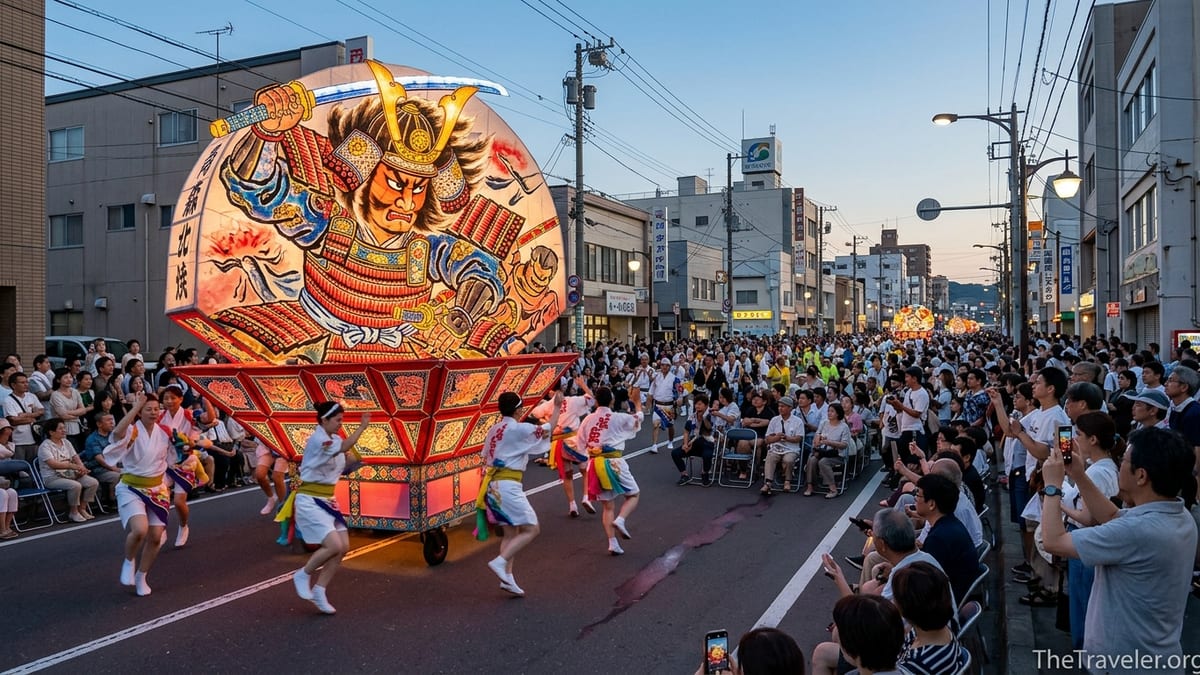
Aomori Nebuta fills central Aomori City from the evening of August 2 through August 7. On the first two nights, both children’s nebuta and a number of full-size floats parade; from around August 4 to 6, the main evening parades feature rows of massive illuminated warrior figures pulled through the streets by teams in traditional coats, accompanied by drummers, flutes and “haneto” dancers who jump in time to the chant. On August 7, a daytime parade showcases prize-winning floats, followed in the evening by a maritime procession and a large fireworks display over Aomori Bay.
Akita Kanto takes place in Akita City typically from August 3 to 6. The iconic images are of performers balancing long bamboo poles, each hung with dozens of lanterns, on their hips, shoulders and foreheads. During the main night events, rows of these “kanto” are carried down the main street near Akita Station. In the daytime, smaller performance and practice sessions are held in parks or public squares, where visitors can often try lifting lighter poles under staff supervision.
Sendai Tanabata officially runs from August 6 to 8, though many visitors arrive on August 5 for a large fireworks display on the banks of the Hirose River that acts as an unofficial opening. During the festival, central Sendai’s covered shopping arcades are transformed with huge clusters of paper streamers and bamboo poles hanging from the ceiling. Unlike Nebuta and Kanto, Tanabata does not center on a single evening parade; instead, the atmosphere is more of a continuous daytime street fair with performances, food stalls and decorations that you wander through at your own pace.
In practical terms, this means that Nebuta and Kanto have specific must-see evening parade windows lasting around two hours, while Sendai Tanabata can be slotted more flexibly into your days. A realistic combined itinerary builds around nighttime in Aomori and Akita, with Sendai serving as either an atmospheric finale or a more relaxed interlude at the end of a very intense festival run.
Reserved Seating, Joining In and How the Parades Work
For Aomori Nebuta, most visitors will either stand along the sidewalks of the parade route or purchase reserved seats along the main roads. Local tourism offices and festival organizers typically sell individual reserved seats in long blocks, often at prices that work out to roughly the equivalent of 3,000 to 5,000 yen per person. These seats are straightforward plastic chairs or simple bleachers set up on the closed carriageway. They are not luxury boxes, but what you are really buying is predictability: a clear, unobstructed view without having to stake out a curb two hours early.
A distinctive feature of Nebuta is that travelers can join as “haneto” dancers, provided they wear the proper costume, which can be rented or purchased locally. This gives you the chance to jump and shout alongside the floats instead of watching passively. Costume sets are sold in local department stores and specialist shops around Aomori Station in the days leading up to the festival, and many visitors report paying a moderate sum for a complete outfit. If you plan to dance, you do not need a reserved seat, but someone in your group might still appreciate having a fixed viewing point for photos.
In Akita Kanto, too, there are paid seating blocks along the main performance street. Prices are usually comparable to or slightly lower than Nebuta seats. Given that the spectacle involves tall poles swaying just above the heads of the performers, having a seat with a front-facing view down the street can make the skill and risk more apparent. During the day, public practice sessions in parks and at Akita Arts Square are often free to watch, and visitors can sometimes queue to try lifting a smaller kanto with guidance, making for memorable photos and a better understanding of the evening performances.
Sendai Tanabata has far fewer formal seating arrangements, since there is no central parade. Instead, your planning decisions revolve around timing. If you want to see the fireworks on the evening of August 5, consider buying reserved riverbank seating, which local agencies and convenience stores within Japan often sell in advance. On festival days, there are occasional stage performances where a few rows of seats are set up, but these are a small part of the overall experience. For most travelers, Sendai Tanabata is a festival to wander, snack and photograph rather than one that demands a ticketed viewing slot.
Train Travel and Building a Realistic Multi-Festival Route
The backbone of a combined festival trip is the Tohoku Shinkansen, which links Tokyo with Shin-Aomori and Sendai. From Shin-Aomori, local trains connect in just a few minutes to Aomori Station near the Nebuta route. Akita is served by the Akita Shinkansen via Morioka and by conventional limited express services from Aomori and other coastal cities. In practical travel time, you can expect around three hours from Tokyo to Aomori by high-speed rail, about two and a half to three hours between Aomori and Akita by conventional trains with a transfer in Hirosaki or other hubs, and roughly two hours from Akita to Sendai by Shinkansen via Omagari or Morioka.
One workable example for early August would be to arrive in Tokyo on August 1, travel up to Aomori on August 2 in time for the first evening parade, spend two nights there, then transfer by train to Akita on August 4 to catch the second or third evening of Kanto. After two nights in Akita, you could ride the Akita Shinkansen down to Sendai on August 6 in time to see Tanabata decorations at their freshest and watch the final nights of the festival. Finally, you can return to Tokyo directly from Sendai on the Tohoku Shinkansen in around an hour and a half.
Travelers concerned about cost often look at JR East rail passes such as the JR East Pass (Tohoku area) or the JR East South Hokkaido Pass, which sometimes offer flexible five or six day travel windows that can be aligned with festival days. These passes can be very good value if you are coming from Tokyo and making multiple long-distance shinkansen journeys within a week. However, they still require you to reserve seats on individual trains, and during festival week, the most popular morning and late-night departures can book out, particularly for large groups.
It is important to think carefully about last trains and late-night movements. For example, some visitors consider staying in Sendai and day-tripping to Aomori for Nebuta, but evening parades typically finish around 9 pm while the last southbound shinkansen from Shin-Aomori toward Sendai generally leaves before then. That means returning all the way to Sendai the same night is usually not realistic. In contrast, hopping between Aomori and nearby Hirosaki or Aomori and Goshogawara after the parade is quite manageable using late-running local services or even rental cars, provided you book in advance.
Handling Accommodation: Booking Strategies and Overflow Cities
Accommodation is where most festival itineraries succeed or fail. In Aomori City, mid-range chains such as Hotel JAL City or JR East’s on-station Metropolitan-branded hotels can sell out almost as soon as they open bookings for Nebuta dates. Business hotels that normally have abundant availability become heavily contested, and booking platforms may show only a handful of rooms remaining at elevated prices. Similar patterns occur in Akita City during Kanto and, to a slightly lesser degree, in central Sendai during Tanabata.
To cope with this, it helps to understand how Japanese hotel booking calendars work. Many national chains, such as Toyoko Inn or Comfort Hotel, release reservations for each night a fixed number of months in advance, sometimes one date at a time around local midnight or mid-morning Japan time. Experienced festival-goers will set alarms and log in the moment a target festival night opens. If you are willing to do the same, you can sometimes secure centrally located, reasonably priced rooms before tour groups and domestic travelers fill them.
A more forgiving strategy is to base yourself in an “overflow” city and commute by train. For Nebuta, people often stay in Hirosaki, Goshogawara or even as far as Hachinohe, all of which have frequent trains into Aomori during the day. For Akita Kanto, Oga Peninsula towns, Kakunodate or even Morioka can serve as bases. During Sendai Tanabata, some visitors base in nearby cities such as Ishinomaki or Fukushima and ride in for the day. In all these cases, you accept an extra hour or more of commuting in exchange for more choice and lower prices.
Be prepared for higher nightly rates and stricter policies. During festival periods, many hotels in central Aomori and Akita impose multi-night minimum stays, non-refundable payment and limited change options. When comparing options, check cancellation policies closely. It can be worth paying slightly more for a room that allows changes or cancellation within a reasonable window in case festival dates shift slightly or your international flights change. At the same time, waiting too long in hopes of a better deal almost always reduces your choices during these peak days.
Dealing With Extreme Demand: Trains, Crowds and On-the-Ground Logistics
During festival evenings, trains and streets in Tohoku can feel as busy as Tokyo rush hour. The key difference is that the infrastructure is more limited. Platforms at smaller stations fill quickly, and unreserved cars on certain limited express services can become standing-room-only. Whenever possible, reserve shinkansen and limited express seats well in advance for the days you know you will be changing cities, such as the morning you leave Aomori for Akita or Akita for Sendai.
At Aomori Nebuta, streets around the station begin closing to traffic well before the parade, and the sidewalks fill steadily from late afternoon. If you have reserved seats, you can arrive closer to parade start time, but plan on at least an hour of margin to navigate crowds. Without seats, it is wise to claim a curb spot 60 to 90 minutes before the parade, especially on peak nights around August 5 and 6. In Akita, the main Kanto performance area near Kanto Odori also becomes very crowded; arriving early gives you flexibility to shift to a section where performers are balancing closer to your position.
Food and drink options are plentiful but come with queues. Temporary stalls line festival routes selling skewered meats, noodles, kakigori shaved ice and local specialties like kiritanpo in Akita or seafood skewers in Aomori. Expect to wait for the most popular stands and consider eating a light meal beforehand. Convenience stores near stations often have their shelves stripped of drinks and snacks in the hours before the parade, so buying water and something small to eat earlier in the day can help you avoid crowds.
Travelers should also think about heat and sudden weather changes. Early August in Tohoku is hot and humid, even compared with the region’s snowy winters. Temperatures commonly climb into the high twenties or low thirties Celsius in the daytime, and standing on packed pavement for several hours can be exhausting. Carry a small towel, handheld fan and water bottle, and consider a light rain jacket or poncho for sudden showers, since events generally proceed even in rain. Comfortable shoes are critical, as you may be on your feet from late afternoon through the end of the parade and the walk back to the station or your hotel.
Combining Other Northern Festivals Along the Route
Once you have committed to being in Tohoku in early August, it is tempting to add additional regional festivals that happen to overlap. The key is to prioritize those that fit naturally along your rail route and do not require unrealistic detours. Within Aomori Prefecture, Hirosaki Neputa runs from around August 1 to 7, featuring fan-shaped illuminated floats parading through the castle town of Hirosaki. Because Hirosaki is directly on the rail line between Aomori and Akita, it makes a convenient stop: you might, for example, travel from Aomori to Hirosaki during the day on August 3, explore Hirosaki Neputa in the evening, then continue to Akita the following morning.
Another option is the Goshogawara Tachineputa Festival, typically held in a similar August window. Its floats are even taller than Aomori’s, towering above the streets of Goshogawara City. Reaching Goshogawara involves a local railway from Aomori, so adding it makes most sense if you are already basing in or passing through Aomori for several days. Because Goshogawara is smaller and has fewer hotels, many visitors stay in Aomori or Hirosaki and treat Tachineputa as an evening side trip.
Further afield, some itineraries try to pair Tohoku’s big three festivals with events like the Nagaoka Fireworks in Niigata Prefecture or the Sansa Odori festival in Morioka, held slightly later in August. While these combinations can be rewarding, the cumulative travel time and the challenge of securing additional hotel nights during peak demand can make the experience feel rushed. For a first-time visitor focused on Tohoku, centering your plan around Aomori Nebuta, Akita Kanto and Sendai Tanabata, with perhaps one smaller Neputa or Tachineputa event added where it geographically fits, is usually more satisfying than trying to tick every possible August festival.
Whatever you add, keep an eye on fatigue. A week of late-night parades, crowded trains and hot days will catch up with even seasoned travelers. Building in one slower day, perhaps in a smaller onsen town such as Nyuto Onsen near Akita or a coastal stop along the Sanriku Coast between Sendai and Morioka, can help you process what you have seen and enjoy the rural landscapes that are such a part of Tohoku’s character.
The Takeaway
Planning a Tohoku summer festival trip is less about checking three names off a list and more about understanding how these events shape life in northern Japan for one intense week each year. Aomori Nebuta’s floats, Akita Kanto’s lanterns and Sendai Tanabata’s streamers are very different in form, but they all share the same ingredients: local volunteers who practice all year, streets that become temporary stages and a sense of community that visitors are invited to share.
By learning the typical dates, booking accommodation as soon as calendars open, reserving key train journeys and being realistic about how much ground you can cover each day, you can experience all three major festivals in a single, coherent route from north to south. Adding carefully chosen side festivals like Hirosaki Neputa or Goshogawara Tachineputa can deepen the experience without derailing your schedule.
Above all, flexibility and patience are vital. Trains will be crowded, parades may be delayed for weather, and your carefully plotted viewing spot might end up behind a tall neighbor. But the reward is a vivid, once-a-year glimpse of a region that many travelers skip, at the moment it is at its most alive: drums echoing down Aomori’s streets, lanterns swaying above Akita’s avenue, and colorful paper wishes fluttering overhead in Sendai’s arcades.
FAQ
Q1. Can I really see Aomori Nebuta, Akita Kanto and Sendai Tanabata in one trip?
Yes, many travelers do this by following the natural order of the festivals from north to south. A common pattern is to attend Aomori Nebuta on August 2 to 4, move to Akita for Kanto around August 4 to 6, then continue to Sendai for Tanabata from August 6 to 8. The schedule is busy but realistic if you reserve trains and hotels well in advance and avoid same-night long-distance transfers after evening parades.
Q2. How far in advance should I book hotels for these festivals?
For central Aomori and Akita during festival nights, it is wise to book as soon as major hotel chains open their calendars, which is often around six to twelve months ahead. Rooms at popular business hotels near Aomori and Akita stations can disappear within days for key festival dates. If you are flexible about staying one or two train stops away, you might find options closer to three to six months out, but leaving it later than that risks having only very expensive or inconvenient properties left.
Q3. Do I need reserved parade seats, or can I watch for free?
You can absolutely watch all three festivals for free from roadside or arcade viewing areas, but reserved seats at Aomori Nebuta and Akita Kanto significantly reduce stress. Paid seats give you a guaranteed view and let you arrive closer to parade time. For Sendai Tanabata, reserved seating is mostly relevant for the separate fireworks event; the main decorations and street stalls are freely accessible and best enjoyed by strolling. If you are traveling with children, older relatives or anyone who cannot stand for long periods, investing in at least one night of reserved seating is strongly recommended.
Q4. Is it better to use a JR rail pass or buy individual tickets?
If you are traveling from Tokyo and making several long shinkansen trips within about a week, a regional JR East rail pass can offer good value, especially if you include side trips such as Hirosaki or Morioka. However, if your only shinkansen rides are Tokyo to Aomori, Akita to Sendai and Sendai back to Tokyo, then the savings may be modest compared with buying individual tickets. In both cases, you still need to reserve seats for the busiest trains in advance, particularly for morning departures on the days you change festival cities.
Q5. What happens if it rains during the festivals?
All three festivals are generally held rain or shine. Aomori Nebuta floats and Akita Kanto lanterns will often still parade in light to moderate rain, though organizers may adjust schedules or shorten routes if weather becomes dangerous. Sendai Tanabata’s paper decorations are somewhat vulnerable to heavy rain, but the main shopping arcades are covered, which offers some protection. Travelers should bring light rain gear and understand that tickets for reserved seats are usually non-refundable even in wet conditions unless an evening is officially canceled.
Q6. Are these festivals suitable for children?
Yes, but planning matters. Children often love the bright lights and drums of Nebuta and the spectacle of Kanto, and Sendai Tanabata in particular is easygoing for families because you can leave and re-enter the festival area at any time. The challenges are late-night finishes, heat and crowds. Booking a nearby hotel, taking afternoon naps and having a clear meeting point in case you get separated can make the experience much smoother for families.
Q7. Can I join the Aomori Nebuta parade as a dancer?
Many visitors join as “haneto” dancers by wearing the proper costume, which can be bought or rented in Aomori City during the festival period. Once you are dressed correctly, you can usually join the parade at designated entry points and dance along behind certain floats. It is a lively, physically demanding experience, so wearing comfortable footwear and staying hydrated is important. You do not need any special dance training, but following the rhythm and watching the people around you will help you blend in.
Q8. What are good base cities if I cannot find rooms in the main festival locations?
If Aomori City is full, look at Hirosaki, Goshogawara or Hachinohe, all connected by rail. When Akita City is booked out, nearby towns like Kakunodate, Oga or even Morioka can serve as alternatives with longer train rides. For Sendai Tanabata, some travelers stay in satellite cities such as Ishinomaki or Fukushima and commute for the day. In each case, check the last train times back to your base before committing to an evening plan so you do not find yourself stranded after the parade.
Q9. How crowded do trains and stations get during festival week?
On key days, shinkansen and limited express trains in Tohoku can be as busy as major holiday periods, especially on morning departures from Tokyo toward Aomori and Akita and evening trains leaving festival cities. Station concourses near parade routes also become congested before and after events. Allow extra time to navigate, travel with manageable luggage and consider avoiding very tight connections between local and high-speed trains. Reserving seats for any longer journeys during this week is strongly advised.
Q10. Is it worth joining an organized tour instead of planning independently?
Organized tours focused on Tohoku’s summer festivals can be appealing if you want someone else to handle hotel bookings, bus transfers and reserved seats. They are especially convenient for travelers who do not speak Japanese or who are nervous about competing for scarce accommodation. The trade-off is less flexibility and often a higher total cost. Independent travelers who are comfortable booking hotels and rail passes several months ahead can absolutely create their own festival itinerary, but they must be proactive and organized to secure the most convenient options.