


Northern Japan has quietly become one of the country’s most compelling touring regions. Operators now package Tohoku and Hokkaido together as a single “Northern Japan” product, selling snow-covered winter festivals, late-blooming cherry blossoms, wild landscapes and deeply traditional rural culture on the same itinerary. For travelers used to Tokyo and Kyoto, this part of Japan feels more remote and more complex to navigate, which is exactly why guided tours have taken off here.
Why Northern Japan Tours Are Different
Most first-time visitors stick to the Tokyo–Hakone–Kyoto “Golden Route.” Northern Japan demands more logistics. Distances are longer, winter is harsher, and many of the best experiences sit in small onsen towns or rural valleys with only a handful of buses each day. This is especially true in inland Tohoku, where reaching places like Nyuto Onsen, Aoni Onsen or the Hakkoda mountains often involves non-English bus timetables, seasonal services and transfers at small local stations.
Hokkaido, by contrast, is better known but just as spread out. Sapporo, Otaru, Asahikawa and Hakodate are linked by rail, but popular winter wildlife and nature areas such as Shiretoko, Abashiri or the Furano–Biei countryside still require careful route planning, and in deep winter many visitors switch to chartered coaches to avoid driving on packed snow and ice. This combination of remoteness and heavy winter weather is one core reason tour companies have built Northern Japan into structured escorted products.
For travelers, this means Northern Japan tours tend to be more focused and more seasonal than itineraries in central Japan. Operators build circuits around winter festivals, cherry blossoms, or summer matsuri, and they often combine Tohoku and Hokkaido in a single northbound arc that might start in Tokyo and finish in Sapporo. That structure affects everything from hotel choices to whether luggage is carried by coach or shipped in advance.
Common Routes Linking Tohoku and Hokkaido
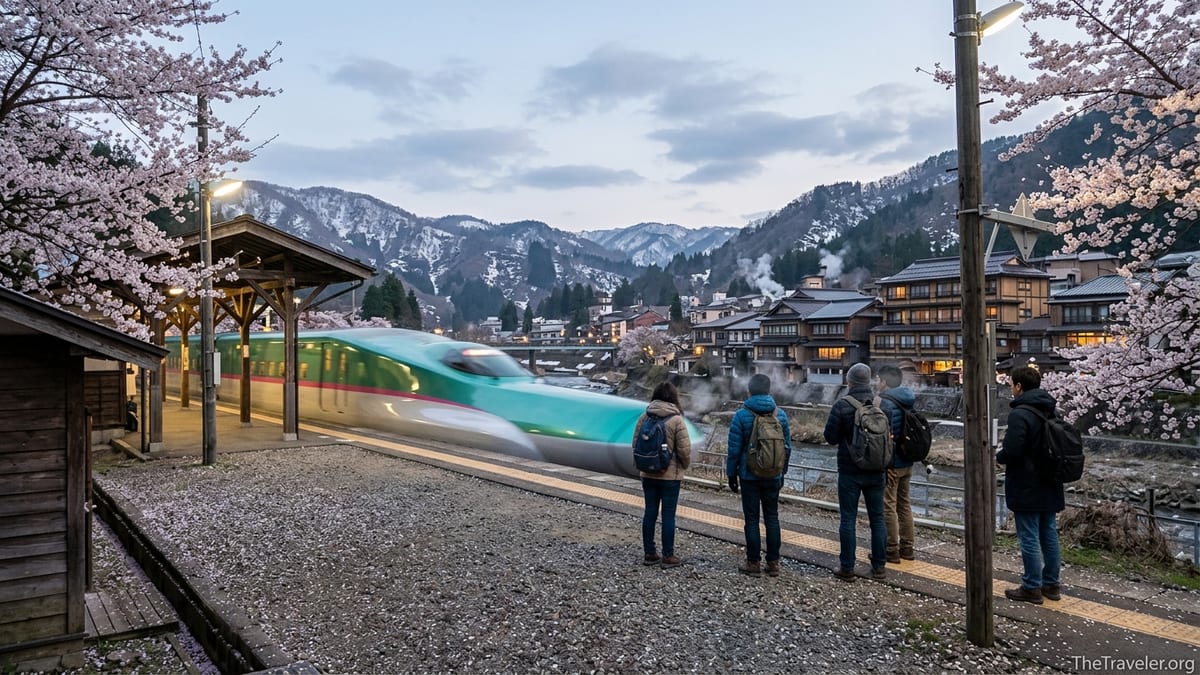
Most combined Tohoku and Hokkaido tours follow the natural spine of the Tohoku Shinkansen before crossing the Tsugaru Strait into southern Hokkaido. A typical escorted circuit might start in Tokyo, then use the bullet train to reach Sendai or Morioka, continue north via Akita or Kakunodate’s preserved samurai streets, stop in Aomori or Hirosaki, then take the undersea Hokkaido Shinkansen tunnel to Hakodate before ending in Sapporo. Many small-group operators mirror this route, adjusting the balance between cities and onsen depending on the theme.
Cherry blossom tours often place a night in Hirosaki or Kakunodate because their castles and samurai districts are famous for late-blooming sakura compared with Tokyo and Kyoto. A recent Northern Japan cherry blossom itinerary from a Hawaii-based escorted operator, for example, combined Sendai, Matsushima Bay, Hirosaki Castle and Hakodate’s Goryokaku Park with onward travel to Sapporo and Otaru in April, timing the trip to catch blossoms as they roll north.
Winter-focused circuits flip the emphasis. Larger escorted tours and some small-group journeys now run “snow country” routes that begin in Tokyo, detour into Tohoku for onsen such as Zao or Nyuto, then head for Hokkaido’s major festivals. A 15-day winter discovery itinerary sold by an international escorted brand currently runs from Tokyo through northern Honshu to Hokkaido, combining Sapporo’s Snow Festival, Asahikawa’s ice sculptures and Otaru’s canal illuminations with smaller regional winter events.
Summer and autumn nature tours often keep the same Tokyo to Sapporo spine but add hikes in national parks such as Towada-Hachimantai or Bandai-Asahi in Tohoku and Daisetsuzan in Hokkaido. In these seasons, some small-group trips loop back to Tokyo instead of finishing in Sapporo, especially if they include central Japan extensions.
Escorted vs Small-Group: How Northern Japan Tours Compare
In Northern Japan, both classic escorted coach tours and smaller group journeys are widely available. Escorted products sold through global brands or regional agencies typically carry 25 to 40 guests on a full-size coach. They tend to prioritize comfort, predictable pacing and broad appeal: think centrally located business hotels in cities such as Sendai, Aomori, Hakodate and Sapporo, plus a couple of nights in large onsen resorts with buffet dinners. A winter tour marketed by a well-known coach operator, for instance, combines Tokyo, Kyoto, Sapporo and Otaru with a group size of roughly 35 guests and a dedicated tour director plus local city guides.
Small-group circuits, on the other hand, usually cap numbers at around 12 to 16 people. Specialist brands that focus exclusively on Japan, along with boutique regional operators, use mid-sized coaches or trains, and sometimes even chartered minibuses to reach towns where parking space is tight. A recent “Quiet Winters” journey from a niche operator advertised a calm, small-group route from Tokyo to Sapporo via samurai towns and snowy valleys, highlighting guesthouses and intimate ryokan that would be impossible to book for a large bus tour.
Price points reflect these differences. Escorted coach tours that include Tohoku and Hokkaido often sit in the mid-market range, with per-day costs that are competitive because hotels and transport are bought in bulk. Small-group circuits cost more per day but add value through distinctive stays, slower pacing and more time with the guide. For example, a 13-day Northern Japan snow tour with under 16 guests will almost always be pricier than a similar-length coach itinerary, but it might include boutique onsen inns, smaller family-run restaurants and experiences such as rural cooking classes or farm visits.
Both formats now commonly market Northern Japan as a combined Tohoku plus Hokkaido package aimed at repeat visitors who have already seen central Japan. The key decision is whether you value the efficiency and lower cost of an escorted coach tour or the intimacy and depth of a small-group journey.
Tour Themes: Culture, Winter, Sakura, Festivals and Nature
Culture-focused circuits in Northern Japan usually emphasize samurai heritage, folk traditions and rural life. These itineraries often include Kakunodate’s well-preserved samurai streets, the former castle town of Hirosaki, and traditional onsen villages such as Naruko in Miyagi or Tsuta Onsen near Lake Towada. Guides might arrange visits to local sake breweries or folk craft workshops, and small-group tours sometimes time departures to coincide with events like Hirosaki’s Chrysanthemum and Autumn Leaves Festival in late October or early November.
Winter tours cluster around signature festivals and snow activities. Sapporo’s Snow Festival, held each February, anchors many itineraries, often combined with Otaru’s Snow Light Path and the Asahikawa Winter Festival. Operators such as All Japan Tours and others package these Hokkaido events with winter illuminations or snow lantern festivals in Tohoku. A typical 15 to 21 day winter festival itinerary might combine the Sapporo Snow Festival, the drift ice season near Abashiri, snow monkeys in Nagano and snow lantern events at Hirosaki Castle, with several overnight stays at onsen ryokan to thaw out between excursions.
Cherry-blossom tours in Northern Japan have surged as travelers look beyond overcrowded spots in Tokyo and Kyoto. Because the sakura front reaches Tohoku and Hokkaido several weeks later, tours often run from mid April into early May and chase late blossoms from Sendai and Kitakami up to Hirosaki, Hakodate and Sapporo. Sample itineraries in 2026 show small-group and escorted trips that start in Tokyo, then ride the shinkansen to northern Tohoku for peak bloom around Hirosaki Castle before continuing to Hakodate’s star-shaped Goryokaku Park and Sapporo’s Maruyama Park when petals are still falling farther south.
Summer festival trips focus heavily on Tohoku. The Aomori Nebuta Matsuri, Akita Kanto Festival and Sendai Tanabata in early August are often packaged together on short, intense circuits that use chartered coaches to move between cities at night. Some operators then extend these tours to Hokkaido for cooler weather and nature walks. Pure nature tours, meanwhile, may ignore festivals completely and concentrate on hiking in national parks, visits to remote lakes such as Towada and Shikotsu, birdwatching on the Hokkaido east coast, or wildflower seasons in Furano and Biei. These trips often travel in very small groups and use a mix of local trains, private vehicles and guided walks.
Hotels, Ryokan and Meals: What to Expect
Accommodation standards across Northern Japan tours vary by style rather than geography. Escorted coach tours typically use three and four star city hotels near major stations in Sendai, Morioka, Aomori, Hakodate and Sapporo. Rooms tend to be compact but well equipped, similar to national chains such as Dormy Inn or Tokyu brands, with Western beds, private bathrooms, and often an on-site public bath. On at least a couple of nights, especially in snow country, these tours include larger onsen resort hotels with buffet dinners and in-house entertainment.
Small-group journeys have more flexibility. Many feature historic ryokan or smaller onsen inns in places like Nyuto, Zao, or the rural outskirts of Aomori and Akita. Rooms may be traditional tatami with futons and shared baths, and dinner is usually a multi-course kaiseki meal sourced from local produce. A boutique winter tour in Hokkaido, for instance, might include a heritage ryokan near Sounkyo Gorge followed by a family-run pension in Furano, with home-style dinners included and lunches left free in local towns.
Meals are another key distinction. Large escorted tours often include breakfast daily and several group dinners, particularly on evenings when the group is staying in isolated onsen resorts or when attendance at a festival might make restaurants busy. Some Northern Japan festival itineraries bundle special dinners, such as regional kaiseki in Aomori during Nebuta season or crab-focused buffets in Sapporo in winter. Small-group tours tend to include fewer dinners, encouraging guests to explore izakaya and smaller local restaurants with the guide’s help, which many repeat visitors appreciate.
In both formats, dietary flexibility is improving but still limited in more rural areas. Vegetarian and gluten-free options are easiest to manage on small-group and private itineraries where operators can brief inns and restaurants far in advance. Travelers with specific requirements should ask clearly during the booking stage, particularly for remote onsen stays where set menus are the norm.
Transport: Coach vs Rail and When Guided Tours Help Most
Coach and rail are used in different ways in Northern Japan. Classic escorted tours rely heavily on private coaches, especially once they leave Tokyo. The bus carries guests and luggage from city to city, stopping at viewpoints, roadside michi-no-eki markets and smaller towns where public transport would require multiple connections. This model is particularly valuable in winter, when icy roads and reduced bus frequencies can make independent travel stressful. For example, accessing snow festivals in smaller Hokkaido towns or Tohoku’s mountain onsen becomes much simpler when a private coach handles door-to-door transfers.
Small-group tours tend to combine long-distance trains with targeted coach or minibus segments. It is common to use the Tohoku Shinkansen between Tokyo, Sendai, Morioka and Shin-Aomori, then switch to chartered vans or local buses to reach rural hot spring towns or trailheads. Hokkaido segments may use limited express trains between Hakodate, Sapporo and Asahikawa, with private vehicles only where necessary. This rail-first approach makes sense when groups are small enough to move quickly through stations and enjoy the train experience as part of the trip.
Guided tours become particularly useful in rural Tohoku, where buses can be infrequent or seasonal. Recent traveler reports highlight how reaching winter destinations such as Sukayu Onsen in the Hakkoda Mountains or Lake Towada can be challenging now that some winter bus routes have been reduced or suspended, leaving rental cars or prearranged transfers as the only realistic options. In heavy snow, mountain roads can close temporarily, and having a tour operator monitoring conditions and reorganizing transport can prevent disruptions that would be difficult to handle alone.
Even outside winter, guided support simplifies complex days. A summer-festival circuit linking Aomori’s Nebuta, Akita’s Kanto and Sendai’s Tanabata in one week requires tight timing, late-night departures and reserved seating; tour operators charter coaches or reserve blocks of train seats and secure hotel allotments that would otherwise sell out months in advance. In these cases, both escorted and small-group tours remove layers of logistical risk for travelers who do not read Japanese or want to avoid high-season stress.
Private and Tailor-Made Itineraries in Northern Japan
For travelers who want control over pacing and hotel style but still need logistical help, private and tailor-made itineraries are increasingly popular. Major bespoke operators and Japan specialists now offer sample Northern Japan trips that can be customized to include both Tohoku and Hokkaido, typically over 12 to 18 days. These itineraries often begin in Tokyo, spend several nights working north through onsen towns and castle cities, then cross to Hokkaido for wildlife and wide-open landscapes before ending in Sapporo.
Private itineraries offer the greatest flexibility with routing. A family might, for example, request a focus on cherry blossoms and hot springs, building a late April journey that stays in Kakunodate for samurai-district blossoms, then moves to Hirosaki, crosses to Hakodate for Goryokaku, and finishes in Sapporo and Otaru, with private guides for selected days and free days elsewhere. Another client might prioritize winter photography and ask for a January trip that combines Zao’s snow monsters, the Oirase Gorge in snow, and sea eagles or red-crowned cranes in eastern Hokkaido, using private transfers where public transport is limited.
Costs for private Northern Japan itineraries vary widely but will generally exceed small-group tours on a per-person basis, particularly if private drivers are used for rural transfers. However, private trips often use regional rail passes where efficient, combine them with point-to-point tickets on the Hokkaido Shinkansen, and reserve drivers only on days when they are truly needed. This can keep budgets under better control while still removing the most challenging connections.
Whether a private itinerary finishes in Tokyo or Sapporo depends on international flights and onward travel. Many bespoke tours now encourage open-jaw tickets into Tokyo and out of Sapporo, allowing travelers to end the trip with a few free days in a compact, food-focused city that contrasts nicely with rural Tohoku. Others loop back to Tokyo for shopping or to connect with side trips to central or western Japan.
The Takeaway
Northern Japan rewards travelers willing to go beyond the usual sights, but it also asks more of them in terms of weather, distances and logistics. That is why escorted coach tours, small-group rail-and-coach circuits and private itineraries have all found their place here. Escorted tours suit travelers who value simplicity, predictable comfort and clear pricing, while small-group journeys appeal to those who want more character in their hotels, more time in smaller towns and closer contact with their guide.
The right choice often comes down to season and travel style. In deep winter, when buses are limited and snowstorms can disrupt schedules, a guided tour that handles transfers to onsen towns or festival sites can be worth its cost in peace of mind. During cherry-blossom or summer-festival seasons, the same is true for securing good hotel rooms and reserved seats when demand spikes. In shoulder seasons, independent travel is more manageable, but guided itineraries still offer curated routes and cultural insights that are difficult to replicate alone.
For most visitors looking at Northern Japan for the first or second time, a combined Tohoku plus Hokkaido tour that starts in Tokyo and ends in Sapporo delivers a sense of journey that few other regions can match. Whether you choose a big-bus escorted trip, a 14-guest small-group circuit, or a bespoke private itinerary, the key is to be realistic about how much ground you can cover and where a guide’s expertise will make the difference between a complex trip and a genuinely memorable one.
FAQ
Q1. When is the best time of year to book a Northern Japan tour?
The best time depends on your priorities. For snow festivals and winter scenery, late January to mid February is ideal. For cherry blossoms in Tohoku and Hokkaido, mid April to early May usually works well. Summer festivals cluster around early August, while September and October are popular for cooler weather and autumn colors.
Q2. Do most Northern Japan tours start in Tokyo and end in Sapporo?
Many combined Tohoku and Hokkaido itineraries start in Tokyo, follow the shinkansen north through Tohoku, then cross to Hokkaido and finish in Sapporo. Some shorter trips loop back to Tokyo or end in Hakodate instead, particularly if they focus on either Tohoku or southern Hokkaido rather than both regions.
Q3. How big are the groups on typical Northern Japan escorted and small-group tours?
Classic escorted coach tours often carry about 25 to 40 guests on a full-size bus. Small-group circuits usually limit numbers to around 12 to 16 people, which allows for more flexible hotel choices and easier use of rail and local transport, especially in smaller towns.
Q4. What level of accommodation can I expect in Tohoku and Hokkaido?
Most tours use three and four star hotels in cities such as Sendai, Aomori, Hakodate and Sapporo, comparable to solid business hotels in other parts of Japan. Many itineraries also include stays at onsen ryokan or resort hotels, where rooms may be traditional tatami style and dinners are served on site. Small-group and private tours are more likely to feature boutique inns.
Q5. Are meals usually included on Northern Japan tours?
Breakfast is almost always included. Escorted coach tours often bundle several group dinners, particularly in onsen resorts or during festival evenings. Small-group tours tend to include fewer dinners to encourage independent dining with guidance from the tour leader. Lunches are commonly left open so travelers can choose restaurants around sightseeing sites.
Q6. Is it difficult to travel independently in rural Tohoku and Hokkaido?
Mainline train routes are straightforward, but reaching smaller onsen villages, national parks or winter festival sites can be challenging due to infrequent buses, seasonal schedules and winter road conditions. Guided tours or private transfers are especially helpful for places such as remote hot springs, mountain regions or multiple festivals in a short period.
Q7. Do Northern Japan tours use rail passes, or are tickets included?
Escorted and small-group tours typically include all necessary train tickets within the package price rather than requiring a separate rail pass. Private and tailor-made itineraries sometimes build regional rail passes into the design when that offers good value, combining them with point-to-point tickets and private transfers on more remote segments.
Q8. Can I see both Tohoku summer festivals and Hokkaido in one trip?
Yes, several operators offer August itineraries that cover major Tohoku festivals such as Aomori’s Nebuta, Akita’s Kanto and Sendai’s Tanabata, then continue to Hokkaido for cooler temperatures and nature. These tours often rely on chartered coaches and carefully timed rail journeys because festival dates and hotel availability are very tight.
Q9. Are guided tours better than self-drive in winter?
For many travelers, a guided tour is safer and less stressful than self-driving in winter. Northern Japan often has heavy snow, icy roads and occasional closures, and some public bus routes operate on reduced schedules. Guided tours provide professional drivers, local knowledge and backup plans if weather disrupts the itinerary.
Q10. How far in advance should I book a Northern Japan tour?
For peak seasons such as winter festivals, cherry blossoms and August summer festivals, booking six to twelve months in advance is sensible, especially for small-group or boutique itineraries with limited space. Outside peak dates, three to six months is often enough, but popular departures and unique accommodations can still fill early.