


Shodoshima is the island that many Setouchi travelers never quite reach. Famous neighbors like Naoshima and Teshima draw the contemporary art crowd, but Shodoshima quietly combines tidal sandbars, olive groves, dramatic gorges, historic soy sauce breweries and coastal rice terraces into one substantial island holiday. This is the island to visit when you want a base for scenic drives, ropeway rides, ferries and relaxed resort stays rather than a quick art-day hop.
Why Shodoshima Belongs On Your Setouchi Itinerary
Shodoshima sits in the Seto Inland Sea between Honshu and Shikoku and is one of the largest islands in the region. Its size is part of its appeal. Where Naoshima feels like a compact art park that many visitors cycle in a single day, Shodoshima is a full-scale island landscape, with mountain ridges, small fishing ports and interior valleys. It rewards travelers willing to slow down and treat it as a destination in its own right instead of a quick side trip from Takamatsu.
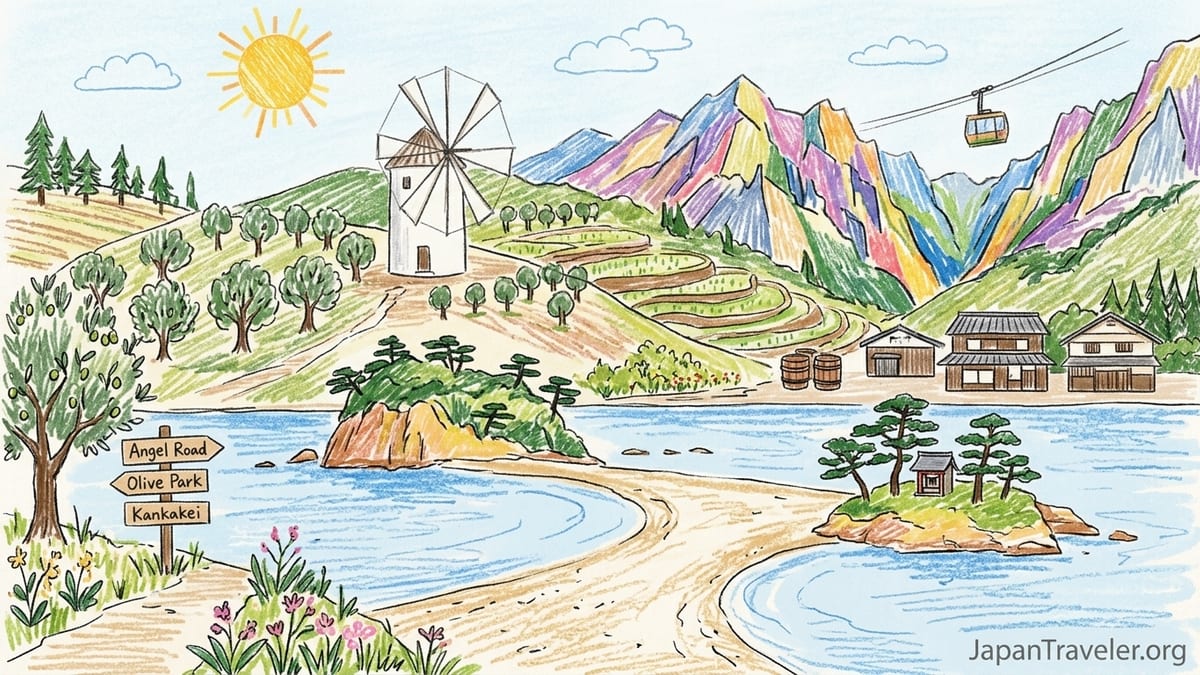
The island’s best known sights are varied enough to fill several days. Angel Road, a 500 meter sandbar that appears at low tide, is the postcard view and the key to planning each day. Shodoshima Olive Park brings a Mediterranean touch with whitewashed buildings and olive groves overlooking the sea. Kankakei Gorge and its ropeway deliver some of the Seto Inland Sea’s most dramatic mountain views, particularly in November when autumn foliage peaks. Add Nakayama Senmaida rice terraces, the nostalgic Twenty-Four Eyes Movie Village, traditional soy sauce breweries and quiet coastal viewpoints and Shodoshima becomes a far more rounded holiday base than its art-island neighbors.
At the same time, its scale means logistics matter. Public buses are useful along the main coastal roads but do not reach every valley on convenient schedules, and walking between major attractions would consume most of a day. Travelers who enjoyed cycling Naoshima loop roads will quickly realize that Shodoshima requires either careful bus planning, a rental car, an e-bike with realistic distances in mind or a private tour for an efficient visit.
This guide focuses on Angel Road, Olive Park, Kankakei, rice terraces, film sets and soy sauce towns, while also comparing ferry gateways, local transport and accommodation. The goal is to help you build a tide-based plan that feels relaxed on the ground but still fits around real-world ferry times and ropeway schedules.
Angel Road: Planning Your Day Around the Tide
Angel Road is the place where most visitors first understand that Shodoshima must be planned around the sea. This natural sandbar connects the main island to several small islets and appears only around low tide, usually twice each day. When the water recedes, a pale strip of sand curves out into the Seto Inland Sea, and locals say that couples who walk it hand-in-hand will have their wishes granted. When the tide rises, the path disappears back under the water and the islands become separate once again.
Because the sandbar is truly tidal rather than a static beach, you cannot simply decide to “do Angel Road after breakfast” without checking the numbers. Tide times are posted locally and can be confirmed on tide-timetable websites or through tourist information, which will list approximate windows when the sandbar is safely exposed. As a rough rule, many visitors aim for the period from about one hour before the day’s low tide to about one hour after, which allows for a relaxed walk, photos and time to visit nearby viewpoints without feeling rushed.
In practical terms this means you build your island day around Angel Road rather than squeeze it in. If low tide falls early in the morning, you might check into a hotel near Tonosho or the Angel Road approach the night before, then walk the sandbar at sunrise before catching a mid-morning bus or rental car to Kankakei Gorge. If low tide is mid-afternoon, you might spend the morning at Olive Park and Nakayama Senmaida, then time your return so that you reach Angel Road an hour before the tide turns. In poor weather or strong winds the sandbar may feel less romantic, so it is worth keeping a flexible mindset and a backup café or onsen plan nearby.
The Angel Road area also serves as a gentle introduction to the island. From slightly elevated vantage points near the small shrine and viewing platform above the sandbar, you look back toward Tonosho Port, the clustered houses of the town and the wider Seto Inland Sea dotted with small green islands. Even if you have already visited Naoshima or Teshima, the scene here feels more natural and less curated. Beachfront hotels and pensions line the shore but they remain low-rise and understated, which helps preserve the mood of walking out into the sea on a strip of sand that appears and disappears each day.
Shodoshima Olive Park: White Windmill, Broomsticks and Local Oils
Shodoshima Olive Park sits on a hillside a short ride from Tonosho, overlooking a gentle inlet of the Seto Inland Sea. Olives were first successfully cultivated on the island in the early twentieth century, and today the park functions both as a working grove and as a visitor-friendly symbol of Shodoshima’s Mediterranean side. Entry to the park grounds is free, which makes it an easy half-day stop even for budget travelers who have already spent on ferries and ropeways.
The most photographed spot is the Greek-style white windmill set among the olive trees, facing the sea. On sunny afternoons you will see visitors lining up to take pictures with the windmill’s arms behind them and the water beyond, often holding a prop broomstick borrowed from the park. The Olive Memorial Hall lends these simple brooms at no charge, and the tradition of leaping with a broomstick against the backdrop of the windmill took off after the live-action adaptation of the animated film “Kiki’s Delivery Service” used Shodoshima as a filming location. The result is a steady stream of candid-looking mid-air shots as people attempt their best witch-in-training poses.
Beyond the photos, Olive Park is a genuinely pleasant place to slow down between more demanding sightseeing. Paths wind through rows of olive trees and herb gardens, there are benches with views down to the sea, and a small onsen facility and café operate nearby. Inside the shop, you can sample locally produced extra-virgin olive oil, olive chocolate, skin-care products and condiments that appear on restaurant menus across the island. For example, bottles of Shodoshima olive oil in the 200 to 300 milliliter range often sit in the 1,500 to 3,000 yen bracket, depending on blend and harvest, while small jars of olive-based tapenades and dressings offer an easier-to-carry alternative for travelers finishing longer Japan trips.
Transportation-wise, Olive Park is reachable by bus from Tonosho and Ikeda, and many rental-car itineraries link Angel Road, Olive Park and Kankakei into a scenic loop. Cycling from Tonosho is possible for confident riders, but you should factor in hills and summer heat. Travelers coming from Naoshima or Teshima often make Olive Park their first Shodoshima stop after dropping luggage at a Tonosho hotel, as it gives a soft landing into the island’s slower rhythms before heading into the mountains.
Kankakei Gorge and Ropeway: Views, Fares and Hiking Choices
Kankakei Gorge rises in the center of Shodoshima and is widely regarded as one of Japan’s more beautiful gorges, especially in autumn. Sheer rock walls and twisted pines frame views over the blue Seto Inland Sea, and from the upper ropeway station on a clear day you can pick out distant islands and even the bridges linking Honshu and Shikoku. Reaching those views, however, requires a choice between taking the Kankakei Ropeway or hiking one of the mountain trails.
The ropeway connects the lower and upper stations in about five minutes. As of the latest published tariffs, a standard adult round trip during the regular period is listed at 2,340 yen, with a higher seasonal fare of 2,700 yen for adults during the November autumn foliage season, when demand peaks and extended operating hours may apply. Children’s tickets are lower, typically around half the adult price. Fares are subject to periodic revision, so you should confirm exact prices and first/last car times close to your travel dates, but these figures give a realistic sense of the budget you should set aside.
For many visitors, especially those on a one day schedule, the ropeway is the most efficient use of time. Buses or rental cars bring you to the lower station, you ride up to the observation decks, walk the short trails near the summit and then return the same way, often fitting Angel Road and either Olive Park or a short soy sauce town visit into the same day. The ropeway cabins have large windows and in autumn you drift past brilliant red and yellow foliage that would take hours to climb on foot. Families with younger children and older travelers generally appreciate the reduced strain.
Hiking, by contrast, requires more planning and fitness but offers a quieter experience. There are established walking trails that link the lower and upper ropeway stations and in some cases continue down toward the coast. A full up-and-down hike can take several hours and involves steep sections and uneven surfaces. To make this work around ropeway schedules and bus timetables, some travelers ride up by ropeway and then hike down, or hike one way and ride the other. This hybrid approach still benefits from the ropeway’s elevated views while allowing you to spend more time inside the forested gorge. Regardless of the option chosen, carrying water and checking weather conditions is important, since the exposed sections near the summit can feel harsh in wind or intense sun.
Nakayama Senmaida, Movie Village and Soy Sauce Streets
Beyond its obvious top sights, Shodoshima’s character lies in its working landscapes and preserved streets. Nakayama Senmaida, a series of terraced rice fields stepping up a valley slope, showcases traditional agriculture on land that might otherwise seem too steep to farm. In planting and harvest seasons the terraces shimmer with water or fresh green, and even in winter the stone walls and curves of the paddies create a photogenic pattern. There is a small shrine, village houses scattered along the hillside and a sense that life here still revolves around the cycles of rice rather than the tourist timetable.
On the island’s southern side, the Twenty-Four Eyes Movie Village recreates and preserves the setting of the 1954 film “Twenty-Four Eyes,” which itself depicted school life on Shodoshima in the pre and post war era. Here you walk through wooden school buildings, a small fishing hamlet façade and period-style shops, all facing a quiet bay. Visitors with an interest in Japanese film or nostalgia for Showa-era coastal towns may choose to spend several hours here, though those on tight schedules sometimes prioritize Angel Road and Kankakei instead. Combination tickets and discounts can occasionally be found through local tourism campaigns, so it is worth checking up to date offers at the time of your trip.
The island is also a long standing center for soy sauce production. In districts such as Shodoshima’s soy sauce town around Hishio-no-Sato, cedar-wood breweries line narrow streets, their darkened walls and stacked wooden barrels carrying the deep smell of fermenting soy. Several breweries open their doors to visitors for self-guided walks or brief tours, and tasting counters allow you to compare raw sauces and products blended with olive oil or local citrus. The Marukin Soy Sauce Museum introduces the brewing process through exhibits, tools and buildings that once anchored a major producer, and there is a shop selling bottled sauces, sweets made with soy and simple condiments that travel well as gifts.
Even without formal tours, simply walking these streets offers another angle on Shodoshima beyond Angel Road romance or ropeway views. It also provides some of the island’s most atmospheric photography opportunities, particularly in the soft light of late afternoon when the wooden walls and tiled roofs catch a warm glow. Travelers with rental cars often pair a morning at Kankakei with an afternoon in soy sauce town, finishing with dinner at a small restaurant that uses Shodoshima soy in its dishes.
Ferries to Shodoshima: Takamatsu, Okayama Side and Teshima Links
Reaching Shodoshima is part of the experience, and your choice of ferry route will shape the rest of your Setouchi itinerary. The most common gateway is Takamatsu on Shikoku, a city well connected to Okayama and the rest of Honshu by the JR Marine Liner rapid train across the Seto Ohashi Bridge. From Takamatsu Port, conventional car ferries and high speed boats run to several Shodoshima ports, notably Tonosho, which is best placed for Angel Road and many hotels. As of recent timetables, the standard one way adult fare from Takamatsu to Tonosho on a regular ferry is typically in the 1,300 to 1,500 yen range, with journey times around one hour. Fast boats are slightly more expensive but shave some minutes off the crossing.
From the Okayama side, you have two main options. One is to travel by local train from Okayama Station to Uno and then continue by ferry via Teshima to reach Tonosho on Shodoshima. This route is particularly interesting for travelers who want to combine Naoshima, Teshima and Shodoshima in one loop, since ferry operators link these islands and allow same day transfers when schedules align. Recent information indicates that the Uno to Tonosho route, stopping at Ieura and Karato ports on Teshima, takes around 60 to 90 minutes and costs roughly 1,200 to 1,400 yen each way for adults, depending on the specific sailing and vessel type.
The other Okayama side option is to use ferries from Shin Okayama Port on the mainland to Tonosho, which are useful for those driving rental cars from Okayama or further west. Operators such as Ryobi Shodoshima Ferry publish detailed timetables with several round trips per day, and car ferries allow vehicles onto the island, simplifying access to inland areas. While exact passenger and vehicle fares change periodically and can depend on engine size and season, you can expect a standard adult foot-passenger ticket to be in a similar bracket to the Takamatsu services, with car charges on top that often fall in the several thousand yen range per vehicle each way.
For travelers coming from Kobe or Himeji, longer distance ferries also serve Shodoshima’s northern Fukuda Port, which can be useful if you are approaching from Kansai without transiting Takamatsu or Okayama. Be aware, however, that Fukuda is some distance from Tonosho and Angel Road, so you will need to factor in bus or car time after arrival. As always with island transport, it is important to confirm up to date schedules and seasonal variations, especially outside peak holiday periods when some sailings may reduce in frequency or require earlier departures than you might expect.
Getting Around Shodoshima: Buses, Rental Cars, E Bikes and Tours
Shodoshima’s size is precisely what sets it apart from Naoshima, but it also means that walking between major sights is rarely practical. From Tonosho Port to Kankakei lower station, for example, it is roughly a dozen kilometers by road. Trying to cover Angel Road, Olive Park and the soy sauce district on foot in a single day would turn your visit into a long endurance walk along traffic routes without leaving much time for actually enjoying the destinations.
Public buses do connect the main coastal towns, Olive Park, the base of Kankakei and some interior villages. Fares are typically a few hundred yen for shorter hops and reach into the 500 to 700 yen range for longer cross island stretches. The downside is that buses may only run once or twice per hour on key routes and less frequently on branch lines, especially later in the afternoon. This means you should download or pick up a current bus map and timetable as soon as you arrive, then structure your day clearly. For example, you might take a morning bus from Tonosho to Kankakei, ride the ropeway, return by bus to Olive Park and finish at Angel Road timed with the tide.
Rental cars provide the most flexibility, particularly for travelers who want to see the Nakayama rice terraces, remote viewpoints and soy sauce districts in a single day. Daily rental rates for small compact cars in Japan often start in the 7,000 to 9,000 yen bracket before fuel, insurance upgrades and any seasonal surcharges, and Shodoshima is no exception. Local agencies operate near Tonosho Port and other key points, and advance reservations are highly recommended in busy periods such as Golden Week or the November foliage season. Driving is on the left, roads are generally well maintained, and traffic is light once you leave the main port areas.
For those who prefer not to drive, e-bike rentals are a popular compromise, especially for visitors used to cycling Naoshima. The crucial difference is scale. Distances that feel manageable on Naoshima’s relatively flat loops can become demanding on Shodoshima’s hillier, longer roads, even with electric assist. An e-bike works best if you focus on one area, for example a loop from Tonosho that takes in Angel Road, nearby beaches and a few coastal viewpoints, or a route in the Olive Park and southern coast area. Attempting to pedal from Tonosho to Kankakei and back in a single day, while still sightseeing, would stretch many riders.
Private guided day tours, whether by minivan, taxi or chartered car with driver, are another option. Prices vary with duration and language requirements but often range in the tens of thousands of yen for a full day for the vehicle, which becomes reasonable for small groups dividing the cost. These tours can be customized to hit Angel Road at low tide, fit in the ropeway, plus a soy sauce brewery visit and photo stops, without the group having to track bus timetables. For first time visitors or families who prefer to minimize logistical stress, this can be a worthwhile investment.
Where to Stay: Tonosho, Coastal Resorts and Quiet Inns
Because of the need to time Angel Road with the tides, staying overnight on Shodoshima often makes more sense than treating it as a day trip. Tonosho, the main port town on the island’s western side, is the most convenient base for many travelers. Hotels near the port allow easy arrivals from Takamatsu or Uno even on later ferries, and from there Angel Road is just a short bus ride or even a walk, depending on your exact location. Midrange Western style hotels in Tonosho, some with onsen baths facing the sea, often price standard double or twin rooms in the ballpark of 12,000 to 20,000 yen per night including breakfast, depending on season and room type.
Closer to Angel Road itself, you will find beachfront resorts and smaller pensions that trade on direct views over the tidal sandbar and surrounding islets. Couples often choose these properties for the chance to watch the sandbar emerge at dawn or bathe in open air baths while the tide recedes. Prices vary widely, from simple guesthouses with shared facilities in the under 10,000 yen per person range to more elaborate ryokan style stays with dinner included that can exceed 25,000 yen per person in peak seasons. The convenience of walking down to Angel Road just before low tide, without needing a bus, is a strong advantage for sunrise or sunset visits.
Elsewhere on the island, quieter inns and small family run minshuku line the coasts and interior valleys. Staying near the soy sauce town or closer to Nakayama Senmaida puts you in touch with everyday island rhythms, though you will need either a rental car or very careful bus planning to reach Angel Road and the ferries. Some of these smaller accommodations operate with limited English but make up for it with home cooked meals featuring local olives, seafood and Shodoshima soy products. For photographers and independent travelers who do not mind basic comfort in exchange for early morning access to terraces or fishing harbors, these stays can be rewarding.
When budgeting, remember to factor transport between where you sleep and where you arrive or depart. A taxi from a coastal inn back to Tonosho Port, for example, might easily cost several thousand yen depending on distance and time of day. By contrast, staying near Tonosho or Angel Road tends to keep these end-of-journey costs down, since you can often walk to the port or rely on short, inexpensive bus hops. If you are combining Shodoshima with Naoshima and Teshima, some travelers choose to base themselves two nights in Takamatsu and day trip to the islands. While possible, this approach sacrifices the quiet evenings and sunrise moments that make an overnight on Shodoshima special.
Suggested One Day and Two Day Shodoshima Itineraries
For travelers short on time, a one day visit to Shodoshima is still worthwhile if planned carefully. A realistic one day loop from Takamatsu might involve catching an early morning ferry to Tonosho, taking a bus or taxi straight to Kankakei Gorge, riding the ropeway and walking the summit paths before descending by midday. From there you could continue by bus or rental car to Olive Park for lunch and a broomstick photo, then time your return to Angel Road for a mid afternoon low tide walk before boarding an evening ferry back to Takamatsu. This plan assumes you have studied tide and ropeway schedules in advance and are comfortable moving briskly.
A two day stay allows the island to breathe. One common pattern is to arrive on Shodoshima around lunchtime on day one, check into a hotel in Tonosho or near Angel Road, and spend the afternoon exploring the tidal sandbar, the nearby beach and viewpoints at a relaxed pace. Evening can be devoted to a seaside onsen or local seafood dinner. On day two, you leave luggage at the hotel, head into the interior for Kankakei and perhaps a short hike, then descend toward the soy sauce town or Twenty-Four Eyes Movie Village before returning to the port for an afternoon or early evening ferry.
Travelers particularly interested in rural landscapes and photography might reverse priorities. Day one could focus on Nakayama Senmaida and farming villages, arriving at Angel Road only for a sunset low tide if the numbers align. Day two might then concentrate on Olive Park and Kankakei before departure. In each case, the consistent pattern is to treat Angel Road as an anchor at either the start or end of the day, with other attractions flexing around it. Attempting to hit every major sight in a single day tends to feel rushed and vulnerable to small delays in buses or ropeway queues, which is why at least one overnight is recommended.
The attractions that most strongly justify staying on the island rather than day tripping are those tied to specific light and tide conditions. Angel Road at dawn or dusk, Nakayama’s terraces in sunrise mist or evening glow, and Kankakei’s summit views when the air is especially clear all benefit from being able to adjust within a wider window rather than arriving on a fixed mid day ferry. Evening dinners featuring local olives, soy condiments and Seto Inland Sea sashimi also feel more relaxed when you know that your bed is a short stroll away rather than across a body of water.
The Takeaway
Shodoshima is not simply Naoshima’s larger neighbor. It is a full scale island with its own rhythms, where the shape of your day is set by tide charts rather than museum time slots. Angel Road’s appearing and disappearing sandbar makes this obvious the moment you arrive, and from there the island invites you into olive groves, mountain gorges, rice terraces and wooden brewery streets that collectively tell a wider Setouchi story.
In terms of practical planning, the best overall transport choice for most visitors is to combine a ferry from Takamatsu or Uno with either a rental car or carefully timed bus use on the island. A representative two day, one night excursion for a couple might involve return ferries in the 5,000 to 6,000 yen total range for two adults, a midrange Tonosho or Angel Road stay of around 18,000 to 30,000 yen for a double room with breakfast, ropeway tickets of roughly 2,340 to 2,700 yen per adult in season, and additional bus or occasional taxi costs adding a few thousand yen more. Meals, souvenirs such as Shodoshima olive oil or soy sauce, and any optional tours would sit on top of that base.
For couples, a hotel or ryokan within walking distance of Angel Road is ideal, offering tidal sandbar walks at quiet hours and easy access to sunsets and onsen facilities. Families may prefer a slightly larger coastal resort near Tonosho, with comfortable Western style rooms, simpler access to buses and food options suitable for children. Photographers often gravitate toward smaller inns closer to Nakayama Senmaida, the soy sauce town or less developed coasts, accepting some extra travel time in exchange for dawn and dusk shooting conditions. Independent travelers and those connecting multiple islands may find that a practical compromise is a well located business style hotel near Tonosho Port, keeping onwards ferries straightforward while still being one short bus ride from Angel Road.
Whichever base you choose, Shodoshima rewards travelers who accept that the island cannot be fully walked in a day and instead embrace a slower, tide-shaped itinerary. Use Angel Road as your timekeeper, let Olive Park and Kankakei provide the headline views, slip into the soy scented side streets and then leave space for the unexpected, whether that is a small roadside café, a distant view of ferries threading between islands or a sudden break in the clouds over the Seto Inland Sea.
FAQ
Q1. How do I time my visit to Angel Road with the tides?
Check local tide tables for Tonosho or Shodoshima and aim to arrive about one hour before the day’s low tide. The sandbar is usually walkable from roughly one hour before to one hour after low tide, although exact conditions vary with weather and season.
Q2. Is Shodoshima possible as a day trip from Takamatsu?
Yes, but it is a long day and you will need an early ferry and a clear plan. Most one day visitors focus on Angel Road, Kankakei Ropeway and possibly Olive Park, using buses or a rental car. Staying overnight offers a more relaxed experience and better timing for tides and light.
Q3. How much does the Kankakei Ropeway cost?
Recent published tariffs list an adult round trip fare of 2,340 yen in the regular season and 2,700 yen in November during the peak autumn foliage period, with children’s fares lower. Prices can change, so confirm the latest information before you travel.
Q4. Which port is best for arriving on Shodoshima?
Tonosho Port is generally the most convenient for first time visitors, especially if you want easy access to Angel Road, buses and a range of accommodation. Ferries from Takamatsu and from the Okayama side via Uno or Shin Okayama connect directly to Tonosho.
Q5. Can I explore Shodoshima entirely on foot like Naoshima?
No. Shodoshima is considerably larger than Naoshima and distances between major sights are too great for comfortable walking. You will need to rely on buses, a rental car, e-bikes or taxis, or book a private tour for efficient sightseeing.
Q6. Are there direct ferry links between Shodoshima, Naoshima and Teshima?
Yes. Services link Uno, Naoshima, Teshima and Tonosho on Shodoshima, allowing you to combine islands in one itinerary when schedules fit. Timetables change seasonally, so you should check current departure times and last boat information when planning.
Q7. Is Shodoshima suitable for families with children?
Shodoshima works well for families who enjoy outdoor activities. Children usually enjoy the Angel Road sandbar, broomstick photos at Olive Park and the ropeway ride at Kankakei. Choosing accommodation with easy access to a port or beach helps keep logistics simple.
Q8. Do I need to book ferries and accommodation in advance?
Outside major Japanese holidays, foot passengers often board ferries without advance reservations, although busy sailings can fill up. Accommodation, especially near Angel Road and during autumn foliage or Golden Week, should be booked ahead to secure preferred locations and prices.
Q9. What is the best season to visit Shodoshima?
Spring and autumn are most comfortable, with mild temperatures and clearer air. Angel Road can be visited year round as long as you time the tide, while Kankakei Gorge is especially spectacular from late October into November when the leaves turn red and gold.
Q10. Is it better to drive or rely on public transport on Shodoshima?
If you are comfortable driving in Japan, a rental car gives you the most flexibility to reach rice terraces, remote viewpoints and multiple sights in one day. Public buses are viable for major attractions if you do not mind planning around timetables and accepting a slower pace.